
Royle's Mountain Vole
Alticola roylei
Red List assessment
Near Threatenedon the IUCN Red List
- EXExtinct
- EWExtinct in the Wild
- CRCritically Endangered
- ENEndangered
- VUVulnerable
- NTNear Threatened
- LCLeast Concern
The Royle's Mountain Vole is recorded in 5 countries across Asia. The IUCN Red List assesses the Royle's Mountain Vole as Near Threatened. No quantitative global population estimate exists.
- Family
- Cricetidae
- Order
- Rodentia
- Genus
- Alticola
- Countries recorded
- 5
- Continents
- Asia
- Red List category
- Near Threatened
- Data updated
- August 9, 2026
What is the Royle's Mountain Vole?
Royle's Mountain Vole is a small, high-altitude rodent belonging to the genus Alticola, a group of voles specialized for life in rocky alpine and subalpine zones of central and southern Asia. It inhabits talus slopes, boulder fields, and alpine meadows typically above 3,000 m in the Himalayan arc. The species is notable for its adaptations to extreme cold, thin air, and sparse vegetation. It was first described by John Edward Gray in 1842 from specimens collected during John Forbes Royle's botanical expeditions in the western Himalayas.
Where does the Royle's Mountain Vole live?
Western and central Himalayas: northern Pakistan (Gilgit-Baltistan, Chitral, Azad Kashmir), northwestern India (Jammu & Kashmir, Himachal Pradesh, Uttarakhand), and western Nepal.
The species range covers the western and central Himalayas, stretching from Chitral and Gilgit-Baltistan in northern Pakistan eastward through Indian Kashmir, Himachal Pradesh, and Uttarakhand, to the western districts of Nepal. Its occurrence in southern Tibet (China) and Bhutan is possible but not firmly confirmed.
Altitude and depth
Typically recorded between 3,000 m and 5,200 m above sea level; most records cluster between 3,500 m and 4,800 m, making it one of the higher-ranging small mammals in the Himalayan system.
Seasonal movements
No true hibernation has been confirmed; the species likely remains active year-round under snow cover using subnivean runways. Activity and reproductive cycles are strongly seasonal, with peak breeding occurring in the short alpine summer (June–September). Winter foraging relies on cached food stores.
Habitat of the Royle's Mountain Vole
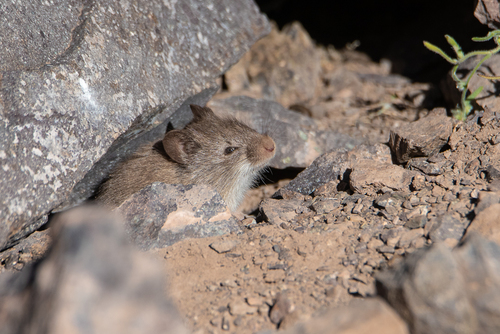
Primary habitats include rocky talus slopes, scree fields, boulder-strewn alpine meadows, and montane grasslands. It shows a strong preference for areas with crevices and rock piles that provide shelter from predators and harsh weather. It can also be found in subalpine shrub zones with dwarf willows and rhododendron.
Adaptations to its environment
Dense, soft fur provides insulation against sub-zero temperatures. Compact body form and relatively short tail and ears minimize heat loss (Allen's rule). Strong claws and robust limbs facilitate movement over rocky terrain. Physiological adaptations likely include enhanced oxygen-carrying capacity of blood to cope with high-altitude hypoxia.
Conservation status and numbers
Near Threatened (NT) on the IUCN Red List. The species does not currently meet the thresholds for a threatened category but is considered at risk due to its restricted mountain habitat, sensitivity to climate warming, and ongoing degradation from overgrazing and human encroachment in high-altitude zones.
Estimated population
No quantitative global population estimate exists. The population trend is presumed to be declining, driven primarily by ongoing habitat deterioration and climate-induced range contraction.
What threatens the Royle's Mountain Vole?
Climate change is the foremost long-term threat, as rising temperatures cause upward compression and contraction of suitable cold alpine habitat with no further refugia available above the snowline. Heavy livestock grazing in high pastures degrades vegetation and soil structure. Expanding infrastructure (roads, tourism) in the Himalayas increases disturbance. Predator pressure (raptors, mustelids) may intensify as habitat shrinks.
Diseases and parasites
Like other voles, it is likely host to ectoparasites (fleas, mites, ticks) and internal helminths. Voles in the Himalayan region have been implicated as potential reservoirs for hantaviruses and other zoonotic pathogens, though specific data for A. roylei are lacking.
What is being done to protect it?
Parts of the range fall within protected areas such as Great Himalayan National Park (India, UNESCO World Heritage Site), Hemis National Park (India), and Khunjerab National Park (Pakistan). General wildlife protection legislation in India (Wildlife Protection Act, 1972) and Pakistan applies to its habitat. No species-specific conservation program is currently in place.
Recommended actions
Long-term population monitoring and distributional surveys using standardized trapping protocols are urgently needed. Grazing management in core alpine habitats should be enforced. Climate refugia mapping along the Himalayan ridge should be conducted. Taxonomic and genetic studies are needed to clarify population structure and inform conservation unit designations.
What the Royle's Mountain Vole looks like
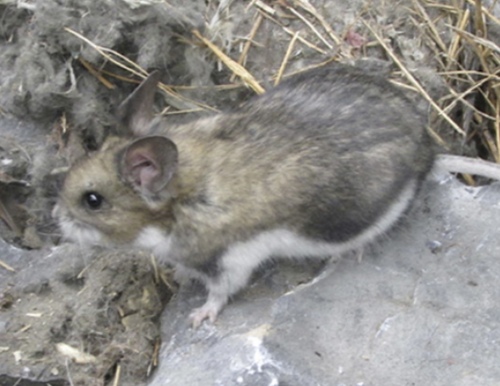
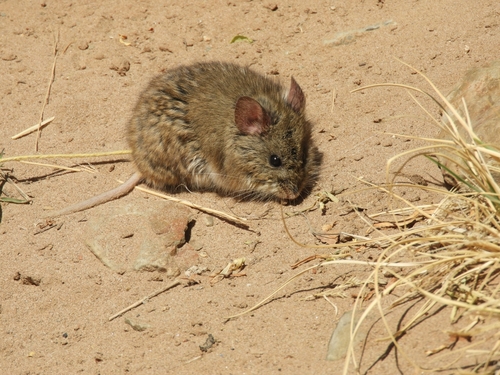
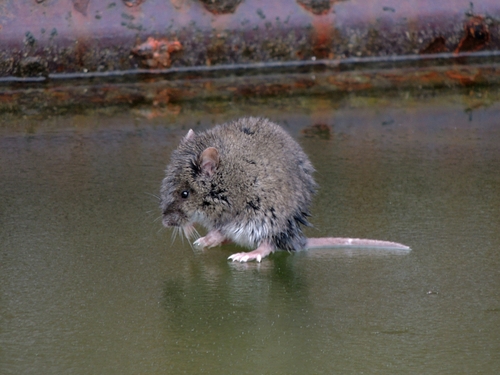
Dorsal pelage is soft and dense, typically pale grayish-brown to buffy-gray, often with a faint ochre wash along the flanks. The ventral surface is pale whitish to creamy gray. The tail is bicolored (darker above, paler below) and very sparsely haired. Eyes are small and black; ears are relatively short and partly hidden in the fur.
Size
Head-body length approximately 95–135 mm; tail length 25–50 mm (notably short relative to body, roughly one-third of body length); hind foot 14–19 mm.
Weight
Typically 20–45 g; adults often weigh 28–38 g with little obvious sexual size dimorphism.
Distinctive features
Compared to the closely related Silver Mountain Vole (Alticola argentatus), A. roylei tends to be slightly larger, less silvery, and more buffy-brown in overall coloration. Compared to Stoliczka's Mountain Vole (A. stoliczkanus), it occupies a more westerly range and has a broader, less elongated skull. The very short, finely haired tail is a hallmark of the whole Alticola genus.
Differences between males and females
Sexual dimorphism is minimal. Females may be marginally smaller than males, but the difference is slight and not reliably distinguishable in the field.
Behaviour and diet of the Royle's Mountain Vole
Royle's Mountain Vole is thought to be moderately social, living in small family groups or loose colonies centered around a shared rock pile or talus system. Individuals maintain overlapping home ranges within a colony but may defend immediate burrow entrances. Precise social structure is poorly documented.
When it is active
Primarily diurnal and crepuscular during summer, taking advantage of the short alpine day and warmer midday temperatures. Under extreme cold or snow cover, activity may shift to brief foraging bouts near rock crevices. The species does not hibernate and remains intermittently active in winter.
Diet
Strictly herbivorous. Diet consists of alpine grasses, sedges, forbs, mosses, lichens, roots, and the bark of dwarf shrubs. Like many Alticola species, it caches plant material in underground chambers and rock crevices as winter food stores (haying behavior).
How it feeds and hunts
Not applicable; the species is a strict herbivore. Foraging involves clipping and collecting plant material close to rocky refugia, with individuals rarely venturing far from cover.
Communication
Uses high-pitched squeaks and ultrasonic vocalizations for close-range communication and alarm. Scent glands produce chemical signals used in territory marking and reproductive signaling. Tactile communication is important in social interactions within colonies.
Interactions with other species
Key predators include raptors (e.g., Himalayan buzzard, Steppe Eagle, Lammergeier), small mustelids (weasels, stoat), Tibetan fox, and snow leopard (incidentally). It likely competes for food with other small herbivores such as pikas (Ochotona spp.), which share similar rocky alpine habitats. Pikas and A. roylei may indirectly compete for nesting sites and food caches.
Role in its ecosystem
As a primary consumer in high-altitude ecosystems, it plays an important role in nutrient cycling by grazing alpine vegetation and aerating soil through burrowing. It forms a key prey item linking primary production to higher trophic levels (raptors, carnivorous mammals) in Himalayan alpine food webs.
Reproduction and lifecycle
Breeding season is restricted to the short alpine summer, approximately May to September. Gestation is estimated at 19–21 days (typical for arvicolines). Litter size is typically 3–6 pups. Females may produce 2–3 litters per season under favorable conditions.
Raising the young
Altricial pups are born in a grass-lined nest within a rock crevice or burrow. The female provides most parental care, nursing and guarding the young for approximately 2–3 weeks until weaning. Males may contribute to nest defense in some vole species but this is undocumented specifically for A. roylei.
Maturity and lifespan
Sexual maturity is likely reached at 4–6 weeks of age, consistent with other arvicolines. Wild lifespan is estimated at 1–2 years; captive longevity data are not available for this species specifically.
Taxonomy and naming of the Royle's Mountain Vole
Classification
Mammalia > Rodentia > Cricetidae (subfamily Arvicolinae) > Alticola > Alticola roylei (Gray, 1842)
Subspecies
No widely recognized subspecies are currently validated; the species is treated as monotypic in most modern taxonomic revisions, though historical literature occasionally distinguished regional forms.
Scientific synonyms
Arvicola roylei Gray, 1842 (basionym); Phaiomys roylei (Gray, 1842); Alticola roylei blanfordi has been proposed by some authors but is not universally accepted.
What research says
Recent studies
Phylogeographic studies of the genus Alticola using mitochondrial and nuclear markers have helped clarify species boundaries and historical dispersal routes across the Himalayas and Tibetan Plateau. Some recent analyses suggest that the western Himalayan populations attributed to A. roylei may harbor cryptic genetic diversity warranting further taxonomic scrutiny.
Genome and DNA
The diploid chromosome number for Alticola roylei has been reported as 2n = 54 in some studies, consistent with other Alticola species; however, karyotypic data across the full range remain incomplete. No whole-genome sequencing study specific to this species has been published.
Compared with similar species
Royle's Mountain Vole is most similar to Alticola argentatus (Silver Mountain Vole) and Alticola stoliczkanus (Stoliczka's Mountain Vole), with which it shares rocky alpine habitats. A. argentatus has a distinctly more silvery-gray pelage. A. stoliczkanus has a more easterly distribution (Ladakh, Xinjiang, Tibetan Plateau) and a narrower skull. All three species share the characteristic short tail and dense insulating fur of the genus.
The Royle's Mountain Vole and people
Like pikas, Royle's Mountain Vole engages in 'haying' — cutting and storing grass and herbs in piles under rocks to sustain itself through the harsh Himalayan winter, essentially acting as a mountain farmer. Despite living at altitudes where even acclimatized humans struggle to breathe, this tiny rodent maintains high activity levels without supplemental oxygen. The genus Alticola means 'high dweller' in Latin, a fitting description for a rodent that thrives where few mammals dare to live.
Where and how to see it
Best observed in early morning or late afternoon during summer months (June–August) in rocky talus fields and boulder slopes between 3,500 and 4,500 m. Good locations include the high-altitude zones of Great Himalayan National Park (Himachal Pradesh, India) and alpine meadows above Spiti Valley. Patient, quiet observation near large rock outcrops is the most effective strategy, as individuals quickly retreat into crevices when disturbed.
Risks to humans
No notable direct risk to humans. As a potential reservoir host for various rodent-borne pathogens common in Asia, minimal precaution is advisable when handling wild-caught individuals, but casual encounters pose no meaningful health risk.
Human uses
No documented commercial, agricultural, or traditional medicinal uses. The species has limited scientific use as an indicator of high-altitude ecosystem health and as a model organism for studying adaptations to hypoxia and cold in montane rodents.
Myths and legends
No specific myths or cultural legends are known to be associated with Royle's Mountain Vole. High-altitude voles and pikas are sometimes acknowledged in Himalayan folklore as signs of a healthy alpine ecosystem, but no dedicated symbolism applies to this species.
Countries where the Royle's Mountain Vole is recorded
The 5 countries named in the range description of its IUCN Red List assessment.
Questions about the Royle's Mountain Vole
Where does the Royle's Mountain Vole live?
The Royle's Mountain Vole is recorded in Bhutan, China, India, Nepal and Pakistan across Asia. These countries come from the range description of its IUCN Red List assessment, and they are what place the species on the interactive map.
Is the Royle's Mountain Vole endangered?
The IUCN Red List assesses the Royle's Mountain Vole as Near Threatened. The species does not qualify as threatened today, but it is close to the thresholds and likely to cross them soon. It is the category that most often changes at the next assessment.
How many are left in the wild?
No quantitative global population estimate exists. This figure comes from the species assessment on the IUCN Red List; population estimates for wild mammals are ranges, not counts, and are revised at each assessment.
What habitat does the Royle's Mountain Vole live in?
Primary habitats include rocky talus slopes, scree fields, boulder-strewn alpine meadows, and montane grasslands.
What is the scientific name of the Royle's Mountain Vole?
The Royle's Mountain Vole is Alticola roylei, in the family Cricetidae, order Rodentia.
Other species in the genus Alticola
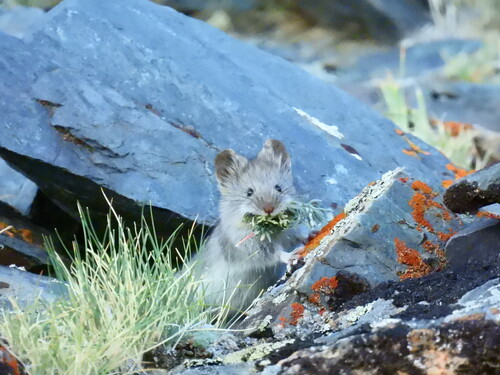
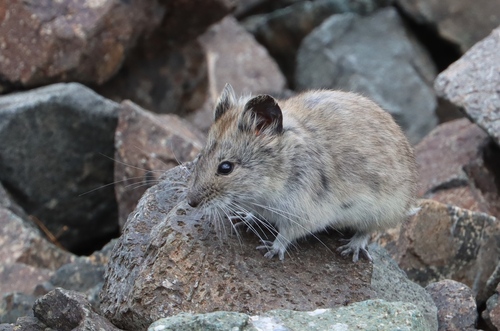
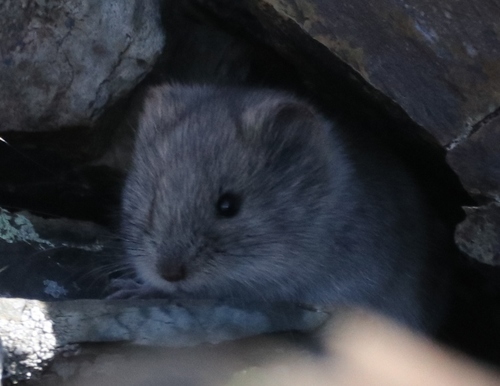

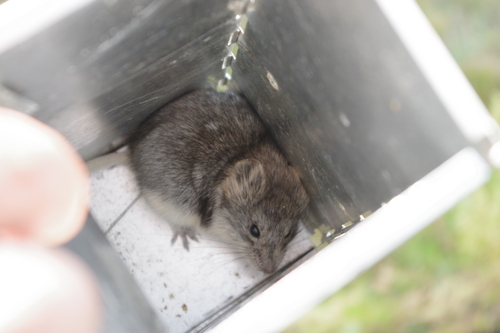
Other species in the family Cricetidae
Sources
Conservation status, range description and population estimate come from the IUCN Red List assessment for Alticola roylei. Countries are derived from that range description, not from a mapped country list. Last refreshed on .
The distribution map is drawn from the IUCN Red List spatial data compiled in 2008. IUCN (International Union for Conservation of Nature)