
Lemming Vole
Alticola lemminus
Red List assessment
Least Concernon the IUCN Red List
- EXExtinct
- EWExtinct in the Wild
- CRCritically Endangered
- ENEndangered
- VUVulnerable
- NTNear Threatened
- LCLeast Concern
The Lemming Vole is recorded in 4 countries across Asia and Europe. The IUCN Red List assesses the Lemming Vole as Least Concern. No precise global population estimate exists.
- Family
- Cricetidae
- Order
- Rodentia
- Genus
- Alticola
- Countries recorded
- 4
- Continents
- Asia and Europe
- Red List category
- Least Concern
- Data updated
- August 9, 2026
What is the Lemming Vole?
The Lemming Vole (Alticola lemminus) is a small, compact rodent of the subfamily Arvicolinae, found in the cold highlands and tundra-mountain zones of northeastern Siberia. Its common name derives from its striking morphological resemblance to true lemmings, including a stocky body, short limbs, and reduced tail. It is adapted to harsh subarctic and alpine conditions and inhabits rocky outcrops, scree slopes, and adjacent tundra habitats. Although not closely studied, it plays an important ecological role as an herbivore in these ecosystems.
Where does the Lemming Vole live?
Northeastern Russia (Siberia): Yakutia (Sakha Republic), Kolyma uplands, Magadan Oblast, Chukotka Autonomous Okrug, and surrounding mountainous regions of northeastern Siberia.
Endemic to northeastern Russia; range centered on the Verkhoyansk and Kolyma mountain systems, Yakutia (Sakha Republic), Magadan Oblast, and Chukotka. Potentially extending to isolated mountain massifs of extreme northeastern Siberia. Does not appear to occur in China, Mongolia, or Kazakhstan.
Altitude and depth
Typically found between 500 and 2,000 meters above sea level, concentrated in subalpine and alpine belts of northeastern Siberian mountain ranges.
Seasonal movements
Active year-round; does not hibernate. Reduced surface activity in deep winter when it likely uses subnivean tunnels beneath the snow. Breeding activity peaks during the brief Arctic and subarctic summer (June–August).
Habitat of the Lemming Vole
Rocky alpine and subalpine zones, mountain tundra, scree fields, talus slopes, and rocky outcrops interspersed with low-growing vegetation. It is also found in highland meadows and shrub tundra adjacent to rocky terrain. The species favors areas with abundant crevices for shelter and refuge from predators.
Adaptations to its environment
Dense, soft fur provides insulation against extreme cold. Compact body shape (reduced surface-area-to-volume ratio) minimizes heat loss. Use of rock crevices and subnivean spaces offers protection from wind, predators, and temperature extremes. Like related Alticola species, it likely caches food for winter.
Conservation status and numbers
Least Concern (LC) on the IUCN Red List. The species is considered to have a stable population with no evidence of significant decline. Its remote, largely undisturbed habitat in northeastern Siberia reduces exposure to most major human-driven threats.
Estimated population
No precise global population estimate exists. The population is believed to be stable and relatively widespread within its northeastern Siberian range, though naturally limited by the specialized nature of its rocky mountain habitat.
What threatens the Lemming Vole?
Climate change represents the most significant long-term threat, as warming temperatures alter alpine and tundra habitats. Shrubification (expansion of shrubs into open tundra) could reduce suitable rocky habitat. Direct human pressure is currently minimal due to the remoteness of its range.
Diseases and parasites
Likely hosts typical arvicolinе ectoparasites (fleas, mites, ticks) and endoparasites (helminths, protozoans). May carry hantaviruses as do many arvicolines, though this has not been specifically documented for this species. Detailed parasitological studies are lacking.
What is being done to protect it?
Much of the species' range overlaps with protected nature reserves in northeastern Russia (e.g., Magadansky Nature Reserve, Wrangel Island Reserve vicinity). No species-specific conservation programs are known, nor are they currently deemed necessary given its LC status.
Recommended actions
Long-term population monitoring in the context of climate change is advisable. Studies to clarify its exact range and population trends would be beneficial. Maintaining the integrity of protected areas in northeastern Russia is the most important passive conservation measure.
What the Lemming Vole looks like
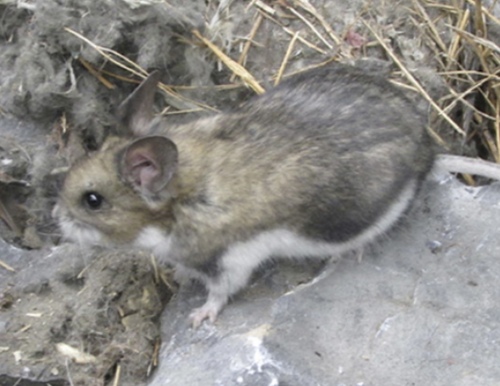
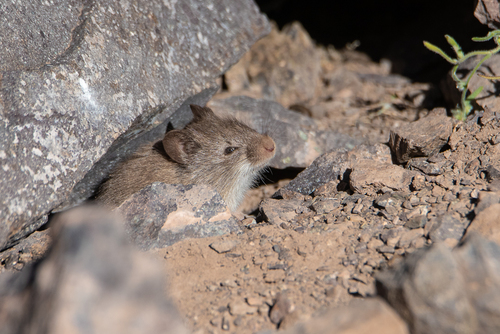
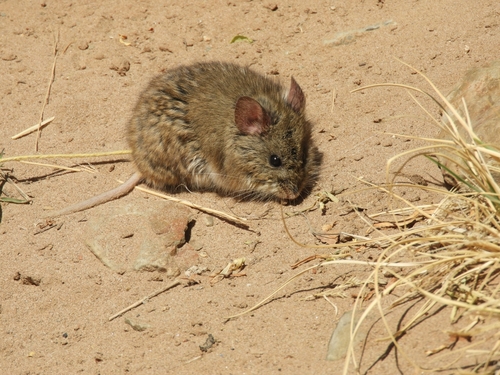
Dorsal fur is dense and soft, typically yellowish-brown to grayish-brown or ochraceous, often with a slightly darker mid-dorsal stripe. The ventral surface is paler, creamy or whitish-gray. The face is broad and blunt, eyes are small, and ears are short and largely concealed by fur. The tail is very short and sparsely haired.
Size
Body length approximately 110–145 mm; tail length approximately 20–35 mm (notably short relative to body, lemming-like). Hind foot approximately 17–20 mm.
Weight
Estimated 40–80 grams; no significant documented dimorphism in size between sexes.
Distinctive features
Distinguished from other Alticola species by its notably stockier, more lemming-like body proportions, comparatively shorter tail, and broader skull. Its overall appearance more closely resembles collared lemmings (Dicrostonyx) than typical voles, which is unusual among Alticola.
Differences between males and females
Sexual dimorphism is minimal or absent; males and females are similar in size and coloration, as is typical for small arvicolines.
Behaviour and diet of the Lemming Vole
Presumed to be semi-social or loosely colonial, as is common in Alticola species that occupy rocky terrain with limited shelter sites. Individual home ranges likely overlap near high-quality rocky shelters. No detailed behavioral studies are available.
When it is active
Primarily diurnal or crepuscular, with activity peaks in morning and late afternoon during summer. Activity rhythm may shift under the continuous daylight of the Arctic summer. In winter, likely active under snow in subnivean passages.
Diet
Strictly herbivorous. Diet consists of grasses, sedges, forbs, mosses, lichens, and other low-growing tundra and alpine vegetation. May consume dried plant matter and cached vegetation during winter months.
Communication
Uses high-pitched squeaks and ultrasonic vocalizations for communication, particularly between mother and young. Scent marking via urine and glandular secretions is likely used for territory delineation. Threat postures and teeth-chattering may be used as defensive signals.
Interactions with other species
Predated upon by raptors (rough-legged buzzards, snowy owls, gyrfalcons), Arctic foxes, ermines, and least weasels. Competes for resources with co-occurring small rodents such as true lemmings (Lemmus) and other voles in adjacent habitats. May share rocky microhabitats with pikas (Ochotona species).
Role in its ecosystem
Functions as a primary consumer and prey species within the northeastern Siberian mountain food web. Contributes to nutrient cycling through grazing and burrowing activity. Its population fluctuations may influence predator populations in the region.
Reproduction and lifecycle
Breeding season is restricted to the short warm season, approximately June through August. Gestation is likely around 18–21 days, typical for arvicolines. Litter size is estimated at 3–7 pups, with potentially 2–3 litters per season under favorable conditions.
Raising the young
Young are altricial at birth, born blind and hairless. The mother provides nursing and warmth in a grass-lined nest within a rock crevice or burrow. Weaning likely occurs at 14–21 days, after which juveniles quickly achieve independence.
Maturity and lifespan
Sexual maturity is likely reached at 4–6 weeks of age, as is typical for voles. Maximum lifespan in the wild is probably 1–2 years; slightly longer in captivity, though captive data for this species are unavailable.
Taxonomy and naming of the Lemming Vole
Classification
Mammalia > Rodentia > Cricetidae > Arvicolinae > Alticola > Alticola lemminus
Scientific synonyms
Historically referenced as Microtus lemminus in older taxonomic literature; some early treatments placed it within broader Alticola groupings under different synonyms.
What research says
Recent studies
This species remains poorly studied; no major recent publications specifically addressing its ecology, genetics, or behavior are widely available. Taxonomic revisions of the genus Alticola have periodically re-evaluated its phylogenetic placement within the group.
Genome and DNA
Chromosome number has not been well-documented specifically for Alticola lemminus in readily available literature. The genus Alticola shows variable karyotypes among species; detailed genomic studies for this species are lacking.
Compared with similar species
Most closely related to other Alticola mountain voles such as Alticola macrotis (Large-eared Vole) and Alticola strelzowi (Flat-headed Vole). Distinguished from these by its more lemming-like morphology and more northeasterly distribution. Unlike true lemmings (Lemmus, Dicrostonyx), it does not undergo dramatic population boom-and-bust cycles.
The Lemming Vole and people
The Lemming Vole is remarkable for convergently evolving a lemming-like body plan — stocky, short-tailed, and broad-headed — despite being more closely related to typical mountain voles. Its common name is a direct nod to this visual mimicry of lemmings. It inhabits some of the coldest and most remote mountainous terrain on Earth, enduring northeastern Siberian winters where temperatures can plunge below -50°C.
Where and how to see it
Best observed during the short Siberian summer (July–August) in rocky alpine zones of the Kolyma Uplands or Verkhoyansk Range. Look for movement among boulders and scree slopes during early morning or late afternoon. Access requires significant logistical planning due to the extreme remoteness of its habitat in northeastern Russia.
Risks to humans
No notable risk to humans. As with many small rodents, handling wild individuals carries a theoretical risk of bites or disease transmission, but direct human encounters are extremely rare given the species' remote range.
Countries where the Lemming Vole is recorded
The 4 countries named in the range description of its IUCN Red List assessment.
Questions about the Lemming Vole
Where does the Lemming Vole live?
The Lemming Vole is recorded in China, Kazakhstan, Mongolia and Russia across Asia and Europe. These countries come from the range description of its IUCN Red List assessment, and they are what place the species on the interactive map.
Is the Lemming Vole endangered?
The IUCN Red List assesses the Lemming Vole as Least Concern. The species is widespread and abundant enough not to qualify for any threatened category. It does not mean the species is safe forever, only that nothing in the current data raises an alarm.
How many are left in the wild?
No precise global population estimate exists. This figure comes from the species assessment on the IUCN Red List; population estimates for wild mammals are ranges, not counts, and are revised at each assessment.
What habitat does the Lemming Vole live in?
Rocky alpine and subalpine zones, mountain tundra, scree fields, talus slopes, and rocky outcrops interspersed with low-growing vegetation.
What is the scientific name of the Lemming Vole?
The Lemming Vole is Alticola lemminus, in the family Cricetidae, order Rodentia.
Other species in the genus Alticola
Other species in the family Cricetidae
Sources
Conservation status, range description and population estimate come from the IUCN Red List assessment for Alticola lemminus. Countries are derived from that range description, not from a mapped country list. Last refreshed on .
The distribution map is drawn from the IUCN Red List spatial data compiled in 2012. IUCN (International Union for Conservation of Nature)