
Altiplano Grass Mouse
Akodon lutescens
Red List assessment
Least Concernon the IUCN Red List
- EXExtinct
- EWExtinct in the Wild
- CRCritically Endangered
- ENEndangered
- VUVulnerable
- NTNear Threatened
- LCLeast Concern
The Altiplano Grass Mouse is recorded in 3 countries across South America. The IUCN Red List assesses the Altiplano Grass Mouse as Least Concern. No precise global population estimate is available.
- Family
- Cricetidae
- Order
- Rodentia
- Genus
- Akodon
- Countries recorded
- 3
- Continents
- South America
- Red List category
- Least Concern
- Data updated
- August 9, 2026
What is the Altiplano Grass Mouse?
Akodon lutescens is a small sigmodontine rodent endemic to the high-altitude puna and Altiplano grasslands of the central Andes. It is a relatively inconspicuous, ground-dwelling mouse well adapted to the cold, arid conditions above 3,500 m elevation. Like other members of the diverse Akodon genus, it plays an important ecological role as both a seed consumer and prey item in Andean ecosystems. Its yellowish-brown pelage, suggested by the Latin epithet 'lutescens' (meaning 'becoming yellow'), helps it blend into the dry grasses of its harsh environment.
Where does the Altiplano Grass Mouse live?
High Andes Altiplano of southwestern Bolivia and northwestern Argentina (Jujuy and Salta provinces), with possible occurrence in extreme southern Peru
Range is centered on the Bolivian Altiplano (departments of Oruro and Potosí) and extends south into the Puna region of northwestern Argentina (provinces of Jujuy and Salta). Marginal populations may occur in extreme southern Peru near Lake Titicaca's southern margins.
Altitude and depth
Typically found between 3,500 and 4,800 m above sea level, well within the high puna zone; it is one of the higher-altitude members of its genus.
Seasonal movements
No known long-distance migrations; activity patterns may shift seasonally with temperature extremes and rainfall. During the driest and coldest months (June–August), individuals may reduce surface activity, though true hibernation has not been documented in this species.
Habitat of the Altiplano Grass Mouse
Primarily inhabits puna and Altiplano grasslands dominated by bunch grasses such as Festuca orthophylla and Stipa spp., as well as bofedales (high-altitude peatland wetlands) and rocky outcrops interspersed with sparse shrubs. It tends to avoid dense shrubland and heavily degraded areas, preferring native grassland with sufficient ground cover.
Adaptations to its environment
Possesses a dense, insulating underfur that helps retain body heat in the extreme cold of the Altiplano, where nighttime temperatures regularly fall below freezing. Its kidneys are likely adapted for water conservation in this semi-arid environment. Fossorial and semi-fossorial tendencies provide shelter from cold and predators.
Conservation status and numbers
Least Concern (LC) on the IUCN Red List. The species has a reasonably broad distribution across the Altiplano and is not currently considered to face population declines of sufficient magnitude to qualify for a threatened category. No major population trend data are available, but habitat remains relatively intact over much of its range.
Estimated population
No precise global population estimate is available. The species is considered to have a stable population overall, with local densities varying seasonally and with habitat quality.
What threatens the Altiplano Grass Mouse?
Overgrazing by domestic livestock (sheep, llamas, alpacas, cattle) degrades puna grasslands and reduces habitat quality. Mining activities in the Bolivian and Argentine Altiplano can cause habitat loss and contamination of soils and water sources. Climate change poses a long-term threat through altered precipitation patterns and potential upward shifts in vegetation zones.
Diseases and parasites
As with other Akodon, likely hosts various ecto- and endoparasites including mites, fleas, nematodes, and cestodes. Rodents in the Altiplano region are known reservoirs for hantaviruses and other zoonotic agents, though specific records for A. lutescens are limited.
What is being done to protect it?
Parts of its range fall within protected areas such as the Eduardo Avaroa Andean Fauna National Reserve in Bolivia and the Laguna de los Pozuelos Biosphere Reserve in Argentina. General Andean biodiversity programs indirectly benefit this species.
Recommended actions
Long-term population monitoring across the Altiplano is needed to detect potential declines. Sustainable grazing management in puna grasslands and expansion of protected area networks at high altitude would benefit this and many co-occurring species. Research into the effects of artisanal and industrial mining on local rodent populations is a priority.
What the Altiplano Grass Mouse looks like
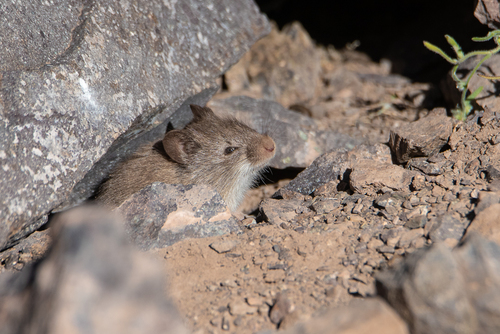
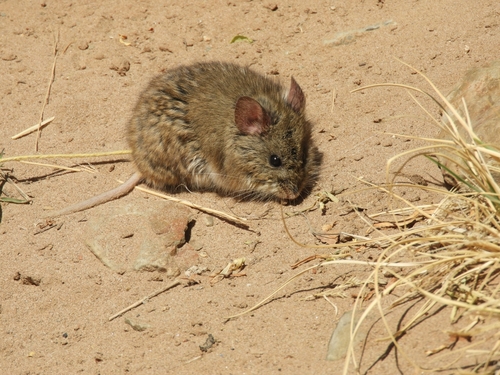
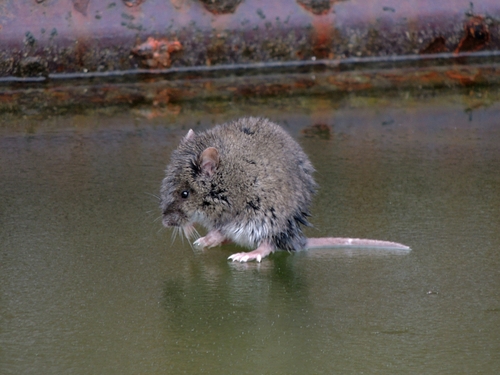
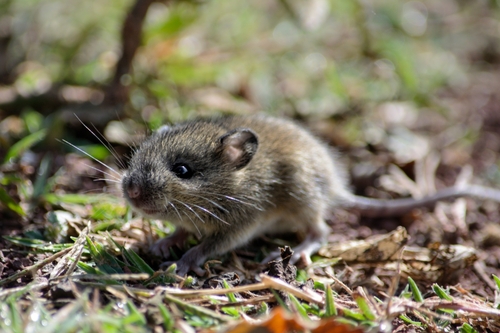
Dorsal pelage is yellowish-brown to ochraceous-brown, sometimes with a grizzled effect due to darker-tipped guard hairs. The ventral surface is paler, grayish-white to buff. The tail is bicolored, darker above and paler below, and relatively sparsely haired. Ears are small and rounded.
Size
Head-body length approximately 85–115 mm; tail length 55–80 mm (shorter than body, typical of the genus). Hindfoot length approximately 18–22 mm.
Weight
Typically 15–30 g; no strong sexual size dimorphism reported, with males and females of similar mass.
Distinctive features
The distinctly yellowish or ochraceous dorsal coloration distinguishes A. lutescens from sympatric Akodon species such as A. boliviensis, which tends to be darker brownish-gray. Its restricted high-altitude distribution and relatively short tail are also useful identification features.
Differences between males and females
Minimal sexual dimorphism in external morphology; males and females are similar in size and coloration. Males may be very slightly larger on average.
Behaviour and diet of the Altiplano Grass Mouse
Presumed to be largely solitary outside of the breeding season, as is typical for most Akodon species. Individuals maintain small home ranges within grassland microhabitats. Some aggregation around high-quality food patches or shelter sites may occur.
When it is active
Primarily nocturnal to crepuscular, with peak activity around dusk and dawn. Some diurnal activity may occur in cooler seasons when nighttime foraging is energetically costly. Individuals seek cover in burrows or under rocks during the day.
Diet
Omnivorous, feeding primarily on seeds, green plant material (grasses, forbs), and invertebrates (insects, larvae). The diet likely shifts seasonally depending on food availability, with more animal matter consumed during the wet season when insects are more abundant.
How it feeds and hunts
Forages on the ground by searching through grass stems and leaf litter for seeds and invertebrates. Uses its vibrissae and olfactory senses to detect food items. No specialized hunting technique; opportunistic in prey capture.
Communication
Like other sigmodontine rodents, likely uses ultrasonic vocalizations for mother-pup communication and possibly mate attraction. Scent marking via urine and glandular secretions probably demarcates home ranges. Threat displays may involve tooth chattering.
Interactions with other species
Prey for Andean raptors (e.g., Puna Hawk, American Kestrel), carnivorous mammals (Andean fox, pampas cat, Andean weasel), and large snakes at lower elevations. Competes for resources with other sympatric small rodents such as Phyllotis species and other Akodon. May disperse seeds of grasses and forbs.
Role in its ecosystem
Functions as a primary consumer channeling plant energy to higher trophic levels and as prey for numerous Altiplano predators. Its seed-caching and consumption behavior may influence grass community composition. It contributes to soil aeration through burrowing activity.
Reproduction and lifecycle
Breeding is believed to be seasonal, tied to the austral wet season (roughly November–March), when food resources are more abundant. Litter sizes in Akodon typically range from 2 to 6 pups. Gestation is approximately 20–23 days, consistent with the genus.
Raising the young
Females are the primary caregivers, nursing young in a nest constructed in a burrow or under dense vegetation. Pups are altricial at birth (naked and blind) and develop rapidly, reaching weaning at approximately 3 weeks of age.
Maturity and lifespan
Sexual maturity is reached at approximately 6–8 weeks of age. Lifespan in the wild is likely 1–2 years; captive individuals of related Akodon species may live up to 3 years.
Taxonomy and naming of the Altiplano Grass Mouse
Classification
Mammalia > Rodentia > Cricetidae (Sigmodontinae) > Akodon > Akodon lutescens (J.A. Allen, 1901)
Scientific synonyms
Originally described by Joel Asaph Allen in 1901; some older literature may place it under broader Akodon groupings before modern phylogenetic revisions, but no widely recognized synonyms are currently accepted.
What research says
Recent studies
Phylogenetic studies of the Sigmodontinae have helped clarify the relationships of A. lutescens within the Akodon boliviensis species group. Molecular work on Altiplano rodent communities has occasionally included this species in broader ecological and biogeographic analyses of high-Andean mammal diversity.
Genome and DNA
The diploid chromosome number is not precisely confirmed for this species in the literature I can confirm; Akodon genus is notable for high karyotypic variability and unusual sex chromosome systems (XY females occur in some congeners). Specific cytogenetic data for A. lutescens should be verified against primary sources.
Compared with similar species
Closely related to Akodon boliviensis, with which it shares much of its range; A. boliviensis is generally darker and less ochraceous. Compared to the lowland Akodon azarae, A. lutescens is smaller and adapted to far harsher, colder conditions. Within the puna community it occupies a similar niche to Phyllotis species but is distinguishable by its shorter tail and omnivorous diet.
The Altiplano Grass Mouse and people
The species lives at altitudes where atmospheric oxygen levels are roughly 40% lower than at sea level, making it one of the highest-dwelling grass mice in the world. Its genus name, Akodon, comes from Greek meaning 'point-toothed,' referencing the cuspidate molars typical of the group. Despite the apparent harshness of the Altiplano, populations of small mammals like A. lutescens can reach surprisingly high local densities in productive bofedal wetland patches.
Where and how to see it
Best observed at night using a red-light torch along the edges of puna grasslands and bofedales in Bolivia's Oruro or Potosí departments, or in Argentina's Jujuy province near localities such as La Quiaca. Pitfall trapping surveys by researchers have documented the species in areas around Eduardo Avaroa Reserve. Patience and silence at dusk near grass tussocks offer the best chance of a sighting.
Risks to humans
No notable direct risk to humans. As with all wild rodents in the Andes, there is a theoretical risk of zoonotic disease transmission (e.g., hantavirus) through contact with urine, feces, or bites; standard precautions when handling wild rodents are advised.
Human uses
No known direct human uses (food, medicine, trade). The species has been collected for scientific museum specimens and used as a study organism in Andean ecology and biogeography research.
Countries where the Altiplano Grass Mouse is recorded
The 3 countries named in the range description of its IUCN Red List assessment.
Questions about the Altiplano Grass Mouse
Where does the Altiplano Grass Mouse live?
The Altiplano Grass Mouse is recorded in Argentina, Bolivia and Peru across South America. These countries come from the range description of its IUCN Red List assessment, and they are what place the species on the interactive map.
Is the Altiplano Grass Mouse endangered?
The IUCN Red List assesses the Altiplano Grass Mouse as Least Concern. The species is widespread and abundant enough not to qualify for any threatened category. It does not mean the species is safe forever, only that nothing in the current data raises an alarm.
How many are left in the wild?
No precise global population estimate is available. This figure comes from the species assessment on the IUCN Red List; population estimates for wild mammals are ranges, not counts, and are revised at each assessment.
What habitat does the Altiplano Grass Mouse live in?
Primarily inhabits puna and Altiplano grasslands dominated by bunch grasses such as Festuca orthophylla and Stipa spp., as well as bofedales (high-altitude peatland wetlands) and rocky outcrops interspersed with sparse shrubs.
What is the scientific name of the Altiplano Grass Mouse?
The Altiplano Grass Mouse is Akodon lutescens, in the family Cricetidae, order Rodentia.
Other species in the genus Akodon

Other species in the family Cricetidae
Sources
Conservation status, range description and population estimate come from the IUCN Red List assessment for Akodon lutescens. Countries are derived from that range description, not from a mapped country list. Last refreshed on .
The distribution map is drawn from the IUCN Red List spatial data compiled in 2016. IUCN (International Union for Conservation of Nature)