
Flat-headed Vole
Alticola strelzowi
Red List assessment
Least Concernon the IUCN Red List
- EXExtinct
- EWExtinct in the Wild
- CRCritically Endangered
- ENEndangered
- VUVulnerable
- NTNear Threatened
- LCLeast Concern
The Flat-headed Vole is recorded in 4 countries across Asia and Europe. The IUCN Red List assesses the Flat-headed Vole as Least Concern. No precise global population estimate is available.
- Family
- Cricetidae
- Order
- Rodentia
- Genus
- Alticola
- Countries recorded
- 4
- Continents
- Asia and Europe
- Red List category
- Least Concern
- Data updated
- August 9, 2026
What is the Flat-headed Vole?
The Flat-headed Vole is a small, semi-fossorial rodent named for its characteristically dorsoventrally compressed skull, an adaptation that allows it to navigate narrow rock crevices in mountainous terrain. It inhabits the rocky slopes, talus fields, and alpine meadows of the Altai Mountain system and surrounding ranges in Central Asia. It is a member of the genus Alticola, commonly known as mountain voles or high-mountain voles, which are specialized for life at high altitudes. Its cryptic coloration, compact body, and rock-dwelling lifestyle make it a rarely observed but ecologically significant small mammal of the Central Asian highlands.
Where does the Flat-headed Vole live?
Russia (Altai Republic, Altai Krai), Kazakhstan (eastern regions), Mongolia (western Mongolian Altai), and northwestern China (Xinjiang)
The species ranges across the Altai Mountain system, including the Russian Altai (Altai Republic and Altai Krai), eastern Kazakhstan (Kazakh Altai), western Mongolia (Mongolian Altai), and potentially adjacent parts of northwestern China (Xinjiang). Its distribution is closely tied to the occurrence of suitable rocky montane habitat and follows the Altai cordillera system.
Altitude and depth
Typically found between approximately 800 m and 3,000 m above sea level, with highest densities generally occurring in the subalpine and alpine zones (1,500–2,800 m). Distribution closely mirrors the availability of rocky substrates rather than a strict altitudinal band.
Seasonal movements
Does not hibernate, remaining active year-round beneath snow cover in subnivean spaces and within rock crevices. Activity is greatest during warmer months when food resources are abundant. In winter, it relies on stored food caches and any accessible vegetation under the snowpack.
Habitat of the Flat-headed Vole
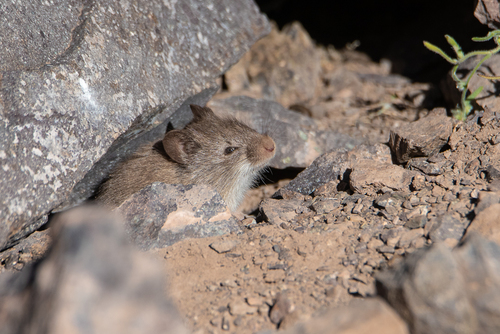
Primary habitat consists of rocky outcrops, boulder fields (talus slopes), stony alpine and subalpine meadows, and cliff faces in mountainous regions. It shelters in crevices between rocks, under boulders, and among scree, which provide protection from predators and harsh weather. It is rarely found in open soil habitats and strongly prefers substrates with rocky cover.
Adaptations to its environment
The most remarkable adaptation is the flattened skull and dorso-ventrally compressed body, which allow the animal to squeeze into very narrow rock crevices inaccessible to most predators. Dense, soft fur provides thermal insulation against cold alpine temperatures. Its short, sturdy limbs are well suited for climbing and scrambling over rocks. Caching behavior helps the animal survive periods of scarce food in winter.
Conservation status and numbers
Least Concern (LC) on the IUCN Red List. The species is assessed as having a sufficiently large range and population to not qualify for a threatened category. No rapid population decline has been documented, and a portion of its range falls within protected areas.
Estimated population
No precise global population estimate is available. The population is considered stable based on the current IUCN assessment. Density likely varies considerably across its fragmented montane range.
What threatens the Flat-headed Vole?
The species faces limited but emerging threats including habitat degradation through overgrazing by livestock on alpine meadows, which can reduce vegetation cover and disturb rocky habitats. Climate change poses a longer-term risk by altering alpine vegetation zones and snowpack dynamics. Localized threats from mining activities in the Altai region may affect some subpopulations.
Diseases and parasites
Likely hosts ectoparasites (fleas, lice, mites) typical of small rodents in Central Asia. May carry zoonotic pathogens common to rodents in the region, such as hantaviruses or plague (Yersinia pestis), though specific records for this species are sparse. No documented disease outbreaks specific to A. strelzowi are known.
What is being done to protect it?
Parts of its range fall within existing protected areas, including the Altaisky Zapovednik (Altai Nature Reserve) in Russia and various protected zones in Mongolia and Kazakhstan. No species-specific conservation program is known to target this vole. General biodiversity protection in the Altai-Sayan ecoregion indirectly benefits the species.
Recommended actions
Continued monitoring of population trends across its range is needed, particularly in areas subject to increased livestock pressure and mining activities. Long-term studies on the effects of climate change on alpine habitat suitability are recommended. Strengthening protection of core rocky montane habitats within existing and future reserve networks would be beneficial.
What the Flat-headed Vole looks like
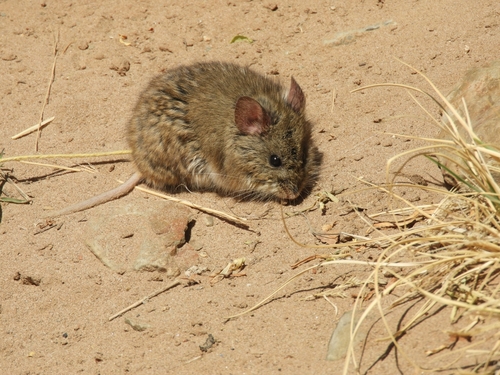
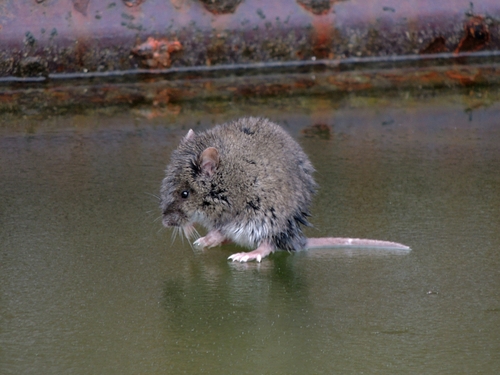
The dorsal fur is typically grayish-brown to pale sandy-brown, providing camouflage against rocky substrates. The ventral surface is whitish to pale gray. The fur is soft and dense. The head is notably flattened compared to many other voles, with small ears partially hidden in the fur and small, dark eyes.
Size
Body length approximately 90–130 mm; tail length approximately 20–40 mm (relatively short, as typical for Alticola). Hind foot length around 15–20 mm.
Weight
Estimated body weight between 20 and 55 g; no significant difference documented between sexes, though data are limited.
Distinctive features
The strongly flattened skull and overall compressed head profile are the most distinctive features separating A. strelzowi from many congeners. It differs from Alticola macrotis (Large-eared Vole) by its smaller, less prominent ears. Compared to Alticola roylei, it tends to have a more compressed cranium and is restricted to the Altai system rather than the Himalayas.
Differences between males and females
Sexual dimorphism is minimal or absent in external appearance, as is typical for Alticola voles. Males and females are similar in size, weight, and coloration.
Behaviour and diet of the Flat-headed Vole
Likely semi-social, possibly living in loose family groups or small colonies centered around suitable rock crevice systems, as observed in related Alticola species. Individuals may share crevice shelters, especially in winter. Social structure details for this species specifically are poorly documented.
When it is active
Primarily active during daylight hours (diurnal) and at twilight (crepuscular), with activity patterns likely adjusted seasonally. Activity is concentrated in morning and late afternoon during warmer months to avoid midday heat.
Diet
Strictly herbivorous. Diet consists of grasses, sedges, forbs, mosses, lichens, and seeds found in alpine and subalpine meadows. It also consumes the bark and twigs of low-growing shrubs. Like other Alticola species, it likely constructs food caches of dried plant material (hay piles) within rock crevices to sustain itself through winter.
Communication
Likely uses high-pitched vocalizations and ultrasonic calls for communication between individuals, as documented in related vole species. Scent marking via glands and urine may be used to demarcate territories or communicate reproductive status. Body postures and tail movements likely serve as visual signals during social encounters.
Interactions with other species
Natural predators likely include raptors (such as golden eagles and Altai falcons), mustelids (weasels, stoats), and snakes in lower-altitude portions of its range. It competes with other small herbivores (pikas, Alticola congeners) for rocky habitats and plant resources. As a herbivore and prey item, it occupies a key intermediate trophic position in alpine ecosystems.
Role in its ecosystem
Functions as an important prey base for montane predators, helping sustain food webs in high-altitude Altai ecosystems. Its hay-caching behavior may influence local plant community composition by selective harvesting. As a small herbivore, it contributes to nutrient cycling through grazing and waste deposition in rocky alpine habitats.
Reproduction and lifecycle
Breeding season likely spans late spring through early autumn (approximately May–September), corresponding to the period of snow-free conditions and peak food availability. Gestation is estimated at approximately 19–22 days, typical for cricetid rodents. Litter sizes are probably 3–6 pups, with multiple litters possible per season.
Raising the young
As in other small cricetid rodents, the female is the primary caregiver, nursing and protecting pups in a nest concealed within a rock crevice. Pups develop rapidly and are weaned at approximately 2–3 weeks of age. Young may become independent before the end of the breeding season.
Maturity and lifespan
Sexual maturity is likely reached at 4–6 weeks of age, as is typical for small cricetid voles. Lifespan in the wild is probably 1–2 years, with few individuals surviving more than one winter. Captive longevity data are not available for this species.
Taxonomy and naming of the Flat-headed Vole
Classification
Mammalia > Rodentia > Cricetidae > Alticola > Alticola strelzowi
Subspecies
No widely recognized subspecies are currently confirmed, though some regional populations have been discussed. Taxonomic revision of the genus Alticola is ongoing and may affect subspecific designations.
Scientific synonyms
Arvicola strelzowi Kastschenko, 1899; formerly sometimes placed within a broader concept of Alticola argentatus. The species was described by Kastschenko and later reassigned to the genus Alticola.
What research says
Recent studies
Recent phylogeographic studies of the Alticola genus using molecular markers have helped clarify species boundaries and relationships within the group, though A. strelzowi remains one of the less thoroughly studied members. Ongoing taxonomic revisions of Cricetidae continue to refine the genus Alticola, potentially affecting the recognized range and status of this species.
Genome and DNA
Chromosome number has not been widely published for this species specifically; related Alticola species often have karyotypes of 2n = 54 or similar. Genetic studies on the Alticola genus suggest complex phylogeographic structure across the Altai region, but targeted genomic studies on A. strelzowi are lacking.
Compared with similar species
Alticola strelzowi is closely related to other Altai-region mountain voles such as Alticola semicanus (Gray-sided Vole) and Alticola argentatus (Silver Mountain Vole). It is distinguished from these by its more pronounced skull flattening and distinct geographic range. Compared to common meadow voles (Microtus), Alticola species are generally adapted to rockier, more extreme alpine conditions and tend to have flatter heads and denser fur.
The Flat-headed Vole and people
The Flat-headed Vole's skull is so uniquely compressed that it can slip into rock crevices only millimeters wider than its body, making it virtually impossible for most predators to follow. Like pikas, it cuts and dries vegetation into 'haystacks' stored within crevices — acting as a tiny alpine farmer preparing for winter. Despite living in one of the world's most challenging mountain environments, it does not hibernate, staying active even under deep snow at temperatures well below freezing.
Where and how to see it
The best chance to observe this species is during summer months (June–August) in the rocky alpine zones of the Russian Altai, particularly within the Altaisky Zapovednik or along talus slopes above 1,500 m. Patience and quiet observation near boulder fields during early morning or late afternoon hours offer the best opportunities. Bring binoculars, as individuals tend to remain close to crevices and retreat rapidly when disturbed.
Risks to humans
No notable risk to humans under normal circumstances. Like all wild rodents, it may carry ectoparasites or zoonotic pathogens, so handling without protective measures is inadvisable. Encounters in the wild are extremely rare given its shy nature and remote habitat.
Countries where the Flat-headed Vole is recorded
The 4 countries named in the range description of its IUCN Red List assessment.
Questions about the Flat-headed Vole
Where does the Flat-headed Vole live?
The Flat-headed Vole is recorded in China, Kazakhstan, Mongolia and Russia across Asia and Europe. These countries come from the range description of its IUCN Red List assessment, and they are what place the species on the interactive map.
Is the Flat-headed Vole endangered?
The IUCN Red List assesses the Flat-headed Vole as Least Concern. The species is widespread and abundant enough not to qualify for any threatened category. It does not mean the species is safe forever, only that nothing in the current data raises an alarm.
How many are left in the wild?
No precise global population estimate is available. This figure comes from the species assessment on the IUCN Red List; population estimates for wild mammals are ranges, not counts, and are revised at each assessment.
What habitat does the Flat-headed Vole live in?
Primary habitat consists of rocky outcrops, boulder fields (talus slopes), stony alpine and subalpine meadows, and cliff faces in mountainous regions.
What is the scientific name of the Flat-headed Vole?
The Flat-headed Vole is Alticola strelzowi, in the family Cricetidae, order Rodentia.
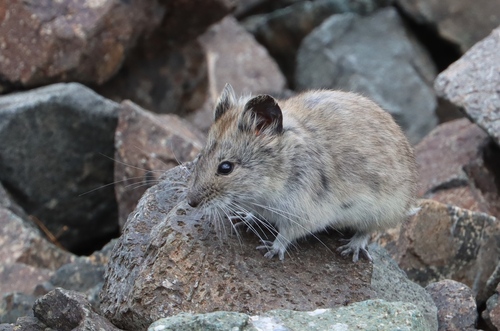
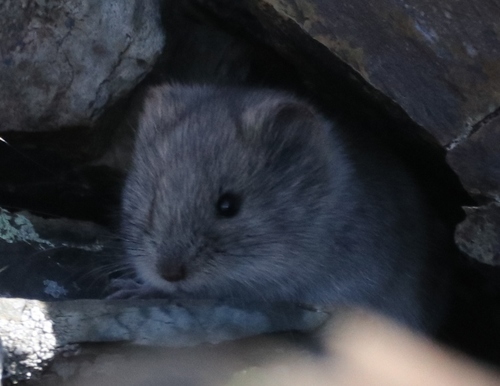
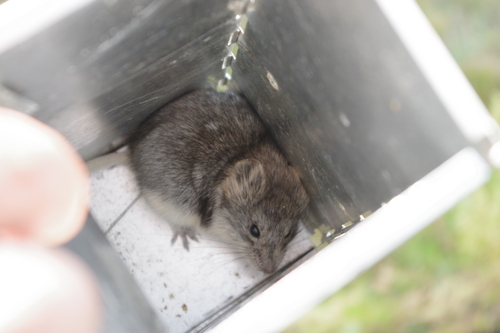
Other species in the genus Alticola

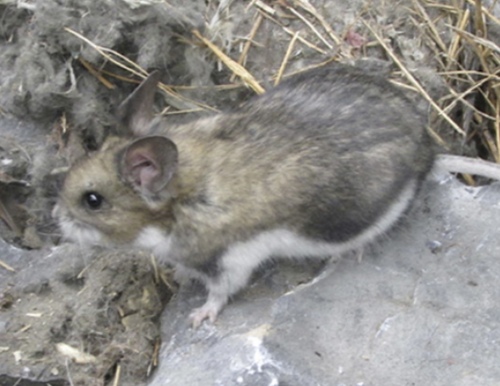
Other species in the family Cricetidae
Sources
Conservation status, range description and population estimate come from the IUCN Red List assessment for Alticola strelzowi. Countries are derived from that range description, not from a mapped country list. Last refreshed on .
The distribution map is drawn from the IUCN Red List spatial data compiled in 2008. IUCN (International Union for Conservation of Nature)