
Afghan Vole
Microtus afghanus
Red List assessment
Least Concernon the IUCN Red List
- EXExtinct
- EWExtinct in the Wild
- CRCritically Endangered
- ENEndangered
- VUVulnerable
- NTNear Threatened
- LCLeast Concern
The Afghan Vole is recorded in 3 countries across Asia. The IUCN Red List assesses the Afghan Vole as Least Concern. No precise global population estimate exists, but the species is considered common within its range with a presumed stable population trend.
- Family
- Cricetidae
- Order
- Rodentia
- Genus
- Microtus
- Countries recorded
- 3
- Continents
- Asia
- Red List category
- Least Concern
- Data updated
- August 9, 2026
What is the Afghan Vole?
The Afghan Vole is a small burrowing rodent native to the mountainous and semi-arid regions of Central Asia, particularly Afghanistan. It belongs to the diverse Microtus genus, known for its ecological importance as prey and soil engineers. This species is remarkable for its adaptation to arid, rocky, and high-altitude terrains where few other small mammals thrive. It remains relatively understudied compared to other vole species due to the difficulty of fieldwork in its native range.
Where does the Afghan Vole live?
Afghanistan, northern Pakistan, Tajikistan, and adjacent parts of Central Asia
Found primarily in Afghanistan, extending into northern Pakistan, Tajikistan, and possibly bordering regions of Central Asia. Its range is centered on the mountainous Hindu Kush and adjacent foothill systems.
Altitude and depth
Typically found between 1000 and 3500 meters elevation, with some populations recorded at higher alpine zones.
Seasonal movements
Does not undergo true hibernation but reduces surface activity during harsh winters, relying on stored food and burrow insulation. Breeding activity increases significantly in spring and summer months.
Habitat of the Afghan Vole
Inhabits semi-desert steppes, rocky slopes, alpine meadows, and cultivated field margins. Often found near water sources such as streams or irrigation channels in otherwise arid landscapes.
Adaptations to its environment
Possesses dense fur for insulation against cold mountain climates and strong forelimbs adapted for digging burrow systems. Its compact body shape and small ears reduce heat loss in cold, exposed environments.
Conservation status and numbers
Listed as Least Concern (LC) by the IUCN due to its relatively wide distribution and presumed stable population, though data on population trends remain limited.
Estimated population
No precise global population estimate exists, but the species is considered common within its range with a presumed stable population trend.
What threatens the Afghan Vole?
Habitat degradation from overgrazing, agricultural expansion, and human settlement in mountain valleys pose localized threats. Climate change affecting alpine and semi-arid ecosystems could also impact future population stability.
Diseases and parasites
Susceptible to various ectoparasites such as fleas and mites, as well as potential reservoirs for zoonotic pathogens common in Central Asian rodent populations.
What is being done to protect it?
No specific conservation programs target this species directly, as it is not currently considered threatened. General habitat protection in Central Asian protected areas may incidentally benefit the species.
Recommended actions
Increased field surveys to better assess population density and distribution, along with monitoring of habitat changes due to agriculture and climate shifts, are recommended.
What the Afghan Vole looks like
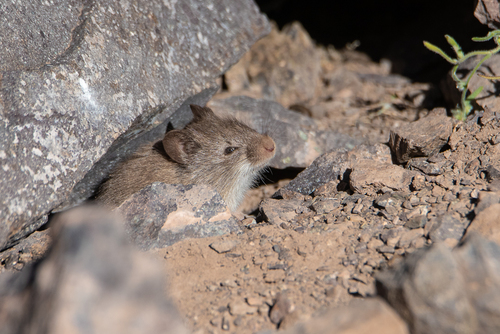
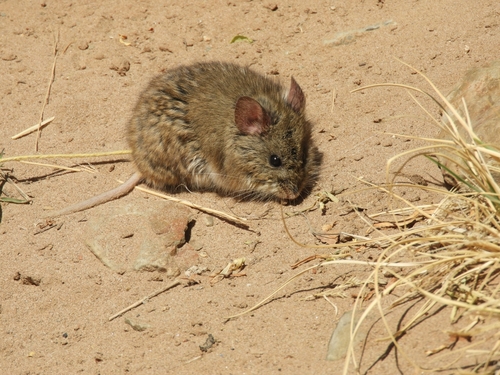
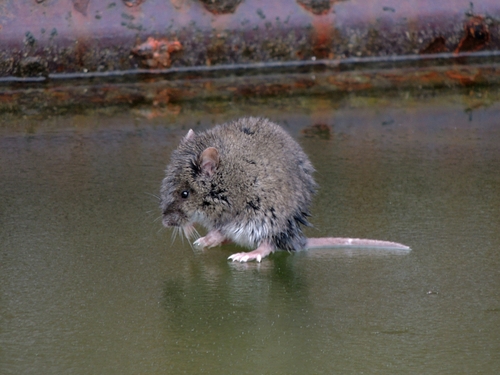
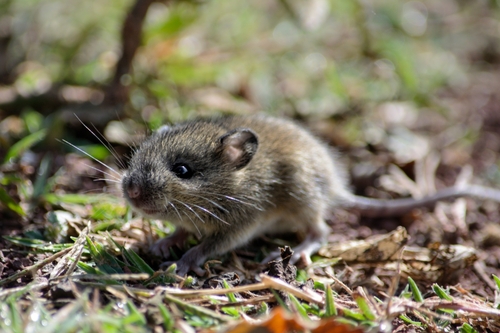
The fur is typically grayish-brown to sandy brown on the dorsal side, with paler, grayish-white underparts. It has small rounded ears, short legs, and a relatively short tail compared to many other vole species.
Size
Body length typically ranges from 9 to 12 cm, with a tail length of 2.5 to 4 cm.
Weight
Adults generally weigh between 20 and 40 grams.
Distinctive features
Distinguished from related Microtus species by subtle differences in skull morphology, molar tooth pattern, and slightly shorter tail proportions relative to body length.
Differences between males and females
Minimal sexual dimorphism; males and females are similar in size and coloration, though males may be marginally larger.
Behaviour and diet of the Afghan Vole
Generally solitary or living in small family groups within burrow systems, though some clustering may occur near favorable food and water sources.
When it is active
Primarily active during the day (diurnal) with peak activity in early morning and late afternoon, though some crepuscular activity has been noted.
Diet
Herbivorous, feeding mainly on grasses, herbs, seeds, and roots found in its steppe and mountain habitats. Diet shifts seasonally based on plant availability.
Communication
Communicates through scent marking of burrows and trails, along with soft vocalizations for social interaction and alarm signaling.
Interactions with other species
Serves as prey for raptors, foxes, and small mustelids, while its burrowing activity can influence soil structure and plant community dynamics. May compete with other small rodents for food resources.
Role in its ecosystem
Plays an important ecological role as a primary consumer and prey species, contributing to nutrient cycling and soil aeration through its burrowing behavior.
Reproduction and lifecycle
Breeding occurs mainly in spring and summer, with females producing multiple litters per year. Gestation lasts approximately 20 days, with litters typically containing 3 to 6 young.
Raising the young
Females provide most parental care, nursing and protecting young within the burrow until weaning at around 2-3 weeks of age. Young become independent shortly after weaning.
Maturity and lifespan
Reaches sexual maturity at around 6-8 weeks of age; typical lifespan in the wild is short, generally less than 1-2 years due to predation and environmental pressures.
Taxonomy and naming of the Afghan Vole
Classification
Class Mammalia > Order Rodentia > Family Cricetidae > Genus Microtus > Species Microtus afghanus
Scientific synonyms
Formerly sometimes classified within Microtus (Blanfordimys) afghanus; occasionally treated as a subspecies of Blanfordimys group voles
What research says
Recent studies
Recent taxonomic studies have focused on clarifying its phylogenetic placement within the Microtus and Blanfordimys groups using molecular genetic techniques.
Compared with similar species
Similar in size and ecology to other Central Asian voles such as Microtus carruthersi, but distinguished by cranial and dental characteristics as well as habitat preference for drier, rockier terrain.
The Afghan Vole and people
The Afghan Vole thrives in some of the harshest, driest mountain terrains where few small mammals can survive. Despite living in politically unstable regions, it remains one of the more resilient small rodent species in Central Asia.
Where and how to see it
Best observed at dawn or dusk in rocky foothill habitats of Afghanistan or Tajikistan, though political and safety constraints make field observation challenging for most researchers and travelers.
Risks to humans
No notable risk to humans, though as with many rodents it could theoretically carry parasites or pathogens of minor public health concern.
Countries where the Afghan Vole is recorded
The 3 countries named in the range description of its IUCN Red List assessment.
Questions about the Afghan Vole
Where does the Afghan Vole live?
The Afghan Vole is recorded in Afghanistan, Pakistan and Tajikistan across Asia. These countries come from the range description of its IUCN Red List assessment, and they are what place the species on the interactive map.
Is the Afghan Vole endangered?
The IUCN Red List assesses the Afghan Vole as Least Concern. The species is widespread and abundant enough not to qualify for any threatened category. It does not mean the species is safe forever, only that nothing in the current data raises an alarm.
How many are left in the wild?
No precise global population estimate exists, but the species is considered common within its range with a presumed stable population trend. This figure comes from the species assessment on the IUCN Red List; population estimates for wild mammals are ranges, not counts, and are revised at each assessment.
What habitat does the Afghan Vole live in?
Inhabits semi-desert steppes, rocky slopes, alpine meadows, and cultivated field margins.
What is the scientific name of the Afghan Vole?
The Afghan Vole is Microtus afghanus, in the family Cricetidae, order Rodentia.
Other species in the genus Microtus
Other species in the family Cricetidae
Sources
Conservation status, range description and population estimate come from the IUCN Red List assessment for Microtus afghanus. Countries are derived from that range description, not from a mapped country list. Last refreshed on .
The distribution map is drawn from the IUCN Red List spatial data compiled in 2008. IUCN (International Union for Conservation of Nature)