
Andean Akodont
Abrothrix andinus
Red List assessment
Least Concernon the IUCN Red List
- EXExtinct
- EWExtinct in the Wild
- CRCritically Endangered
- ENEndangered
- VUVulnerable
- NTNear Threatened
- LCLeast Concern
The Andean Akodont is recorded in 4 countries across South America. The IUCN Red List assesses the Andean Akodont as Least Concern. No precise global population estimate exists, but the species is considered common and stable within its range.
- Family
- Cricetidae
- Order
- Rodentia
- Genus
- Abrothrix
- Countries recorded
- 4
- Continents
- South America
- Red List category
- Least Concern
- Data updated
- August 9, 2026
What is the Andean Akodont?
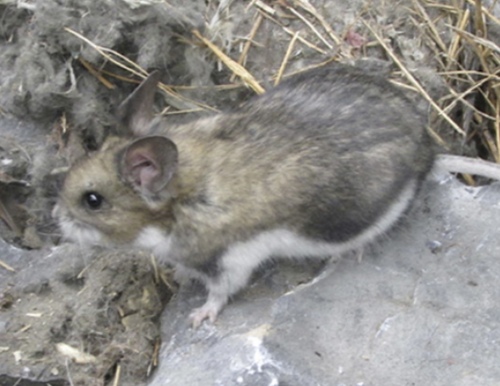
The Andean Akodont is a small rodent native to the high-altitude regions of the central Andes in South America. It is a member of the diverse sigmodontine radiation and is notable for its adaptation to cold, high-elevation puna and altiplano habitats. This species is widespread and common within its range, making it an important small mammal in Andean grassland ecosystems. It belongs to a genus (Abrothrix) known for its ecological diversity across southern South America.
Where does the Andean Akodont live?
Argentina, Chile, Bolivia, and Peru, primarily in the high Andes
Distributed along the central Andes from southern Peru and western Bolivia through northern Chile and northwestern Argentina, including the Atacama and Puna de Atacama regions.
Altitude and depth
Typically found at elevations between 2,000 and 5,000 meters above sea level, with some populations recorded even higher in extreme puna habitats.
Seasonal movements
No true migration or hibernation; activity and reproduction may shift seasonally in response to temperature and precipitation, with peaks in warmer, wetter months.
Habitat of the Andean Akodont
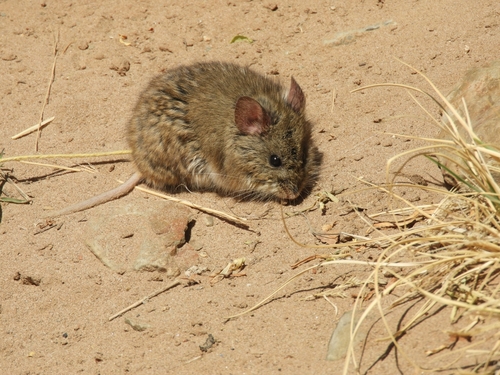
Found mainly in high-altitude puna grasslands, altiplano steppe, and rocky or shrubby areas with sparse vegetation. It also occupies semi-arid scrublands and areas near wetlands or bofedales at high elevation.
Adaptations to its environment
Possesses dense fur for insulation against cold high-altitude temperatures and physiological adaptations for hypoxia tolerance. It is also behaviorally flexible, using burrows and rock crevices to escape extreme temperature fluctuations.
Conservation status and numbers
Listed as Least Concern (LC) by the IUCN due to its wide distribution, presumed large population, and tolerance of a variety of high-altitude habitats.
Estimated population
No precise global population estimate exists, but the species is considered common and stable within its range.
What threatens the Andean Akodont?
No major threats currently identified; localized habitat degradation from mining, livestock grazing, and climate change in high-altitude ecosystems could pose future risks.
Diseases and parasites
Known to host various ectoparasites (fleas, mites) and endoparasites typical of wild rodents, though specific disease studies are limited.
What is being done to protect it?
No specific conservation programs target this species directly, though it benefits from protected areas within its Andean range, such as national parks and reserves in Chile, Argentina, and Bolivia.
Recommended actions
Continued monitoring of high-altitude habitats, especially in areas affected by mining and climate change, is recommended to ensure population stability.
What the Andean Akodont looks like
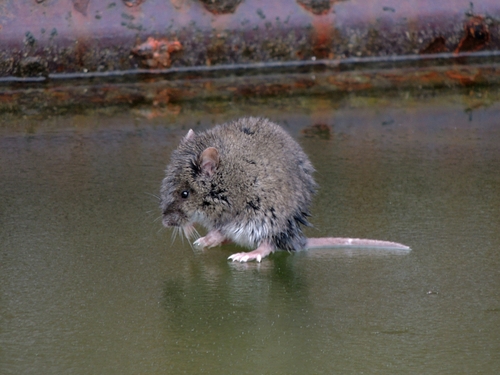
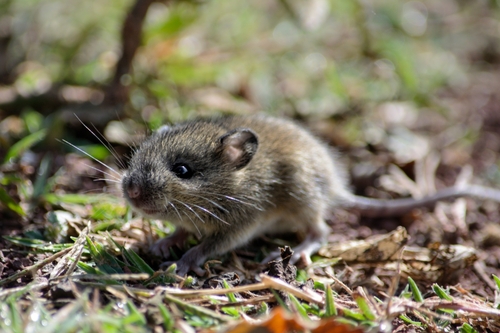
Has soft, dense grayish-brown to yellowish-brown dorsal fur, with lighter, grayish underparts. Its body is compact and rounded, typical of small akodontine rodents, with a moderately long tail.
Size
Body length (head-body) typically ranges from 8 to 11 cm, with a tail length of about 6 to 9 cm.
Weight
Weighs approximately 15 to 30 grams, with little difference between males and females.
Distinctive features
Distinguished from related Abrothrix species by subtle differences in skull morphology, fur coloration, and tail-to-body ratio, often requiring genetic or dental analysis for precise identification.
Behaviour and diet of the Andean Akodont
Generally solitary or found in loose, non-territorial groups; social structure is not strongly hierarchical.
When it is active
Primarily nocturnal to crepuscular, though some daytime activity may occur in cooler high-altitude conditions.
Diet
Omnivorous, feeding on seeds, grasses, herbaceous plants, and occasionally insects or other small invertebrates.
How it feeds and hunts
Forages opportunistically on the ground among vegetation and rocky substrates, using scent and tactile cues to locate food.
Communication
Communicates primarily through scent marking and tactile signals; vocalizations are limited and mainly used in close-range or distress contexts.
Interactions with other species
Serves as prey for Andean foxes, raptors (such as owls and hawks), and small carnivorous mammals; may compete with other small rodents for food and burrow space.
Role in its ecosystem
Plays a role in seed dispersal and soil aeration through burrowing, and serves as an important prey base for Andean predators, contributing to high-altitude food web stability.
Reproduction and lifecycle
Breeding occurs mainly during the warmer months (spring to summer); gestation lasts about 22-25 days, with litters typically of 3 to 6 pups.
Raising the young
Females provide most parental care, nursing and protecting young in burrows until weaning, which occurs after a few weeks.
Maturity and lifespan
Reaches sexual maturity at around 2-3 months; lifespan in the wild is typically less than 2 years due to predation and harsh environmental conditions.
Taxonomy and naming of the Andean Akodont
Classification
Mammalia > Rodentia > Cricetidae > Abrothrix > Abrothrix andinus
Subspecies
Several subspecies have been proposed across the Andean range (e.g., A. a. andinus, A. a. lanosus, A. a. illutea), though their taxonomic validity is debated and some are now considered distinct species or synonyms.
Scientific synonyms
Akodon andinus (former genus placement); Akodon lanosus and other akodontine names have been used historically for related populations.
What research says
Recent studies
Recent phylogenetic research has focused on resolving taxonomic uncertainties within the Abrothrix genus, revealing that some populations previously classified as A. andinus may represent distinct cryptic species.
Genome and DNA
Genetic studies within the genus Abrothrix have been used to clarify species boundaries and phylogenetic relationships, though specific chromosome counts for A. andinus are not widely documented.
Compared with similar species
Similar to other Abrothrix species like Abrothrix olivaceus, but distinguished by its preference for higher elevations and slightly different cranial features.
The Andean Akodont and people
This tiny rodent can survive at elevations above 4,500 meters, among the highest recorded for small mammals. It is remarkably adaptable to the extreme temperature swings of the Andean altiplano, tolerating both freezing nights and warm days.
Where and how to see it
Best observed at dusk or dawn in puna grasslands of northern Chile or northwestern Argentina, particularly in protected high-altitude reserves; patience and quiet observation near rocky outcrops increase chances of sighting.
Risks to humans
No notable risk to humans.
Countries where the Andean Akodont is recorded
The 4 countries named in the range description of its IUCN Red List assessment.
Questions about the Andean Akodont
Where does the Andean Akodont live?
The Andean Akodont is recorded in Argentina, Bolivia, Chile and Peru across South America. These countries come from the range description of its IUCN Red List assessment, and they are what place the species on the interactive map.
Is the Andean Akodont endangered?
The IUCN Red List assesses the Andean Akodont as Least Concern. The species is widespread and abundant enough not to qualify for any threatened category. It does not mean the species is safe forever, only that nothing in the current data raises an alarm.
How many are left in the wild?
No precise global population estimate exists, but the species is considered common and stable within its range. This figure comes from the species assessment on the IUCN Red List; population estimates for wild mammals are ranges, not counts, and are revised at each assessment.
What habitat does the Andean Akodont live in?
Found mainly in high-altitude puna grasslands, altiplano steppe, and rocky or shrubby areas with sparse vegetation.
What is the scientific name of the Andean Akodont?
The Andean Akodont is Abrothrix andinus, in the family Cricetidae, order Rodentia.
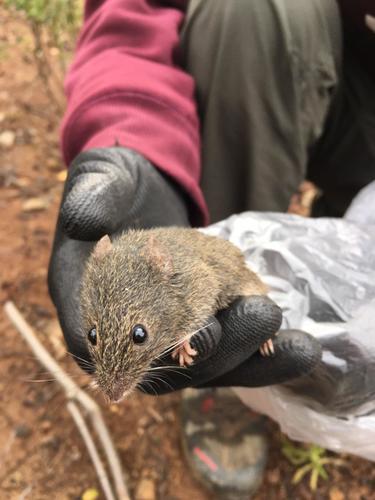
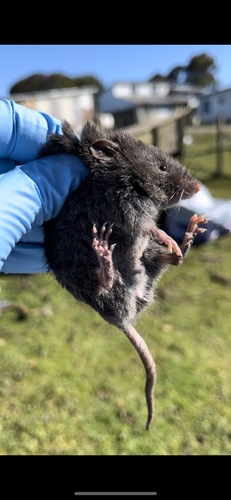
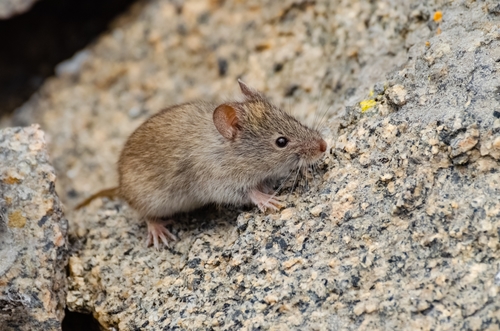
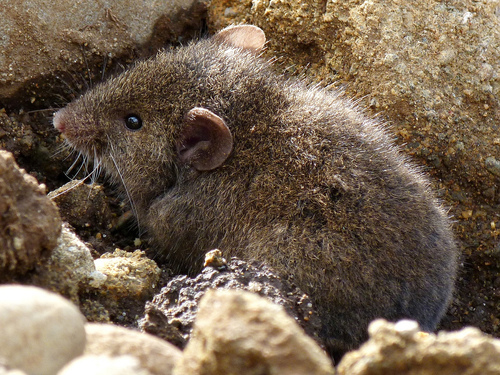
Other species in the genus Abrothrix

Other species in the family Cricetidae
Sources
Conservation status, range description and population estimate come from the IUCN Red List assessment for Abrothrix andinus. Countries are derived from that range description, not from a mapped country list. Last refreshed on .
The distribution map is drawn from the IUCN Red List spatial data compiled in 2008. IUCN (International Union for Conservation of Nature)