
African Grass Rat
Arvicanthis niloticus
Red List assessment
Least Concernon the IUCN Red List
- EXExtinct
- EWExtinct in the Wild
- CRCritically Endangered
- ENEndangered
- VUVulnerable
- NTNear Threatened
- LCLeast Concern
The African Grass Rat is recorded in 13 countries across Africa. The IUCN Red List assesses the African Grass Rat as Least Concern. No precise global estimate exists; the species is considered abundant and widespread with a stable or locally fluctuating population trend.
- Family
- Muridae
- Order
- Rodentia
- Genus
- Arvicanthis
- Countries recorded
- 13
- Continents
- Africa
- Red List category
- Least Concern
- Data updated
- August 9, 2026
What is the African Grass Rat?
The African Grass Rat is a medium-sized, diurnal murid rodent found across sub-Saharan Africa and the Nile Valley. It inhabits open grasslands, savannas, floodplains, and agricultural fields, often forming dense local populations. It is notably one of the very few diurnal rodents among the Murinae, making it a valuable model organism for chronobiology and circadian rhythm research. It is also prone to spontaneously developing type 2 diabetes under high-carbohydrate diets, further cementing its importance in biomedical science.
Where does the African Grass Rat live?
Sub-Saharan Africa and the Nile Valley; widespread from Senegal and Mauritania east to Ethiopia and Somalia, south to Tanzania and Uganda; also present in Egypt along the Nile Delta
Distributed broadly across sub-Saharan Africa: from Senegal and Mauritania through Mali, Niger, Chad, Sudan, Egypt (Nile Delta and Valley), Ethiopia, Somalia, Kenya, Uganda, Rwanda, and Tanzania. It is particularly abundant along the Nile River corridor and in the Ethiopian highlands.
Altitude and depth
Typically found from sea level up to approximately 2,500 m elevation; most abundant at low to mid-altitudes (0–1,500 m) but populations in Ethiopia have been recorded up to 2,500 m in highland grasslands.
Seasonal movements
No true hibernation or migration. Activity and population density tend to peak during and after the rainy season when grass seed abundance is highest. Breeding intensity can increase with rainfall and food availability, leading to seasonal population booms.
Habitat of the African Grass Rat
Primarily inhabits grassy savannas, Nile floodplains, riverbanks, wetland margins, and agricultural fields including grain crops. It favors areas with dense ground-level vegetation for cover and nesting, and readily adapts to human-modified landscapes such as irrigated farmland and road verges.
Adaptations to its environment
Its diurnal activity pattern is a key adaptation distinguishing it from most murids, thought to reduce competition with nocturnal rodents. It has well-developed burrow systems for thermoregulation and predator avoidance. Its kidneys are adapted for water conservation in semi-arid environments, and its incisors are robust enough to process hard grass seeds and stems.
Conservation status and numbers
Least Concern (LC) on the IUCN Red List. The species has a very large range, is abundant and common throughout, shows no evidence of rapid population decline, and tolerates habitat modification well. It is not considered to face any major threats threatening its overall survival.
Estimated population
No precise global estimate exists; the species is considered abundant and widespread with a stable or locally fluctuating population trend. Densities can reach hundreds of individuals per hectare in favorable agricultural habitats.
What threatens the African Grass Rat?
Local population control campaigns due to its status as an agricultural pest (crop raiding of cereals, sorghum, and maize). Rodenticide use in farming areas can cause localized population declines. Habitat loss through large-scale conversion of natural grasslands is a minor long-term concern.
Diseases and parasites
Hosts a range of ectoparasites (fleas, ticks, mites) and endoparasites (helminths, protozoa). It is implicated as a reservoir host for various pathogens including Bartonella spp. and possibly some arboviruses. It also supports Anopheles mosquito feeding, making it tangentially relevant to malaria ecology. In the laboratory, captive colonies can develop spontaneous type 2 diabetes.
What is being done to protect it?
No specific conservation programs are dedicated to this species due to its Least Concern status. It occurs within numerous protected areas across its range, including national parks in Ethiopia, Kenya, and Uganda. Ironically, control measures rather than conservation measures are more often applied.
Recommended actions
No urgent conservation actions are required. Monitoring of populations in areas of intensive rodenticide use is advisable. Research into sustainable pest management should be encouraged to avoid broader ecosystem impacts when controlling this species on farmland.
What the African Grass Rat looks like
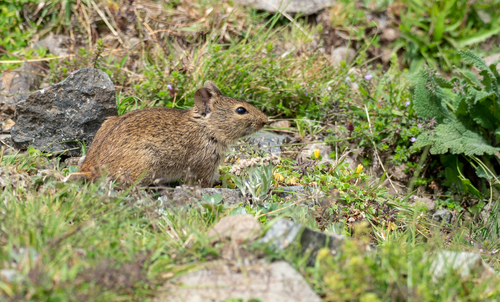
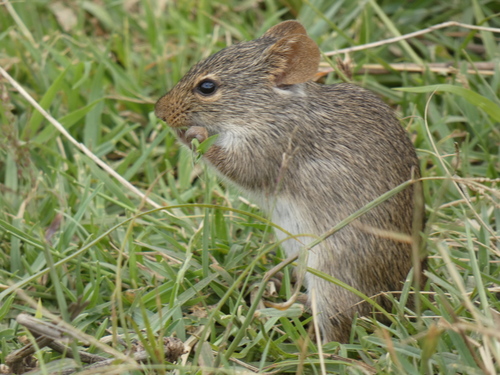
The dorsal fur is coarse and grizzled brownish-gray to yellowish-brown, with darker streaks running along the back produced by black-tipped guard hairs interspersed with buff underfur. The ventral surface is paler, ranging from whitish-gray to buff. The tail is bicolored (darker above, paler below), and the ears are moderately large and rounded.
Size
Head-body length: 12–20 cm; tail length: 9–15 cm (usually shorter than the body). Shoulder height is approximately 3–4 cm. Total length typically 21–35 cm.
Weight
Adults typically weigh between 60 and 170 g. Males and females are of similar size, though males may average slightly heavier.
Distinctive features
Distinguished from closely related Arvicanthis species (e.g., A. abyssinicus, A. ansorgei) by its slightly larger size, coarser pelage texture, and broader skull morphology. Compared to common Rattus species sharing its habitat, it has a shorter, less scaly tail and a more grizzled, coarser coat.
Differences between males and females
Sexual dimorphism is minimal. Males are marginally larger and heavier on average, but the difference is not pronounced enough to be reliably distinguished in the field.
Behaviour and diet of the African Grass Rat
Lives in social groups or loose colonies centered around burrow systems. Groups typically consist of a dominant male, several females, and juveniles. Social interactions include mutual grooming, scent marking of territory, and communal nesting. Population densities can be very high in resource-rich areas.
When it is active
Strongly diurnal, with peak activity during the morning and late afternoon hours to avoid midday heat. This is one of the most striking behavioral traits of this species among murids, and it maintains activity synchrony with the light-dark cycle very precisely.
Diet
Primarily herbivorous. Diet consists of grass seeds, green shoots, stems, roots, and leaves. In agricultural areas, it feeds heavily on cultivated cereals (sorghum, millet, wheat, maize) and can become a significant pest. Occasionally consumes insects, larvae, and other invertebrates for protein supplementation.
How it feeds and hunts
Forages by moving through grass swards, clipping stems with its incisors, and collecting seeds from seed heads. It may cache food in or near burrow entrances. Being diurnal, it relies heavily on vision as well as olfaction to locate food resources.
Communication
Communicates through ultrasonic vocalizations (especially between pups and mothers), squealing calls when threatened, and extensive scent marking using urine and specialized scent glands. Tail-rattling and upright posture are used as threat or alarm displays.
Interactions with other species
Major predators include raptors (e.g., barn owls, African hawk-eagles), snakes (e.g., puff adders, African rock pythons), mongooses, and small carnivores. Competes with other rodents (Mastomys, Rattus) for food and burrow sites. Acts as a host for fleas, mites, and ticks, and serves as a food base for a broad predator community.
Role in its ecosystem
Serves as a key prey species supporting numerous predator populations across African grassland ecosystems. Its burrowing activity aerates soil and contributes to nutrient cycling. As a seed consumer, it can influence grass and plant community composition. In agricultural zones it can be a significant pest causing crop losses.
Reproduction and lifecycle
Breeding can occur year-round but peaks during and after the rainy season. Gestation lasts approximately 21–25 days. Litter size ranges from 2 to 8 pups (average 4–6). Females can produce multiple litters per year under favorable conditions, allowing rapid population growth.
Raising the young
The female is the primary caregiver, nursing and protecting the pups in the burrow nest. Pups are born altricial (blind and hairless) and open their eyes at around 10–12 days. Weaning occurs at approximately 3 weeks. Males may remain in proximity but do not provide direct care.
Maturity and lifespan
Sexual maturity is reached at approximately 5–7 weeks of age. Lifespan in the wild is typically 1–2 years due to high predation pressure. In captivity, individuals can live up to 3–4 years.
Taxonomy and naming of the African Grass Rat
Classification
Mammalia > Rodentia > Muridae > Arvicanthis > Arvicanthis niloticus
Subspecies
Several subspecies have been proposed historically, including A. n. niloticus (Nile Valley, Egypt/Sudan), A. n. testicularis, and A. n. somalicus, though subspecific boundaries remain debated and many former subspecies have been elevated to full species within the genus Arvicanthis.
Scientific synonyms
Mus niloticus Desmarest, 1822 (original description); Arvicola niloticus; Mus (Arvicanthis) niloticus; formerly confused with Arvicanthis abyssinicus and A. ansorgei before genus revision.
What research says
Recent studies
Recent studies have focused on A. niloticus as a model for understanding the genetic and molecular basis of diurnality in mammals, in contrast to nocturnal lab mice and rats. Research published in the 2010s–2020s has identified differences in retinal photoreceptor distributions and suprachiasmatic nucleus gene expression compared to nocturnal murids. Additionally, studies continue examining its role as a spontaneous model for type 2 diabetes.
Genome and DNA
Diploid chromosome number: 2n = 56. The genome of Arvicanthis niloticus has been studied in the context of circadian rhythm genetics and type 2 diabetes susceptibility; it is one of very few diurnal murid species with genomic resources available for comparative chronobiology research.
Compared with similar species
Most closely related to other Arvicanthis species such as A. abyssinicus (Abyssinian Grass Rat) and A. ansorgei (Ansorg's Grass Rat), which occupy overlapping or adjacent ranges but differ in pelage details and skull morphology. Compared to the distantly related common brown rat (Rattus norvegicus), A. niloticus is smaller, shorter-tailed, coarser-furred, and strictly diurnal rather than nocturnal.
The African Grass Rat and people
The African Grass Rat is one of the very few diurnal murid rodents in the world, making it a unique subject for studying how mammalian body clocks work differently in day-active vs. night-active species. Captive individuals spontaneously develop type 2 diabetes when fed high-glycemic diets, making them a naturally occurring animal model for human metabolic disease research. Local population explosions can be so dramatic after good rainy seasons that they create rodent 'plagues' in agricultural regions, temporarily overwhelming farmers' control efforts.
Where and how to see it
Best observed during daylight hours in open grassland habitats, along agricultural field margins, or near riverbanks in Ethiopia, Sudan, and Kenya. The Ethiopian Rift Valley, the shores of Lake Awash, and irrigated farmlands near Khartoum are particularly productive sites. Morning and late afternoon are ideal; a slow, quiet approach is recommended as individuals are alert to movement.
Risks to humans
Low direct risk to humans. May bite if handled. As a potential reservoir for some zoonotic pathogens and ectoparasites (fleas, ticks), there is a minor indirect health risk in areas of high population density. Its primary impact on humans is economic, through crop damage in agricultural zones.
Human uses
Widely used as a laboratory animal model in biomedical research, particularly for circadian rhythm studies and type 2 diabetes research. Occasionally consumed as bushmeat in some rural African communities. Considered an agricultural pest in grain-farming regions, leading to active rodent control programs. Not commercially farmed or traded for the pet industry.
Myths and legends
No major documented myths or legends are specifically associated with this species. In some agricultural communities along the Nile, mass rodent outbreaks have historically been interpreted as omens or divine punishments, and rodent pests in general feature in ancient Egyptian records as agricultural adversaries.
Countries where the African Grass Rat is recorded
The 13 countries named in the range description of its IUCN Red List assessment.
Questions about the African Grass Rat
Where does the African Grass Rat live?
The African Grass Rat is recorded in Chad, Egypt, Ethiopia, Kenya and Mali, among 13 countries in total across Africa. These countries come from the range description of its IUCN Red List assessment, and they are what place the species on the interactive map.
Is the African Grass Rat endangered?
The IUCN Red List assesses the African Grass Rat as Least Concern. The species is widespread and abundant enough not to qualify for any threatened category. It does not mean the species is safe forever, only that nothing in the current data raises an alarm.
How many are left in the wild?
No precise global estimate exists; the species is considered abundant and widespread with a stable or locally fluctuating population trend. This figure comes from the species assessment on the IUCN Red List; population estimates for wild mammals are ranges, not counts, and are revised at each assessment.
What habitat does the African Grass Rat live in?
Primarily inhabits grassy savannas, Nile floodplains, riverbanks, wetland margins, and agricultural fields including grain crops.
What is the scientific name of the African Grass Rat?
The African Grass Rat is Arvicanthis niloticus, in the family Muridae, order Rodentia.
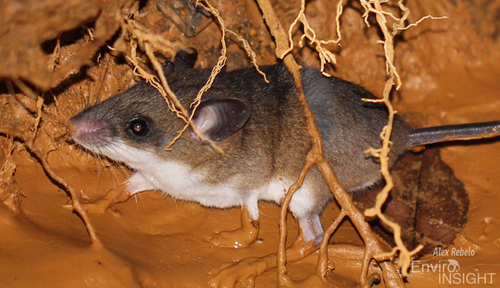
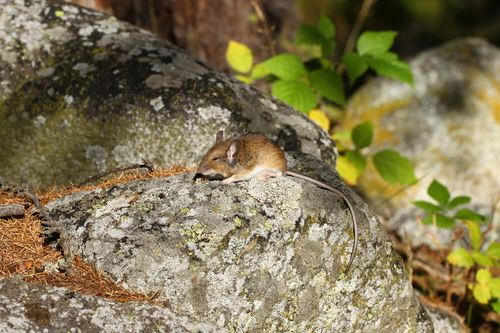
Other species in the genus Arvicanthis
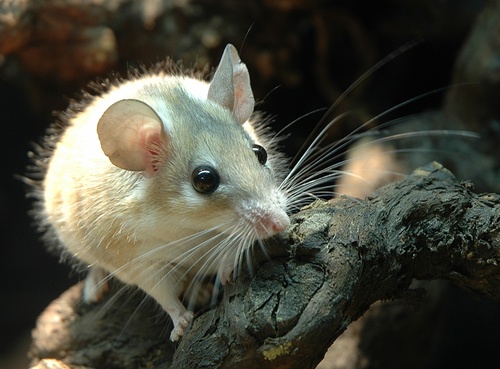
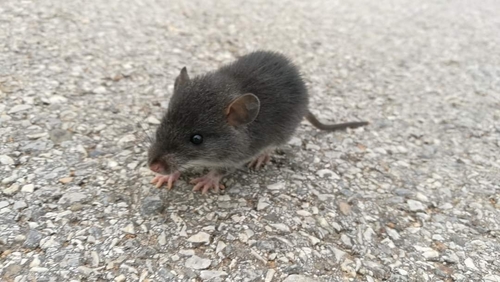
Other species in the family Muridae
Sources
Conservation status, range description and population estimate come from the IUCN Red List assessment for Arvicanthis niloticus. Countries are derived from that range description, not from a mapped country list. Last refreshed on .
The distribution map is drawn from the IUCN Red List spatial data compiled in 2008. IUCN (International Union for Conservation of Nature)