
Nairobi Grass Rat
Arvicanthis nairobae
Red List assessment
Least Concernon the IUCN Red List
- EXExtinct
- EWExtinct in the Wild
- CRCritically Endangered
- ENEndangered
- VUVulnerable
- NTNear Threatened
- LCLeast Concern
The Nairobi Grass Rat is recorded in 2 countries across Africa. The IUCN Red List assesses the Nairobi Grass Rat as Least Concern. No precise global population estimate is available.
- Family
- Muridae
- Order
- Rodentia
- Genus
- Arvicanthis
- Countries recorded
- 2
- Continents
- Africa
- Red List category
- Least Concern
- Data updated
- August 9, 2026
What is the Nairobi Grass Rat?
The Nairobi Grass Rat is a medium-sized murid rodent endemic to East Africa, named after Nairobi, Kenya, the vicinity of its type locality. It belongs to the genus Arvicanthis, a group of diurnal African grass rats that are ecologically important in open savanna and grassland ecosystems. Unlike the majority of rodents, Arvicanthis species are primarily active during the day, making them unusually visible among small mammals. A. nairobae is notable as a relatively range-restricted species within a genus that otherwise spans much of sub-Saharan Africa.
Where does the Nairobi Grass Rat live?
East Africa, primarily Kenya (especially the central highlands and surroundings of Nairobi) and possibly adjacent parts of northern Tanzania.
Confined mainly to Kenya, centered around the Nairobi region and the central Kenyan highlands. The precise range limits remain incompletely documented, but records suggest occurrence across central and possibly southern Kenya; overlap with neighboring Tanzania is uncertain.
Altitude and depth
Typically found between approximately 1,000 and 2,000 meters above sea level, corresponding to the East African highlands where Nairobi is situated.
Seasonal movements
No significant seasonal migrations are documented. Activity levels and reproductive output may increase during the wet seasons (March–May and October–December) when food resources are more abundant.
Habitat of the Nairobi Grass Rat
Primarily occupies open grasslands, grassy savannas, bushland edges, and disturbed areas including agricultural margins and roadsides. It shows a preference for areas with dense herbaceous ground cover interspersed with shrubs. Disturbed and secondary habitats near human settlements are also utilized.
Adaptations to its environment
Well-adapted to open, often arid or semi-arid grasslands with coarse vegetation. Its diurnal activity pattern — rare among rodents — is a key adaptation allowing exploitation of daytime food resources. Dense, coarse fur provides protection from abrasion in dry grassy habitats, and robust incisors allow processing of hard seeds and stems.
Conservation status and numbers
Listed as Least Concern (LC) by the IUCN. The species is assessed as not currently facing major threats sufficient to qualify for a threatened category, though detailed population data are limited. Its tolerance of disturbed and human-modified habitats contributes to its resilience.
Estimated population
No precise global population estimate is available. The population is presumed to be relatively stable given the LC status, though long-term trends have not been rigorously monitored.
What threatens the Nairobi Grass Rat?
Habitat loss through urban expansion (Nairobi is one of Africa's fastest-growing cities), agricultural intensification, and overgrazing by livestock, which degrades the grassland habitats on which the species depends. Rodenticide use in agricultural settings may also pose a localized threat.
Diseases and parasites
Like other Arvicanthis species, likely hosts a range of ectoparasites (fleas, ticks, mites) and endoparasites (helminths, protozoans). Potential reservoir host for certain arboviruses and bacterial pathogens common to East African rodents, though specific studies on A. nairobae are lacking.
What is being done to protect it?
No species-specific conservation programs are known. The species may benefit from protected areas in Kenya such as Nairobi National Park and surrounding wildlife conservancies that preserve grassland habitats.
Recommended actions
Systematic surveys to clarify the species' full range and abundance; monitoring of population trends in the context of rapid urban and agricultural expansion around Nairobi; reduction of indiscriminate rodenticide use in surrounding farmland.
What the Nairobi Grass Rat looks like
Dorsal fur is coarse and spiny in texture, typically grizzled brown to tawny-olive with darker brown mid-dorsal shading. The underparts are paler, often creamy-white to grey. The tail is moderately long, scaly, and bicolored (darker above, paler below). Eyes are relatively large, reflecting the species' diurnal lifestyle.
Size
Body length approximately 12–18 cm (head-body); tail length approximately 10–15 cm. Typical of medium Arvicanthis species.
Weight
Typically 60–120 grams; exact weight range for A. nairobae specifically is not well documented, broadly consistent with congeners.
Distinctive features
Distinguished from the closely related Arvicanthis niloticus by geographic range, subtle cranial morphometric differences, and molecular characters. The coarse, almost bristly dorsal pelage is characteristic of the genus and helps distinguish Arvicanthis from superficially similar murids in the region.
Differences between males and females
Sexual dimorphism is minimal or absent in external appearance, as is typical of Arvicanthis species. Males and females are similar in size and coloration.
Behaviour and diet of the Nairobi Grass Rat
Likely semi-social, similar to other Arvicanthis species that live in loose colonies or family groups sharing burrow systems. Group sizes and social hierarchy details for this specific species are not well documented.
When it is active
Diurnal; active primarily during daylight hours, with peak activity in the morning and late afternoon. This is one of the defining characteristics of the Arvicanthis genus, setting them apart from most other murid rodents.
Diet
Herbivorous to granivorous; diet consists primarily of seeds, grasses, green plant material, and occasionally invertebrates. Like other Arvicanthis, it likely forages widely in open grassland for seeds and succulent plant parts.
How it feeds and hunts
Forages actively on the ground and among grass stems, using its incisors to clip and process grass seeds and stems. No hunting of vertebrate prey is documented; foraging is opportunistic within the grassland matrix.
Communication
Communicates via ultrasonic vocalizations, scent marking using urine and specialized glands, and tactile interactions. Alarm calls may alert group members to aerial or terrestrial predators.
Interactions with other species
Subject to predation by raptors (especially small hawks and owls), snakes, mongooses, and small carnivores. Competes with other granivorous rodents for seed resources. May share grassland habitat with other small rodents such as Mastomys and Mus species.
Role in its ecosystem
Plays a role as a seed disperser and consumer in grassland ecosystems. As prey for multiple predator guilds, it forms an important link in savanna food webs. May cause minor damage to crops when inhabiting agricultural edges.
Reproduction and lifecycle
Likely breeds year-round or semi-continuously with peaks during rainy seasons, as is typical for Arvicanthis in East Africa. Gestation is approximately 21–24 days; litter size is typically 3–7 pups. Multiple litters per year are probable given food availability.
Raising the young
Pups are altricial at birth and are nursed by the mother in a grass-lined burrow nest. Weaning occurs at approximately 3 weeks. Paternal care details are not specifically documented for this species.
Maturity and lifespan
Sexual maturity is likely reached at 6–8 weeks of age, consistent with other Arvicanthis species. Lifespan in the wild is probably 1–2 years; captive individuals of related species can survive 3–4 years.
Taxonomy and naming of the Nairobi Grass Rat
Classification
Mammalia > Rodentia > Muridae > Arvicanthis > Arvicanthis nairobae
Scientific synonyms
Historically sometimes treated as a subspecies or synonym of Arvicanthis niloticus; described by Heller in 1910. May appear in older literature under Arvicanthis niloticus nairobae.
What research says
Recent studies
Molecular systematic studies on the Arvicanthis niloticus species complex have helped clarify the distinctness of A. nairobae as a valid species. Ongoing rodent diversity surveys in Kenya continue to refine our understanding of its range and ecology.
Genome and DNA
Specific chromosomal data for A. nairobae are not well published. Related Arvicanthis species typically have a diploid number of 2n = 62. Molecular phylogenetic studies have been used to distinguish A. nairobae from A. niloticus.
Compared with similar species
Most similar to Arvicanthis niloticus (Nile Grass Rat), from which it is distinguished by geographic distribution, minor morphometric differences, and genetic divergence. Also related to A. neumanni and A. ansorgei of East Africa, but A. nairobae has a more restricted range centered on the Kenyan highlands.
The Nairobi Grass Rat and people
The Nairobi Grass Rat is one of the few rodent species in the world that is predominantly active during the day, allowing researchers to observe its natural behaviors far more easily than most small mammals. The entire genus Arvicanthis has been used in biomedical research as a model for studying diurnal circadian rhythms and metabolic disorders. This species is literally named after one of Africa's largest megacities and can potentially be observed within sight of Nairobi's skyscrapers in remnant grassland patches.
Where and how to see it
Best observed in grassland and savanna habitats around Nairobi National Park, the Nairobi outskirts, and surrounding highland areas. Morning and late afternoon are optimal times due to its diurnal habits. Patience in grassy areas near shrub margins is recommended; the species is relatively bold compared to nocturnal rodents.
Risks to humans
No notable direct risk to humans. As with all wild rodents, there is a theoretical risk of disease transmission (e.g., via ectoparasites or direct contact), so handling wild individuals without protective equipment should be avoided.
Human uses
Not known to be used in traditional medicine or the pet trade to any significant degree. Related Arvicanthis species are occasionally used in biomedical research as diurnal rodent models; A. nairobae itself is not commonly used in laboratories. Locally, it may be perceived as a minor agricultural pest where it inhabits crop margins.
Countries where the Nairobi Grass Rat is recorded
The 2 countries named in the range description of its IUCN Red List assessment.
Questions about the Nairobi Grass Rat
Where does the Nairobi Grass Rat live?
The Nairobi Grass Rat is recorded in Kenya and Tanzania across Africa. These countries come from the range description of its IUCN Red List assessment, and they are what place the species on the interactive map.
Is the Nairobi Grass Rat endangered?
The IUCN Red List assesses the Nairobi Grass Rat as Least Concern. The species is widespread and abundant enough not to qualify for any threatened category. It does not mean the species is safe forever, only that nothing in the current data raises an alarm.
How many are left in the wild?
No precise global population estimate is available. This figure comes from the species assessment on the IUCN Red List; population estimates for wild mammals are ranges, not counts, and are revised at each assessment.
What habitat does the Nairobi Grass Rat live in?
Primarily occupies open grasslands, grassy savannas, bushland edges, and disturbed areas including agricultural margins and roadsides.
What is the scientific name of the Nairobi Grass Rat?
The Nairobi Grass Rat is Arvicanthis nairobae, in the family Muridae, order Rodentia.
Other species in the genus Arvicanthis
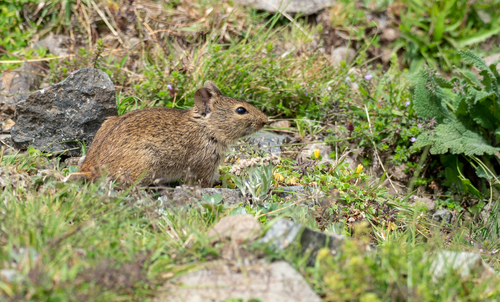
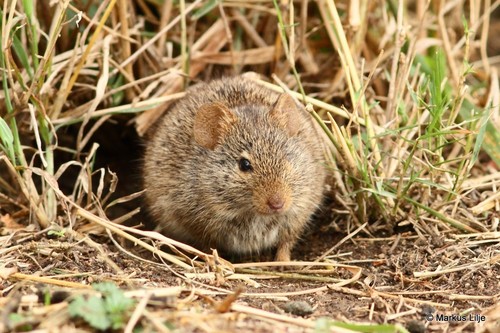
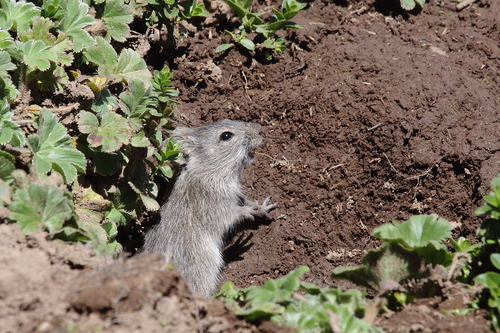
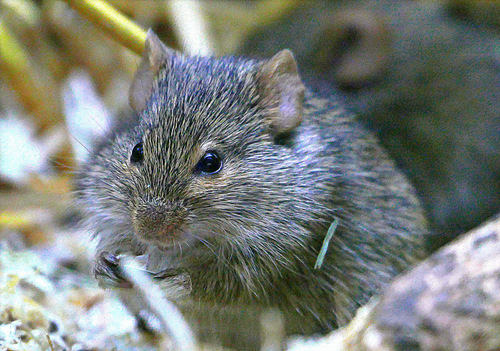
Other species in the family Muridae
Sources
Conservation status, range description and population estimate come from the IUCN Red List assessment for Arvicanthis nairobae. Countries are derived from that range description, not from a mapped country list. Last refreshed on .
The distribution map is drawn from the IUCN Red List spatial data compiled in 2008. IUCN (International Union for Conservation of Nature)