
Asia Minor Spiny Mouse
Acomys cilicicus
Red List assessment
Data Deficienton the IUCN Red List
- EXExtinct
- EWExtinct in the Wild
- CRCritically Endangered
- ENEndangered
- VUVulnerable
- NTNear Threatened
- LCLeast Concern
Data Deficient has no position on the scale above — it records the absence of an assessment, not a degree of risk.
The IUCN Red List records the Asia Minor Spiny Mouse as Data Deficient. Unknown; no reliable population estimate exists.
- Family
- Muridae
- Order
- Rodentia
- Genus
- Acomys
- Red List category
- Data Deficient
- Data updated
- August 9, 2026
What is the Asia Minor Spiny Mouse?
The Asia Minor Spiny Mouse is a small rodent belonging to the genus Acomys, first described by Spitzenberger in 1978 from specimens collected in the Cilicia region of southern Turkey. Like all spiny mice, it is named for the stiff, spine-like guard hairs covering its dorsum, which give it a hedgehog-like texture. It is one of the least-studied members of its genus and is considered endemic to a restricted area of Asia Minor. Its biology and ecology remain poorly documented, making it one of the more enigmatic small mammals of the Middle Eastern region.
Where does the Asia Minor Spiny Mouse live?
Southern Turkey, primarily in the Cilicia (Çukurova) region and adjacent foothills of the Taurus Mountains
Endemic to southern Turkey, with its type locality in the Cilicia (Çukurova) region near the Adana province and the foothills of the Taurus Mountains. The precise extent of its range remains uncertain due to limited field surveys; it may overlap marginally with neighboring countries but is currently considered a Turkish endemic.
Altitude and depth
Likely occurs from near sea level up to approximately 1000–1500 m in the Taurus Mountain foothills, based on habitat associations and related species; precise altitudinal data are lacking.
Seasonal movements
No specific seasonal migration or hibernation is documented; like other Acomys species it is likely active year-round, possibly reducing surface activity during the hottest summer months.
Habitat of the Asia Minor Spiny Mouse
Believed to inhabit rocky semi-arid terrain, scrublands, and dry limestone outcrops typical of the Mediterranean and sub-Mediterranean zones of southern Turkey. Like related Acomys species, it likely favors crevices in rocky slopes and rugged hillside habitats that provide shelter from predators. Dry open woodland and maquis shrubland may also form part of its range.
Adaptations to its environment
Possesses a dorsal coat of stiffened, spine-like hairs that offer some protection against predators. The genus Acomys is also known for extraordinary skin autotomy and regeneration—individuals can shed large patches of skin when grabbed and regenerate it with minimal scarring, a trait presumably shared by this species. Large eyes suggest adaptation to low-light or nocturnal conditions in rocky terrain.
Conservation status and numbers
Data Deficient (DD) on the IUCN Red List. The species is assessed as DD because there is insufficient information on its population size, distribution, ecology, and trends to make a reliable assessment of its extinction risk. It has not been adequately surveyed, and its restricted apparent range raises concern.
Estimated population
Unknown; no reliable population estimate exists. Population trend is undetermined due to lack of data.
What threatens the Asia Minor Spiny Mouse?
Potential threats include agricultural expansion and intensification in the Çukurova plain, urbanization around Adana, overgrazing by livestock that degrades rocky scrubland habitat, and possibly collection for the pet trade (as spiny mice are popular in the exotic pet market). Climate change may alter the semi-arid habitat on which it depends.
Diseases and parasites
No specific disease or parasite data for this species; members of the genus Acomys are known to host various ectoparasites (fleas, ticks, mites) and endoparasites (helminths, protozoans). Like many murid rodents, it may be capable of carrying hantaviruses or other zoonotic pathogens, though this is unconfirmed for A. cilicicus.
What is being done to protect it?
No species-specific conservation programs are known. It may receive incidental protection within protected areas of southern Turkey (e.g., parts of the Taurus Mountains), and it is nominally covered by Turkish national wildlife protection legislation. It is listed on Appendix III of the Bern Convention.
Recommended actions
Priority actions include targeted field surveys in the Cilicia region and surrounding Taurus foothills to clarify its distribution and abundance, genetic studies to resolve its taxonomic status relative to other Acomys species, monitoring of habitat quality in its known range, and assessment of pet trade pressure. Upgrading its IUCN assessment with actual population data is urgently needed.
What the Asia Minor Spiny Mouse looks like
The dorsal pelage is grayish-brown to sandy-brown with stiff, flattened, spine-like guard hairs interspersed among softer underfur. The ventral surface is white or pale gray. It has large, prominent dark eyes, relatively large and rounded ears, and a moderately long scaly tail. The overall body shape is compact and mouse-like.
Size
Body length estimated at 80–120 mm (head-body), with a tail of similar or slightly shorter length (~70–110 mm), consistent with other members of the Acomys cahirinus complex.
Weight
Estimated 30–60 g; precise data for this species are unavailable, but related Acomys species in this size class fall within this range.
Distinctive features
Distinguished from the closely related Acomys cahirinus by subtle differences in skull morphology, dental characters, and geographic range (Turkey vs. North Africa/Middle East). It is differentiated from Acomys nesiotes (Cyprus Spiny Mouse) by geographic isolation and minor cranial differences. The spiny dorsal coat immediately distinguishes it from non-Acomys murid rodents sharing its range.
Differences between males and females
Sexual dimorphism is minimal in Acomys species generally; males and females are similar in size and coloration. Females may be marginally smaller. No information specific to A. cilicicus is available.
Behaviour and diet of the Asia Minor Spiny Mouse
Likely semi-social as in other Acomys species, living in small family groups or loose colonies within rocky crevices. Communal nesting has been observed in related species. Specific social structure data for A. cilicicus are unavailable.
When it is active
Primarily nocturnal to crepuscular, with most foraging occurring after sunset, a pattern consistent across the genus Acomys. Daytime hours are generally spent sheltering in rock crevices or burrows.
Diet
Omnivorous; diet likely includes seeds, dry plant matter, fruits, invertebrates, and possibly small vertebrates, consistent with the generalist feeding habits observed throughout the Acomys genus. Opportunistic foraging in rocky, resource-scarce environments is typical.
How it feeds and hunts
Forages actively by exploring rocky terrain and crevices at night, using its vibrissae and olfaction to locate invertebrates and seeds. No specialized hunting techniques are documented; it is largely a generalist ground-level forager.
Communication
Likely communicates via ultrasonic vocalizations, scent marking with urine and glandular secretions, and tactile contact, as documented in other Acomys species. No species-specific communication studies exist for A. cilicicus.
Interactions with other species
Predators likely include owls (e.g., Barn Owl, Little Owl), snakes, and small carnivorous mammals in the Turkish Taurus region. It may compete with sympatric murids such as Mus macedonicus or Apodemus species for food resources in rocky habitats. Ectoparasites (fleas, mites) typical of the region presumably affect this species.
Role in its ecosystem
Functions as a small omnivore contributing to seed dispersal and invertebrate population regulation in rocky semi-arid ecosystems. It also serves as prey for a variety of raptors and small predators, linking lower trophic levels to higher predators.
Reproduction and lifecycle
Reproductive biology is unstudied in this species specifically. Based on closely related Acomys species, gestation is likely 35–42 days—long for a rodent of this size—producing litters of 1–5 fully furred, precocial young. Breeding may occur year-round in favorable conditions or peak in spring and autumn.
Raising the young
In Acomys generally, young are born in an advanced state of development (precocial), open-eyed and mobile within hours. Females provide nursing and protection; cooperative breeding (alloparental care by related females) has been documented in related species and may occur here.
Maturity and lifespan
Age at sexual maturity is unknown but likely 6–10 weeks as in related Acomys species. Lifespan in the wild is probably 1–3 years; captive Acomys can live up to 5–7 years.
Taxonomy and naming of the Asia Minor Spiny Mouse
Classification
Mammalia > Rodentia > Muridae > Acomys > Acomys cilicicus
Scientific synonyms
Previously sometimes treated as a subspecies or variant of Acomys cahirinus; no widely accepted synonyms beyond early taxonomic confusion within the Acomys cahirinus complex.
What research says
Recent studies
No recent dedicated studies on A. cilicicus are known. The species has occasionally appeared in phylogeographic studies of the Acomys cahirinus complex reassessing species boundaries in the eastern Mediterranean. Broader genus-level research on the remarkable wound-healing and skin regeneration of Acomys has attracted significant scientific interest, though focused on A. kempi and A. percivali.
Genome and DNA
No published genome or detailed cytogenetic data specific to A. cilicicus. Related Acomys species (e.g., A. cahirinus) have 2n=36–68 chromosomes depending on the species, and the broader genus has been subject to genomic studies on skin regeneration.
Compared with similar species
Most closely related to and historically confused with Acomys cahirinus (Cairo Spiny Mouse) of North Africa and the broader Middle East, from which it is distinguished by geographic range and cranial morphology. It is also geographically proximate to Acomys nesiotes (Cyprus Spiny Mouse), an island endemic. All Acomys species share the characteristic spiny dorsal pelage and precocial young, setting them apart from most other murids.
The Asia Minor Spiny Mouse and people
1) Spiny mice of the genus Acomys are among the very few mammals known to voluntarily shed large patches of their own skin to escape predators—and then regenerate it completely, including hair follicles and sweat glands, a feat almost unheard of among mammals. 2) Despite their spine-like hairs, Acomys spines are flattened and groove-ridged rather than hollow like a porcupine's quills, and function more as tactile sensors and protective armor than as projectiles. 3) The species name 'cilicicus' refers to the ancient region of Cilicia in southern Turkey, one of the most historically storied crossroads of civilizations, making this mouse a living link to antiquity.
Where and how to see it
Best chances for observation are at dusk or at night in the rocky scrubland and hillside habitats around the Taurus Mountain foothills in the Adana and Mersin provinces of southern Turkey. Using a red-light headlamp to minimize disturbance and visiting rocky outcrops with natural crevices in spring or autumn increases likelihood of sightings. However, given the extreme scarcity of records, this species is exceptionally difficult to find and has rarely been documented by field researchers.
Risks to humans
No notable risk to humans; it is a small, non-venomous rodent. Like all wild rodents, it may carry ectoparasites or zoonotic pathogens and should be handled with appropriate caution and protective equipment if captured for research.
Human uses
Potentially collected for the exotic pet trade, as spiny mice (Acomys spp.) are popular among rodent enthusiasts; however, there is no documented commercial trade specifically involving A. cilicicus. No known use in traditional medicine or agriculture.
Questions about the Asia Minor Spiny Mouse
Is the Asia Minor Spiny Mouse endangered?
The IUCN Red List assesses the Asia Minor Spiny Mouse as Data Deficient. There is not enough information to judge the risk of extinction, usually because the species is rarely seen or has never been surveyed. It is not a reassuring category: several species were Data Deficient right up to the point they were found to be Critically Endangered.
How many are left in the wild?
Unknown; no reliable population estimate exists. This figure comes from the species assessment on the IUCN Red List; population estimates for wild mammals are ranges, not counts, and are revised at each assessment.
What habitat does the Asia Minor Spiny Mouse live in?
Believed to inhabit rocky semi-arid terrain, scrublands, and dry limestone outcrops typical of the Mediterranean and sub-Mediterranean zones of southern Turkey.
What is the scientific name of the Asia Minor Spiny Mouse?
The Asia Minor Spiny Mouse is Acomys cilicicus, in the family Muridae, order Rodentia.
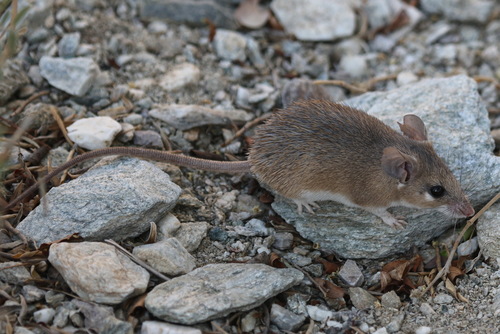
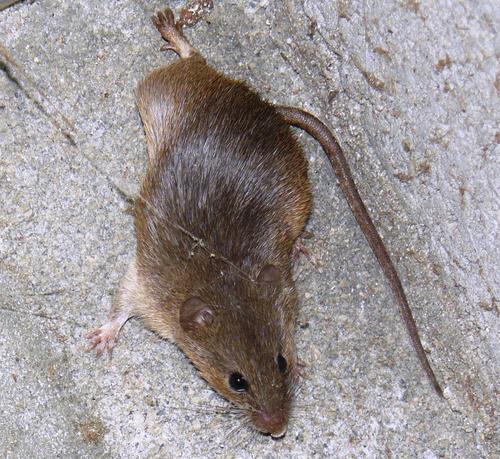
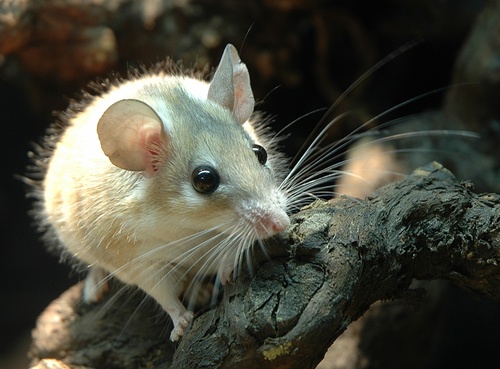
Other species in the genus Acomys
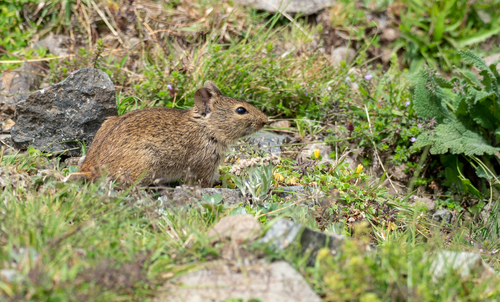
Other species in the family Muridae
Sources
Conservation status, range description and population estimate come from the IUCN Red List assessment for Acomys cilicicus. Countries are derived from that range description, not from a mapped country list. Last refreshed on .
The distribution map is drawn from the IUCN Red List spatial data compiled in 2009. IUCN (International Union for Conservation of Nature)