
Ammodile
Ammodillus imbellis
Red List assessment
Data Deficienton the IUCN Red List
- EXExtinct
- EWExtinct in the Wild
- CRCritically Endangered
- ENEndangered
- VUVulnerable
- NTNear Threatened
- LCLeast Concern
Data Deficient has no position on the scale above — it records the absence of an assessment, not a degree of risk.
The Ammodile is recorded in 2 countries across Africa. The IUCN Red List records the Ammodile as Data Deficient. Unknown. No reliable population estimates exist; trend is undetermined.
- Family
- Muridae
- Order
- Rodentia
- Genus
- Ammodillus
- Countries recorded
- 2
- Continents
- Africa
- Red List category
- Data Deficient
- Data updated
- August 9, 2026
What is the Ammodile?
The ammodile is a small, gerbil-like rodent and the sole member of the genus Ammodillus, making it one of the most taxonomically isolated small mammals in Africa. It inhabits the arid sandy plains of the Horn of Africa and is characterized by its elongated hindlimbs adapted for saltatorial (bounding) locomotion in open desert terrain. Remarkably little is known about its biology, ecology, and behavior, making it one of the least-studied rodents on the continent. Its data-deficient IUCN status reflects the near-total absence of field studies and population surveys.
Where does the Ammodile live?
Horn of Africa, primarily Somalia and the Ogaden region of eastern Ethiopia.
Restricted to the Horn of Africa: known records come from central and southern Somalia and the Ogaden plateau of southeastern Ethiopia. The full extent of its range remains poorly defined due to the scarcity of surveys in this politically challenging region.
Altitude and depth
Lowland and mid-elevation arid zones, generally from near sea level to approximately 1,000 m, though precise altitudinal limits are not well documented.
Habitat of the Ammodile
The ammodile is strongly associated with sandy desert and semi-arid scrubland, particularly flat, open plains with sparse vegetation. It favors areas with loose, sandy substrates that allow burrowing. The habitat is typically hot and hyper-arid to arid, with very low and unpredictable rainfall.
Adaptations to its environment
The ammodile possesses elongated, powerful hindlimbs relative to its forelimbs, allowing rapid bipedal or semi-bipedal bounding escape from predators on open sandy ground. Its sandy-buff pelage provides effective camouflage against desert substrates. Like many desert rodents, it is presumed to have physiological adaptations for water conservation, obtaining much of its water from food.
Conservation status and numbers
Data Deficient (DD) on the IUCN Red List. The species has not been assessed as threatened, but the DD status reflects insufficient data on population size, trend, ecology, and distribution. Its presumed restricted range in an area subject to habitat degradation and conflict raises potential conservation concern.
Estimated population
Unknown. No reliable population estimates exist; trend is undetermined.
What threatens the Ammodile?
Habitat degradation through overgrazing by livestock is likely the primary threat, as it destroys the sparse vegetative cover and destabilizes sandy soils. Desertification driven by climate change may reduce suitable habitat. Ongoing regional conflict and insecurity in Somalia severely limit the ability to conduct surveys and conservation actions.
Diseases and parasites
No specific studies on diseases or parasites in this species. Desert rodents in the region are general reservoirs for fleas, mites, and potentially zoonotic pathogens such as Leishmania, though this has not been documented for Ammodillus.
What is being done to protect it?
No targeted conservation programs are known for this species. It may occur within some protected areas in Ethiopia or Somalia, but effective protection in those regions is limited by political instability. It is listed in CITES only passively through general rodent listings.
Recommended actions
Priority actions include targeted field surveys across its presumed range to establish distribution limits and population status; ecological studies on diet, reproduction, and habitat use; and formal IUCN reassessment once basic data are available. Long-term habitat monitoring and protection from overgrazing are also recommended.
What the Ammodile looks like
The ammodile has sandy to pale buff upperparts that blend with desert substrates, with slightly paler or whitish underparts. It has large, rounded eyes suited to low-light conditions, prominent ears, a long tufted tail, and notably long hindlimbs giving it a jerboa-like silhouette. The overall build is slender and lightweight.
Size
Estimated body length approximately 7–10 cm (head-body); tail length approximately 10–14 cm, typically longer than the body. Hindlimbs notably elongated compared to forelimbs.
Weight
Estimated 20–40 g, consistent with similarly sized desert gerbils; no sex-specific weight data are available.
Distinctive features
Unlike true jerboas (family Dipodidae), the ammodile belongs to the gerbil subfamily (Gerbillinae) but convergently evolved elongated hindlimbs. It is distinguished from gerbils of the genus Gerbillus and Meriones by its more extreme hindlimb elongation, its monotypic genus status, and its restricted Horn of Africa range.
Behaviour and diet of the Ammodile
Presumably solitary, as is typical for small desert rodents in arid zones. No social behavior studies exist for this species.
When it is active
Presumed nocturnal or crepuscular, consistent with most desert rodents that avoid daytime heat. Specific activity patterns have not been documented.
Diet
Diet is not well documented but is presumed to be omnivorous, combining seeds, plant material, and invertebrates (insects, small arthropods), as seen in related desert gerbils. Seeds and roots may form the bulk of the diet during dry seasons.
How it feeds and hunts
Likely forages by actively searching sandy ground and sparse vegetation for seeds and invertebrates at night, using its keen sense of smell and possibly vibrissal sensitivity to detect prey and food items.
Communication
Specific communication behaviors are undocumented. Desert gerbils typically use foot-drumming on the substrate as seismic signaling, scent marking with specialized glands, and possibly ultrasonic vocalizations. The ammodile may use similar mechanisms.
Interactions with other species
Natural predators likely include owls (e.g., barn owl, Tyto alba), small carnivores such as sand cats (Felis margarita), and snakes. As a small granivore-insectivore, it may compete with sympatric gerbils and other small rodents for food resources.
Role in its ecosystem
As a seed consumer and potential insectivore, the ammodile likely plays a role in seed dispersal and invertebrate population regulation in its desert ecosystem. It may also serve as prey for mid-level predators, contributing to food web dynamics in a resource-sparse environment.
Reproduction and lifecycle
No reproductive data are available for this species. By analogy with related gerbilline rodents in arid habitats, breeding may be opportunistic and linked to rainfall events that trigger vegetation growth. Litter size is estimated at 2–5 pups.
Raising the young
Unknown in detail. As with related gerbils, the female likely rears young in a burrow with an estimated weaning period of 3–4 weeks.
Maturity and lifespan
Not documented. Based on comparable gerbilline rodents, sexual maturity likely occurs at 2–3 months. Lifespan in the wild is estimated at 1–3 years; captive data are unavailable as the species has not been maintained in captivity.
Taxonomy and naming of the Ammodile
Classification
Mammalia > Rodentia > Muridae (subfamily Gerbillinae) > Ammodillus > Ammodillus imbellis (de Winton, 1898)
Scientific synonyms
No widely recognized synonyms; Ammodillus imbellis de Winton, 1898 remains the valid name. The genus Ammodillus is monotypic.
What research says
Recent studies
Very few recent studies have targeted this species directly. Phylogenomic studies of Gerbillinae (e.g., Chevret et al., 2020s) have helped clarify the evolutionary position of Ammodillus but ecological field studies remain essentially absent.
Genome and DNA
Chromosome number and genomic data are not well documented in the literature. Phylogenetic studies placing Ammodillus within Gerbillinae have used mitochondrial markers, confirming its position as a basal or isolated lineage within the subfamily.
Compared with similar species
Ammodillus imbellis occupies a similar ecological niche to the North African and Asian jerboas (family Dipodidae) but is a convergently evolved gerbilline. It is more distantly related to the well-studied Mongolian gerbil (Meriones unguiculatus) and more similar in habits to small African gerbils of the genus Gerbillus, though it is more specialized for bipedal locomotion than most Gerbillus species.
The Ammodile and people
The ammodile is so poorly known that it has essentially never been studied in the wild, making it one of the most mysterious small mammals in Africa. Its elongated hindlimbs evolved convergently with jerboas on a completely different ancestral lineage, a striking example of parallel evolution. It is the sole living representative of its entire genus, giving it a unique and irreplaceable position in the mammalian tree of life.
Where and how to see it
Observation in the wild is extremely difficult due to its remote range in conflict-affected areas of Somalia and the Ogaden region of Ethiopia. Night surveys using spotlight or pitfall traps in flat sandy desert habitats during cooler seasons would offer the best chance of detection. No tourist infrastructure supports wildlife observation in most of its range.
Risks to humans
No notable risk to humans. It is a small, non-venomous rodent that poses no significant danger.
Countries where the Ammodile is recorded
The 2 countries named in the range description of its IUCN Red List assessment.
Questions about the Ammodile
Where does the Ammodile live?
The Ammodile is recorded in Ethiopia and Somalia across Africa. These countries come from the range description of its IUCN Red List assessment, and they are what place the species on the interactive map.
Is the Ammodile endangered?
The IUCN Red List assesses the Ammodile as Data Deficient. There is not enough information to judge the risk of extinction, usually because the species is rarely seen or has never been surveyed. It is not a reassuring category: several species were Data Deficient right up to the point they were found to be Critically Endangered.
How many are left in the wild?
Unknown. No reliable population estimates exist; trend is undetermined. This figure comes from the species assessment on the IUCN Red List; population estimates for wild mammals are ranges, not counts, and are revised at each assessment.
What habitat does the Ammodile live in?
The ammodile is strongly associated with sandy desert and semi-arid scrubland, particularly flat, open plains with sparse vegetation.
What is the scientific name of the Ammodile?
The Ammodile is Ammodillus imbellis, in the family Muridae, order Rodentia.
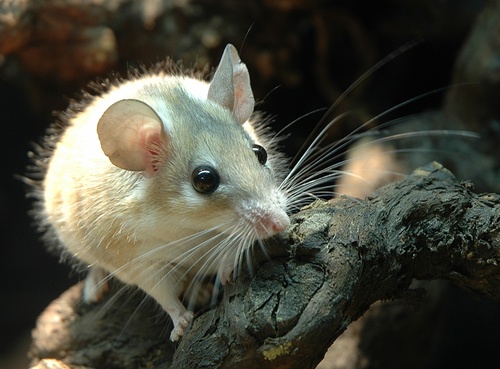
Other species in the family Muridae
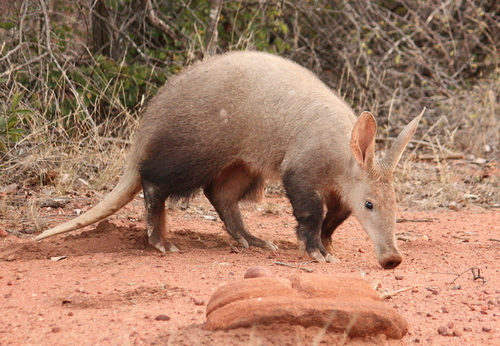
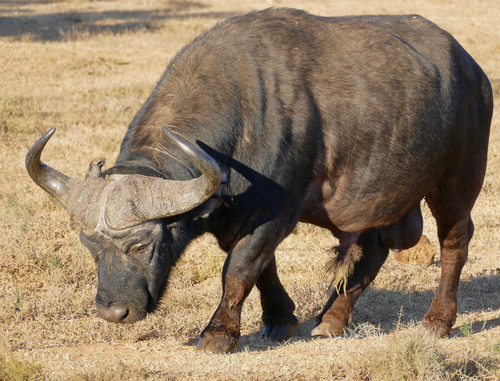
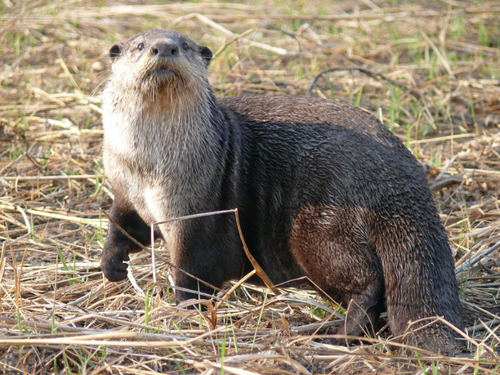
Species that share its range

Sources
Conservation status, range description and population estimate come from the IUCN Red List assessment for Ammodillus imbellis. Countries are derived from that range description, not from a mapped country list. Last refreshed on .
The distribution map is drawn from the IUCN Red List spatial data compiled in 2017. IUCN SSC Small Mammal Specialist Group