
Humpback Whale
Megaptera novaeangliae
Red List assessment
Least Concernon the IUCN Red List
- EXExtinct
- EWExtinct in the Wild
- CRCritically Endangered
- ENEndangered
- VUVulnerable
- NTNear Threatened
- LCLeast Concern
The Humpback Whale is recorded in 6 countries across Europe, North America, South America, Oceania and Antarctica. The IUCN Red List assesses the Humpback Whale as Least Concern. Approximately 80,000 individuals globally, with an increasing overall trend though some regional populations remain small.
- Family
- Balaenopteridae
- Order
- Cetartiodactyla
- Genus
- Megaptera
- Countries recorded
- 6
- Continents
- Europe, North America, South America, Oceania and Antarctica
- Red List category
- Least Concern
- Data updated
- August 9, 2026
What is the Humpback Whale?
The humpback whale is a large baleen whale renowned for its acrobatic breaching, long pectoral fins, and complex songs. It undertakes one of the longest migrations of any mammal, traveling between cold feeding grounds and warm breeding areas. Found in every ocean basin, it is a keystone species in marine ecosystems and a favorite subject of whale-watching tourism.
Where does the Humpback Whale live?
Found in all major oceans worldwide, with notable populations off North America, South America, Africa, Australia, Antarctica, and the Pacific Islands
Globally distributed across the Atlantic, Pacific, and Indian Oceans, including waters off Alaska, Canada, the Caribbean, Brazil, West Africa, Norway, Australia, New Zealand, and Antarctica.
Altitude and depth
Primarily surface to about 200 m depth, though dives can reach up to 400 m when foraging.
Seasonal movements
Performs extensive seasonal migrations, moving from nutrient-rich polar/subpolar feeding grounds in summer to warm tropical breeding grounds in winter, covering distances up to 8,000 km round trip.
Habitat of the Humpback Whale
Pelagic and coastal marine waters, ranging from polar feeding grounds to tropical and subtropical breeding lagoons; often found near continental shelves and seamounts.
Adaptations to its environment
Long pectoral fins improve maneuverability for bubble-net feeding; thick blubber layer insulates against cold polar waters; baleen plates allow efficient filter-feeding on krill and small fish.
Conservation status and numbers
Least Concern (LC) according to IUCN, following significant recovery after the end of commercial whaling; some regional subpopulations remain endangered or vulnerable.
Estimated population
Approximately 80,000 individuals globally, with an increasing overall trend though some regional populations remain small.
What threatens the Humpback Whale?
Ship strikes, entanglement in fishing gear, noise pollution, habitat degradation, and climate change affecting prey availability.
Diseases and parasites
Susceptible to skin lesions, barnacles, whale lice, and occasionally viral infections; entanglement wounds can lead to secondary infections.
What is being done to protect it?
Protected under the International Whaling Commission moratorium, CITES Appendix I, and various national marine mammal protection acts; marine protected areas and shipping lane adjustments have been implemented in key habitats.
Recommended actions
Continue reducing ship strike risk through speed restrictions, improve fishing gear to prevent entanglement, monitor population trends, and mitigate climate impacts on prey species.
What the Humpback Whale looks like
Dark gray to black skin with white patterns on the belly and underside of the long pectoral fins, knobby protuberances (tubercles) on the head, and a small dorsal fin set on a hump-like ridge.
Size
Adults typically measure 12–16 meters in length, with females generally slightly larger than males.
Weight
Average weight ranges from 25 to 30 metric tons, with some individuals reaching up to 40 tons.
Distinctive features
Distinguished from other baleen whales by its exceptionally long pectoral fins (up to a third of body length), knobby head, and acrobatic breaching behavior.
Differences between males and females
Minimal external dimorphism; females are slightly larger than males, and only females possess a hemispherical lobe near the genital area.
Behaviour and diet of the Humpback Whale
Generally solitary or found in small, transient groups, though larger aggregations occur on feeding and breeding grounds; cooperative bubble-net feeding groups can form among certain populations.
When it is active
Active during both day and night, with feeding, traveling, and socializing occurring at variable hours depending on prey availability and migration phase.
Diet
Carnivorous, feeding primarily on krill, small schooling fish such as herring and capelin, using baleen plates to filter food from the water.
How it feeds and hunts
Uses bubble-net feeding, lunge feeding, and cooperative group foraging strategies to concentrate and capture prey efficiently.
Communication
Known for complex, structured songs produced mainly by males during breeding season, as well as social sounds like breaches, tail slaps, and pectoral fin slaps for communication.
Interactions with other species
Occasionally preyed upon by orcas, especially calves; interacts with various seabirds and fish species that benefit from feeding aggregations created by their bubble-net behavior.
Role in its ecosystem
Plays a role as a nutrient cycler, transporting nutrients from feeding to breeding grounds and contributing to marine food web dynamics through predation on krill and small fish.
Reproduction and lifecycle
Breeding occurs in warm tropical waters during winter; gestation lasts about 11–12 months, typically resulting in a single calf.
Raising the young
Calves are cared for exclusively by the mother, nursing for about 6–12 months while accompanying her during migration; weaning occurs gradually as the calf begins independent feeding.
Maturity and lifespan
Sexual maturity is reached around 5–7 years; lifespan in the wild is estimated at 45–100 years.
Taxonomy and naming of the Humpback Whale
Classification
Mammalia > Cetartiodactyla > Balaenopteridae > Megaptera > Megaptera novaeangliae
Subspecies
Three subspecies recognized: Megaptera novaeangliae novaeangliae (North Atlantic), M. n. kuzira (North Pacific), and M. n. australis (Southern Hemisphere), differing mainly in range and minor morphological traits.
Scientific synonyms
Balaena novaeangliae, Megaptera longimana, Megaptera nodosa
What research says
Recent studies
Recent research has focused on acoustic communication changes due to ocean noise pollution and genetic connectivity between different breeding and feeding populations.
Genome and DNA
Diploid chromosome number is 44; genomic studies have been used to track population structure and migratory connectivity between ocean basins.
Compared with similar species
Compared to blue and fin whales, humpbacks are smaller but more acrobatic, with distinctly longer pectoral fins and more complex vocalizations.
The Humpback Whale and people
Humpback whale songs can last up to 20 minutes and are among the most complex in the animal kingdom; individual whales can be identified by unique tail fluke patterns, much like a fingerprint.
Where and how to see it
Best observed during winter breeding season in places like Hawaii, the Dominican Republic, or Tonga, or during summer feeding season off Alaska, Iceland, or Antarctica; early morning boat tours often yield the best sightings.
Risks to humans
No notable risk to humans; generally curious and non-aggressive, though accidental collisions with boats can occur.
Human uses
Historically hunted for oil and baleen; today primarily valued for ecotourism through whale watching and scientific research.
Myths and legends
Featured prominently in Polynesian and Indigenous coastal cultures as symbols of strength, guidance, and connection between sea and spirit worlds.
Countries where the Humpback Whale is recorded
The 6 countries named in the range description of its IUCN Red List assessment.
Questions about the Humpback Whale
Where does the Humpback Whale live?
The Humpback Whale is recorded in Antarctica, Australia, Brazil, Canada and New Zealand, among 6 countries in total across Europe, North America, South America, Oceania and Antarctica. These countries come from the range description of its IUCN Red List assessment, and they are what place the species on the interactive map.
Is the Humpback Whale endangered?
The IUCN Red List assesses the Humpback Whale as Least Concern. The species is widespread and abundant enough not to qualify for any threatened category. It does not mean the species is safe forever, only that nothing in the current data raises an alarm.
How many are left in the wild?
Approximately 80,000 individuals globally, with an increasing overall trend though some regional populations remain small. This figure comes from the species assessment on the IUCN Red List; population estimates for wild mammals are ranges, not counts, and are revised at each assessment.
What habitat does the Humpback Whale live in?
Pelagic and coastal marine waters, ranging from polar feeding grounds to tropical and subtropical breeding lagoons; often found near continental shelves and seamounts.
What is the scientific name of the Humpback Whale?
The Humpback Whale is Megaptera novaeangliae, in the family Balaenopteridae, order Cetartiodactyla.
Other species in the family Balaenopteridae
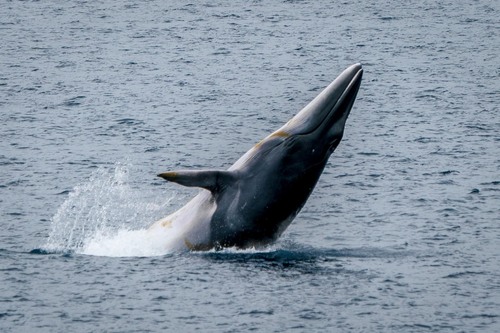
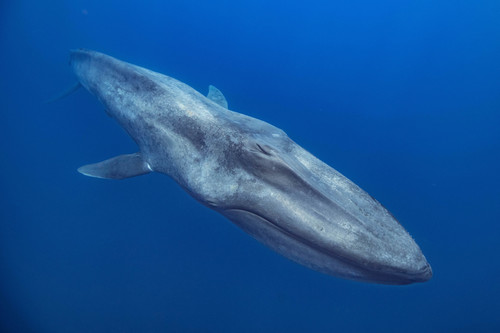
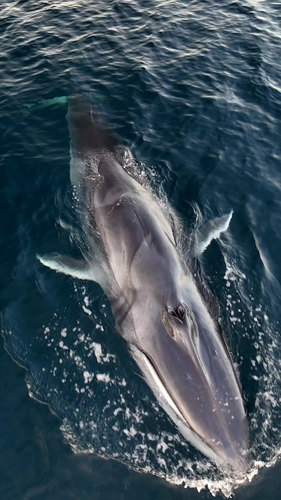
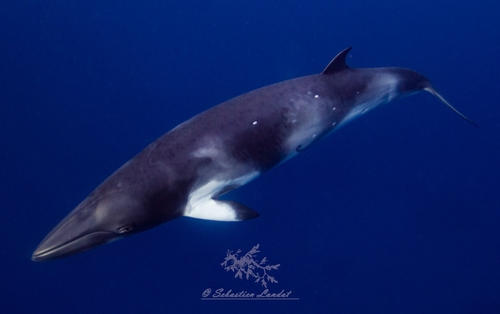
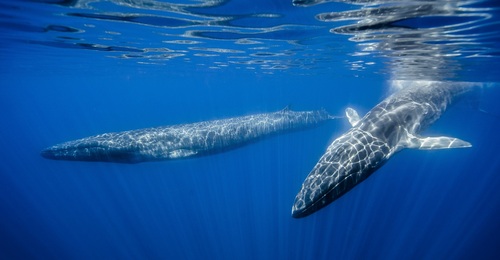
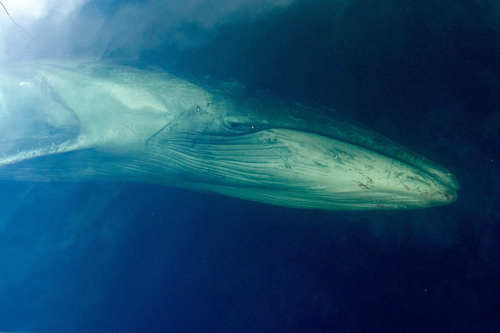
Species that share its range
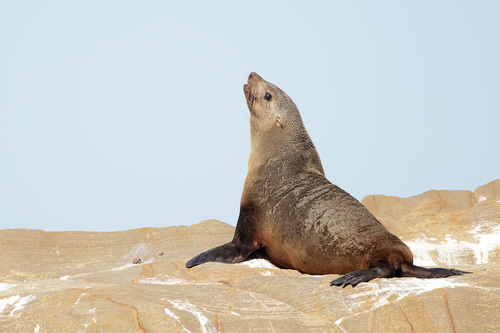

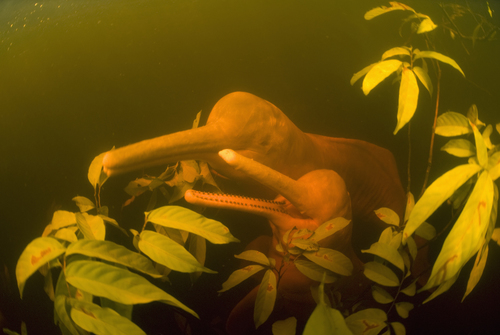
Sources
Conservation status, range description and population estimate come from the IUCN Red List assessment for Megaptera novaeangliae. Countries are derived from that range description, not from a mapped country list. Last refreshed on .
The distribution map is drawn from the IUCN Red List spatial data compiled in 2012. IUCN (International Union for Conservation of Nature)