
Fin Whale
Balaenoptera physalus
Red List assessment
Vulnerableon the IUCN Red List
- EXExtinct
- EWExtinct in the Wild
- CRCritically Endangered
- ENEndangered
- VUVulnerable
- NTNear Threatened
- LCLeast Concern
The Fin Whale is recorded in 3 countries across Europe and North America. The IUCN Red List assesses the Fin Whale as Vulnerable. Global population estimated at approximately 100,000-140,000 individuals, with populations showing signs of recovery in some regions (like the North Atlantic) since whaling moratoriums, though overall trend varies by region from increasing to stable.
- Family
- Balaenopteridae
- Order
- Cetartiodactyla
- Genus
- Balaenoptera
- Countries recorded
- 3
- Continents
- Europe and North America
- Red List category
- Vulnerable
- Data updated
- August 9, 2026
What is the Fin Whale?
The fin whale is the second-largest animal on Earth after the blue whale, reaching lengths up to 27 meters. Known for its sleek, streamlined body and distinctive asymmetrical head coloration, it is found in oceans worldwide from polar to tropical waters. Often called the 'greyhound of the sea' due to its speed, this baleen whale is remarkable for its fast swimming capability and deep, resonant vocalizations that travel great distances underwater.
Where does the Fin Whale live?
Found in all major oceans worldwide, with significant populations in the North Atlantic (including waters off Greenland, Iceland, and Norway), North Pacific, and Southern Hemisphere; the given coordinates correspond to waters off Northeast Greenland/Svalbard region.
Cosmopolitan distribution spanning the Atlantic, Pacific, and Southern Oceans; found from the Arctic to the Antarctic, with major feeding grounds in the North Atlantic (Gulf of St. Lawrence, Mediterranean Sea, Norwegian Sea), North Pacific (California Current, Gulf of Alaska), and Southern Ocean.
Altitude and depth
Typically dives to depths of 100-200 meters for feeding, though capable of diving to over 470 meters; spends most time in surface waters (0-50m) for breathing and traveling.
Seasonal movements
Undertakes seasonal migrations between high-latitude summer feeding grounds and lower-latitude winter breeding grounds, though migration patterns are less predictable and well-defined than in other baleen whales like humpbacks.
Habitat of the Fin Whale
Primarily pelagic, inhabiting open ocean and continental shelf waters; found in both temperate and polar seas, often near productive upwelling zones and continental slopes where prey concentrations are high.
Adaptations to its environment
Streamlined body shape and powerful tail fluke enable fast swimming speeds up to 40 km/h; baleen plates filter small prey efficiently; thick blubber layer provides insulation in cold waters and energy storage during migration and fasting periods.
Conservation status and numbers
Listed as Vulnerable (VU) by IUCN due to historical population declines from commercial whaling, with global populations estimated to have declined by more than 50% over three generations (approximately 87 years) primarily due to 20th century whaling operations.
Estimated population
Global population estimated at approximately 100,000-140,000 individuals, with populations showing signs of recovery in some regions (like the North Atlantic) since whaling moratoriums, though overall trend varies by region from increasing to stable.
What threatens the Fin Whale?
Ship strikes are a major ongoing threat due to the species' preference for shipping lanes; entanglement in fishing gear; historical commercial whaling caused massive population reductions; climate change affecting prey distribution; ocean noise pollution disrupting communication.
Diseases and parasites
Known to host various parasites including whale lice (cyamids), barnacles, and internal parasites such as nematodes; susceptible to morbillivirus infections and other diseases, though comprehensive disease surveillance data is limited.
What is being done to protect it?
Protected under the International Whaling Commission moratorium since 1986; listed on CITES Appendix I and II; covered by various national marine mammal protection laws; ship strike mitigation measures implemented in high-traffic areas like the Mediterranean and along North American coasts.
Recommended actions
Implement stricter shipping lane adjustments and speed restrictions in critical habitats; expand marine protected areas; improve fishing gear technology to reduce entanglement; continue population monitoring and acoustic research to track recovery trends.
What the Fin Whale looks like
Sleek, streamlined grey-brown body with a distinctive V-shaped head; notably asymmetrical coloration on the lower jaw, with white on the right side and dark grey on the left side; pale chevron pattern behind the head; small, curved dorsal fin set two-thirds back on the body.
Size
Body length ranges from 18-27 meters, with Southern Hemisphere individuals typically larger than Northern Hemisphere counterparts; females are slightly longer than males.
Weight
Adults typically weigh between 40,000-80,000 kg (40-80 metric tons), with larger Southern Hemisphere individuals reaching up to 120,000 kg.
Distinctive features
The unique asymmetrical jaw coloration (white right side, dark left side) is diagnostic and found in no other whale species; distinguished from blue whales by smaller size, more pointed head shape, and taller, more curved dorsal fin.
Differences between males and females
Minimal sexual dimorphism; females are typically slightly longer than males by about 5-10%, but external appearance is otherwise similar between sexes.
Behaviour and diet of the Fin Whale
Generally found alone or in small groups of 2-7 individuals, though larger aggregations of dozens to hundreds may form in productive feeding areas; less socially cohesive than some other baleen whale species.
When it is active
Active throughout day and night; surfaces regularly to breathe with a characteristic tall, columnar blow reaching 4-6 meters high; alternates between feeding dives and travel at the surface.
Diet
Carnivorous filter feeder consuming krill, small schooling fish (herring, capelin, sand lance), and copepods; diet composition varies by region and season based on prey availability.
How it feeds and hunts
Uses lunge feeding technique, accelerating rapidly through prey concentrations with mouth open, then expelling water through baleen plates to trap prey; often feeds on one side, exploiting the asymmetrical jaw coloration possibly to startle or herd prey.
Communication
Produces very low-frequency vocalizations (20 Hz) that can travel hundreds of kilometers underwater, among the most powerful sounds produced by any animal; these calls are believed used for long-distance communication and possibly mate attraction.
Interactions with other species
Adult fin whales have few natural predators, though orcas (killer whales) occasionally attack calves or juveniles; may compete with other baleen whales and large predatory fish for prey resources in feeding areas.
Role in its ecosystem
Functions as an important predator in marine food webs, helping control populations of krill and small schooling fish; nutrient cycling through fecal plumes contributes to primary productivity in surface waters (whale pump effect).
Reproduction and lifecycle
Breeding occurs primarily in winter months; gestation period lasts approximately 11-12 months; typically produces a single calf every 2-3 years; mating system is not well documented but believed to be polygynous.
Raising the young
Calves are nursed by the mother for 6-7 months and remain closely associated with her during this period; mothers provide all parental care with no paternal involvement; calves grow rapidly on nutrient-rich milk before weaning.
Maturity and lifespan
Sexual maturity reached at 6-10 years of age; lifespan in the wild can exceed 80-90 years, with some estimates suggesting individuals may live over 100 years based on earwax lamination studies.
Taxonomy and naming of the Fin Whale
Classification
Class Mammalia > Order Cetartiodactyla > Family Balaenopteridae > Genus Balaenoptera > Species B. physalus
Subspecies
Two recognized subspecies: B. p. physalus (Northern Hemisphere fin whale) and B. p. quoyi (Southern Hemisphere fin whale, generally larger); a possible pygmy form in the Southern Hemisphere has been debated.
Scientific synonyms
Balaena physalus (original Linnaeus 1758 classification), Physalus antiquorum, Balaenoptera quoyi
What research says
Recent studies
Recent research using passive acoustic monitoring has revealed complex song patterns and population-specific vocal dialects; genetic studies continue to refine understanding of population structure and connectivity between ocean basins.
Genome and DNA
Diploid chromosome number is 2n=44; genome sequencing studies have provided insights into population genetic structure and helped identify distinct populations for conservation management purposes.
Compared with similar species
Similar to the blue whale but smaller and with a more pointed head; distinguished from sei whales by larger size and the characteristic asymmetrical jaw coloration; shares habitat and some prey species with humpback whales but has a more streamlined body shape built for speed.
The Fin Whale and people
Fin whales are the fastest baleen whales, capable of swimming at speeds up to 40 km/h, earning them the nickname 'greyhound of the sea'; their asymmetrical jaw coloration is unique among all whale species; they produce some of the loudest sounds of any animal on Earth, audible for hundreds of kilometers.
Where and how to see it
Best observed during summer feeding season in locations like the Gulf of St. Lawrence (Canada), Azores, Ligurian Sea (Mediterranean), or off the California coast; whale watching tours in these regions offer good sighting opportunities from June through September.
Risks to humans
No notable risk to humans; fin whales are not aggressive and pose no direct threat, though vessel collisions can be dangerous for both the whale and small boats.
Human uses
Historically hunted extensively for oil, meat, and baleen during the 19th and 20th centuries, leading to severe population declines; currently protected from commercial whaling, though limited subsistence or scientific whaling continues in some regions like Iceland and Japan under controversial circumstances.
Myths and legends
Historically less prominent in mythology compared to other whale species, though whaling cultures in Norway and Japan have traditional stories and practices associated with fin whale hunts; sometimes conflated with other large whale species in maritime folklore.
Countries where the Fin Whale is recorded
The 3 countries named in the range description of its IUCN Red List assessment.
Questions about the Fin Whale
Where does the Fin Whale live?
The Fin Whale is recorded in Greenland, Iceland and Norway across Europe and North America. These countries come from the range description of its IUCN Red List assessment, and they are what place the species on the interactive map.
Is the Fin Whale endangered?
Yes. The IUCN Red List assesses the Fin Whale as Vulnerable, one of the three threatened categories. The species faces a high risk of extinction in the wild. It is the first of the three threatened categories: numbers are falling, the range is shrinking, or the population is small enough that a single bad event could do lasting damage.
How many are left in the wild?
Global population estimated at approximately 100,000-140,000 individuals, with populations showing signs of recovery in some regions (like the North Atlantic) since whaling moratoriums, though overall trend varies by region from increasing to stable. This figure comes from the species assessment on the IUCN Red List; population estimates for wild mammals are ranges, not counts, and are revised at each assessment.
What habitat does the Fin Whale live in?
Primarily pelagic, inhabiting open ocean and continental shelf waters; found in both temperate and polar seas, often near productive upwelling zones and continental slopes where prey concentrations are high.
What is the scientific name of the Fin Whale?
The Fin Whale is Balaenoptera physalus, in the family Balaenopteridae, order Cetartiodactyla.
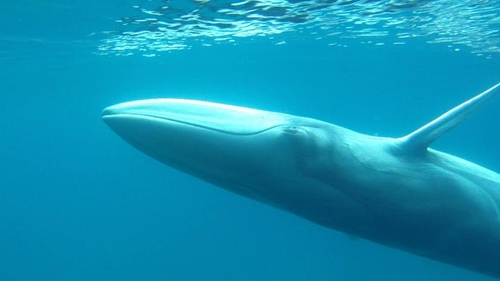
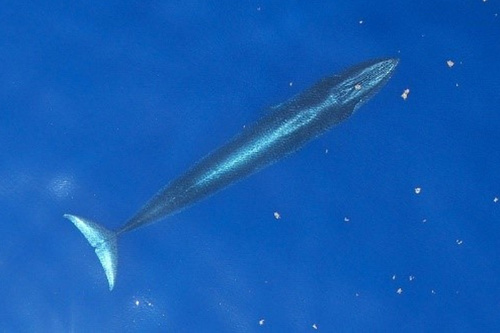
Other species in the genus Balaenoptera
Other species in the family Balaenopteridae
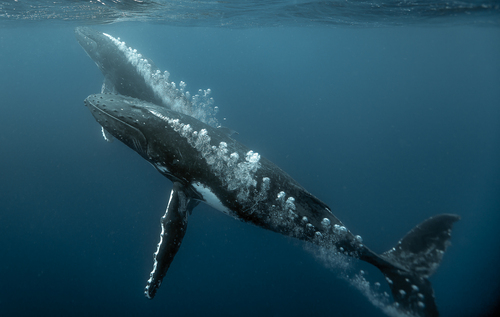
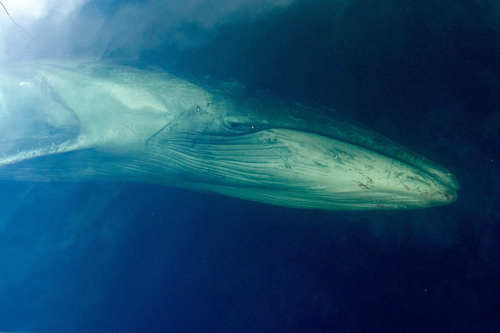
Species that share its range
Sources
Conservation status, range description and population estimate come from the IUCN Red List assessment for Balaenoptera physalus. Countries are derived from that range description, not from a mapped country list. Last refreshed on .
The distribution map is drawn from the IUCN Red List spatial data compiled in 2014. IUCN (International Union for Conservation of Nature)