
American Badger
Taxidea taxus
Red List assessment
Least Concernon the IUCN Red List
- EXExtinct
- EWExtinct in the Wild
- CRCritically Endangered
- ENEndangered
- VUVulnerable
- NTNear Threatened
- LCLeast Concern
The American Badger is recorded in 3 countries across North America. The IUCN Red List assesses the American Badger as Least Concern. No precise global population estimate exists, but the species is considered widespread and stable overall, though some subspecies like T.
- Family
- Mustelidae
- Order
- Carnivora
- Genus
- Taxidea
- Countries recorded
- 3
- Continents
- North America
- Red List category
- Least Concern
- Data updated
- August 9, 2026
What is the American Badger?
The American Badger is a stocky, burrowing mustelid native to the grasslands and open habitats of North America. It is renowned for its powerful digging ability, using it both to excavate dens and to hunt burrowing prey like ground squirrels and prairie dogs. This solitary, mostly nocturnal carnivore plays an important ecological role as a predator and ecosystem engineer, its abandoned burrows providing shelter for many other species.
Where does the American Badger live?
Central and western North America, including the United States, southern Canada, and northern Mexico
Ranges from south-central Canada (Alberta, Saskatchewan, Manitoba) through the western and central United States, including the Great Plains, Great Basin, and Pacific states, extending south into central Mexico.
Altitude and depth
Sea level up to approximately 3,600 meters in mountainous grassland and alpine meadow habitats.
Seasonal movements
Badgers do not truly hibernate but enter periods of torpor during cold winter months, remaining in their burrows for extended periods with reduced activity, especially in northern parts of their range.
Habitat of the American Badger
Prefers open habitats such as prairies, grasslands, shrub-steppe, and agricultural fields with loose, well-drained soil suitable for digging. Also found in open woodlands and semi-arid deserts, generally avoiding dense forests and rocky terrain.
Adaptations to its environment
Possesses powerful forelimbs with long, strong claws adapted for rapid digging, a flattened body shape suited for moving through tunnels, and loose skin that allows it to turn and defend itself in tight burrows. Its stocky build and low center of gravity aid in both digging and combat with prey.
Conservation status and numbers
Listed as Least Concern by the IUCN due to its wide distribution and generally stable population, though some regional populations face localized declines from habitat loss.
Estimated population
No precise global population estimate exists, but the species is considered widespread and stable overall, though some subspecies like T. t. jacksoni in the Great Lakes region are of local conservation concern.
What threatens the American Badger?
Main threats include habitat loss from agricultural conversion and urban development, vehicle collisions, and historical persecution as a perceived agricultural pest. Poisoning campaigns targeting prairie dogs and ground squirrels have also indirectly reduced prey availability.
Diseases and parasites
Susceptible to rabies, canine distemper, and various ectoparasites and endoparasites including fleas, ticks, and intestinal worms.
What is being done to protect it?
Protected under various state and provincial wildlife regulations in the US and Canada; some regions have specific management plans for regional subspecies of concern. Conservation of prairie and grassland ecosystems indirectly benefits badger populations.
Recommended actions
Protecting and restoring native grassland habitats, maintaining prey populations of burrowing rodents, implementing wildlife road crossings to reduce vehicle mortality, and monitoring regional population trends in vulnerable subspecies.
What the American Badger looks like
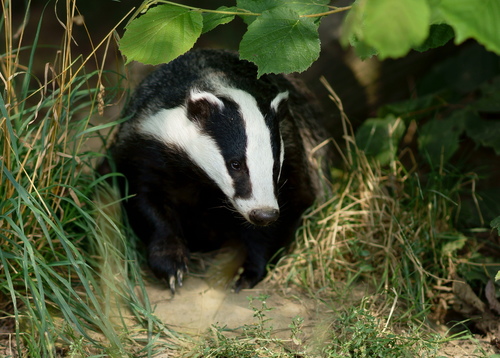
Has a grizzled grayish-brown coat with a distinctive white stripe running from the nose over the top of the head, black patches on the face, and a broad, flattened body. Short legs with strong claws and a low-slung stance give it a squat, powerful appearance.
Size
Body length ranges from 42 to 72 cm, with a short tail of 10-15 cm; shoulder height is roughly 15-30 cm.
Weight
Adults typically weigh between 4 and 12 kg, with males generally larger than females.
Distinctive features
The bold white facial stripe, extremely flattened body shape, and unusually long front claws distinguish it from other North American mustelids like otters or weasels.
Differences between males and females
Males are typically 10-30% larger and heavier than females, though coloration and markings are similar between sexes.
Behaviour and diet of the American Badger
Primarily solitary animals except during breeding season or when females are raising young; they maintain individual home ranges that may overlap slightly with neighbors.
When it is active
Mostly nocturnal to crepuscular, though some daytime activity occurs, particularly in areas with low human disturbance.
Diet
Carnivorous, feeding mainly on burrowing rodents such as ground squirrels, pocket gophers, and prairie dogs; also consumes insects, small reptiles, birds, eggs, and occasionally carrion.
How it feeds and hunts
Uses powerful digging to excavate prey directly from their burrows, often collapsing tunnel systems to trap animals; may also cache food and has been observed forming loose hunting associations with coyotes to flush prey.
Communication
Communicates through scent marking via anal glands, body postures, hissing, growling, and other vocalizations especially during aggressive encounters or mating.
Interactions with other species
Occasionally forms mutualistic hunting partnerships with coyotes to increase prey capture success; predators include golden eagles, coyotes, and occasionally large raptors targeting young badgers.
Role in its ecosystem
Acts as an important ecosystem engineer, its digging aerates soil and its abandoned burrows provide shelter for numerous other species such as burrowing owls, snakes, and small mammals.
Reproduction and lifecycle
Breeding occurs in summer, but implantation is delayed until winter, with births occurring in early spring; litters typically consist of 1-5 kits after a gestation period of about 6 weeks post-implantation.
Raising the young
Females raise the young alone in a natal den, nursing and caring for the kits for about 2-3 months until they become independent, with weaning occurring around 8 weeks.
Maturity and lifespan
Reaches sexual maturity at around 1 year of age; typically lives 4-10 years in the wild, with captive individuals sometimes living up to 14 years or more.
Taxonomy and naming of the American Badger
Classification
Class Mammalia > Order Carnivora > Family Mustelidae > Genus Taxidea > Species Taxidea taxus
Subspecies
Several recognized subspecies including T. t. taxus (Great Plains), T. t. jeffersonii (Pacific Northwest), T. t. berlandieri (Southwest/Mexico), and T. t. jacksoni (Great Lakes region), differing mainly in size and coloration across their ranges.
Scientific synonyms
Meles labradoria (historical synonym), Taxidea americana
What research says
Recent studies
Recent research has focused on badger-coyote hunting cooperation, genetic diversity among subspecies, and impacts of habitat fragmentation on population connectivity in agricultural landscapes.
Genome and DNA
Diploid chromosome number is 2n=32; genetic studies have been used to delineate subspecies boundaries and population structure across North America.
Compared with similar species
Distinct from the European badger (Meles meles) which is more social and lives in larger family groups called clans; the American Badger is more solitary and has a flatter body adapted for digging in open habitats rather than woodland.
The American Badger and people
American Badgers can dig fast enough to disappear into the ground in less than a minute; they have been documented cooperatively hunting with coyotes, a rare example of interspecies collaboration among wild carnivores.
Where and how to see it
Best observed at dawn or dusk in open grassland or prairie habitats of the western United States, such as national grasslands or wildlife refuges; look for large burrow entrances with fresh dirt mounds as signs of activity.
Risks to humans
Generally avoids humans but can bite or scratch fiercely if cornered or threatened; not venomous and poses minimal risk unless directly provoked.
Human uses
Historically trapped for fur, though this practice has declined significantly; occasionally valued in pest control due to their predation on agricultural rodent pests.
Myths and legends
Featured in various Native American folklore as a symbol of tenacity and resourcefulness; sometimes depicted as a trickster or a fierce, stubborn spirit due to its aggressive defensive behavior.
Countries where the American Badger is recorded
The 3 countries named in the range description of its IUCN Red List assessment.
Questions about the American Badger
Where does the American Badger live?
The American Badger is recorded in Canada, Mexico and United States across North America. These countries come from the range description of its IUCN Red List assessment, and they are what place the species on the interactive map.
Is the American Badger endangered?
The IUCN Red List assesses the American Badger as Least Concern. The species is widespread and abundant enough not to qualify for any threatened category. It does not mean the species is safe forever, only that nothing in the current data raises an alarm.
How many are left in the wild?
No precise global population estimate exists, but the species is considered widespread and stable overall, though some subspecies like T. This figure comes from the species assessment on the IUCN Red List; population estimates for wild mammals are ranges, not counts, and are revised at each assessment.
What habitat does the American Badger live in?
Prefers open habitats such as prairies, grasslands, shrub-steppe, and agricultural fields with loose, well-drained soil suitable for digging.
What is the scientific name of the American Badger?
The American Badger is Taxidea taxus, in the family Mustelidae, order Carnivora.
Other species in the family Mustelidae

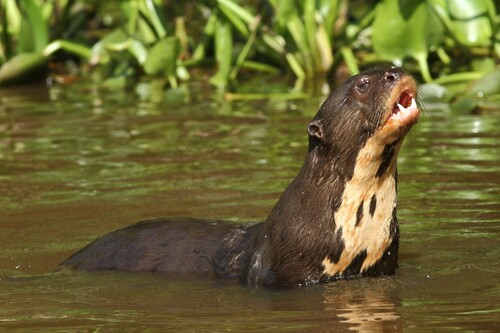
Species that share its range
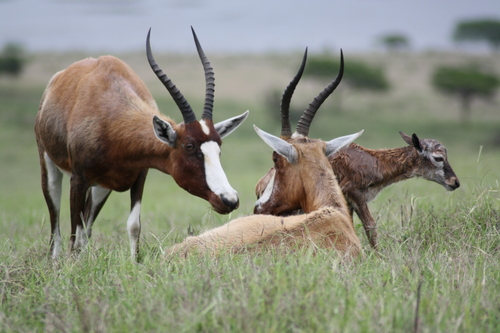
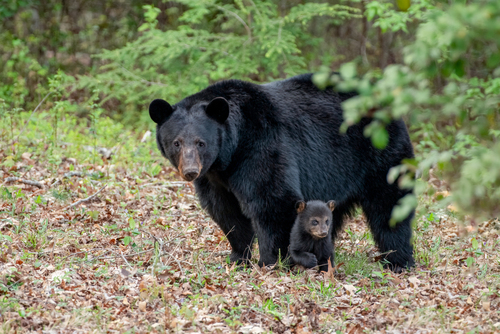
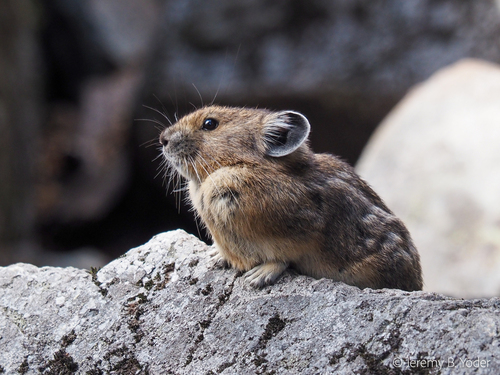
Sources
Conservation status, range description and population estimate come from the IUCN Red List assessment for Taxidea taxus. Countries are derived from that range description, not from a mapped country list. Last refreshed on .
The distribution map is drawn from the IUCN Red List spatial data compiled in 2008. IUCN (International Union for Conservation of Nature)