
Giant Otter
Pteronura brasiliensis
Red List assessment
Endangeredon the IUCN Red List
- EXExtinct
- EWExtinct in the Wild
- CRCritically Endangered
- ENEndangered
- VUVulnerable
- NTNear Threatened
- LCLeast Concern
The Giant Otter is recorded in 11 countries across South America. The IUCN Red List assesses the Giant Otter as Endangered. placeholder
- Family
- Mustelidae
- Order
- Carnivora
- Genus
- Pteronura
- Countries recorded
- 11
- Continents
- South America
- Red List category
- Endangered
- Data updated
- August 9, 2026
What is the Giant Otter?
The giant otter is the largest of the world's otter species, native to the freshwater rivers, lakes, and creeks of South America's Amazon and Pantanal regions. Known locally as 'river wolf' or 'lobo de río', it is a highly social, vocal, and diurnal carnivore that lives in tight-knit family groups. Its remarkable size, loud vocal repertoire, and cooperative hunting behavior make it one of the most charismatic and ecologically important predators of Neotropical wetlands.
Where does the Giant Otter live?
South America, primarily the Amazon and Pantanal basins in Brazil, Peru, Ecuador, Bolivia, Colombia, and the Guianas
Found across the Amazon Basin including Brazil, Peru, Ecuador, Colombia, Bolivia, and the Guianas (Guyana, Suriname, French Guiana), with important populations also in the Pantanal wetlands of Brazil, Bolivia, and Paraguay. Historically more widespread but now regionally extinct or greatly reduced in Argentina, Uruguay, and parts of its former range.
Altitude and depth
Typically found at low elevations from sea level up to around 300-500 m in lowland river systems; they do not occur in high Andean altitudes.
Seasonal movements
No true migration, but seasonal water level changes (wet vs dry season) strongly influence movement between rivers, oxbow lakes, and temporary dens.
Habitat of the Giant Otter
Slow-moving freshwater rivers, oxbow lakes, creeks, and seasonally flooded forests within lowland tropical rainforest and wetland ecosystems. They favor clear, quiet waters with abundant fish and vegetated banks for den construction.
Adaptations to its environment
Webbed feet, a powerful flattened tail, and dense waterproof fur enable efficient swimming and thermoregulation in aquatic environments. Sensitive whiskers (vibrissae) help detect prey movement in murky water, and their large size and group cooperation allow them to tackle formidable prey like caimans.
Conservation status and numbers
Classified as Endangered (EN) by the IUCN due to historic overhunting for its pelt and ongoing habitat degradation; populations remain fragmented and slow to recover due to low reproductive rates and reliance on pristine river systems.
Estimated population
placeholder
What threatens the Giant Otter?
Historical fur trade decimated populations; current threats include habitat destruction from deforestation, gold mining (mercury pollution), dam construction, overfishing reducing prey base, and human-wildlife conflict.
Diseases and parasites
placeholder
What is being done to protect it?
placeholder
Recommended actions
placeholder
What the Giant Otter looks like
placeholder
Size
placeholder
Weight
placeholder
Distinctive features
placeholder
Differences between males and females
placeholder
Behaviour and diet of the Giant Otter
placeholder
When it is active
placeholder
Diet
placeholder
How it feeds and hunts
placeholder
Communication
placeholder
Interactions with other species
placeholder
Role in its ecosystem
placeholder
Reproduction and lifecycle
placeholder
Raising the young
placeholder
Maturity and lifespan
placeholder
Taxonomy and naming of the Giant Otter
Classification
Mammalia > Carnivora > Mustelidae > Pteronura > P. brasiliensis
Scientific synonyms
Lutra brasiliensis, Pteronura sandbachi
What research says
Recent studies
placeholder
Genome and DNA
placeholder
Compared with similar species
placeholder
The Giant Otter and people
placeholder
Where and how to see it
placeholder
Risks to humans
placeholder
Human uses
placeholder
Myths and legends
placeholder
Countries where the Giant Otter is recorded
The 11 countries named in the range description of its IUCN Red List assessment.
Questions about the Giant Otter
Where does the Giant Otter live?
The Giant Otter is recorded in Argentina, Bolivia, Brazil, Colombia and Ecuador, among 11 countries in total across South America. These countries come from the range description of its IUCN Red List assessment, and they are what place the species on the interactive map.
Is the Giant Otter endangered?
Yes. The IUCN Red List assesses the Giant Otter as Endangered, one of the three threatened categories. The species faces a very high risk of extinction in the wild — a step below Critically Endangered, but still on a trajectory that ends badly without intervention.
How many are left in the wild?
placeholder This figure comes from the species assessment on the IUCN Red List; population estimates for wild mammals are ranges, not counts, and are revised at each assessment.
What habitat does the Giant Otter live in?
Slow-moving freshwater rivers, oxbow lakes, creeks, and seasonally flooded forests within lowland tropical rainforest and wetland ecosystems.
What is the scientific name of the Giant Otter?
The Giant Otter is Pteronura brasiliensis, in the family Mustelidae, order Carnivora.
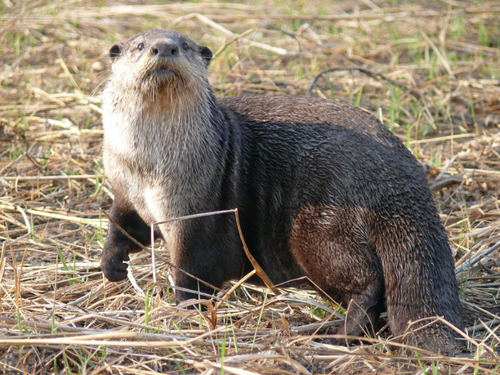
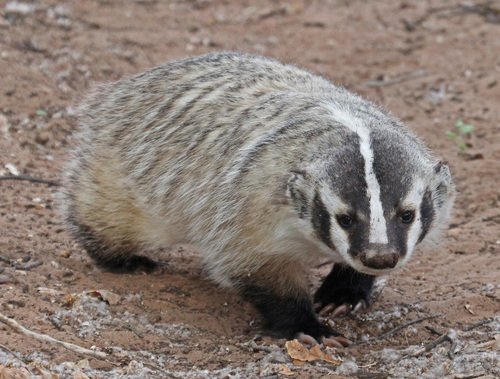
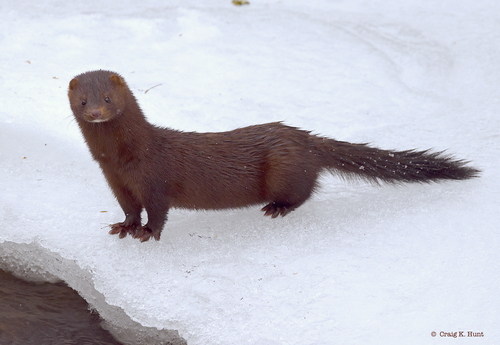
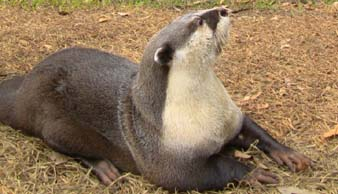
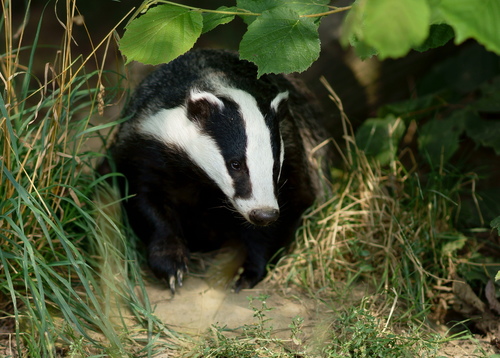
Other species in the family Mustelidae

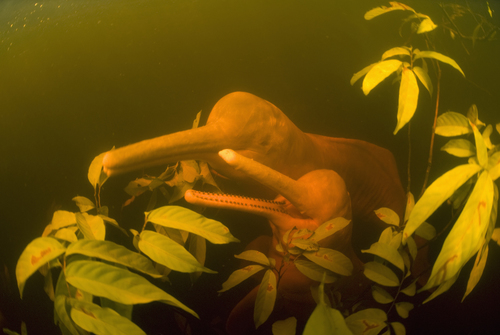
Species that share its range
Sources
Conservation status, range description and population estimate come from the IUCN Red List assessment for Pteronura brasiliensis. Countries are derived from that range description, not from a mapped country list. Last refreshed on .
The distribution map is drawn from the IUCN Red List spatial data compiled in 2015. IUCN (International Union for Conservation of Nature)