
Congo Clawless Otter
Aonyx congicus
Red List assessment
Near Threatenedon the IUCN Red List
- EXExtinct
- EWExtinct in the Wild
- CRCritically Endangered
- ENEndangered
- VUVulnerable
- NTNear Threatened
- LCLeast Concern
The Congo Clawless Otter is recorded in 10 countries across Africa. The IUCN Red List assesses the Congo Clawless Otter as Near Threatened. No reliable global population estimate exists.
- Family
- Mustelidae
- Order
- Carnivora
- Genus
- Aonyx
- Countries recorded
- 10
- Continents
- Africa
- Red List category
- Near Threatened
- Data updated
- August 9, 2026
What is the Congo Clawless Otter?
The Congo Clawless Otter is a semi-aquatic mustelid endemic to the tropical rainforest rivers and swamps of the Congo Basin in Central Africa. It is closely related to the African Clawless Otter (Aonyx capensis) but is generally considered a distinct species, slightly smaller and more confined to dense forested waterways. It is remarkable for its largely clawless, dexterous forefeet, which it uses to feel for prey under rocks and in crevices. Its striking white facial markings distinguish it visually and give it its French common name meaning 'white-cheeked otter of Cameroon.'
Where does the Congo Clawless Otter live?
Central Africa, primarily the Congo Basin: Democratic Republic of Congo, Cameroon, Gabon, Republic of Congo, Central African Republic, Uganda, Rwanda, Burundi, and possibly Nigeria and Angola.
Found across the Congo Basin region: Democratic Republic of Congo (core range), Cameroon (south and east), Gabon, Republic of Congo, Central African Republic, Uganda (western), Rwanda, and Burundi. Possibly also present in northeastern Angola and northwestern Zambia.
Altitude and depth
Mainly found at lowland altitudes from near sea level up to approximately 1,500 m, following forested river systems.
Seasonal movements
No well-documented seasonal migrations. Activity and foraging patterns may shift slightly with seasonal water level fluctuations in the Congo Basin, but the species is generally resident year-round in suitable habitat.
Habitat of the Congo Clawless Otter
Primarily tropical lowland rainforest streams, rivers, swamps, and marshy areas within the Congo Basin. It shows a strong preference for slow to moderately flowing freshwater systems bordered by dense riparian vegetation, which provides cover and denning sites.
Adaptations to its environment
The nearly absent claws on the forefeet are replaced by highly sensitive, flexible digits ideal for tactile prey detection in murky water. The dense, water-repellent fur provides thermal insulation. Powerful webbed hind feet allow efficient swimming, and valve-like nostrils and small ears can be closed when diving.
Conservation status and numbers
Near Threatened (NT) on the IUCN Red List. The population is suspected to be in gradual decline due to ongoing habitat degradation and hunting pressure, but has not yet met the threshold for Vulnerable status. The remoteness of much of its range has made accurate population assessments difficult.
Estimated population
No reliable global population estimate exists. The population trend is considered declining, driven by habitat loss and subsistence hunting across its range.
What threatens the Congo Clawless Otter?
Primary threats include deforestation and degradation of riparian forest habitat due to logging and agricultural expansion; hunting for bushmeat and, historically, the fur trade; incidental capture in fishing nets; and water pollution from mining operations (particularly artisanal diamond and gold mining) in the Congo Basin.
Diseases and parasites
Specific disease and parasite studies for this species are lacking. Related otters are known to carry various helminth parasites and are susceptible to diseases such as canine distemper virus, which could be a risk near human settlements.
What is being done to protect it?
Listed under CITES Appendix II, restricting international commercial trade. Parts of its range overlap with protected areas such as Salonga National Park (DRC), Odzala-Kokoua National Park (Republic of Congo), and Lobéké National Park (Cameroon). However, enforcement in these areas is often limited.
Recommended actions
Priority actions include improved population surveys and monitoring using camera traps and eDNA methods; strengthening anti-poaching enforcement in key protected areas; community-based conservation programs to reduce bushmeat hunting; and mitigation of mining pollution in critical river systems.
What the Congo Clawless Otter looks like
The dorsal fur is uniformly dark chocolate-brown to blackish-brown. The ventral side is lighter, and there are prominent white or creamy-white patches on the cheeks, chin, throat, and upper chest. The muzzle is broad, with a conspicuous set of stiff vibrissae. The body is long and streamlined with a thick, tapering tail.
Size
Head-body length approximately 60–90 cm; tail length 40–60 cm. Total length can reach up to 150 cm. Slightly smaller on average than the African Clawless Otter.
Weight
Typically 10–16 kg. Males are slightly larger than females but the difference is modest.
Distinctive features
Distinguished from the African Clawless Otter (Aonyx capensis) by its more restricted range within dense Congo Basin rainforest, slightly smaller size, and minor morphological differences including claw and skull characteristics. The white facial patches are similar to A. capensis but tend to be more extensive on the cheeks. Distinguished from the Spot-necked Otter (Hydrictis maculicollis) by the absence of spotting on the throat and by having clawless forefeet.
Differences between males and females
Sexual dimorphism is minimal; males are slightly larger and heavier than females on average, but there is no notable difference in coloration or markings.
Behaviour and diet of the Congo Clawless Otter
Generally considered solitary or found in small family units (a mated pair with their most recent offspring). It is not known to form larger social groups. Individuals may share overlapping home ranges, particularly along productive stretches of river.
When it is active
Primarily crepuscular and nocturnal, with peak foraging activity around dawn, dusk, and at night. During daylight hours it tends to rest in dense riparian cover or in dens along riverbanks.
Diet
Carnivorous, feeding mainly on fish, freshwater crabs, frogs, aquatic invertebrates, and occasionally small mammals or birds. Freshwater crabs and fish are thought to form the dietary staple. Like other Aonyx otters, it may consume harder-shelled prey more readily than the Spot-necked Otter due to strong jaw musculature.
How it feeds and hunts
Hunts primarily by tactile exploration — using its sensitive, clawless forepaws to probe under rocks, in mud, and among submerged roots for hidden prey. It may also pursue fish actively in open water. Foraging is often conducted in shallow, slow-moving sections of rivers and swamps.
Communication
Uses a variety of vocalizations including chirps, whistles, and hums for contact calls, and louder calls as alarm signals. Scent marking with anal gland secretions and spraints (feces) on prominent objects along riverbanks is used to delineate home ranges and communicate reproductive status.
Interactions with other species
Potential predators include large crocodilians, pythons, and possibly large raptors targeting juveniles. It may compete for prey with the Spot-necked Otter (Hydrictis maculicollis) where their ranges overlap. As a piscivore and crab predator, it plays a role in regulating aquatic invertebrate and small fish populations.
Role in its ecosystem
Functions as a mid-level predator in Congo Basin freshwater ecosystems, contributing to the regulation of fish and invertebrate communities. Its spraints may also play a minor role in nutrient cycling along riverbanks.
Reproduction and lifecycle
Breeding biology is poorly documented. Based on related species, gestation is estimated at approximately 60–65 days. Litter sizes are likely 1–3 pups. There may be no strict breeding season given the relatively stable equatorial climate of its range.
Raising the young
Parental care is assumed to involve both parents, with the mother playing the primary role in nursing and protection of pups. Young otters remain dependent on parents for several months while learning to swim and hunt. The family unit may stay together until the next litter is born.
Maturity and lifespan
Sexual maturity is estimated at approximately 2 years of age, based on data from closely related species. Wild lifespan is unknown but estimated at 10–15 years; captive individuals of related species have lived over 20 years.
Taxonomy and naming of the Congo Clawless Otter
Classification
Mammalia > Carnivora > Mustelidae > Aonyx > Aonyx congicus
Scientific synonyms
Aonyx capensis congicus (when treated as a subspecies of the African Clawless Otter); Paraonyx congica (Lönnberg, 1910).
What research says
Recent studies
Camera trap surveys in the Congo Basin have occasionally documented this species, but targeted ecological studies remain rare. Phylogeographic analyses have been used to confirm species-level distinction from A. capensis, though the exact boundaries of the species' range remain incompletely mapped.
Genome and DNA
No specific published chromosome count or genome sequence is available for Aonyx congicus. Molecular studies have been used to clarify its taxonomic relationship with Aonyx capensis, supporting its recognition as a distinct species.
Compared with similar species
Most closely related to the African Clawless Otter (Aonyx capensis), from which it was separated taxonomically based on morphological and molecular evidence; A. capensis is larger and occurs in a wider range of habitats across sub-Saharan Africa. The Congo Clawless Otter is ecologically similar to the Spot-necked Otter (Hydrictis maculicollis), which shares parts of its range, but differs in the absence of claws on forefeet, spotted throat markings, and dietary preferences.
The Congo Clawless Otter and people
Despite being called 'clawless,' the Congo Clawless Otter actually retains small, flattened nail-like structures on some digits of its hind feet — it is the forefeet that are truly almost bare. Its hyper-sensitive, clawless forepaws function like hands, allowing it to manipulate and inspect prey with remarkable dexterity. The species is so elusive and understudied that relatively little is known about its behavior in the wild compared to most other otter species.
Where and how to see it
Best observed at dawn and dusk along slow-moving forested rivers and swamps within protected areas such as Salonga National Park (DRC) or Odzala-Kokoua National Park (Republic of Congo). Silent canoe or kayak observation from the water's edge offers the best chance of sighting. Due to its nocturnal tendencies and secretive nature, camera traps set near riverbanks are often more reliable than direct observation.
Risks to humans
No notable risk to humans. Like other otters, it may bite defensively if cornered or handled, but it is not aggressive and poses no venom or disease risk under normal circumstances.
Human uses
Historically hunted for its dense, water-repellent fur and as bushmeat in some parts of its range. It is not known to be used significantly in traditional medicine. International commercial trade is regulated under CITES Appendix II.
Myths and legends
No widely documented myths or legends are specifically associated with this species. In some Central African communities, otters in general may be viewed with a mix of respect and superstition as creatures that bridge aquatic and terrestrial worlds, though specific cultural associations for Aonyx congicus are not well documented.
Countries where the Congo Clawless Otter is recorded
The 10 countries named in the range description of its IUCN Red List assessment.
Questions about the Congo Clawless Otter
Where does the Congo Clawless Otter live?
The Congo Clawless Otter is recorded in Angola, Burundi, Cameroon, Central African Republic and Democratic Republic of the Congo, among 10 countries in total across Africa. These countries come from the range description of its IUCN Red List assessment, and they are what place the species on the interactive map.
Is the Congo Clawless Otter endangered?
The IUCN Red List assesses the Congo Clawless Otter as Near Threatened. The species does not qualify as threatened today, but it is close to the thresholds and likely to cross them soon. It is the category that most often changes at the next assessment.
How many are left in the wild?
No reliable global population estimate exists. This figure comes from the species assessment on the IUCN Red List; population estimates for wild mammals are ranges, not counts, and are revised at each assessment.
What habitat does the Congo Clawless Otter live in?
Primarily tropical lowland rainforest streams, rivers, swamps, and marshy areas within the Congo Basin.
What is the scientific name of the Congo Clawless Otter?
The Congo Clawless Otter is Aonyx congicus, in the family Mustelidae, order Carnivora.
Other species in the genus Aonyx
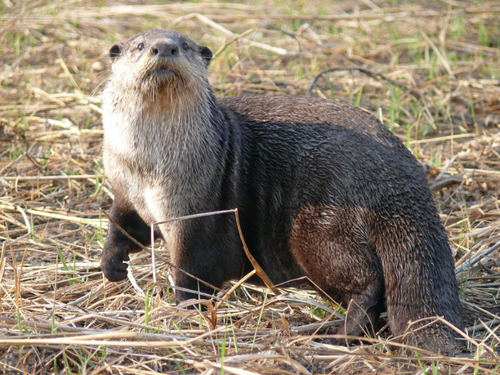
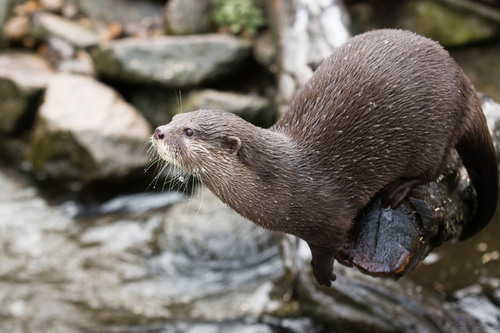
Other species in the family Mustelidae
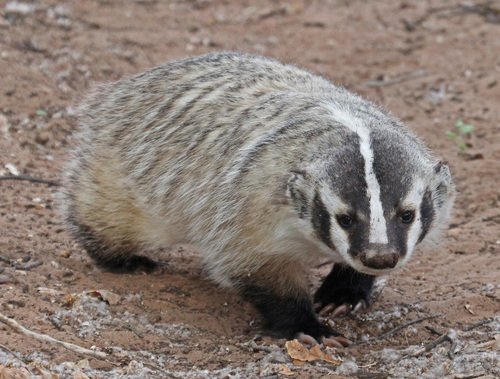
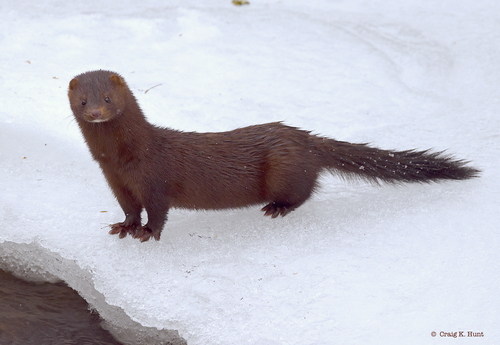

Species that share its range

Sources
Conservation status, range description and population estimate come from the IUCN Red List assessment for Aonyx congicus. Countries are derived from that range description, not from a mapped country list. Last refreshed on .
The distribution map is drawn from the IUCN Red List spatial data compiled in 2015. IUCN (International Union for Conservation of Nature)