
Eurasian Badger
Meles meles
Red List assessment
Least Concernon the IUCN Red List
- EXExtinct
- EWExtinct in the Wild
- CRCritically Endangered
- ENEndangered
- VUVulnerable
- NTNear Threatened
- LCLeast Concern
The Eurasian Badger is recorded in 5 countries across Europe. The IUCN Red List assesses the Eurasian Badger as Least Concern. Estimated at over 1 million individuals across Europe, with populations generally stable or increasing in many countries, though subject to regional culling programs in the UK linked to TB control.
- Family
- Mustelidae
- Order
- Carnivora
- Genus
- Meles
- Countries recorded
- 5
- Continents
- Europe
- Red List category
- Least Concern
- Data updated
- August 9, 2026
What is the Eurasian Badger?
The Eurasian badger is a robust, medium-sized mustelid found across most of Europe and into Asia, recognizable by its distinctive black-and-white striped face. It is a highly adaptable, primarily nocturnal omnivore that lives in complex underground burrow systems called setts, often inhabited by generations of the same family group. Despite being classified as a carnivore, its diet is remarkably varied and it plays an important ecological role as both predator and scavenger. It is one of the most well-studied mammals in Europe due to its widespread distribution and cultural significance.
Where does the Eurasian Badger live?
Europe and parts of Western Asia, including the UK, France, Germany, Scandinavia, Eastern Europe, and extending into Russia and parts of the Middle East
Widespread across continental Europe from Ireland and the UK in the west to Scandinavia in the north, the Mediterranean countries in the south, and eastward through Eastern Europe into Russia and parts of the Caucasus and Middle East.
Altitude and depth
Sea level up to approximately 2000m in mountainous regions, though most populations occur at lower elevations in lowland and hilly terrain.
Seasonal movements
Not a true hibernator but undergoes reduced activity ('winter lethargy') during cold months, relying on fat reserves built up in autumn; activity increases significantly in spring and summer with mating and foraging peaks.
Habitat of the Eurasian Badger
Deciduous and mixed woodlands, hedgerows, grasslands, farmland edges, and scrubland; prefers areas with well-drained soil suitable for digging setts. Also found in suburban and urban environments in parts of its range, particularly in the UK.
Adaptations to its environment
Strong forelimbs and long claws adapted for digging extensive burrow systems; excellent sense of smell compensates for relatively poor eyesight; thick fur and fat reserves provide insulation during winter lethargy periods.
Conservation status and numbers
Least Concern (LC) according to IUCN, reflecting a large, stable, and widespread population across most of its range with no major rangewide declines detected.
Estimated population
Estimated at over 1 million individuals across Europe, with populations generally stable or increasing in many countries, though subject to regional culling programs in the UK linked to TB control.
What threatens the Eurasian Badger?
Road mortality, habitat fragmentation from agricultural intensification and urban development, historical persecution (badger baiting, culling related to bovine tuberculosis control in the UK), and localized hunting in some regions.
Diseases and parasites
Susceptible to bovine tuberculosis (a major concern in UK cattle disease management), as well as various parasites including fleas, ticks, and intestinal worms; also can carry rabies in some historical European contexts.
What is being done to protect it?
Protected under national wildlife laws in most European countries, including the UK's Protection of Badgers Act 1992; setts are legally protected from disturbance in many jurisdictions; ongoing research into TB transmission and vaccination alternatives to culling.
Recommended actions
Continued monitoring of population trends, wildlife road-crossing infrastructure to reduce vehicle collisions, evidence-based alternatives to lethal TB control such as vaccination, and habitat connectivity preservation.
What the Eurasian Badger looks like
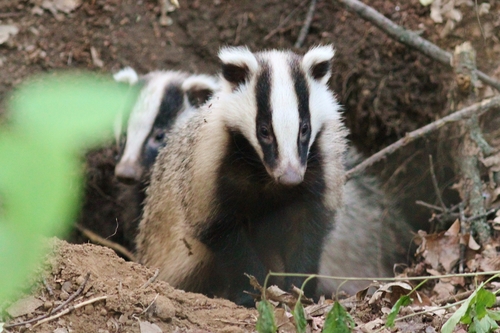
Stocky, low-slung body with grey grizzled fur on the back and flanks, black legs and belly, and a strikingly patterned white head with two broad black stripes running from nose to ears. Small eyes and ears, a pointed muzzle, and a short thick tail complete its distinctive appearance.
Size
Body length 60-90 cm including a short tail of 12-20 cm; shoulder height approximately 25-30 cm.
Weight
Typically 7-13 kg, with significant seasonal variation; males slightly heavier than females on average, with weight peaking in autumn before winter lethargy.
Distinctive features
The bold black-and-white facial stripes are the most immediately recognizable feature, distinguishing it from other mustelids; its stocky build and digging adaptations also set it apart from more slender relatives like weasels and martens.
Differences between males and females
Minimal sexual dimorphism; males (boars) are slightly larger and heavier than females (sows) on average, but visual differences are subtle and not reliably used for field identification.
Behaviour and diet of the Eurasian Badger
Highly social for a mustelid, living in matriarchal family groups called clans of 4-12 individuals sharing a communal sett; group size and social structure vary regionally depending on food availability and habitat quality.
When it is active
Primarily nocturnal and crepuscular, emerging from setts at dusk to forage and returning before dawn; occasional daytime activity observed in undisturbed areas.
Diet
Omnivorous generalist with earthworms forming the dietary staple in many regions, supplemented by insects, small mammals, amphibians, bird eggs, fruits, roots, and cereals depending on seasonal availability.
How it feeds and hunts
Forages primarily by scent and snuffling through leaf litter and soil; digs for earthworms and grubs, and opportunistically preys on small vertebrates or raids nests; does not engage in cooperative hunting.
Communication
Communicates through scent marking via subcaudal and anal glands to mark territory and identify clan members, along with a range of vocalizations including growls, purrs, and chittering, plus body postures during social interactions.
Interactions with other species
Few natural predators as adults due to size and defensive capability, though cubs may fall prey to foxes or birds of prey; competes with foxes for den space and food resources; setts are sometimes shared or later occupied by rabbits or foxes.
Role in its ecosystem
Acts as an ecosystem engineer through extensive burrowing which creates microhabitats used by other species; contributes to seed dispersal through fruit consumption and helps regulate populations of soil invertebrates and small vertebrates.
Reproduction and lifecycle
Mating can occur year-round but is often followed by delayed implantation, with embryos not developing until winter; gestation (active) lasts about 7 weeks, with 1-5 cubs born typically in February.
Raising the young
Cubs are born blind and helpless in the natal chamber of the sett and are cared for primarily by the mother, nursing for about 12 weeks; other clan members may assist in guarding the sett, and cubs become independent by autumn.
Maturity and lifespan
Sexual maturity typically reached at 12-15 months, though breeding success often delayed until 2-3 years of age; lifespan in the wild averages 6-8 years, with maximum records around 14-15 years, and up to 19 years in captivity.
Taxonomy and naming of the Eurasian Badger
Classification
Class: Mammalia > Order: Carnivora > Family: Mustelidae > Genus: Meles > Species: Meles meles
Subspecies
Several subspecies recognized including M. m. meles (Central/Northern Europe), M. m. canescens (Southeastern Europe, Middle East), M. m. leptorhynchus (Asia, sometimes considered separate species Meles leucurus), though taxonomy of Asian populations remains debated.
Scientific synonyms
Ursus meles (Linnaeus, 1758, original description), Meles vulgaris, Meles taxus
What research says
Recent studies
Recent research has focused on badger movement ecology using GPS tracking, social network dynamics within clans, and the epidemiology of bovine tuberculosis transmission between badgers and cattle, informing conservation and disease management policy debates.
Genome and DNA
Diploid chromosome number of 2n=44; genetic studies have revealed population structuring across Europe linked to Ice Age refugia and postglacial recolonization patterns.
Compared with similar species
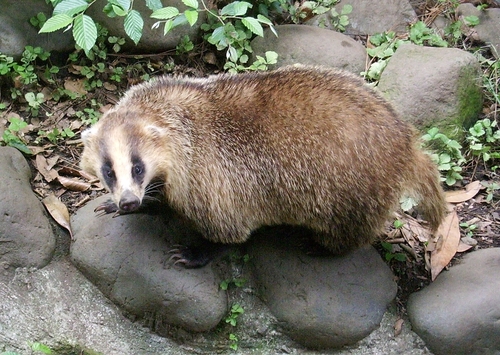
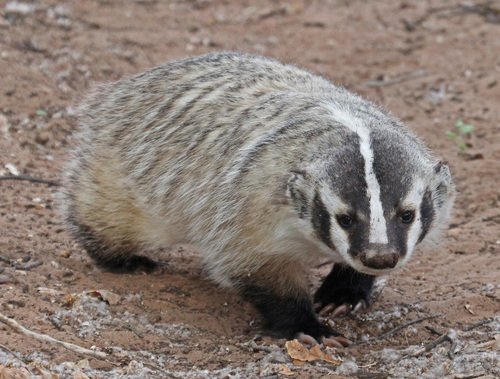
Similar in general body plan to the American badger (Taxidea taxus) but the Eurasian badger is more social and less specialized for open grassland digging; distinguishable from other Meles species (e.g., Asian badger, Meles leucurus) primarily through subtle skull and pelage differences.
The Eurasian Badger and people
Badger setts can be centuries old, passed down through generations and sometimes containing dozens of entrances and tunnels; badgers are known to be meticulous, maintaining separate 'latrine' areas away from their sleeping chambers; despite being carnivores, earthworms can make up the majority of their diet in some regions.
Where and how to see it
Best observed at dusk near known sett entrances in woodland edges or hedgerows during spring and summer months; quiet, patient waiting downwind of a sett with minimal artificial light increases chances of sighting.
Risks to humans
Generally low risk to humans; bites can occur if cornered or handled, and there is a small risk of disease transmission (e.g., bovine TB) though direct human infection is rare; mainly of concern in agricultural contexts related to livestock disease.
Human uses
Historically hunted for fur and meat in some regions, and badger hair has been used traditionally in shaving brush bristles; also significant in wildlife tourism and as a flagship species for hedgerow and woodland conservation efforts.
Myths and legends
In British and European folklore, badgers have been associated with wisdom, tenacity, and home-loving virtues, appearing in literature such as 'The Wind in the Willows'; in some rural traditions, badgers were historically persecuted due to superstitions linking them to bad luck.
Countries where the Eurasian Badger is recorded
The 5 countries named in the range description of its IUCN Red List assessment.
Questions about the Eurasian Badger
Where does the Eurasian Badger live?
The Eurasian Badger is recorded in France, Germany, Ireland, Russia and United Kingdom across Europe. These countries come from the range description of its IUCN Red List assessment, and they are what place the species on the interactive map.
Is the Eurasian Badger endangered?
The IUCN Red List assesses the Eurasian Badger as Least Concern. The species is widespread and abundant enough not to qualify for any threatened category. It does not mean the species is safe forever, only that nothing in the current data raises an alarm.
How many are left in the wild?
Estimated at over 1 million individuals across Europe, with populations generally stable or increasing in many countries, though subject to regional culling programs in the UK linked to TB control. This figure comes from the species assessment on the IUCN Red List; population estimates for wild mammals are ranges, not counts, and are revised at each assessment.
What habitat does the Eurasian Badger live in?
Deciduous and mixed woodlands, hedgerows, grasslands, farmland edges, and scrubland; prefers areas with well-drained soil suitable for digging setts.
What is the scientific name of the Eurasian Badger?
The Eurasian Badger is Meles meles, in the family Mustelidae, order Carnivora.
Other species in the genus Meles
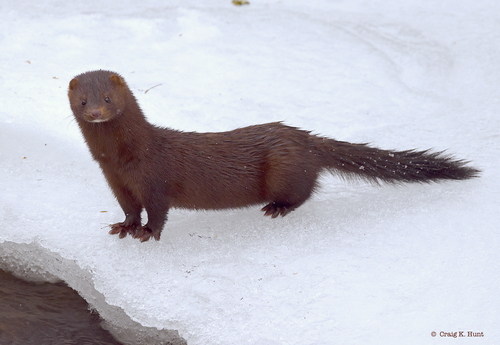
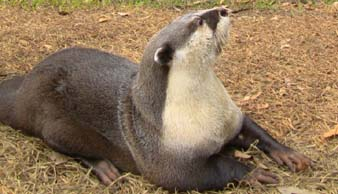
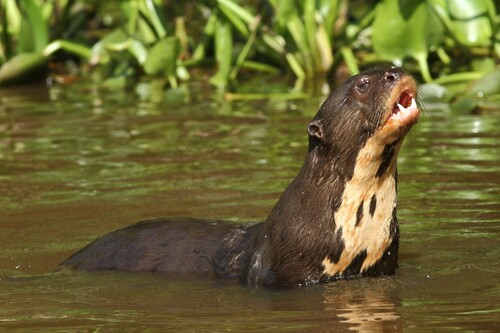
Other species in the family Mustelidae

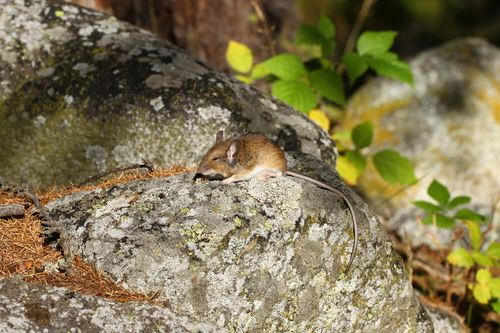
Species that share its range

Sources
Conservation status, range description and population estimate come from the IUCN Red List assessment for Meles meles. Countries are derived from that range description, not from a mapped country list. Last refreshed on .
The distribution map is drawn from the IUCN Red List spatial data compiled in 2016. IUCN (International Union for Conservation of Nature)