
Andean Bear
Tremarctos ornatus
Red List assessment
Vulnerableon the IUCN Red List
- EXExtinct
- EWExtinct in the Wild
- CRCritically Endangered
- ENEndangered
- VUVulnerable
- NTNear Threatened
- LCLeast Concern
The Andean Bear is recorded in 6 countries across South America. The IUCN Red List assesses the Andean Bear as Vulnerable. Estimated total population is between 2500 and 10000 mature individuals, with a decreasing population trend across most of its range.
- Family
- Ursidae
- Order
- Carnivora
- Genus
- Tremarctos
- Countries recorded
- 6
- Continents
- South America
- Red List category
- Vulnerable
- Data updated
- August 9, 2026
What is the Andean Bear?
The Andean bear, also called the spectacled bear, is the only extant bear species native to South America and the last surviving member of the subfamily Tremarctinae. It inhabits the tropical Andes from Venezuela to Bolivia, favoring cloud forests and páramo habitats. It is remarkable for its distinctive facial markings resembling spectacles and its highly frugivorous diet compared to other bears. As a shy, elusive animal, it plays a crucial ecological role as a seed disperser in Andean ecosystems.
Where does the Andean Bear live?
Andean mountain range countries: Venezuela, Colombia, Ecuador, Peru, Bolivia, and far northern Argentina
Distributed along the tropical Andes mountain range in South America, from western Venezuela through Colombia, Ecuador, Peru, Bolivia, to the very north of Argentina. Populations are fragmented due to habitat loss along this narrow mountainous corridor.
Altitude and depth
Typically found between 200 and 4750 meters elevation, though most commonly observed between 1000 and 2700 meters in cloud forest zones.
Seasonal movements
No true hibernation occurs due to relatively stable tropical mountain climate; however, bears may shift elevation seasonally following fruit availability, moving to lower or higher zones as different food sources ripen.
Habitat of the Andean Bear
Found in a wide variety of habitats including cloud forests, high-altitude páramo grasslands, dry forests, and montane scrublands. It shows strong association with humid montane forests but can also traverse more arid regions when moving between habitats.
Adaptations to its environment
Strong climbing ability with curved claws allows access to fruit in trees and construction of platform nests for feeding and resting. Their varied dentition reflects an omnivorous diet, and thick fur provides insulation against cool montane temperatures.
Conservation status and numbers
Classified as Vulnerable by the IUCN due to ongoing habitat loss, fragmentation, and population decline estimated at over 30% over the past three generations. The species faces continued pressure from deforestation and human-wildlife conflict throughout its range.
Estimated population
Estimated total population is between 2500 and 10000 mature individuals, with a decreasing population trend across most of its range.
What threatens the Andean Bear?
Major threats include habitat loss from agricultural expansion and logging, human-wildlife conflict due to crop and livestock raiding, poaching for body parts used in traditional medicine, and habitat fragmentation isolating populations.
Diseases and parasites
Known to be affected by internal parasites such as roundworms and external parasites like ticks; disease information in wild populations remains limited due to difficulty of study.
What is being done to protect it?
Protected under national laws in all range countries and listed on CITES Appendix I. Conservation efforts include protected areas such as Podocarpus National Park in Ecuador and Sangay National Park, along with community-based conservation programs and corridors connecting fragmented habitats.
Recommended actions
Priority actions include expanding and connecting protected habitat corridors, mitigating human-bear conflict through community education and compensation programs, strengthening anti-poaching enforcement, and conducting further population monitoring studies.
What the Andean Bear looks like
Predominantly black or dark brown fur with distinctive cream or beige markings around the eyes, muzzle, and chest that vary uniquely between individuals. The facial markings often resemble spectacles or masks, giving rise to its common name.
Size
Body length ranges from approximately 120 to 200 cm, with shoulder height around 70 to 90 cm.
Weight
Males typically weigh between 100 and 200 kg, while females are smaller, weighing between 35 and 82 kg.
Distinctive features
Unlike other bear species, it has a shorter face, distinctive pale facial markings unique to each individual, and is the only bear native to South America. Its smaller size and more herbivorous diet also distinguish it from most other Ursidae.
Differences between males and females
Males are notably larger than females, sometimes weighing more than twice as much, and this size disparity is one of the most pronounced among bear species.
Behaviour and diet of the Andean Bear
Generally solitary animals except during mating season or when females are raising cubs. Home ranges of males may overlap with those of several females, but bears typically avoid direct social interaction outside of breeding.
When it is active
Primarily diurnal to crepuscular, though activity patterns can shift to more nocturnal behavior in areas of higher human disturbance to avoid contact with people.
Diet
Highly omnivorous but predominantly frugivorous, consuming a wide variety of fruits, bromeliads, cacti, orchid bulbs, and palm hearts. Occasionally supplements diet with insects, small vertebrates, and carrion when available.
How it feeds and hunts
Rather than hunting, the bear forages using strong forelimbs and claws to strip bark, dig for roots, and climb trees to access fruit; it occasionally opportunistically kills small livestock or wildlife.
Communication
Communicates through vocalizations such as huffs, grunts, and screams, as well as scent marking on trees to signal territory and reproductive status. Body posture and claw marks on trees also serve as visual communication signals.
Interactions with other species
Adults have few natural predators due to their size, though pumas may occasionally threaten cubs. They compete indirectly with other frugivores for fruit resources and play a role in seed dispersal that benefits many plant species.
Role in its ecosystem
Serves a key ecological role as a seed disperser for numerous Andean plant species, contributing to forest regeneration and biodiversity maintenance. Its foraging activities also help maintain structural diversity within montane forest ecosystems.
Reproduction and lifecycle
Breeding season typically occurs between April and June, with gestation lasting around 160 to 255 days due to delayed implantation. Litters usually consist of one to three cubs, born in a den during the following months.
Raising the young
Mothers provide sole parental care, nursing and protecting cubs in a den for the first few months before venturing out. Cubs stay with their mother for up to a year or more, learning foraging skills before becoming independent.
Maturity and lifespan
Sexual maturity is typically reached around 4 to 7 years of age. Lifespan in the wild is estimated at 20 to 25 years, while individuals in captivity can live up to 35 years.
Taxonomy and naming of the Andean Bear
Classification
Class Mammalia > Order Carnivora > Family Ursidae > Genus Tremarctos > Species Tremarctos ornatus
Scientific synonyms
Ursus ornatus (original name given by Cuvier in 1825)
What research says
Recent studies
Recent studies using camera trap networks and GPS collar data have provided new insights into home range sizes, movement corridors, and habitat connectivity needs across fragmented Andean landscapes.
Genome and DNA
The Andean bear has a diploid chromosome number of 52, and genetic studies have confirmed its distinct evolutionary lineage as the sole surviving member of the Tremarctinae subfamily.
Compared with similar species
Compared to the American black bear, the Andean bear is generally smaller, more arboreal, and far more frugivorous in diet. It differs from the extinct short-faced bears of its subfamily by being considerably smaller and less carnivorous.
The Andean Bear and people
Each Andean bear has unique facial markings, much like a human fingerprint, allowing researchers to identify individuals. They are also skilled tree climbers and build platform nests in trees to rest and feed on fruit.
Where and how to see it
Best observed in protected reserves such as Ecuador's Cajas National Park or Peru's Chaparri Reserve during early morning or late afternoon hours when bears are most active. Patience and use of local guides greatly increase chances of sighting due to the species' shy and elusive nature.
Risks to humans
Generally poses low risk to humans and tends to avoid contact, though conflicts can arise when bears raid crops or livestock, occasionally resulting in defensive aggression if cornered.
Human uses
Historically hunted for body parts used in traditional medicine and as trophies, though this practice is now illegal in most range countries. The species also holds significant value for ecotourism in several Andean protected areas.
Myths and legends
In Andean folklore, the bear is often associated with mountain spirits and is featured in indigenous myths as a guardian of the forest or a transformative shapeshifting figure. It holds cultural significance in various indigenous communities across its range, including symbolism in Incan mythology.
Countries where the Andean Bear is recorded
The 6 countries named in the range description of its IUCN Red List assessment.
Questions about the Andean Bear
Where does the Andean Bear live?
The Andean Bear is recorded in Argentina, Bolivia, Colombia, Ecuador and Peru, among 6 countries in total across South America. These countries come from the range description of its IUCN Red List assessment, and they are what place the species on the interactive map.
Is the Andean Bear endangered?
Yes. The IUCN Red List assesses the Andean Bear as Vulnerable, one of the three threatened categories. The species faces a high risk of extinction in the wild. It is the first of the three threatened categories: numbers are falling, the range is shrinking, or the population is small enough that a single bad event could do lasting damage.
How many are left in the wild?
Estimated total population is between 2500 and 10000 mature individuals, with a decreasing population trend across most of its range. This figure comes from the species assessment on the IUCN Red List; population estimates for wild mammals are ranges, not counts, and are revised at each assessment.
What habitat does the Andean Bear live in?
Found in a wide variety of habitats including cloud forests, high-altitude páramo grasslands, dry forests, and montane scrublands.
What is the scientific name of the Andean Bear?
The Andean Bear is Tremarctos ornatus, in the family Ursidae, order Carnivora.
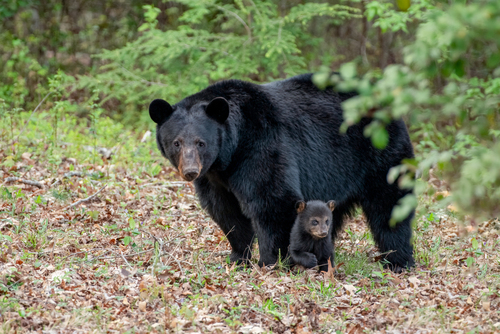
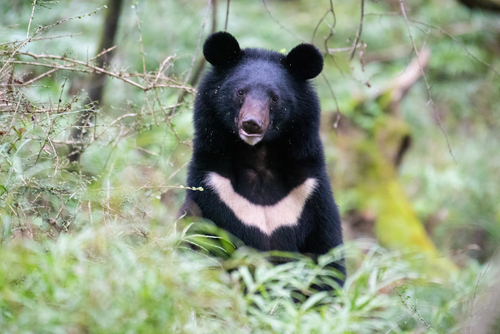
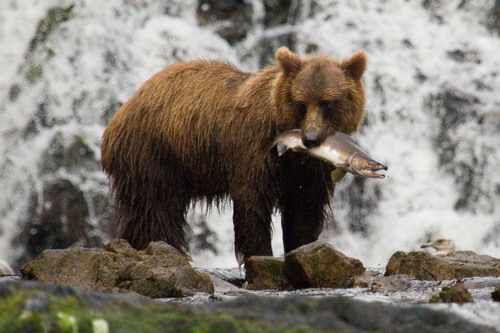
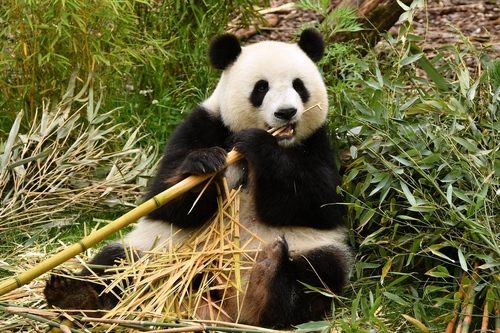
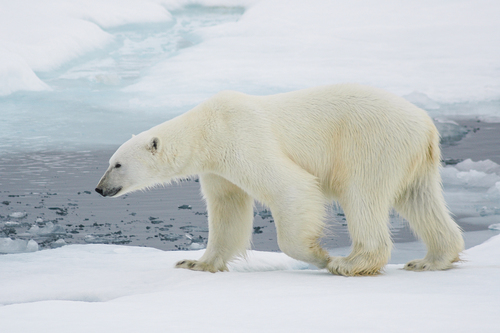
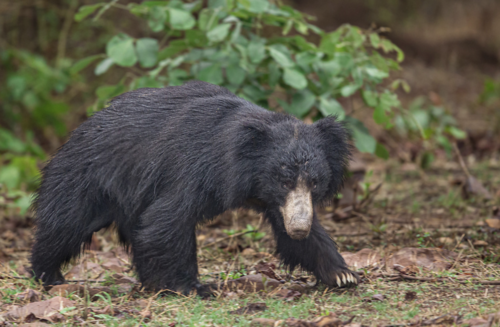
Other species in the family Ursidae
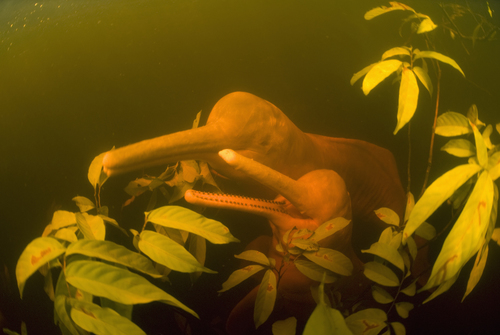
Species that share its range
Sources
Conservation status, range description and population estimate come from the IUCN Red List assessment for Tremarctos ornatus. Countries are derived from that range description, not from a mapped country list. Last refreshed on .
The distribution map is drawn from the IUCN Red List spatial data compiled in 2017. IUCN (International Union for Conservation of Nature)