
African Clawless Otter
Aonyx capensis
Red List assessment
Near Threatenedon the IUCN Red List
- EXExtinct
- EWExtinct in the Wild
- CRCritically Endangered
- ENEndangered
- VUVulnerable
- NTNear Threatened
- LCLeast Concern
The African Clawless Otter is recorded in 19 countries across Africa. The IUCN Red List assesses the African Clawless Otter as Near Threatened. No reliable global census exists.
- Family
- Mustelidae
- Order
- Carnivora
- Genus
- Aonyx
- Countries recorded
- 19
- Continents
- Africa
- Red List category
- Near Threatened
- Data updated
- August 9, 2026
What is the African Clawless Otter?
The African clawless otter is the second largest otter in the world, surpassed only by the giant otter of South America. It inhabits rivers, estuaries, wetlands, and coastal marine environments across sub-Saharan Africa. Remarkable for its largely clawless feet and highly dexterous, partially webbed 'hands,' it is uniquely adapted to tactile foraging in murky waters. Its bold white-to-cream facial markings make it one of the most recognizable otter species in Africa.
Where does the African Clawless Otter live?
Sub-Saharan Africa, from Senegal and Sudan south to South Africa; absent from the Congo Basin rainforest core
Broadly distributed across sub-Saharan Africa: South Africa, Lesotho, Eswatini, Namibia, Botswana, Zimbabwe, Mozambique, Tanzania, Kenya, Uganda, Ethiopia, Cameroon, Nigeria, Senegal, Gambia, Guinea-Bissau, Sierra Leone, DRC margins. Notably absent from the interior Congo Basin and true Sahara.
Altitude and depth
Sea level to approximately 2,800 m in the Ethiopian Highlands and East African montane zones; most common below 2,000 m. In coastal South Africa it regularly forages in the intertidal and subtidal marine zone.
Seasonal movements
No strict migration. Breeding peaks vary by region; in southern Africa cubs are often born in spring (August–November). Activity levels may increase during rainy season when prey is more abundant. No hibernation.
Habitat of the African Clawless Otter
Freshwater rivers, streams, lakes, seasonal pools, estuaries, mangroves, and rocky coastlines with kelp beds. Strongly associated with dense riparian vegetation for shelter and denning. Tolerates a wide range of altitudes but consistently requires access to clean water and bankside cover.
Adaptations to its environment
Forefeet are largely unwebbed and highly sensitive, functioning as dexterous hands for feeling under rocks and in crevices. Hind feet are webbed for swimming propulsion. Dense, water-repellent double-layered fur traps air for insulation. Eyes and nostrils can close underwater; a tapetum lucidum aids low-light vision. In coastal South Africa individuals have adapted to saltwater foraging in kelp forests, regularly consuming marine crabs and octopus.
Conservation status and numbers
Near Threatened (NT) on the IUCN Red List (assessed 2014, under review). Although the species retains a wide range, ongoing habitat degradation, water pollution, and localized hunting are producing a slow but continuous population decline that approaches, but does not yet meet, Vulnerable thresholds.
Estimated population
No reliable global census exists. Population trend is considered declining across most of the range, though the species remains locally common in protected areas such as iSimangaliso Wetland Park (South Africa) and several East African national parks.
What threatens the African Clawless Otter?
Water pollution (agricultural pesticides, mining effluents) reducing prey availability and causing direct toxicity. Habitat loss through wetland drainage and river channelization. Accidental drowning in gill nets and fish traps. Persecution by fish farmers and subsistence fishers. Road kills near river crossings. In some regions, hunting for traditional medicine and the bushmeat trade.
Diseases and parasites
Susceptible to various endoparasites including nematodes (Pseudolupus and Toxocara spp.) and cestodes. Reported to contract canine distemper virus in areas with feral dog populations. Mange (Sarcoptes scabiei) recorded in some individuals. Organochlorine and heavy metal bioaccumulation documented in coastal South African populations, affecting reproduction and immune function.
What is being done to protect it?
Protected under CITES Appendix II, limiting commercial trade. Listed under national legislation in South Africa (Nature Conservation Ordinances), Kenya Wildlife Act, and similar statutes across range states. Conservation managed within numerous protected areas including iSimangaliso, Kruger NP, Okavango Delta, and the Garden Route National Park (near the given coordinates). The IUCN Otter Specialist Group monitors populations and coordinates surveys.
Recommended actions
Improved water quality regulation and enforcement of anti-pollution laws. Installation of otter-friendly escape hatches in fish traps and gill nets. Expansion of riparian buffer zones and wetland protection. Systematic population monitoring with standardized survey methods. Community education programs targeting fish farmers and subsistence fishers. Reassessment of IUCN status with updated population data.
What the African Clawless Otter looks like
Large, robust mustelid with a broad, flattened head and a long, tapered tail. Dorsal fur is dark chocolate-brown to dark gray-brown; the cheeks, chin, throat, chest, and sides of the neck are white to pale cream. The belly is paler than the back. The lips and muzzle are fleshy pink.
Size
Head-body length 73–95 cm; tail 41–67 cm; total length up to 1.6 m. Shoulder height approximately 25–30 cm.
Weight
Males typically 13–21 kg; females 10–16 kg. The species is noticeably sexually dimorphic in mass.
Distinctive features
Absence of functional claws (only small rudimentary claws on digits 2–4 of the forefeet, absent on hind feet) distinguishes it from the spotted-necked otter (Hydrictis maculicollis), which has full claws and spotted markings. It is larger and has a plain dark back, unlike the spotted-necked otter's speckled throat and chest. The Congo clawless otter (Aonyx congicus) is smaller with a less extensive white facial patch.
Differences between males and females
Males are significantly heavier (up to 30% more) and slightly longer than females. Coloration is essentially identical between sexes. Males may have a broader, more muscular neck.
Behaviour and diet of the African Clawless Otter
Predominantly solitary outside of the breeding season. Adult males hold overlapping home ranges with females but are generally intolerant of other adult males. Family groups consisting of a female and her sub-adult offspring may forage and rest together for up to a year. Home ranges vary from 3 to over 30 km of watercourse depending on prey availability.
When it is active
Mainly crepuscular and nocturnal, though also active by day in undisturbed areas. Peak activity typically occurs at dawn and dusk. Rests in dense riparian vegetation, rock crevices, or burrows dug by other species during midday heat.
Diet
Carnivorous. Primary prey includes freshwater crabs (dominant in many areas), fish, frogs, molluscs, and aquatic invertebrates. Coastal populations additionally consume marine crabs, octopus, and mussels. Occasionally takes small birds, rodents, and large insects.
How it feeds and hunts
Forages primarily by touch rather than sight: inserts sensitive forepaws into holes and under rocks to feel for prey, earning it the nickname 'hands' of the otter world. Fish are chased underwater with bursts of agile swimming and caught in the mouth. Crabs and molluscs are brought to shore and manipulated with the forefeet before consumption. May also use its whiskers (vibrissae) to detect water movements from fish.
Communication
Vocal repertoire includes a high-pitched whistle (contact call), explosive 'ha' alarm calls, chirping and mewing between mother and cubs, and growling during agonistic encounters. Scent marking is prominent: sprainting (depositing feces) at conspicuous sites along waterways demarcates territories. Anal gland secretions are used in direct scent marking. Body posturing and tail position convey social signals.
Interactions with other species
Predators include leopard, crocodile, large birds of prey (African fish eagle), and pythons, particularly of young otters. Competes with spotted-necked otters and various fish-eating birds for aquatic prey. In coastal areas, competes with Cape clawless crab-eaters such as black-backed jackals. May occasionally cache or steal fish from cormorants. Has a symbiotic relationship with riparian vegetation through nutrient deposition from sprainting.
Role in its ecosystem
Mesopredator and keystone species in riverine and wetland ecosystems. Controls populations of crabs, frogs, and fish, structuring benthic invertebrate communities. Acts as a bioindicator of water quality: its presence signals a healthy, unpolluted aquatic ecosystem. Spraints deposit nutrients at the water's edge, supporting riparian plant growth.
Reproduction and lifecycle
No strictly fixed breeding season across the range; in southern Africa births peak August–November. Gestation lasts approximately 60–65 days. Litter size is typically 2–3 cubs (range 1–5). Cubs are born in a secluded burrow or dense vegetation.
Raising the young
The female raises cubs largely alone; paternal involvement is generally minimal or absent. Cubs are born helpless and blind, opening their eyes at about 5 weeks. They begin swimming at about 6 weeks with coaching from the mother. Solid food is introduced from around 8–10 weeks; weaning occurs at 3–4 months. Juveniles may remain with the mother for up to a year before dispersal.
Maturity and lifespan
Sexual maturity is reached at approximately 1–2 years of age. Lifespan in the wild is estimated at 10–12 years; captive individuals have lived up to 15–17 years.
Taxonomy and naming of the African Clawless Otter
Classification
Mammalia > Carnivora > Mustelidae > Aonyx > Aonyx capensis
Subspecies
A. c. capensis (Schinz, 1821) – Southern Africa; A. c. hindei (Thomas, 1905) – East Africa; A. c. meneliki (Thomas, 1902) – Ethiopia; A. c. congicus (Lönnberg, 1910) – Central Africa. Some authorities also recognize A. c. helios (Heller, 1913) from the East African coast.
Scientific synonyms
Lutra capensis G. Cuvier, 1823; Paraonyx capensis; Aonyx microdon Pohle, 1920. Previously placed in genus Lutra before morphological revision.
What research says
Recent studies
Recent stable isotope studies (2018–2023) in South Africa have revealed a greater reliance on marine prey in coastal populations than previously appreciated, demonstrating dietary plasticity. Camera-trap surveys in East Africa (2020–2023) provided new data on home range sizes and activity budgets. Environmental DNA (eDNA) methods are being piloted to survey populations non-invasively across river systems.
Genome and DNA
The diploid chromosome number is reported as 2n = 38, consistent with related mustelids. Limited genomic studies exist; phylogenomic analyses place Aonyx as sister to Lutrinae clawed otters, with the Congo clawless otter (A. congicus) as its closest relative.
Compared with similar species
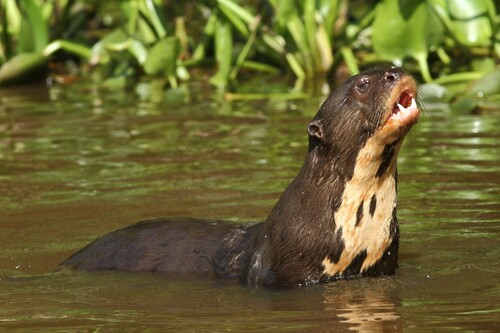
Compared to the spotted-necked otter (Hydrictis maculicollis), the African clawless otter is roughly twice as heavy, lacks claws, and favors crabs over fish. The Congo clawless otter (Aonyx congicus) is smaller (6–9 kg), paler, and restricted to the Congo Basin. The Asian small-clawed otter (Aonyx cinereus) is far smaller (2–5 kg) and occupies a similar ecological niche in Asia. The giant otter (Pteronura brasiliensis) of South America exceeds it in length but shares a similarly bold facial pale patch.
The African Clawless Otter and people
Unlike most otters, the African clawless otter uses its highly dexterous forepaws almost like human hands — it can open shellfish, manipulate objects, and even 'feel' for hidden prey entirely by touch in turbid water. Coastal individuals in the Western Cape of South Africa regularly dive in cold Atlantic kelp forests, showing remarkable thermal and ecological flexibility. Despite their largely solitary lifestyle, captive groups have been observed playing elaborate chase and wrestling games well into adulthood.
Where and how to see it
Best observed at dawn or dusk along clean, slow-moving rivers and estuaries. The Garden Route (Wilderness Lagoon, Knysna Estuary) and iSimangaliso Wetland Park in South Africa are among the most reliable sites. Scanning sandbanks and rocky shores for characteristic spiraling spraint sites (spraints are often deposited on prominent rocks) helps locate territories. Quiet approach on foot along riverbanks is essential; use of binoculars allows observation at a distance without disturbance.
Risks to humans
Generally not dangerous. Can inflict a painful bite if cornered, handled, or protecting cubs. No venomous properties. No documented transmission of zoonotic disease to humans under natural conditions, though standard precautions apply when handling injured animals.
Human uses
Historically trapped for its dense, water-repellent pelt in some regions, though commercial fur trade has largely ceased. In parts of West and Central Africa, individuals are occasionally taken for the bushmeat trade or traditional medicine. The species is kept in a small number of zoological collections worldwide for conservation education. It is increasingly valued as an ecotourism asset, particularly in South African river and coastal tourism circuits.
Myths and legends
Among some southern African communities, otters are associated with water spirits and are considered omens of rain or flooding. In certain Zulu traditions, encountering an otter at a river is seen as a sign of a healthy ancestral connection to water. The species features in San (Bushman) oral traditions of the Cape region, where it is sometimes depicted as a trickster figure skilled at obtaining food through cunning.
Countries where the African Clawless Otter is recorded
The 19 countries named in the range description of its IUCN Red List assessment.
Questions about the African Clawless Otter
Where does the African Clawless Otter live?
The African Clawless Otter is recorded in Botswana, Cameroon, Democratic Republic of the Congo, Eswatini and Ethiopia, among 19 countries in total across Africa. These countries come from the range description of its IUCN Red List assessment, and they are what place the species on the interactive map.
Is the African Clawless Otter endangered?
The IUCN Red List assesses the African Clawless Otter as Near Threatened. The species does not qualify as threatened today, but it is close to the thresholds and likely to cross them soon. It is the category that most often changes at the next assessment.
How many are left in the wild?
No reliable global census exists. This figure comes from the species assessment on the IUCN Red List; population estimates for wild mammals are ranges, not counts, and are revised at each assessment.
What habitat does the African Clawless Otter live in?
Freshwater rivers, streams, lakes, seasonal pools, estuaries, mangroves, and rocky coastlines with kelp beds.
What is the scientific name of the African Clawless Otter?
The African Clawless Otter is Aonyx capensis, in the family Mustelidae, order Carnivora.
Other species in the genus Aonyx
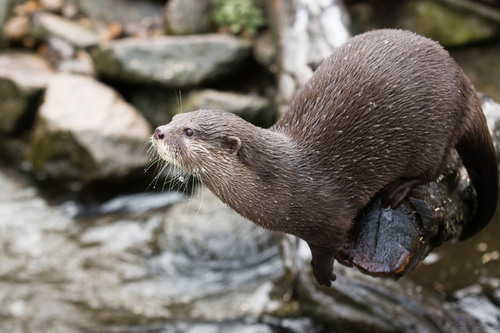
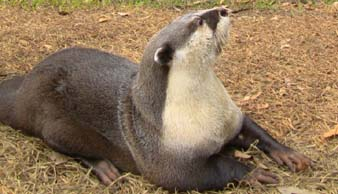
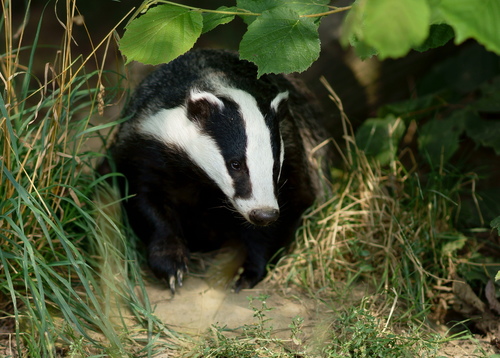
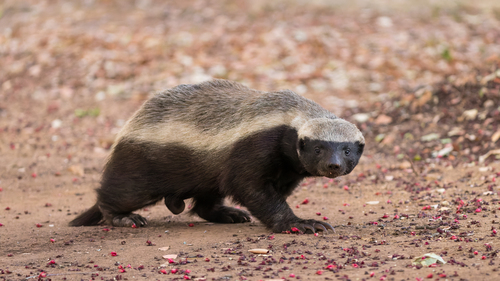
Other species in the family Mustelidae
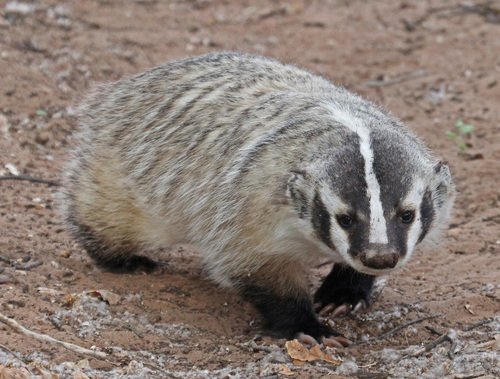
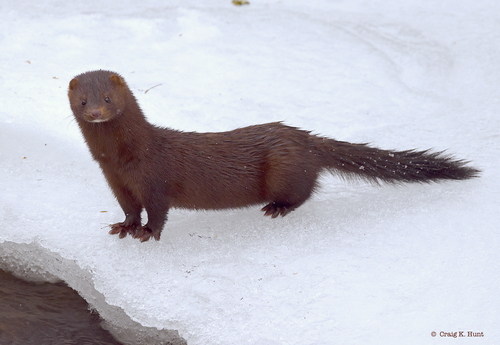

Species that share its range
Sources
Conservation status, range description and population estimate come from the IUCN Red List assessment for Aonyx capensis. Countries are derived from that range description, not from a mapped country list. Last refreshed on .
The distribution map is drawn from the IUCN Red List spatial data compiled in 2015. IUCN (International Union for Conservation of Nature)