
Eurasian Otter
Lutra lutra
Red List assessment
Near Threatenedon the IUCN Red List
- EXExtinct
- EWExtinct in the Wild
- CRCritically Endangered
- ENEndangered
- VUVulnerable
- NTNear Threatened
- LCLeast Concern
The Eurasian Otter is recorded in 8 countries across Africa, Asia and Europe. The IUCN Red List assesses the Eurasian Otter as Near Threatened. Global population unknown precisely but considered stable to increasing in Western Europe, while declining in parts of Asia; regional estimates suggest tens of thousands of individuals across the range.
- Family
- Mustelidae
- Order
- Carnivora
- Genus
- Lutra
- Countries recorded
- 8
- Continents
- Africa, Asia and Europe
- Red List category
- Near Threatened
- Data updated
- August 9, 2026
What is the Eurasian Otter?
The Eurasian otter is a semi-aquatic mustelid found across a vast range from Ireland to Japan. It is a highly adaptable predator inhabiting freshwater and coastal ecosystems, known for its streamlined body and playful behavior. As a top predator in freshwater systems, it serves as an important indicator of water quality and ecosystem health. Despite its wide distribution, it has faced significant historical declines due to pollution and habitat loss.
Where does the Eurasian Otter live?
Widespread across Europe and Asia, including the UK, Ireland, Scandinavia, Southern and Eastern Europe, Russia, and parts of North Africa and Southeast Asia
Found across Europe from Ireland and Britain through Scandinavia, Southern and Eastern Europe, Russia, into Central Asia, the Indian subcontinent, China, and parts of Southeast Asia including Indonesia. Also present in North Africa (Morocco, Tunisia, Algeria).
Altitude and depth
Sea level up to 2,500m in mountainous regions such as the Himalayas; dives typically range from surface to a few meters depth in freshwater habitats.
Seasonal movements
No true hibernation or long-distance migration, though activity patterns may shift seasonally with prey availability and ice cover in northern regions.
Habitat of the Eurasian Otter
Rivers, lakes, marshes, streams, and coastal marine habitats with abundant vegetation cover for holts (dens). Requires clean water with healthy fish populations and riparian vegetation for shelter and denning sites.
Adaptations to its environment
Dense, waterproof double-layered fur provides insulation in cold water; webbed feet, a streamlined body, and a powerful tail enable efficient swimming. Nostrils and ears close underwater, and long whiskers help detect prey in murky water.
Conservation status and numbers
Near Threatened (NT) by IUCN, having recovered from severe historical declines in Western Europe due to pesticide bans and habitat protection, though populations remain fragmented and vulnerable in parts of its range.
Estimated population
Global population unknown precisely but considered stable to increasing in Western Europe, while declining in parts of Asia; regional estimates suggest tens of thousands of individuals across the range.
What threatens the Eurasian Otter?
Water pollution (pesticides, heavy metals), habitat destruction, road mortality, declining fish stocks, and historical hunting for fur; illegal poaching persists in parts of Asia.
Diseases and parasites
Susceptible to parasites such as flukes and roundworms, as well as diseases like canine distemper virus and leptospirosis in some populations.
What is being done to protect it?
Protected under the Bern Convention, EU Habitats Directive, and CITES Appendix I; reintroduction programs in the UK and habitat restoration projects across Europe have supported recovery.
Recommended actions
Continued water quality monitoring, protection of riparian habitats, reduction of road mortality through wildlife crossings, and stronger enforcement against poaching in Asian range states.
What the Eurasian Otter looks like
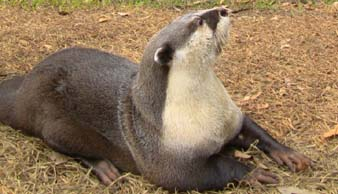
Sleek brown fur with a paler, often cream-colored throat and underside; streamlined body, flattened head, small ears, and a thick tapering tail used for propulsion.
Size
Body length 60-90 cm with a tail of 35-45 cm, totaling up to 1.3 meters; shoulder height approximately 30 cm.
Weight
Males typically weigh 7-12 kg, while females are smaller at 5-8 kg.
Distinctive features
Distinguished from the North American river otter by a shorter, broader head and different skull morphology; distinguished from other otter species by its range and slightly smaller size compared to giant otters.
Differences between males and females
Males are generally 20-30% larger and heavier than females, though coloration is similar between sexes.
Behaviour and diet of the Eurasian Otter
Primarily solitary, with individuals maintaining home ranges that may overlap; occasional loose social interactions occur, especially between mothers and offspring or during mating.
When it is active
Primarily nocturnal and crepuscular, though can be active during the day in undisturbed areas with abundant food.
Diet
Carnivorous, feeding mainly on fish (eels, salmonids, cyprinids), but also amphibians, crustaceans, small mammals, birds, and insects depending on availability.
How it feeds and hunts
Hunts by sight and touch underwater, using sensitive whiskers to detect prey movement in low visibility; chases fish in short bursts and often eats prey on land or at feeding platforms.
Communication
Uses a range of vocalizations including whistles, chirps, and screams; scent marking with spraints (feces) at prominent locations serves as territorial and social communication.
Interactions with other species
Few natural predators, though large raptors, wolves, and crocodiles can threaten young or vulnerable individuals; competes with mink and other predators for fish resources.
Role in its ecosystem
Acts as a keystone predator in freshwater ecosystems, helping regulate fish populations and serving as a bioindicator species reflecting water quality and ecosystem health.
Reproduction and lifecycle
Breeding can occur year-round in temperate climates, with gestation lasting about 60-64 days; litters typically consist of 1-4 cubs born in a den called a holt.
Raising the young
Females raise cubs alone, nursing them for about 3 months and teaching them to swim and hunt over the following months; cubs remain dependent for up to a year before dispersing.
Maturity and lifespan
Reaches sexual maturity around 2-3 years of age; lifespan in the wild is typically 8-10 years, while captive individuals can live up to 15-20 years.
Taxonomy and naming of the Eurasian Otter
Classification
Mammalia > Carnivora > Mustelidae > Lutra > Lutra lutra
Subspecies
Several subspecies recognized including L. l. lutra (Europe and much of Asia), L. l. meridionalis (North Africa), L. l. seistanica (Central Asia), and L. l. barang (Southeast Asia), though taxonomy is debated and some are considered synonyms.
Scientific synonyms
Mustela lutra (Linnaeus, 1758, original combination)
What research says
Recent studies
Recent research has focused on using otter spraint DNA for non-invasive population monitoring and assessing pollutant bioaccumulation as an indicator of ecosystem health.
Genome and DNA
Diploid chromosome number is 2n=38; genetic studies have been used to assess population structure and recovery patterns across European populations.
Compared with similar species
Similar in ecology to the North American river otter (Lontra canadensis) but generally smaller with a more restricted aquatic dependency; differs from the giant otter (Pteronura brasiliensis) in size and social structure, being solitary rather than group-living.
The Eurasian Otter and people
Otters use tools such as stones to crack open shellfish; they are known for playful behavior including sliding on mudbanks and riverbanks purely for enjoyment; their spraints have a distinctive sweet smell often compared to jasmine tea.
Where and how to see it
Best observed at dawn or dusk near quiet rivers, lakes, or coastal areas with minimal human disturbance; looking for spraints, footprints, and feeding remains can help locate active territories.
Risks to humans
No notable risk to humans; otters are shy and avoid human contact, though captive or cornered individuals may bite defensively.
Human uses
Historically hunted for fur, though this practice has significantly declined; today otters are valued for ecotourism and as flagship species for wetland conservation.
Myths and legends
In British and Celtic folklore, otters are considered symbols of playfulness and water spirits; in some Asian cultures, otters appear in myths as clever tricksters or guardians of rivers.
Countries where the Eurasian Otter is recorded
The 8 countries named in the range description of its IUCN Red List assessment.
Questions about the Eurasian Otter
Where does the Eurasian Otter live?
The Eurasian Otter is recorded in Algeria, China, Indonesia, Ireland and Morocco, among 8 countries in total across Africa, Asia and Europe. These countries come from the range description of its IUCN Red List assessment, and they are what place the species on the interactive map.
Is the Eurasian Otter endangered?
The IUCN Red List assesses the Eurasian Otter as Near Threatened. The species does not qualify as threatened today, but it is close to the thresholds and likely to cross them soon. It is the category that most often changes at the next assessment.
How many are left in the wild?
Global population unknown precisely but considered stable to increasing in Western Europe, while declining in parts of Asia; regional estimates suggest tens of thousands of individuals across the range. This figure comes from the species assessment on the IUCN Red List; population estimates for wild mammals are ranges, not counts, and are revised at each assessment.
What habitat does the Eurasian Otter live in?
Rivers, lakes, marshes, streams, and coastal marine habitats with abundant vegetation cover for holts (dens).
What is the scientific name of the Eurasian Otter?
The Eurasian Otter is Lutra lutra, in the family Mustelidae, order Carnivora.
Other species in the genus Lutra
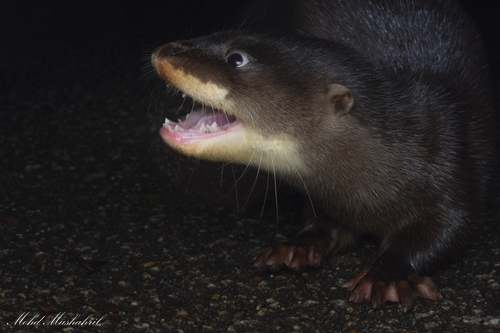
Other species in the family Mustelidae
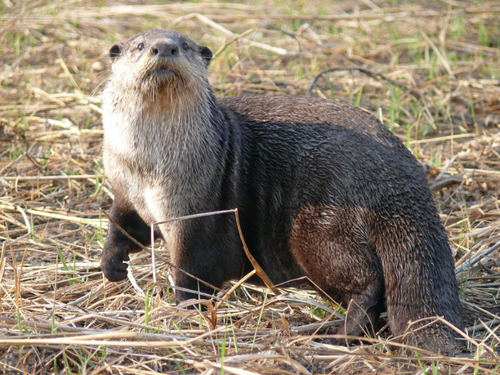
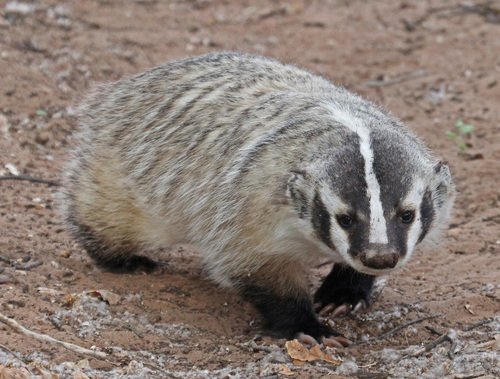
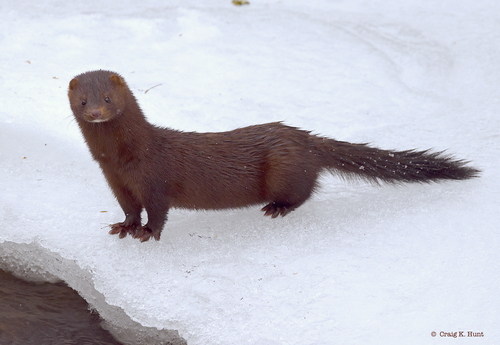
Species that share its range

Sources
Conservation status, range description and population estimate come from the IUCN Red List assessment for Lutra lutra. Countries are derived from that range description, not from a mapped country list. Last refreshed on .
The distribution map is drawn from the IUCN Red List spatial data compiled in 2015. IUCN (International Union for Conservation of Nature)