
Bogota Grass Mouse
Neomicroxus bogotensis
Red List assessment
Least Concernon the IUCN Red List
- EXExtinct
- EWExtinct in the Wild
- CRCritically Endangered
- ENEndangered
- VUVulnerable
- NTNear Threatened
- LCLeast Concern
The Bogota Grass Mouse is recorded in one country, Colombia across South America. The IUCN Red List assesses the Bogota Grass Mouse as Least Concern. No precise population estimate is available.
- Family
- Cricetidae
- Order
- Rodentia
- Genus
- Neomicroxus
- Countries recorded
- 1
- Continents
- South America
- Red List category
- Least Concern
- Data updated
- August 9, 2026
What is the Bogota Grass Mouse?
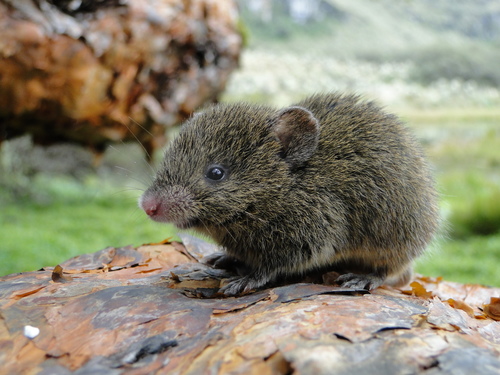
The Bogota Grass Mouse is a small sigmodontine rodent endemic to the high-altitude Andean grasslands and montane scrub of central Colombia. It belongs to the recently erected genus Neomicroxus, separated from Microxus based on molecular phylogenetic evidence. It is remarkable as a nearly range-restricted endemic to the Bogotá plateau, one of the most urbanized high-altitude regions in South America. Despite intense landscape transformation in its range, it persists in remnant natural habitats.
Where does the Bogota Grass Mouse live?
Colombia, Eastern Andes (Cordillera Oriental), primarily in and around the Bogotá Savanna (Sabana de Bogotá) and Cundinamarca department.
Endemic to Colombia, restricted to the Eastern Cordillera (Cordillera Oriental) of the Andes. Its range is centered on the Bogotá plateau (Cundinamarca department) and extends to adjacent departments in the Eastern Andes. It is one of the most geographically restricted rodents in Colombia.
Altitude and depth
Typically found between approximately 2,500 and 3,600 meters above sea level, within the montane and páramo zones of the Colombian Eastern Andes.
Seasonal movements
No documented seasonal migrations or hibernation. Activity patterns likely remain relatively consistent year-round, though breeding may be loosely tied to rainfall seasonality in the Colombian Andes (wet seasons: March–May and September–November).
Habitat of the Bogota Grass Mouse
Primarily occupies Andean páramo grasslands, montane scrublands, and the transitional zones between cloud forest and open grassland. It also inhabits humid high-altitude meadows and disturbed edge habitats. The Bogotá Savanna (Sabana de Bogotá) provides a mosaic of remnant natural patches within an otherwise heavily modified landscape.
Adaptations to its environment
Adapted to cold, high-altitude environments with dense, insulating fur that helps retain body heat in the cool páramo climate. Its compact body morphology reduces heat loss. Generalist feeding behavior allows it to exploit variable food resources in mosaic high-Andean habitats. Strong digging and burrowing tendencies help it shelter from temperature extremes and predators.
Conservation status and numbers
Listed as Least Concern (LC) on the IUCN Red List. Although its range is restricted, the population is not considered to be declining rapidly enough to warrant a threatened category. The species tolerates some degree of habitat disturbance and appears to persist in fragmented landscapes.
Estimated population
No precise population estimate is available. The trend is presumed stable overall, though local populations near Bogotá may be under pressure. The species is not considered rare across suitable remnant habitat.
What threatens the Bogota Grass Mouse?
The primary threats are habitat loss and degradation driven by agricultural expansion (particularly potato farming and cattle grazing), the urban sprawl of Bogotá and surrounding municipalities, drainage of wetlands, and alteration of páramo ecosystems. Fire used to clear land is an additional pressure. Long-term climate change poses a risk by pushing the páramo belt to higher elevations.
Diseases and parasites
Specific parasites have not been well documented for this species. Like other Andean rodents, it likely harbors intestinal helminths, ectoparasitic mites and fleas, and potentially acts as a reservoir for hantaviruses or other zoonotic pathogens, though this has not been confirmed for N. bogotensis specifically.
What is being done to protect it?
The species may benefit indirectly from protected areas in the Colombian Eastern Andes such as Chingaza National Natural Park and the Sumapaz páramo system. Colombian law provides general protections for páramo ecosystems under Law 99 of 1993 and subsequent legislation restricting mining and agriculture above 3,000 meters.
Recommended actions
Monitoring of population trends in key localities around the Bogotá plateau, particularly in remnant grassland and páramo patches. Expansion and strengthening of protected páramo areas. Research into population genetics to assess connectivity between fragmented subpopulations. Promotion of sustainable land-use practices to buffer key habitat patches.
What the Bogota Grass Mouse looks like
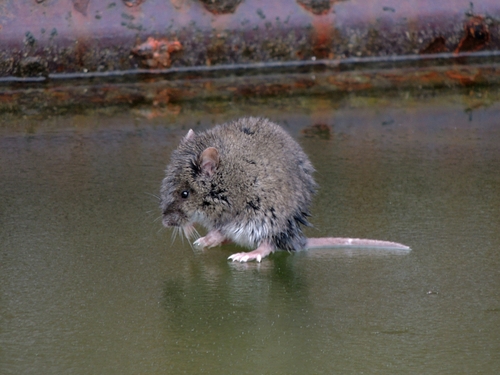
Dorsal fur is brownish to dark grayish-brown, often with a slightly darker mid-dorsal line. Ventral fur is paler, grayish-white to buffy. The tail is bicolored, darker above and paler below, and moderately haired. The ears are rounded and relatively small. The feet are proportionally broad, and the claws are well-developed for digging.
Size
Total body length approximately 80–115 mm; tail length approximately 55–80 mm (shorter than or subequal to the body); hindfoot length approximately 18–22 mm.
Weight
Estimated weight range of approximately 15–35 grams, consistent with other small sigmodontine grass mice of similar size.
Distinctive features
Distinguished from other sigmodontine mice in the region by its combination of relatively short tail, robust body form, brownish dorsal coloration, and its geographic restriction to high-altitude sites near Bogotá. Compared to Akodon affinis (also in the Colombian Andes), it tends to be smaller and more robust, and molecular data clearly distinguish Neomicroxus as a separate genus.
Differences between males and females
Sexual dimorphism is minimal, as is typical for small sigmodontine rodents. Males and females are similar in size and coloration.
Behaviour and diet of the Bogota Grass Mouse
Presumed to be largely solitary or to live in loose associations, as is typical for most sigmodontine grass mice. It does not form structured social groups. Individuals likely maintain small, overlapping home ranges.
When it is active
Likely nocturnal to crepuscular, with peak activity at night or at dusk and dawn. This pattern is common among sigmodontine rodents and reduces exposure to avian predators.
Diet
Omnivorous, feeding primarily on seeds, grasses, herbaceous plant material, and roots, supplemented by invertebrates such as insects and larvae. This flexible diet is typical of Andean grass mice and allows exploitation of the varied food resources of the páramo.
How it feeds and hunts
Forages on the ground and in leaf litter, using its well-developed whiskers (vibrissae) to detect food items. It may dig for roots, bulbs, and soil invertebrates. No active predatory hunting behavior is documented.
Communication
Communicates via ultrasonic vocalizations, scent marking with urine and glandular secretions, and tactile contact. These modalities are used for mate attraction, territorial signaling, and mother–offspring bonding, consistent with other grass mice.
Interactions with other species
Likely preyed upon by Andean raptors (e.g., Circus cinereus, Geranoaetus melanoleucus), owls (e.g., Asio flammeus), and small carnivores such as weasels (Mustela frenata). It may compete with other sympatric small rodents for food resources. It probably serves as a host for ectoparasites (mites, fleas) and endoparasites.
Role in its ecosystem
Plays a role as a primary consumer in the high-Andean food web, channeling energy from plant material and invertebrates to higher trophic levels. May contribute to seed dispersal and soil aeration through burrowing activity in páramo ecosystems.
Reproduction and lifecycle
Breeding biology is not well documented for this species. Like other sigmodontines at high altitude, it likely breeds seasonally, possibly producing 2–4 young per litter with a gestation period of approximately 21–23 days. Multiple litters per year are probable under favorable conditions.
Raising the young
Maternal care is presumed, as in other sigmodontines; the female nurses and protects young in a nest. Young are altricial at birth and become independent after several weeks. Paternal investment is likely minimal or absent.
Maturity and lifespan
Sexual maturity is likely reached at 2–3 months of age, consistent with other sigmodontine rodents. Lifespan in the wild is estimated at 1–2 years; captive longevity data are unavailable for this species.
Taxonomy and naming of the Bogota Grass Mouse
Classification
Mammalia > Rodentia > Cricetidae (subfamily Sigmodontinae) > Neomicroxus > Neomicroxus bogotensis
Scientific synonyms
Microxus bogotensis (Thomas, 1895); historically assigned to the genus Microxus, which was later split; sometimes referenced under the broader Akodon group before molecular revisions.
What research says
Recent studies
The most significant recent taxonomic development was the formal erection of the genus Neomicroxus (ca. 2013–2015) based on phylogenomic data, which clarified the evolutionary relationships of this Colombian endemic and separated it from the morphologically similar Microxus. Detailed ecological or population studies remain largely absent.
Genome and DNA
Chromosome number has not been definitively published for N. bogotensis. The genus Neomicroxus was established based on molecular phylogenetic analyses (mitochondrial and nuclear markers) distinguishing it from Microxus and related genera.
Compared with similar species
Neomicroxus bogotensis is morphologically similar to Akodon affinis and Microxus minutus, both Andean sigmodontines, but is distinguishable by molecular characters and subtle morphological differences in skull and dental morphology. Among Neomicroxus, it is the type species; the genus may contain additional undescribed or recently recognized species from adjacent Andean regions.
The Bogota Grass Mouse and people
Neomicroxus bogotensis holds the distinction of being the type species for its entire genus, meaning it gave its name and served as the reference specimen for the formal description of Neomicroxus. This tiny rodent survives in one of the most densely populated high-altitude metropolitan areas in the world — Bogotá — persisting in habitat fragments surrounded by a city of over eight million people. Its ancestors have inhabited the Bogotá plateau for thousands of years, long predating the city that now bears its name in the species' common English name.
Where and how to see it
Best observed in remnant páramo and grassland patches on the outskirts of Bogotá, such as in the buffer zones of Chingaza National Natural Park or the Sumapaz páramo. Night surveys using live traps (Sherman traps) baited with seeds or peanut butter are the most reliable detection method. Early morning and evening are optimal observation windows.
Risks to humans
No notable risk to humans. Like all wild rodents, it may theoretically carry zoonotic pathogens, but no specific public health concern has been documented for this species.
Countries where the Bogota Grass Mouse is recorded
The 1 countries named in the range description of its IUCN Red List assessment.
Questions about the Bogota Grass Mouse
Where does the Bogota Grass Mouse live?
The Bogota Grass Mouse is recorded in Colombia across South America. These countries come from the range description of its IUCN Red List assessment, and they are what place the species on the interactive map.
Is the Bogota Grass Mouse endangered?
The IUCN Red List assesses the Bogota Grass Mouse as Least Concern. The species is widespread and abundant enough not to qualify for any threatened category. It does not mean the species is safe forever, only that nothing in the current data raises an alarm.
How many are left in the wild?
No precise population estimate is available. This figure comes from the species assessment on the IUCN Red List; population estimates for wild mammals are ranges, not counts, and are revised at each assessment.
What habitat does the Bogota Grass Mouse live in?
Primarily occupies Andean páramo grasslands, montane scrublands, and the transitional zones between cloud forest and open grassland.
What is the scientific name of the Bogota Grass Mouse?
The Bogota Grass Mouse is Neomicroxus bogotensis, in the family Cricetidae, order Rodentia.
Other species in the genus Neomicroxus
Other species in the family Cricetidae
Species that share its range
Sources
Conservation status, range description and population estimate come from the IUCN Red List assessment for Neomicroxus bogotensis. Countries are derived from that range description, not from a mapped country list. Last refreshed on .
The distribution map is drawn from the IUCN Red List spatial data compiled in 2008. IUCN (International Union for Conservation of Nature)