
Honey Badger
Mellivora capensis
Red List assessment
Least Concernon the IUCN Red List
- EXExtinct
- EWExtinct in the Wild
- CRCritically Endangered
- ENEndangered
- VUVulnerable
- NTNear Threatened
- LCLeast Concern
The Honey Badger is recorded in 5 countries across Africa and Asia. The IUCN Red List assesses the Honey Badger as Least Concern. No precise global population estimate exists; densities are generally low (about 1 individual per 100 km²), with the overall population considered stable at a continental scale but declining in certain regions.
- Family
- Mustelidae
- Order
- Carnivora
- Genus
- Mellivora
- Countries recorded
- 5
- Continents
- Africa and Asia
- Red List category
- Least Concern
- Data updated
- August 9, 2026
What is the Honey Badger?
The honey badger is a medium-sized, robust carnivore renowned for its extraordinary fearlessness, strength, and resistance to venom. Found across Africa, the Middle East, and South Asia, it occupies a remarkable diversity of habitats from deserts to rainforests. It is famous in popular culture for its aggressive defense behavior against predators far larger than itself, including lions and humans. Despite its Least Concern status, it faces localized declines due to persecution and habitat loss.
Where does the Honey Badger live?
Sub-Saharan Africa, the Middle East, and parts of South Asia including India
Ranges across most of sub-Saharan Africa, extending north into parts of Morocco and Algeria, through the Arabian Peninsula, Iran, and into the Indian subcontinent including Nepal. It has one of the largest distributions of any carnivore species.
Altitude and depth
Sea level up to approximately 2,600 meters in mountainous regions
Seasonal movements
No true migration or hibernation; the species remains active year-round, though activity patterns may shift seasonally in response to temperature, becoming more nocturnal in hot seasons and more diurnal in cooler months.
Habitat of the Honey Badger
Highly adaptable, occupying savannas, grasslands, semi-desert, desert, dense forest, and even high-altitude moorlands. It avoids only extremely arid deserts and dense tropical rainforest interiors. It is often found near termite mounds, rocky outcrops, or riverine areas that provide burrowing opportunities.
Adaptations to its environment
Extremely loose, thick skin allows it to twist and bite attackers even when grabbed, while its skin is also resistant to bee stings, porcupine quills, and snake bites. Powerful front claws enable rapid digging of burrows and excavation of prey from hard ground. Its metabolism and behavior are adapted to opportunistic scavenging and foraging across highly variable habitats.
Conservation status and numbers
Listed as Least Concern by the IUCN due to its extremely wide distribution and adaptability, though some regional populations are declining and it is locally extinct in parts of its former range. Population trends vary significantly by region, with stable numbers in protected areas but declines outside them.
Estimated population
No precise global population estimate exists; densities are generally low (about 1 individual per 100 km²), with the overall population considered stable at a continental scale but declining in certain regions.
What threatens the Honey Badger?
Persecution by farmers and beekeepers due to livestock and hive raiding, habitat degradation, road mortality, and incidental capture in snares set for other species. In some regions it is hunted for traditional medicine or bushmeat.
Diseases and parasites
Susceptible to rabies and canine distemper virus, along with various internal and external parasites such as ticks and helminths, though comprehensive disease studies are limited.
What is being done to protect it?
Protected under national legislation in many range countries and listed on CITES Appendix III in some nations; found within numerous protected areas and national parks across Africa and Asia. Conservation programs focus on human-wildlife conflict mitigation, particularly around beekeeping operations.
Recommended actions
Expand community-based conflict mitigation programs, improve livestock and hive protection methods, monitor population trends in underprotected regions, and strengthen anti-poaching and snare-removal efforts.
What the Honey Badger looks like
Distinctive two-toned coat with a broad silvery-grey to white dorsal stripe running from the top of the head to the base of the tail, contrasting sharply with the jet-black fur on the face, legs, and underside. The body is stocky and muscular, with a broad head, small eyes, and a short, thick tail. Skin is notably loose and thick, an adaptation for defense.
Size
Body length of 55-77 cm plus a tail of 12-30 cm; shoulder height approximately 23-28 cm.
Weight
Males typically weigh 9-16 kg, while females are smaller at 5-10 kg.
Distinctive features
The sharply demarcated black-and-white/grey coat pattern is unique among mustelids and serves as an aposematic warning signal. Its exceptionally loose skin, powerful claws, and disproportionate aggression relative to its size further distinguish it from related species.
Differences between males and females
Males are notably larger and heavier than females, sometimes up to 60-100% heavier, though coloration and general appearance are similar between sexes.
Behaviour and diet of the Honey Badger
Primarily solitary, with adults maintaining large overlapping home ranges and coming together mainly to mate. Limited evidence suggests occasional cooperative foraging, particularly the well-documented mutualistic relationship with the greater honeyguide bird.
When it is active
Primarily nocturnal in hot regions and more crepuscular or diurnal in cooler areas or seasons; activity patterns are highly flexible depending on temperature and food availability.
Diet
Highly omnivorous and opportunistic, feeding on insects, larvae, small mammals, reptiles (including venomous snakes), birds, eggs, carrion, fruit, and honey/bee brood. It is known for its exceptional ability to overpower prey much larger than itself, including cobras.
How it feeds and hunts
Uses powerful digging claws to excavate rodents, reptiles, and insect larvae from burrows, and often follows scent trails to locate prey. It famously raids beehives for honey and larvae, tolerating stings due to its thick skin, and may follow honeyguide birds to find hives.
Communication
Communicates through a range of vocalizations including growls, hisses, and screams, along with extensive scent marking using anal gland secretions to mark territory and communicate reproductive status. Body postures and aggressive displays are also used to deter threats.
Interactions with other species
Engages in a well-known mutualistic relationship with the greater honeyguide bird, which leads it to beehives in exchange for access to leftover wax and larvae. It has few natural predators due to its aggressive defense, though lions, leopards, and large pythons occasionally kill them.
Role in its ecosystem
Plays an important ecological role as a mesopredator and scavenger, helping control rodent, reptile, and insect populations while also aiding in nutrient cycling through carrion consumption. Its digging activity can also influence soil aeration and create burrows used by other species.
Reproduction and lifecycle
Breeding occurs year-round without a fixed season; gestation lasts about 50-70 days (including possible delayed implantation), typically producing a single cub, occasionally two.
Raising the young
Females raise young entirely alone in underground dens, nursing and caring for cubs for up to 12-16 months, an unusually long dependency period for a mustelid. Cubs learn foraging and hunting skills gradually from the mother before becoming independent.
Maturity and lifespan
Sexual maturity is reached around 12-16 months for females and slightly later for males; lifespan in the wild is estimated at 7-8 years, while captive individuals can live up to 24-26 years.
Taxonomy and naming of the Honey Badger
Classification
Class Mammalia > Order Carnivora > Family Mustelidae > Genus Mellivora > Species Mellivora capensis
Subspecies
Up to 12 subspecies recognized based on range, including M. c. capensis (Southern Africa), M. c. signata (Central/West Africa), M. c. abyssinica (East Africa), M. c. indica (India), and M. c. buechneri (Middle East/Arabian Peninsula), though many distinctions are debated due to limited genetic data.
Scientific synonyms
Ursus capensis (original description by Schreber, 1776); Gulo capensis; Mellivora ratel
What research says
Recent studies
Recent research has focused on its remarkable resistance to snake venom through modified nicotinic acetylcholine receptors, as well as camera-trap studies documenting its extensive home range sizes and interactions with honeyguide birds.
Genome and DNA
Diploid chromosome number reported as 2n=32; genetic studies remain limited but have been used to help clarify subspecies boundaries and phylogenetic placement within Mustelidae.
Compared with similar species
Unlike its mustelid relatives such as badgers (Meles meles) which are more social and less aggressive, the honey badger is solitary and exceptionally pugnacious for its size. It is ecologically convergent with wolverines (Gulo gulo) in its fearless, opportunistic scavenging behavior despite being only distantly related.
The Honey Badger and people
The honey badger holds a Guinness World Record listing as the 'most fearless animal' due to its willingness to confront much larger predators. It can survive multiple cobra bites, with venom only causing temporary unconsciousness rather than death, and it has been observed using tools such as rocks to reach beehives.
Where and how to see it
Best observed in well-protected reserves such as Kruger National Park (South Africa) or Kalahari regions during early morning or late evening hours when temperatures are cooler. Patience is required as sightings are uncommon due to their low density and largely nocturnal habits.
Risks to humans
Can be aggressive and dangerous if cornered or threatened, capable of inflicting serious bites and scratches; however, it generally avoids humans and attacks are rare and usually defensive.
Human uses
Occasionally used in traditional medicine practices in parts of Africa, and historically persecuted for perceived threats to livestock and beehives; it has no significant role in commercial trade or farming.
Myths and legends
In parts of Africa, the honey badger is sometimes regarded with a mix of fear and respect due to folklore about its supposed ability to castrate larger animals in fights, though this specific claim is exaggerated. Its fearless reputation has made it a popular internet meme symbolizing toughness and indifference to danger.
Countries where the Honey Badger is recorded
The 5 countries named in the range description of its IUCN Red List assessment.
Questions about the Honey Badger
Where does the Honey Badger live?
The Honey Badger is recorded in Algeria, India, Iran, Morocco and Nepal across Africa and Asia. These countries come from the range description of its IUCN Red List assessment, and they are what place the species on the interactive map.
Is the Honey Badger endangered?
The IUCN Red List assesses the Honey Badger as Least Concern. The species is widespread and abundant enough not to qualify for any threatened category. It does not mean the species is safe forever, only that nothing in the current data raises an alarm.
How many are left in the wild?
No precise global population estimate exists; densities are generally low (about 1 individual per 100 km²), with the overall population considered stable at a continental scale but declining in certain regions. This figure comes from the species assessment on the IUCN Red List; population estimates for wild mammals are ranges, not counts, and are revised at each assessment.
What habitat does the Honey Badger live in?
Highly adaptable, occupying savannas, grasslands, semi-desert, desert, dense forest, and even high-altitude moorlands.
What is the scientific name of the Honey Badger?
The Honey Badger is Mellivora capensis, in the family Mustelidae, order Carnivora.
Other species in the family Mustelidae
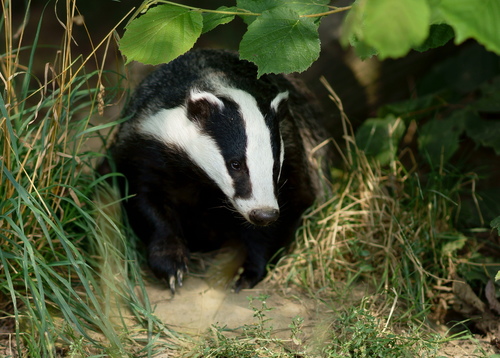

Species that share its range
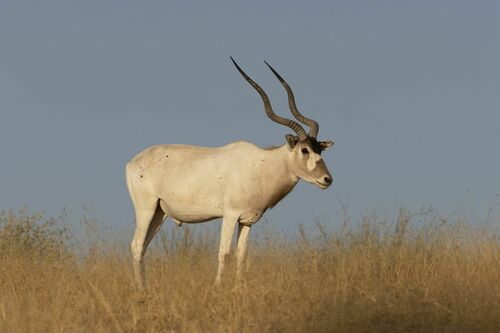
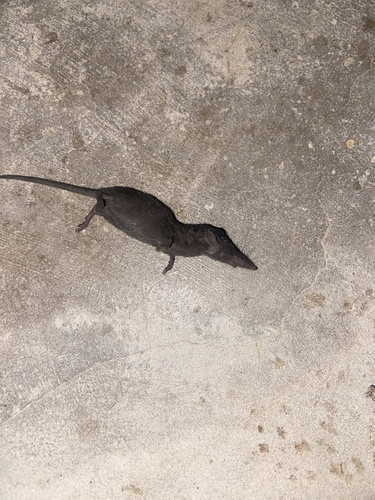
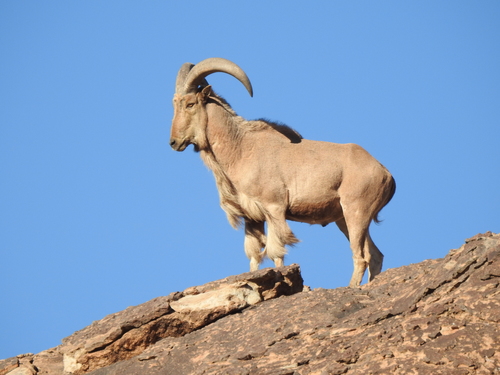
Sources
Conservation status, range description and population estimate come from the IUCN Red List assessment for Mellivora capensis. Countries are derived from that range description, not from a mapped country list. Last refreshed on .
The distribution map is drawn from the IUCN Red List spatial data compiled in 2016. IUCN (International Union for Conservation of Nature)