
Yellow-backed Duiker
Cephalophus silvicultor
Red List assessment
Near Threatenedon the IUCN Red List
- EXExtinct
- EWExtinct in the Wild
- CRCritically Endangered
- ENEndangered
- VUVulnerable
- NTNear Threatened
- LCLeast Concern
The Yellow-backed Duiker is recorded in 12 countries across Africa. The IUCN Red List assesses the Yellow-backed Duiker as Near Threatened. No precise global population estimate exists, but the species is considered to have a declining population trend, with local extirpations documented in heavily hunted areas of West Africa.
- Family
- Bovidae
- Order
- Artiodactyla
- Genus
- Cephalophus
- Countries recorded
- 12
- Continents
- Africa
- Red List category
- Near Threatened
- Data updated
- August 9, 2026
What is the Yellow-backed Duiker?
The Yellow-backed Duiker is the largest of the forest duikers, a small antelope group native to sub-Saharan Africa's forests. It is notable for the distinctive yellow-to-cream patch of erectile hair on its lower back, which can be raised when the animal is alarmed. Found in dense tropical rainforest and forest-savanna mosaics, it plays an important ecological role as a seed disperser.
Where does the Yellow-backed Duiker live?
West and Central Africa, including Central African Republic, Democratic Republic of Congo, Republic of Congo, Cameroon, Gabon, and parts of West Africa such as Sierra Leone, Liberia, and Ivory Coast.
Ranges across West and Central Africa from Sierra Leone and Guinea in the west through Ivory Coast, Ghana, Nigeria, Cameroon, Gabon, Republic of Congo, Democratic Republic of Congo, to parts of Central African Republic, Uganda, and western Kenya.
Altitude and depth
0-3000m, typically found in lowland forests but can occur at higher elevations in montane forest regions of East Africa.
Habitat of the Yellow-backed Duiker
Primarily inhabits lowland tropical rainforest, gallery forest, and forest-savanna mosaic habitats. Also found in secondary forest and forest edges where dense understory provides cover.
Adaptations to its environment
Its compact, sturdy build with a sloped back and strong hindquarters allows it to move efficiently through dense forest undergrowth. The erectile yellow dorsal patch may serve as a warning signal to other duikers, and its keen sense of smell and hearing help detect predators in low-visibility forest environments.
Conservation status and numbers
Near Threatened (IUCN), with populations declining due to habitat loss and unsustainable bushmeat hunting across its range. Some regional populations, particularly in West Africa, face more severe pressure than those in Central Africa's larger forest blocks.
Estimated population
No precise global population estimate exists, but the species is considered to have a declining population trend, with local extirpations documented in heavily hunted areas of West Africa.
What threatens the Yellow-backed Duiker?
Primary threats include bushmeat hunting and snaring, deforestation and habitat fragmentation from logging and agricultural expansion, and civil unrest limiting conservation enforcement in parts of its range.
Diseases and parasites
Susceptible to various tick-borne diseases and gastrointestinal parasites common to forest ungulates, though specific studies on this species are limited.
What is being done to protect it?
Protected in numerous national parks and reserves including Dzanga-Sangha (CAR), Odzala-Kokoua (Congo), and Korup National Park (Cameroon). Listed on CITES Appendix II in some range states, with anti-poaching patrols conducted in major protected areas.
Recommended actions
Strengthen anti-poaching enforcement and snare removal programs, promote sustainable bushmeat alternatives for local communities, and expand connectivity between fragmented forest habitats through corridor conservation.
What the Yellow-backed Duiker looks like
Dark reddish-brown to blackish-brown coat with a distinctive triangular patch of long, erectile yellow-to-orange hair running from the shoulders to the tail base. The face is often darker, with short, backward-curving horns present in both sexes.
Size
Shoulder height of 70-90 cm, body length approximately 115-145 cm.
Weight
Males typically weigh 50-80 kg; females are slightly heavier, ranging from 60-80 kg, making this the largest duiker species.
Distinctive features
The prominent yellow dorsal crest distinguishes it immediately from all other duiker species, along with its notably larger size compared to other Cephalophus members.
Differences between males and females
Minimal sexual dimorphism; females are slightly larger and heavier than males, and both sexes possess horns, though male horns may be marginally more robust.
Behaviour and diet of the Yellow-backed Duiker
Generally solitary or found in monogamous pairs; territorial behavior is exhibited by both sexes, who mark and defend home ranges using scent glands.
When it is active
Primarily crepuscular and nocturnal, though also active during daylight hours in undisturbed areas with low human presence.
Diet
Herbivorous, feeding mainly on fallen fruits, leaves, seeds, and fungi; occasionally consumes flowers and even small invertebrates or carrion opportunistically, making it more omnivorous than most duikers.
Communication
Communicates through scent marking via preorbital glands, alarm snorts, and whistling calls when threatened. The erectile yellow dorsal hair may also serve as a visual signal to conspecifics.
Interactions with other species
Natural predators include leopards, golden cats, large pythons, and human hunters; juveniles may also fall prey to eagles and other opportunistic predators. It shares habitat with other duiker species and forest ungulates with minimal direct competition due to differing dietary niches.
Role in its ecosystem
Plays a significant role in forest ecology as a seed disperser for numerous fruiting tree species, contributing to forest regeneration and plant diversity maintenance.
Reproduction and lifecycle
Breeding occurs year-round without strong seasonality; gestation lasts approximately 7-9 months, resulting in a single calf per birth.
Raising the young
The mother hides the calf in dense vegetation for the first few weeks of life, visiting periodically to nurse; weaning occurs around 3-5 months, with the calf becoming independent by 6-10 months.
Maturity and lifespan
Sexual maturity is reached around 9-12 months; lifespan in the wild is estimated at 10-12 years, while captive individuals have lived up to 15-18 years.
Taxonomy and naming of the Yellow-backed Duiker
Classification
Class Mammalia > Order Artiodactyla > Family Bovidae > Genus Cephalophus > Species Cephalophus silvicultor
Subspecies
Several subspecies have been proposed, including C. s. silvicultor (Central Africa) and C. s. congicus (Congo Basin), though taxonomy remains debated with some authorities treating them as a single variable species.
Scientific synonyms
Antilope silvicultor (original name by Afzelius, 1815)
What research says
Recent studies
Recent camera-trap studies in Central African protected areas have provided new insights into activity patterns and habitat use, revealing greater diurnal activity in well-protected reserves than previously assumed.
Compared with similar species
Larger than all other duiker species, including the similarly forest-dwelling Bay Duiker and Red Duiker; distinguished from these smaller relatives by its size and unique yellow dorsal crest.
The Yellow-backed Duiker and people
It is the largest duiker species, sometimes called the 'giant duiker.' When alarmed, it can erect the yellow hair on its back into a striking crest visible even in dim forest light. Despite being a herbivore, it has been observed eating carrion and small animals on rare occasions.
Where and how to see it
Best observed in well-protected reserves such as Dzanga-Sangha (CAR) or Odzala-Kokoua National Park (Congo) during early morning or dusk hours near forest clearings and salt licks.
Risks to humans
No notable risk to humans.
Human uses
Hunted extensively for bushmeat throughout its range, representing an important protein source for local communities; also occasionally kept in zoos and wildlife parks for conservation breeding and education purposes.
Myths and legends
In some Central African cultures, duikers feature in folklore as clever, elusive tricksters due to their secretive forest behavior and ability to evade hunters.
Countries where the Yellow-backed Duiker is recorded
The 12 countries named in the range description of its IUCN Red List assessment.
Questions about the Yellow-backed Duiker
Where does the Yellow-backed Duiker live?
The Yellow-backed Duiker is recorded in Cameroon, Central African Republic, Democratic Republic of the Congo, Gabon and Ghana, among 12 countries in total across Africa. These countries come from the range description of its IUCN Red List assessment, and they are what place the species on the interactive map.
Is the Yellow-backed Duiker endangered?
The IUCN Red List assesses the Yellow-backed Duiker as Near Threatened. The species does not qualify as threatened today, but it is close to the thresholds and likely to cross them soon. It is the category that most often changes at the next assessment.
How many are left in the wild?
No precise global population estimate exists, but the species is considered to have a declining population trend, with local extirpations documented in heavily hunted areas of West Africa. This figure comes from the species assessment on the IUCN Red List; population estimates for wild mammals are ranges, not counts, and are revised at each assessment.
What habitat does the Yellow-backed Duiker live in?
Primarily inhabits lowland tropical rainforest, gallery forest, and forest-savanna mosaic habitats.
What is the scientific name of the Yellow-backed Duiker?
The Yellow-backed Duiker is Cephalophus silvicultor, in the family Bovidae, order Artiodactyla.
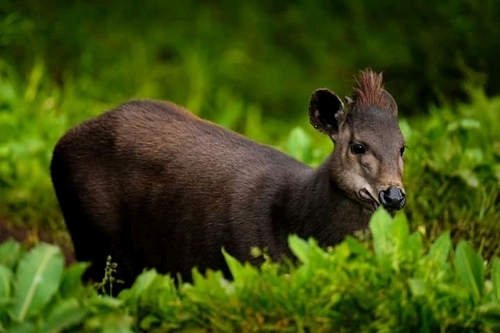
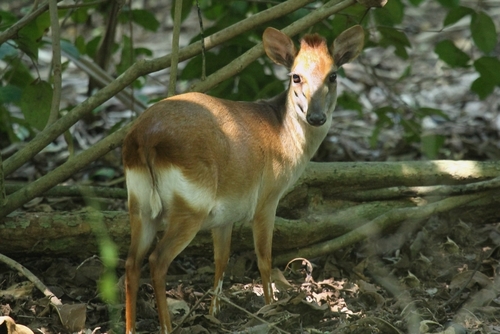
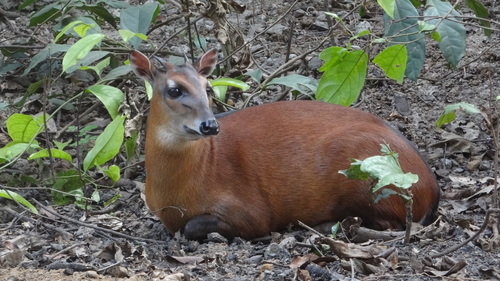
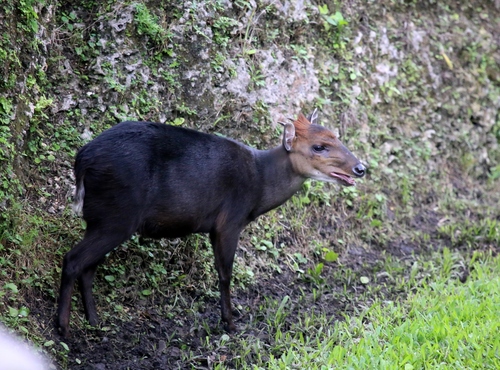
Other species in the genus Cephalophus
Other species in the family Bovidae
Sources
Conservation status, range description and population estimate come from the IUCN Red List assessment for Cephalophus silvicultor. Countries are derived from that range description, not from a mapped country list. Last refreshed on .
The distribution map is drawn from the IUCN Red List spatial data compiled in 2016. IUCN (International Union for Conservation of Nature)