
Wolverine
Gulo gulo
Red List assessment
Least Concernon the IUCN Red List
- EXExtinct
- EWExtinct in the Wild
- CRCritically Endangered
- ENEndangered
- VUVulnerable
- NTNear Threatened
- LCLeast Concern
The Wolverine is recorded in 6 countries across Europe and North America. The IUCN Red List assesses the Wolverine as Least Concern. Global population is difficult to estimate precisely but is thought to number in the low tens of thousands; considered stable globally, though declining in fragmented southern range edges like the contiguous United States.
- Family
- Mustelidae
- Order
- Carnivora
- Genus
- Gulo
- Countries recorded
- 6
- Continents
- Europe and North America
- Red List category
- Least Concern
- Data updated
- August 9, 2026
What is the Wolverine?
The wolverine is the largest terrestrial member of the weasel family (Mustelidae), resembling a small bear but built more like a heavily muscled badger. It inhabits remote boreal forests, tundra, and mountainous regions across the Northern Hemisphere. Renowned for its ferocity, strength, and endurance relative to its size, it is capable of taking down prey much larger than itself and scavenging carcasses in the harshest arctic conditions. Its solitary and elusive nature makes it one of the least studied carnivores in North America.
Where does the Wolverine live?
Northern Canada, Alaska (USA), Scandinavia (Norway, Sweden, Finland), and Russia (Siberia)
Circumpolar distribution across the Northern Hemisphere: Alaska, Canada (Yukon, Northwest Territories, British Columbia), the northern contiguous United States (Rocky Mountains), Scandinavia, and Russia including Siberia.
Altitude and depth
Sea level to over 3000m in mountainous regions; found from lowland taiga to alpine tundra zones.
Seasonal movements
No hibernation; wolverines remain active year-round even in extreme winter conditions. Females require persistent deep snow (until at least mid-May) for natal denning, making snowpack duration a critical seasonal factor.
Habitat of the Wolverine
Boreal forests (taiga), arctic and alpine tundra, and remote mountainous regions with persistent snow cover. They favor areas with cold climates and low human disturbance, often requiring deep snow for denning and food caching.
Adaptations to its environment
Large, well-furred paws act as natural snowshoes for traveling over deep snow, and their dense, frost-resistant fur was traditionally used by Arctic peoples to line parka hoods because it resists ice buildup. Powerful jaws and teeth allow them to crush frozen bone and meat, and an exceptional sense of smell helps locate carcasses buried under snow.
Conservation status and numbers
Listed as Least Concern globally by the IUCN due to stable populations in the vast Russian and Canadian ranges, though regional populations in the contiguous US and parts of Scandinavia are considered vulnerable or threatened due to habitat fragmentation and climate change.
Estimated population
Global population is difficult to estimate precisely but is thought to number in the low tens of thousands; considered stable globally, though declining in fragmented southern range edges like the contiguous United States.
What threatens the Wolverine?
Climate change reducing persistent spring snowpack needed for denning, habitat fragmentation from resource extraction and roads, trapping for fur, and low reproductive rates limiting population recovery.
Diseases and parasites
Known to host various parasites including fleas, ticks, and internal parasites such as roundworms; susceptible to diseases like rabies and canine distemper, though prevalence data in wild populations is limited.
What is being done to protect it?
Protected under various national and regional wildlife laws including the Convention on International Trade in Endangered Species (CITES Appendix II) trade monitoring; ongoing research and monitoring programs in Scandinavia, Canada, and the US; proposed (and contested) listings under the US Endangered Species Act for contiguous US populations.
Recommended actions
Protect and connect large wilderness corridors to allow genetic exchange between fragmented populations, regulate trapping quotas, monitor climate impacts on snowpack, and formally list vulnerable regional populations for legal protection.
What the Wolverine looks like
Thick, dark brown to blackish fur with lighter tan or golden stripes running from the shoulders along the flanks to the base of the bushy tail. The body is stocky and bear-like with short legs, a broad head, small rounded ears, and large curved claws.
Size
Body length 65-107 cm, with a bushy tail adding 17-26 cm; shoulder height approximately 30-45 cm.
Weight
Males typically weigh 12-18 kg; females are smaller, weighing 7-12 kg.
Distinctive features
Distinguished from other mustelids by its much larger size, bear-like proportions, and the characteristic pale lateral stripes on an otherwise dark coat; its disproportionately large paws and powerful jaw structure are also distinctive.
Differences between males and females
Males are notably larger and heavier than females, sometimes by 30% or more in body mass, though coloration is similar between sexes.
Behaviour and diet of the Wolverine
Wolverines are largely solitary animals with extensive home ranges that they mark and defend, though ranges of males may overlap with those of several females. Social interactions are limited mainly to mating season and mother-offspring relationships.
When it is active
Primarily active during crepuscular and nocturnal hours, though activity patterns can shift to be more diurnal depending on season, prey availability, and human disturbance.
Diet
Opportunistic omnivore and scavenger, feeding heavily on carrion (especially winter-killed ungulates like caribou, moose, and deer), small to medium mammals, birds, eggs, and berries when available. They are also capable predators of larger prey when conditions favor them, such as deep snow immobilizing ungulates.
How it feeds and hunts
Wolverines rely on an exceptional sense of smell to locate carcasses buried under meters of snow and use their strength and stamina to cache and defend food. When hunting live prey, they use ambush tactics and can exploit deep snow to slow down and overpower larger animals like caribou.
Communication
Communicates primarily through scent marking using anal gland secretions and urine to signal territory boundaries and reproductive status, supplemented by vocalizations such as growls and grunts during aggressive encounters.
Interactions with other species
Wolverines compete with wolves, bears, and lynx for carrion and prey, and may lose kills to these larger competitors despite their aggressive defense behavior. They occasionally scavenge from wolf kills and have been documented driving off much larger animals from carcasses through sheer tenacity.
Role in its ecosystem
Functions as an important scavenger in northern ecosystems, recycling nutrients from carcasses and helping to control populations of small to medium mammals; also plays a minor role as an opportunistic predator of weakened ungulates.
Reproduction and lifecycle
Mating occurs in summer (April-September) but implantation is delayed until winter, with birth typically occurring in January-April after a total gestation (including delayed implantation) of around 30-50 days of actual fetal development. Litters usually consist of 2-3 kits, born in snow dens.
Raising the young
Females provide sole parental care, nursing kits in snow dens for about 8-10 weeks before they begin to accompany the mother on foraging trips. Young may stay associated with the mother's range for up to a year or more before dispersing.
Maturity and lifespan
Sexual maturity is reached around 2-3 years of age; wild lifespan is typically 7-12 years, while captive individuals can live up to 17 years.
Taxonomy and naming of the Wolverine
Classification
Class Mammalia > Order Carnivora > Family Mustelidae > Genus Gulo > Species Gulo gulo
Subspecies
Gulo gulo gulo (Eurasia), Gulo gulo luscus (North America) — some taxonomists consider these subspecies distinctions weak or invalid based on genetic studies.
Scientific synonyms
Gulo luscus, Mustela gulo
What research says
Recent studies
Recent studies using GPS collar and camera trap data have highlighted the critical dependence of wolverine denning success on persistent spring snowpack, informing climate change vulnerability assessments and habitat connectivity models across North America.
Genome and DNA
Diploid chromosome number is 2n=42; genetic studies have revealed relatively low genetic diversity in some fragmented populations, informing conservation genetics research on connectivity.
Compared with similar species
Compared to other mustelids like the badger or fisher, the wolverine is significantly larger, more powerfully built, and has a more carnivorous, scavenging-based diet; unlike the fisher, it inhabits colder, more open tundra and alpine environments in addition to forests.
The Wolverine and people
Wolverines can travel dozens of kilometers in a single day across rugged terrain and have been recorded ascending steep mountain faces that few other mammals can climb. Despite weighing only around 15 kg, they have been documented driving bears and wolves away from carcasses through sheer aggression and tenacity.
Where and how to see it
Best observed in remote wilderness areas of northern Canada, Alaska, or Scandinavia during winter months when tracks in snow reveal their presence; sightings are rare due to low population density and elusive behavior, so patience and use of trail cameras near carcass sites increase chances of observation.
Risks to humans
No notable risk to humans under normal circumstances, as wolverines actively avoid human contact; however, cornered or trapped individuals can become aggressive and inflict serious bites or scratches.
Human uses
Historically and still today, wolverine fur is highly valued by Arctic indigenous peoples for lining parka hoods due to its frost-resistant properties; the species has also been trapped commercially for fur trade in parts of its range.
Myths and legends
In some Indigenous North American folklore, the wolverine is portrayed as a trickster figure known for cunning and resourcefulness; Scandinavian folklore historically associated the animal with gluttony, giving rise to its French name 'glouton' and the outdated belief that it eats excessively before caching food.
Countries where the Wolverine is recorded
The 6 countries named in the range description of its IUCN Red List assessment.
Questions about the Wolverine
Where does the Wolverine live?
The Wolverine is recorded in Canada, Finland, Norway, Russia and Sweden, among 6 countries in total across Europe and North America. These countries come from the range description of its IUCN Red List assessment, and they are what place the species on the interactive map.
Is the Wolverine endangered?
The IUCN Red List assesses the Wolverine as Least Concern. The species is widespread and abundant enough not to qualify for any threatened category. It does not mean the species is safe forever, only that nothing in the current data raises an alarm.
How many are left in the wild?
Global population is difficult to estimate precisely but is thought to number in the low tens of thousands; considered stable globally, though declining in fragmented southern range edges like the contiguous United States. This figure comes from the species assessment on the IUCN Red List; population estimates for wild mammals are ranges, not counts, and are revised at each assessment.
What habitat does the Wolverine live in?
Boreal forests (taiga), arctic and alpine tundra, and remote mountainous regions with persistent snow cover.
What is the scientific name of the Wolverine?
The Wolverine is Gulo gulo, in the family Mustelidae, order Carnivora.
Other species in the family Mustelidae
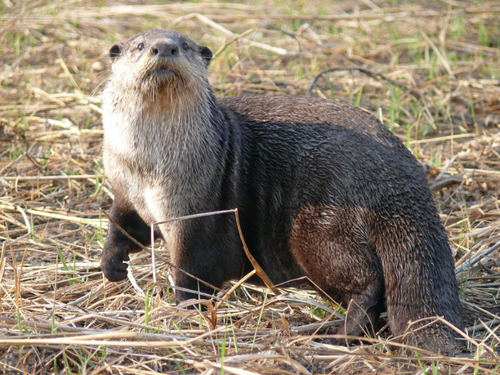
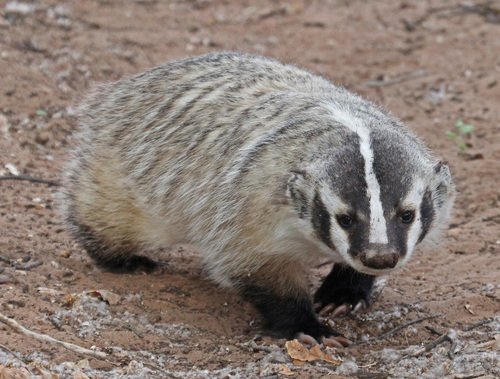
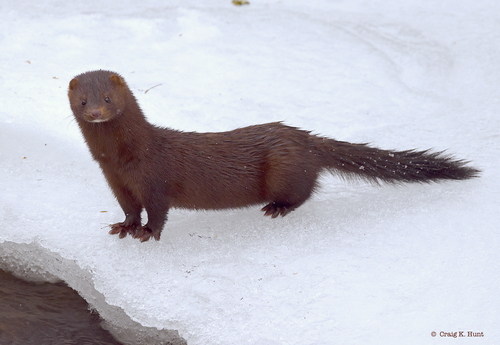
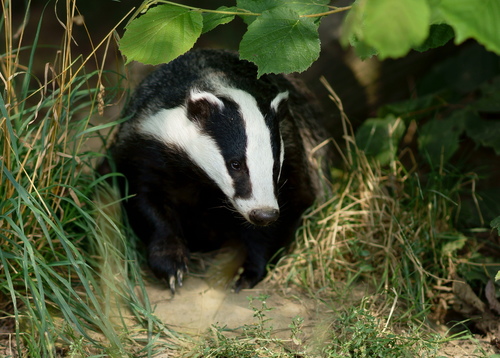

Species that share its range
Sources
Conservation status, range description and population estimate come from the IUCN Red List assessment for Gulo gulo. Countries are derived from that range description, not from a mapped country list. Last refreshed on .
The distribution map is drawn from the IUCN Red List spatial data compiled in 2016. IUCN (International Union for Conservation of Nature)