
White-bellied Pangolin
Phataginus tricuspis
Red List assessment
Endangeredon the IUCN Red List
- EXExtinct
- EWExtinct in the Wild
- CRCritically Endangered
- ENEndangered
- VUVulnerable
- NTNear Threatened
- LCLeast Concern
The White-bellied Pangolin is recorded in 16 countries across Africa. The IUCN Red List assesses the White-bellied Pangolin as Endangered. Population size is difficult to quantify precisely due to the species' elusive and nocturnal nature, but is estimated to be declining rapidly, with local extinctions reported in parts of its range.
- Family
- Manidae
- Order
- Pholidota
- Genus
- Phataginus
- Countries recorded
- 16
- Continents
- Africa
- Red List category
- Endangered
- Data updated
- August 9, 2026
What is the White-bellied Pangolin?
The White-bellied Pangolin is a small, arboreal, scale-covered mammal native to the tropical forests of West and Central Africa. It is one of four African pangolin species and is notable for being highly arboreal, using its prehensile tail to navigate the forest canopy. This species is remarkable for its unique keratin scales, which cover most of its body, and its specialized diet of ants and termites. It is critically important ecologically as a natural pest controller, though it is heavily targeted by illegal wildlife trade.
Where does the White-bellied Pangolin live?
Central and West Africa, including Guinea, Sierra Leone, Liberia, Ivory Coast, Ghana, Nigeria, Cameroon, Gabon, Republic of Congo, Democratic Republic of Congo, and Uganda
Distributed across West and Central Africa, from Guinea-Bissau and Senegal in the west through Sierra Leone, Liberia, Ivory Coast, Ghana, Togo, Benin, Nigeria, Cameroon, Central African Republic, Gabon, Republic of Congo, Democratic Republic of Congo, to Uganda and western Kenya in the east. The species inhabits the Guinean and Congolian forest zones.
Altitude and depth
0-1600m above sea level, typically found in lowland tropical forests
Habitat of the White-bellied Pangolin
Primarily found in tropical rainforests, both primary and secondary growth, as well as forest-savanna mosaics. It prefers areas with dense canopy cover and abundant termite and ant populations. Can also be found in degraded forests and agricultural areas adjacent to forest habitat.
Adaptations to its environment
Possesses a prehensile tail for climbing and gripping branches, curved claws for digging into ant and termite nests, and overlapping keratin scales for protection from predators. Its elongated snout and extremely long sticky tongue (up to 40cm) are specialized for extracting insects from narrow tunnels. Can roll into a tight ball as a defense mechanism when threatened.
Conservation status and numbers
Endangered (EN) according to IUCN Red List, with population declines estimated at over 50% over the past three generations (approximately 21 years) due to intense poaching pressure for international illegal wildlife trade, primarily to Asian markets.
Estimated population
Population size is difficult to quantify precisely due to the species' elusive and nocturnal nature, but is estimated to be declining rapidly, with local extinctions reported in parts of its range. Trend is clearly decreasing across most of its distribution.
What threatens the White-bellied Pangolin?
Illegal international trade for scales (used in traditional Asian medicine) and bushmeat consumption represents the primary threat. Habitat loss due to deforestation, logging, and agricultural expansion also significantly impacts populations. This species is now considered the most heavily trafficked mammal in the world.
Diseases and parasites
Known to host various ectoparasites including ticks and mites specific to pangolins. Has been identified as a potential intermediate host for coronaviruses, drawing significant scientific attention following COVID-19 pandemic research.
What is being done to protect it?
Listed on CITES Appendix I since 2017, prohibiting international commercial trade. Various West and Central African countries have implemented national legal protections, though enforcement remains challenging. Conservation organizations like the Pangolin Specialist Group and various NGOs conduct research, anti-poaching efforts, and community education programs.
Recommended actions
Strengthen enforcement of anti-poaching laws and international trade bans, particularly at ports and border crossings. Expand community-based conservation programs that provide alternative livelihoods to reduce bushmeat hunting. Increase funding for population monitoring, habitat protection, and rescue/rehabilitation centers for confiscated animals.
What the White-bellied Pangolin looks like
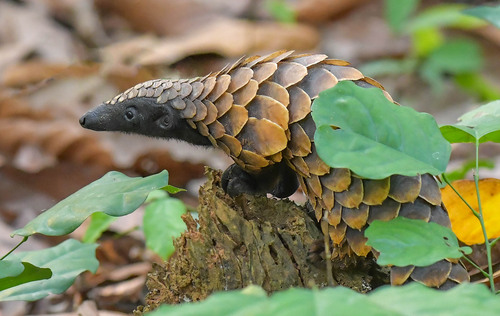
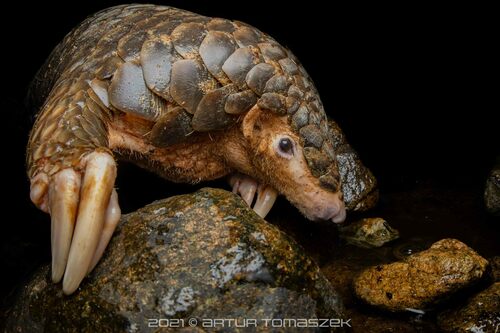
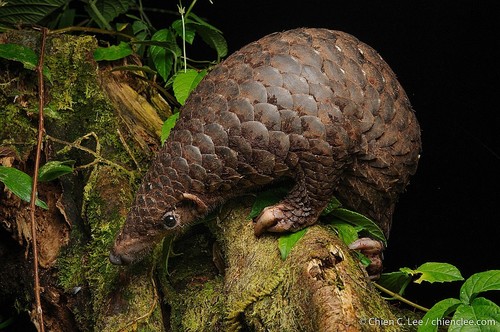
Covered in overlapping brownish scales made of keratin from head to tail, with pale, sparsely-haired underparts giving rise to the 'white-bellied' name. Has a small head with no teeth, elongated snout, and small eyes. The scales have a distinctive tricuspid (three-pointed) shape at their edges, distinguishing this species from relatives.
Size
Head-body length: 30-40cm, with tail length approximately equal to or slightly longer than body length, adding another 30-45cm
Weight
Typically weighs between 1.2-2.7 kg, with limited sexual size difference
Distinctive features
Distinguished from other pangolin species by its tricuspid (three-pointed) scale margins, smaller size compared to giant pangolins, and highly arboreal lifestyle with a long prehensile tail used for climbing. Its ears are more visible than in some other pangolin species.
Behaviour and diet of the White-bellied Pangolin
Solitary and largely asocial except during mating encounters. Individuals maintain home ranges that may overlap with those of others but generally avoid direct contact outside of breeding season.
When it is active
Primarily nocturnal, though some crepuscular activity has been observed. Spends daytime hours resting in tree hollows, dense vegetation, or occasionally underground burrows.
Diet
Specialized insectivore feeding almost exclusively on ants and termites. Can consume up to 150 grams of insects in a single feeding session, using its long sticky tongue to extract prey from nests and tunnels.
How it feeds and hunts
Uses powerful claws to break open ant and termite nests, then extends its extremely long, sticky tongue (which can be longer than its body) into the exposed galleries to capture insects. Has no teeth and relies on a muscular gizzard-like stomach with ingested stones to grind food.
Communication
Primarily communicates through scent marking using secretions from specialized anal glands to mark territory and signal reproductive status. Limited vocalizations have been documented, mostly hissing or puffing sounds when threatened.
Interactions with other species
Natural predators include large cats (leopards), large snakes (pythons), and birds of prey, though the scaled armor provides significant protection. Humans represent the primary threat through hunting and trapping. Has minimal competitive interactions with other species due to its specialized diet.
Role in its ecosystem
Plays a crucial ecological role as a natural pest controller, regulating ant and termite populations within forest ecosystems. This regulation helps maintain forest health and prevents potential insect population explosions that could damage vegetation.
Reproduction and lifecycle
Breeding can occur throughout the year without a strict seasonal pattern. Gestation period lasts approximately 150 days (about 5 months), after which females typically give birth to a single offspring, rarely twins.
Raising the young
Females provide sole parental care, carrying the young on the base of their tail for the first few months of life. Weaning occurs around 3-4 months, though the juvenile may remain with the mother for several months afterward to learn foraging skills.
Maturity and lifespan
Sexual maturity is reached at approximately 2 years of age. Lifespan in the wild is estimated at 4-5 years, though captive individuals have been documented living up to 13-19 years under optimal care conditions.
Taxonomy and naming of the White-bellied Pangolin
Classification
Mammalia > Pholidota > Manidae > Phataginus > Phataginus tricuspis
Scientific synonyms
Manis tricuspis (former genus classification)
What research says
Recent studies
Recent research has focused on the species' potential role as an intermediate host for SARS-CoV-2-related coronaviruses, sparking increased scientific interest in pangolin virology. Additional studies have used genetic techniques to trace illegal trade routes and identify trafficking hotspots.
Genome and DNA
Diploid chromosome number is 2n=36. Genomic studies have focused significantly on this species due to its potential role in coronavirus transmission and evolutionary relationships within Pholidota.
Compared with similar species
Similar to the Black-bellied Pangolin (Phataginus tetradactyla) but distinguished by fewer tail vertebrae and different scale row counts. Larger than most other African pangolins but smaller than the Giant Pangolin (Smutsia gigantea), with a more arboreal lifestyle than the primarily terrestrial Temminck's Ground Pangolin.
The White-bellied Pangolin and people
The White-bellied Pangolin's tongue can be longer than its entire body when fully extended, attached near its pelvis rather than its throat. It is the most trafficked mammal species in the world, with hundreds of thousands illegally traded annually. Despite its fearsome appearance when rolled into a ball, it has no teeth and poses no threat to humans.
Where and how to see it
Best observed through guided night walks in protected tropical forest reserves within its range countries, such as in Gabon or Cameroon, though sightings are rare due to its elusive nocturnal habits. Local ecotourism operators familiar with pangolin habitat and behavior offer the best chances, though patience and quiet movement are essential.
Risks to humans
No notable risk to humans; the species is non-aggressive and lacks teeth or venom. However, handling wild pangolins carries potential zoonotic disease transmission risk, as they may harbor pathogens including coronaviruses.
Human uses
Heavily hunted for bushmeat consumption in local communities and for its scales, which are used in traditional Asian medicine despite lacking scientifically proven medicinal properties. Live animals and body parts are also illegally traded internationally, making this one of the most economically exploited wildlife species globally.
Myths and legends
In various West and Central African cultures, pangolins hold significant cultural and spiritual symbolism, sometimes associated with fertility, protection, or used in traditional ceremonies. Some communities consider the pangolin a sacred or taboo animal that should not be hunted, while others actively hunt it for bushmeat and traditional medicine.
Countries where the White-bellied Pangolin is recorded
The 16 countries named in the range description of its IUCN Red List assessment.
Questions about the White-bellied Pangolin
Where does the White-bellied Pangolin live?
The White-bellied Pangolin is recorded in Benin, Cameroon, Central African Republic, Democratic Republic of the Congo and Gabon, among 16 countries in total across Africa. These countries come from the range description of its IUCN Red List assessment, and they are what place the species on the interactive map.
Is the White-bellied Pangolin endangered?
Yes. The IUCN Red List assesses the White-bellied Pangolin as Endangered, one of the three threatened categories. The species faces a very high risk of extinction in the wild — a step below Critically Endangered, but still on a trajectory that ends badly without intervention.
How many are left in the wild?
Population size is difficult to quantify precisely due to the species' elusive and nocturnal nature, but is estimated to be declining rapidly, with local extinctions reported in parts of its range. This figure comes from the species assessment on the IUCN Red List; population estimates for wild mammals are ranges, not counts, and are revised at each assessment.
What habitat does the White-bellied Pangolin live in?
Primarily found in tropical rainforests, both primary and secondary growth, as well as forest-savanna mosaics.
What is the scientific name of the White-bellied Pangolin?
The White-bellied Pangolin is Phataginus tricuspis, in the family Manidae, order Pholidota.
Other species in the genus Phataginus
Other species in the family Manidae
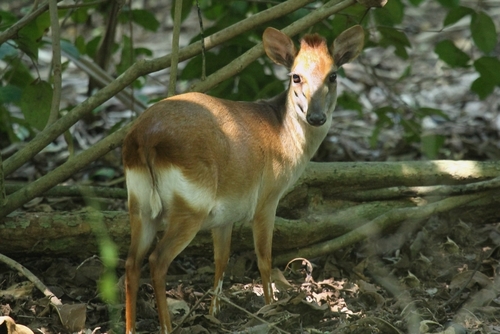
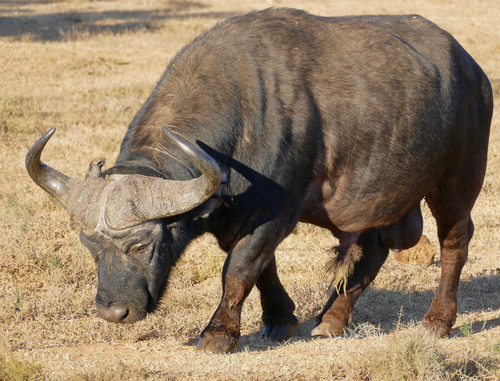
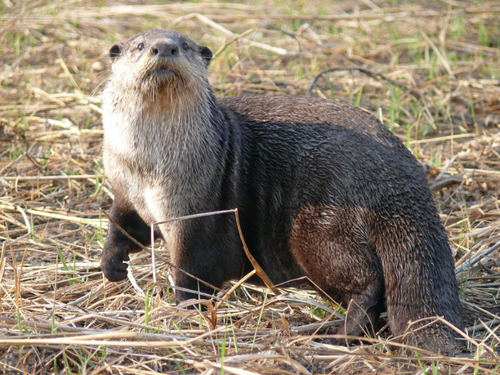
Species that share its range

Sources
Conservation status, range description and population estimate come from the IUCN Red List assessment for Phataginus tricuspis. Countries are derived from that range description, not from a mapped country list. Last refreshed on .
The distribution map is drawn from the IUCN Red List spatial data compiled in 2019. IUCN SSC Pangolin Specialist Group