
African Brush-tailed Porcupine
Atherurus africanus
Red List assessment
Least Concernon the IUCN Red List
- EXExtinct
- EWExtinct in the Wild
- CRCritically Endangered
- ENEndangered
- VUVulnerable
- NTNear Threatened
- LCLeast Concern
The African Brush-tailed Porcupine is recorded in 17 countries across Africa. The IUCN Red List assesses the African Brush-tailed Porcupine as Least Concern. No precise global population estimate is available.
- Family
- Hystricidae
- Order
- Rodentia
- Genus
- Atherurus
- Countries recorded
- 17
- Continents
- Africa
- Red List category
- Least Concern
- Data updated
- August 9, 2026
What is the African Brush-tailed Porcupine?
The African brush-tailed porcupine is a medium-sized, heavily armored rodent belonging to the Old World porcupine family Hystricidae. It is distinguished from larger crested porcupines (Hystrix spp.) by its slender body, relatively long tail tipped with a conspicuous rattle-like brush of hollow, flattened quills, and its bead-like interlocking spines. It inhabits dense tropical rainforests and is almost entirely nocturnal. Its remarkable defensive tail rattle and osteophagy (bone-gnawing for mineral intake) make it a zoologically fascinating species.
Where does the African Brush-tailed Porcupine live?
West and Central Africa, extending into parts of East Africa; primarily Nigeria, Cameroon, Gabon, DRC, Uganda, and neighboring countries
Ranges from Gambia, Senegal, Guinea-Bissau, Guinea, Sierra Leone, Liberia, Côte d'Ivoire, Ghana, and Nigeria in the west, through Cameroon, Equatorial Guinea, Gabon, Republic of Congo, Central African Republic, and the Democratic Republic of Congo, extending into southwestern Uganda and the far western edge of Kenya and Tanzania.
Altitude and depth
Typically found from sea level up to approximately 2,000 m altitude, most commonly below 1,500 m in lowland forest zones.
Seasonal movements
No significant seasonal migration is recorded. Activity may intensify during the dry season when food resources are concentrated near streams. No hibernation occurs.
Habitat of the African Brush-tailed Porcupine
Primarily dense lowland tropical rainforest and moist secondary forest. Also found in gallery forests, forest-savanna mosaics, and sometimes rocky hillside habitats with dense vegetation near water sources. It favors areas with abundant leaf litter and fallen logs for foraging.
Adaptations to its environment
The bead-like, interlocking quills covering the dorsal surface act as effective passive armor against predators. The hollow, rattling tail quills serve as an acoustic alarm to deter predators. Sharp, strong claws allow efficient digging of burrows. Bone-gnawing behavior (osteophagy) supplements calcium and phosphorus in a forest diet often deficient in these minerals.
Conservation status and numbers
Least Concern (LC) on the IUCN Red List. The species has a wide distribution, presumed large overall population, and tolerates some degree of habitat degradation. However, hunting pressure in some parts of its range is considered significant and locally threatens populations.
Estimated population
No precise global population estimate is available. The trend is considered stable overall at the global level, though local declines occur in heavily hunted or deforested areas.
What threatens the African Brush-tailed Porcupine?
Heavy hunting for bushmeat is the primary threat throughout its range, as it is highly prized for food in West and Central Africa. Habitat loss and forest fragmentation due to logging, agricultural expansion, and human settlement also reduce available habitat. Snare trapping is particularly common and indiscriminate.
Diseases and parasites
Susceptible to various ectoparasites (mites, ticks, fleas) and endoparasites (helminths, intestinal nematodes) typical of forest rodents. Has been identified as a potential reservoir host for certain zoonotic pathogens in bushmeat contexts, though specific data remain limited.
What is being done to protect it?
The species benefits from protected areas across its range, including Lopé National Park (Gabon), Dja Faunal Reserve (Cameroon), Nouabalé-Ndoki National Park (Republic of Congo), and numerous reserves in the DRC. It is listed on CITES Appendix III (Ghana), providing some international trade monitoring.
Recommended actions
Strengthening enforcement against illegal bushmeat hunting and snare trapping in protected areas is a priority. Sustainable bushmeat management programs and community-based conservation initiatives should be supported. Long-term population monitoring is needed to detect trends, especially in heavily exploited areas.
What the African Brush-tailed Porcupine looks like
The body is covered dorsally with flattened, bead-like brownish-gray quills interspersed with coarser black-and-white spines. The underparts are softer, with pale grayish-white hair. The head is elongated with a pointed snout, small rounded ears, and large dark eyes adapted for nocturnal vision. The tail terminates in a distinctive 'paintbrush' of white, hollow, flattened quill-rattles.
Size
Head-body length: 40–57 cm; tail length: 10–22 cm. Shoulder height approximately 15–20 cm.
Weight
Typically 1.5–4 kg. Sexual dimorphism in size is minimal, with males and females of similar weight.
Distinctive features
Unlike the larger African crested porcupines (Hystrix cristata or H. africaeaustralis), the African brush-tailed porcupine is notably slimmer and lacks the prominent erectile crest of long quills on the head and back. Its defining feature is the unique rattle-brush tail tip, absent in Hystrix species. The flattened, bead-like quills rather than fully round quills also differentiate it.
Differences between males and females
Sexual dimorphism is minimal. Males and females are similar in size and appearance. Both sexes may have scent glands used for communication.
Behaviour and diet of the African Brush-tailed Porcupine
Generally lives in small family groups of 2–8 individuals, typically a mating pair with offspring from multiple litters. Groups share burrow systems. They are not strongly territorial but maintain home ranges that overlap minimally with neighboring groups.
When it is active
Strictly nocturnal. Individuals emerge from burrows after dark to forage throughout the night, returning before dawn. They spend the day resting in burrows, rock crevices, or hollow logs.
Diet
Primarily herbivorous, feeding on roots, tubers, bulbs, fallen fruits, seeds, bark, and plant stems. Supplements its diet with insects, small vertebrates occasionally, and notably practices osteophagy — gnawing on bones and dry wood to obtain calcium, phosphorus, and other minerals.
How it feeds and hunts
Not a predator in the traditional sense. Forages by rooting through leaf litter and soil using its strong claws and sensitive snout to locate underground tubers, roots, and fallen fruits. Olfaction is the primary sense used in food detection.
Communication
Uses quill-rattling as the primary defensive signal — shaking the tail vigorously produces a loud rattling sound to warn predators. Vocalizations include grunts, snuffling, and tooth-chattering. Scent marking via feces, urine, and possibly specialized glands is used to communicate territory and reproductive status.
Interactions with other species
Natural predators include leopards (Panthera pardus), African rock pythons (Python sebae), and large raptors such as crowned eagles (Stephanoaetus coronatus). It competes with other forest rodents for underground food resources. Its digging activities may incidentally benefit soil aeration and plant root exposure.
Role in its ecosystem
Acts as a seed disperser and soil disturber within tropical forest ecosystems. Its burrowing and root-foraging behavior influences local soil structure. As prey species, it is an important food source for several apex predators in African rainforests.
Reproduction and lifecycle
Breeding appears to occur year-round with possible peaks tied to rainfall and food availability. Gestation lasts approximately 100–110 days. Litter size is typically 1–3 young (usually 1–2). Young are born in a well-developed, precocial state with soft quills that harden within hours.
Raising the young
Both parents participate in raising young within the family burrow system. The young nurse for several weeks and are gradually introduced to solid food. Juveniles may remain with the family group for an extended period before dispersal.
Maturity and lifespan
Sexual maturity is reached at approximately 1–2 years of age. Lifespan in the wild is estimated at 8–12 years; captive individuals have lived over 15 years under managed conditions.
Taxonomy and naming of the African Brush-tailed Porcupine
Classification
Mammalia > Rodentia > Hystricidae > Atherurus > Atherurus africanus
Subspecies
Three subspecies are recognized: A. a. africanus (West Africa, from Senegal to Nigeria), A. a. centralis (Central Africa, from Cameroon to DRC), and A. a. turneri (East Africa, Uganda and western Kenya).
Scientific synonyms
Hystrix africana Cuvier, 1829; Atherurus temmincki Gray, 1842. The genus Atherurus was historically sometimes lumped with Hystrix before morphological distinctions were clarified.
What research says
Recent studies
Recent camera-trap studies in Central African forests (e.g., in Cameroon and Gabon) have provided better documentation of its social behavior and nocturnal activity patterns. Research into bushmeat offtake has highlighted A. africanus as one of the most frequently harvested forest mammals in the Congo Basin.
Genome and DNA
The diploid chromosome number (2n) is reported as approximately 48 for Atherurus species. Molecular phylogenetic studies confirm Atherurus as a basal lineage within Hystricidae, distinct from Hystrix. Detailed genomic studies on this species remain limited.
Compared with similar species
The African brush-tailed porcupine is closely related to the Asiatic brush-tailed porcupine (Atherurus macrourus) of Southeast Asia, which shares the diagnostic tail brush but occupies a geographically separate range. Both Atherurus species are considerably smaller and more slender than Old World crested porcupines (Hystrix spp.) and lack the dramatic erectile quill crest. Within the family Hystricidae, Atherurus is considered more basal than Hystrix.
The African Brush-tailed Porcupine and people
The hollow quills on the tip of its tail function like a natural maraca — when shaken rapidly, they produce a hissing rattle loud enough to startle predators. Despite being a herbivore, it regularly gnaws on bones and antlers to supplement its mineral intake, a behavior called osteophagy rarely seen in herbivorous rodents. Unlike the popular image of porcupines 'shooting' quills, the African brush-tailed porcupine cannot project its quills; however, the quills detach very easily on contact and embed deeply in a predator's skin.
Where and how to see it
Best observed in protected rainforest areas of Gabon (Lopé National Park), Cameroon (Dja Reserve), and the DRC during nighttime spotlight walks along forest trails. Camera traps set near fruiting trees or mineral licks at stream edges yield reliable results. Dawn and dusk are also productive observation times as individuals return to burrows.
Risks to humans
The quills can cause painful puncture wounds if handled carelessly, and detached quills are difficult to remove due to backward-pointing barbs. It poses no venom risk. As a known bushmeat species handled without precaution, it may carry zoonotic parasites; proper handling precautions are recommended.
Human uses
Widely hunted across West and Central Africa for bushmeat, being considered a delicacy in many local cuisines. It is sold in urban and rural markets and represents an important protein source in forest communities. Quills are used in traditional jewelry and ornamental crafts. It is occasionally kept in captivity in local contexts.
Myths and legends
In several Central and West African cultures, the porcupine is associated with resilience and self-defense due to its quill armor, sometimes used as a symbol of protection. Its quills are occasionally used in traditional ornaments and ritual objects. In some communities, hunting and eating porcupine is subject to cultural taboos, particularly for pregnant women, though practices vary widely by ethnic group.
Countries where the African Brush-tailed Porcupine is recorded
The 17 countries named in the range description of its IUCN Red List assessment.
Questions about the African Brush-tailed Porcupine
Where does the African Brush-tailed Porcupine live?
The African Brush-tailed Porcupine is recorded in Cameroon, Central African Republic, Democratic Republic of the Congo, Equatorial Guinea and Gabon, among 17 countries in total across Africa. These countries come from the range description of its IUCN Red List assessment, and they are what place the species on the interactive map.
Is the African Brush-tailed Porcupine endangered?
The IUCN Red List assesses the African Brush-tailed Porcupine as Least Concern. The species is widespread and abundant enough not to qualify for any threatened category. It does not mean the species is safe forever, only that nothing in the current data raises an alarm.
How many are left in the wild?
No precise global population estimate is available. This figure comes from the species assessment on the IUCN Red List; population estimates for wild mammals are ranges, not counts, and are revised at each assessment.
What habitat does the African Brush-tailed Porcupine live in?
Primarily dense lowland tropical rainforest and moist secondary forest.
What is the scientific name of the African Brush-tailed Porcupine?
The African Brush-tailed Porcupine is Atherurus africanus, in the family Hystricidae, order Rodentia.
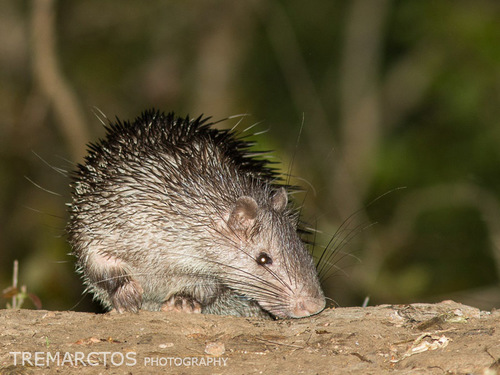
Other species in the genus Atherurus
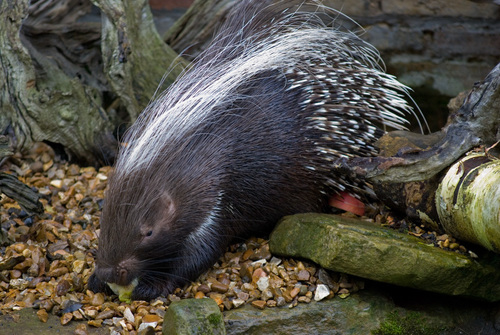
Other species in the family Hystricidae
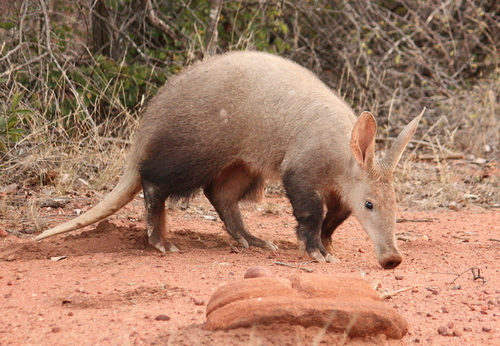
Species that share its range
Sources
Conservation status, range description and population estimate come from the IUCN Red List assessment for Atherurus africanus. Countries are derived from that range description, not from a mapped country list. Last refreshed on .
The distribution map is drawn from the IUCN Red List spatial data compiled in 2008. IUCN (International Union for Conservation of Nature)