
Sunda Pangolin
Manis javanica
Red List assessment
Critically Endangeredon the IUCN Red List
- EXExtinct
- EWExtinct in the Wild
- CRCritically Endangered
- ENEndangered
- VUVulnerable
- NTNear Threatened
- LCLeast Concern
The Sunda Pangolin is recorded in 10 countries across Asia. The IUCN Red List assesses the Sunda Pangolin as Critically Endangered. Exact numbers are unknown due to its secretive nature, but populations are considered to be severely declining across its range, with local extinctions reported in parts of its historic distribution.
- Family
- Manidae
- Order
- Pholidota
- Genus
- Manis
- Countries recorded
- 10
- Continents
- Asia
- Red List category
- Critically Endangered
- Data updated
- August 9, 2026
What is the Sunda Pangolin?
The Sunda pangolin is a scaly, insectivorous mammal native to Southeast Asian tropical forests, notable for being one of the most heavily trafficked mammals in the world due to demand for its scales and meat. It is a solitary, nocturnal, and largely arboreal species with a prehensile tail. Its unique keratin armor and ability to curl into a tight ball make it distinctive among mammals.
Where does the Sunda Pangolin live?
Southeast Asia, including Indonesia, Malaysia, Thailand, Vietnam, Laos, Cambodia, Myanmar, Singapore, Brunei, and the Philippines
Found across mainland Southeast Asia and the Sundaic region, including Vietnam, Cambodia, Laos, Thailand, Peninsular Malaysia, Singapore, Indonesia (Sumatra, Java, Kalimantan), Brunei, and parts of the Philippines.
Altitude and depth
Sea level up to approximately 1,700 meters in elevation
Habitat of the Sunda Pangolin
Primarily found in primary and secondary tropical rainforests, but also adapts to plantations, mangroves, and agricultural areas near forest edges. It relies on tree cover and soil suitable for burrowing or termite/ant nests.
Adaptations to its environment
Its overlapping keratin scales provide protection against predators, while a long sticky tongue and reduced teeth are specialized for eating ants and termites. Strong claws and a prehensile tail allow it to be highly proficient at climbing trees, and it can seal its ears and nostrils to prevent insects from entering while foraging.
Conservation status and numbers
Critically Endangered (IUCN Red List), due to a population decline estimated at over 80% over the past three generations (approximately 21 years), driven primarily by illegal hunting and international trafficking.
Estimated population
Exact numbers are unknown due to its secretive nature, but populations are considered to be severely declining across its range, with local extinctions reported in parts of its historic distribution.
What threatens the Sunda Pangolin?
Illegal poaching and trafficking for scales (used in traditional medicine) and meat (considered a delicacy) are the primary threats, compounded by habitat loss from deforestation and agricultural expansion.
Diseases and parasites
Wild and captive pangolins are known to host various endo- and ectoparasites, and studies have identified them as potential hosts for coronaviruses, prompting interest in zoonotic disease research.
What is being done to protect it?
The species is listed on CITES Appendix I, banning international commercial trade, and is legally protected in most range countries. Various rescue and rehabilitation centers, such as those in Vietnam and Malaysia, work to rehabilitate confiscated animals and support anti-poaching efforts.
Recommended actions
Strengthening law enforcement against poaching and trafficking networks, increasing public awareness campaigns to reduce demand, expanding protected habitat, and supporting community-based conservation initiatives are top priorities.
What the Sunda Pangolin looks like
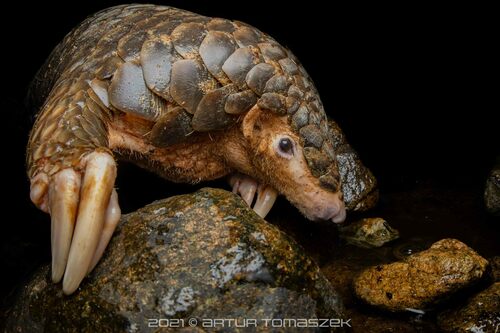
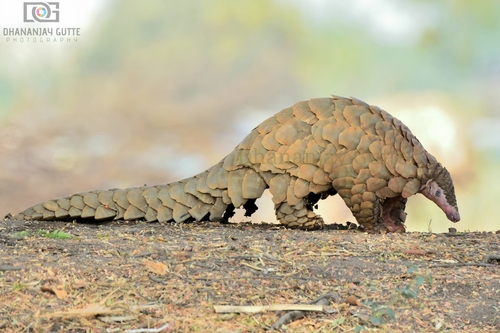
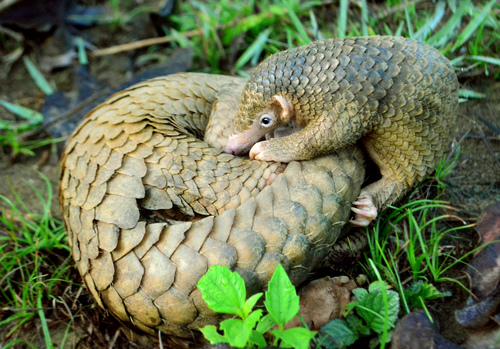
The body is covered in overlapping brownish-grey to yellowish-brown keratin scales, with a pale, sparsely-haired underside. It has a small conical head, no teeth, a long sticky tongue, and a long, muscular prehensile tail used for climbing.
Size
Body length ranges from 40 to 65 cm, with an additional tail length of 35 to 56 cm.
Weight
Adults typically weigh between 2 and 10 kg, with males generally slightly larger than females.
Distinctive features
Compared to other pangolin species, the Sunda pangolin has a longer tail relative to body length and is more arboreal, with smaller and more pointed scales than the Chinese pangolin.
Differences between males and females
Males are generally slightly larger and heavier than females, but there are no major differences in coloration or scale pattern.
Behaviour and diet of the Sunda Pangolin
Sunda pangolins are solitary animals, coming together only briefly for mating; they do not form social groups or hierarchies.
When it is active
Primarily nocturnal, spending daylight hours resting in tree hollows or burrows and becoming active at night to forage.
Diet
Strictly insectivorous, feeding mainly on ants and termites, which it locates using a keen sense of smell.
How it feeds and hunts
Uses strong claws to break open ant and termite nests, then extends its long sticky tongue—longer than its body—to capture insects; it lacks teeth and grinds food using keratinous spines in its stomach.
Communication
Communication is primarily via scent marking with secretions from anal glands, along with limited body postures, as vocalizations are minimal.
Interactions with other species
Predators include large cats, pythons, and birds of prey, though the pangolin’s scaled armor provides significant defense; humans remain its most significant threat through poaching.
Role in its ecosystem
As a specialized insectivore, the Sunda pangolin plays an important ecological role in controlling ant and termite populations, contributing to forest health and soil aeration through its digging.
Reproduction and lifecycle
Breeding can occur year-round, with females giving birth to a single offspring after a gestation period of about 70-140 days, though multiple births occasionally happen.
Raising the young
The mother carries the young on the base of her tail for several months while nursing, and juveniles remain with the mother until independence at around 3-4 months of age.
Maturity and lifespan
Sexual maturity is reached around 2 years of age; lifespan in the wild is estimated at up to 20 years, though captive pangolins often have shorter lifespans due to stress and dietary challenges.
Taxonomy and naming of the Sunda Pangolin
Classification
Mammalia > Pholidota > Manidae > Manis > Manis javanica
Scientific synonyms
Manis dalmanni, Manis aspera
What research says
Recent studies
Recent genetic studies have used DNA barcoding to trace trafficked pangolin scales back to specific populations, aiding law enforcement efforts, and other research has explored pangolins as potential intermediate hosts for coronaviruses.
Genome and DNA
The Sunda pangolin has a diploid chromosome number of 2n=38-40, and genomic studies have been conducted partly to trace illegal trade origins and to investigate its role in coronavirus transmission research.
Compared with similar species
Compared to the Chinese pangolin (Manis pentadactyla), the Sunda pangolin has a longer tail and is more arboreal, while the Indian pangolin (Manis crassicaudata) tends to be more terrestrial and larger in body size.
The Sunda Pangolin and people
Sunda pangolins can curl into a nearly impenetrable ball when threatened, and their tongues can be longer than their entire body when fully extended. They are also excellent swimmers despite their heavy, armored bodies.
Where and how to see it
Due to their nocturnal and secretive nature, wild sightings are extremely rare; best observation opportunities are typically through camera traps in protected reserves in Malaysia or Indonesia, ideally with expert guides.
Risks to humans
No notable risk to humans; Sunda pangolins are non-aggressive and their only defense is curling into a ball.
Human uses
Historically and currently exploited for their scales, believed in traditional medicine to have healing properties, and their meat is considered a luxury food item in parts of Asia, driving significant illegal trade.
Myths and legends
In several Southeast Asian cultures, pangolin scales are believed to have medicinal properties, a belief rooted in traditional medicine systems, although scientifically the scales are composed of keratin, the same material as human fingernails.
Countries where the Sunda Pangolin is recorded
The 10 countries named in the range description of its IUCN Red List assessment.
Questions about the Sunda Pangolin
Where does the Sunda Pangolin live?
The Sunda Pangolin is recorded in Brunei, Cambodia, Indonesia, Laos and Malaysia, among 10 countries in total across Asia. These countries come from the range description of its IUCN Red List assessment, and they are what place the species on the interactive map.
Is the Sunda Pangolin endangered?
Yes. The IUCN Red List assesses the Sunda Pangolin as Critically Endangered, one of the three threatened categories. The species faces an extremely high risk of extinction in the wild. This is the last category before extinction, and it is reached through a very small or steeply declining population, a tiny range, or both.
How many are left in the wild?
Exact numbers are unknown due to its secretive nature, but populations are considered to be severely declining across its range, with local extinctions reported in parts of its historic distribution. This figure comes from the species assessment on the IUCN Red List; population estimates for wild mammals are ranges, not counts, and are revised at each assessment.
What habitat does the Sunda Pangolin live in?
Primarily found in primary and secondary tropical rainforests, but also adapts to plantations, mangroves, and agricultural areas near forest edges.
What is the scientific name of the Sunda Pangolin?
The Sunda Pangolin is Manis javanica, in the family Manidae, order Pholidota.
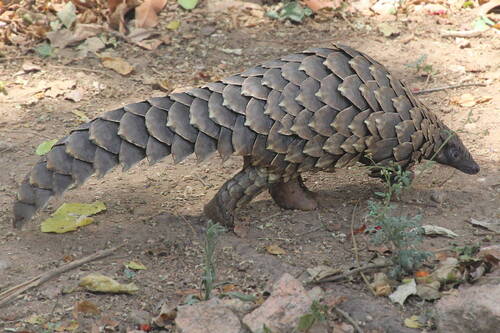
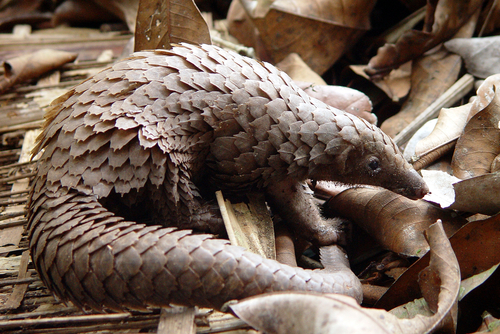
Other species in the genus Manis
Other species in the family Manidae
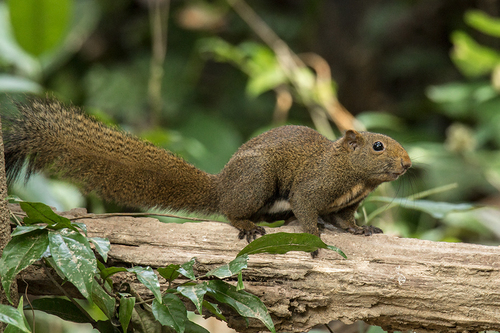
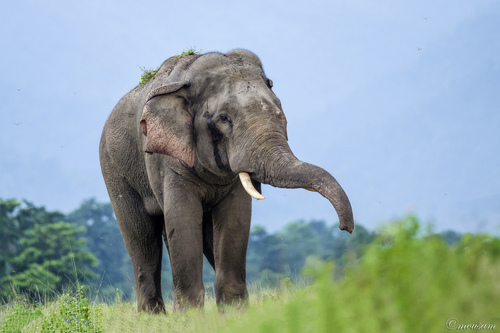
Species that share its range
Sources
Conservation status, range description and population estimate come from the IUCN Red List assessment for Manis javanica. Countries are derived from that range description, not from a mapped country list. Last refreshed on .
The distribution map is drawn from the IUCN Red List spatial data compiled in 2019. IUCN SSC Pangolin Specialist Group