
Variable Squirrel
Callosciurus finlaysonii
Red List assessment
Least Concernon the IUCN Red List
- EXExtinct
- EWExtinct in the Wild
- CRCritically Endangered
- ENEndangered
- VUVulnerable
- NTNear Threatened
- LCLeast Concern
The Variable Squirrel is recorded in 8 countries across Asia and Europe. The IUCN Red List assesses the Variable Squirrel as Least Concern. No precise global population estimate exists, but the species is described as common to abundant throughout much of its range, with a presumed stable or increasing trend.
- Family
- Sciuridae
- Order
- Rodentia
- Genus
- Callosciurus
- Countries recorded
- 8
- Continents
- Asia and Europe
- Red List category
- Least Concern
- Data updated
- August 9, 2026
What is the Variable Squirrel?
The Variable Squirrel is a medium-sized tree squirrel native to Southeast Asia, renowned for its extraordinary color variation across populations, ranging from all-white to bright orange, black, or multicolored forms. It thrives in forests, parks, and urban gardens, often coexisting closely with humans. Its adaptability has allowed it to establish thriving introduced populations far outside its native range, notably in Singapore and Italy. It is a common and conspicuous species in the areas it inhabits.
Where does the Variable Squirrel live?
Native to Thailand, Cambodia, Laos, Myanmar, and Malaysia; introduced populations established in Singapore, Italy, and Japan.
Native range spans Thailand, Cambodia, Laos, Myanmar, and parts of Malaysia; introduced and naturalized populations exist in Singapore, Italy (Liguria region), and Japan due to pet trade escapes.
Altitude and depth
Typically found from sea level up to about 1,200 meters elevation.
Seasonal movements
No hibernation or long-distance migration; breeding activity and foraging may fluctuate slightly with fruiting seasons but the species is active year-round.
Habitat of the Variable Squirrel
Found in tropical and subtropical forests, secondary growth, mangroves, plantations, and urban parks and gardens; highly adaptable to human-modified landscapes.
Adaptations to its environment
Strong curved claws and a long tail aid balance and agility in climbing trees; its varied coat coloration may provide camouflage suited to differing habitats. It has a flexible diet and behavior enabling survival in both forest and urban environments.
Conservation status and numbers
Listed as Least Concern (LC) by the IUCN due to its wide distribution, large population, tolerance of habitat disturbance, and lack of major range-wide threats.
Estimated population
No precise global population estimate exists, but the species is described as common to abundant throughout much of its range, with a presumed stable or increasing trend.
What threatens the Variable Squirrel?
Localized threats include habitat loss from deforestation and urbanization in native range; however, no major population-level threats exist given its adaptability. In some introduced areas it is considered a potential invasive pest.
Diseases and parasites
Susceptible to common rodent ectoparasites such as fleas and mites, and may carry certain zoonotic pathogens, though no major disease outbreaks have been documented.
What is being done to protect it?
No specific conservation programs target this species due to its stable status; it occurs in numerous protected areas within its native range incidentally. In introduced areas like Italy, monitoring focuses on invasive species management rather than conservation.
Recommended actions
Continued monitoring of introduced populations to prevent ecological impacts on native squirrel species; habitat protection in native range as part of broader forest conservation efforts.
What the Variable Squirrel looks like
Coat coloration is extremely variable, including combinations of white, cream, orange, red, black, and grey, often with distinct patterns on the back, tail, and limbs depending on subspecies and locality. It has a bushy tail, rounded ears, and sharp curved claws typical of tree squirrels.
Size
Head-body length approximately 20-26 cm, with a tail of similar or slightly greater length (20-25 cm).
Weight
Typically weighs between 250-350 grams.
Distinctive features
Its name 'Variable Squirrel' reflects the exceptional degree of color polymorphism among subspecies and even within populations, unlike most other Callosciurus species which have more consistent coloration.
Differences between males and females
Minimal sexual dimorphism; males and females are similar in size and coloration.
Behaviour and diet of the Variable Squirrel
Generally solitary or found in loose associations, though multiple individuals may share overlapping territories and feeding areas, especially in food-rich urban parks.
When it is active
Diurnal, most active during early morning and late afternoon, resting during the hottest midday hours.
Diet
Omnivorous, feeding on fruits, seeds, nuts, flowers, bark, and occasionally insects and bird eggs; readily exploits human food sources in urban and park settings.
How it feeds and hunts
Forages opportunistically by climbing and searching tree canopies and ground litter for food; not a hunter but may occasionally prey on small invertebrates or eggs when encountered.
Communication
Communicates through vocal chattering and alarm calls, tail flicking, and scent marking to establish territory and signal presence to conspecifics.
Interactions with other species
Natural predators include birds of prey, snakes, and small carnivorous mammals; in introduced areas, it may compete with native squirrel species for food and nesting sites.
Role in its ecosystem
Plays a role in seed dispersal and, to a lesser extent, pollination through feeding on fruits and flowers, contributing to forest regeneration within its native ecosystem.
Reproduction and lifecycle
Breeding can occur year-round in favorable conditions with possibly two litters per year; gestation lasts about 40-50 days, producing litters of 1-3 young.
Raising the young
Females build nests in tree hollows or dense vegetation and provide sole care for the young, nursing them for several weeks until weaning and independence.
Maturity and lifespan
Reaches sexual maturity around 1 year of age; lifespan in the wild is typically 3-5 years, while captive individuals can live up to 10 years.
Taxonomy and naming of the Variable Squirrel
Classification
Class Mammalia > Order Rodentia > Family Sciuridae > Genus Callosciurus > Species Callosciurus finlaysonii
Subspecies
Around 16 recognized subspecies differing mainly in coloration, including C. f. finlaysonii, C. f. albivexilli, C. f. bocourti, and C. f. ferrugineus, distributed across mainland Southeast Asia.
Scientific synonyms
Sciurus finlaysonii (original name), Macroxus finlaysonii
What research says
Recent studies
Recent research has focused on the invasive potential and genetic diversity of introduced populations in Italy, examining risks to native red squirrel populations.
Genome and DNA
Specific chromosome count data limited, but genetic studies on introduced Italian populations have been used to trace origin and spread of the species via the pet trade.
Compared with similar species
Similar to other Callosciurus species such as the Pallas's squirrel (Callosciurus erythraeus), but distinguished by its greater color variability and slightly different habitat preferences.
The Variable Squirrel and people
This squirrel's coloration can vary so dramatically between individuals that early taxonomists mistakenly classified different color morphs as separate species. It has become an accidental 'exotic pet trade ambassador,' establishing wild colonies in Italian cities far from its native tropics.
Where and how to see it
Best observed during early morning or late afternoon in parks, gardens, and forest edges throughout Thailand and Cambodia, as well as in urban parks of Singapore and coastal Italy where introduced populations thrive.
Risks to humans
No notable risk; docile and generally avoids direct human contact, though it may raid gardens or bird feeders for food.
Human uses
Occasionally kept as an exotic pet due to its striking coloration, which has contributed to unintentional introductions outside its native range; not commercially hunted or farmed.
Countries where the Variable Squirrel is recorded
The 8 countries named in the range description of its IUCN Red List assessment.
Questions about the Variable Squirrel
Where does the Variable Squirrel live?
The Variable Squirrel is recorded in Cambodia, Italy, Japan, Laos and Malaysia, among 8 countries in total across Asia and Europe. These countries come from the range description of its IUCN Red List assessment, and they are what place the species on the interactive map.
Is the Variable Squirrel endangered?
The IUCN Red List assesses the Variable Squirrel as Least Concern. The species is widespread and abundant enough not to qualify for any threatened category. It does not mean the species is safe forever, only that nothing in the current data raises an alarm.
How many are left in the wild?
No precise global population estimate exists, but the species is described as common to abundant throughout much of its range, with a presumed stable or increasing trend. This figure comes from the species assessment on the IUCN Red List; population estimates for wild mammals are ranges, not counts, and are revised at each assessment.
What habitat does the Variable Squirrel live in?
Found in tropical and subtropical forests, secondary growth, mangroves, plantations, and urban parks and gardens; highly adaptable to human-modified landscapes.
What is the scientific name of the Variable Squirrel?
The Variable Squirrel is Callosciurus finlaysonii, in the family Sciuridae, order Rodentia.
Other species in the genus Callosciurus
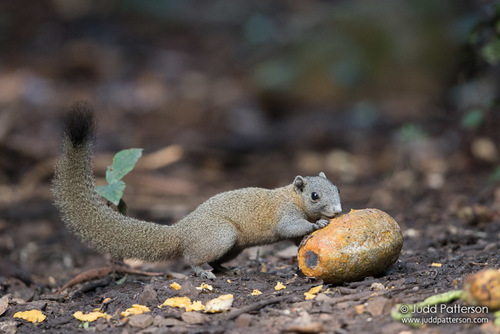
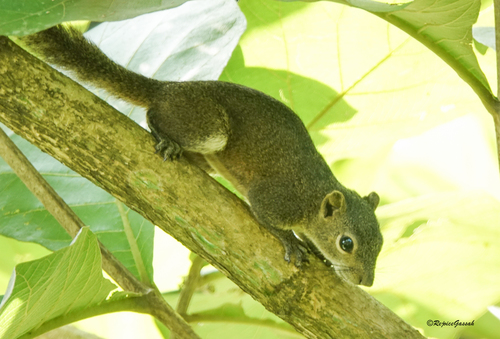
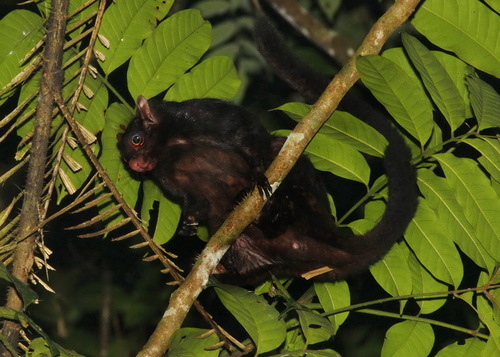
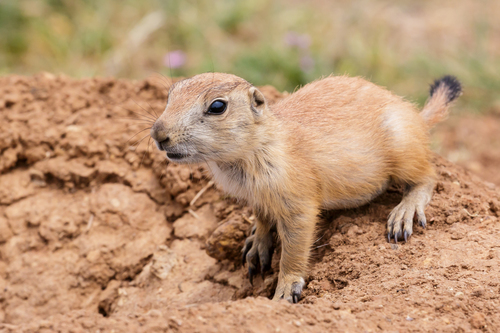
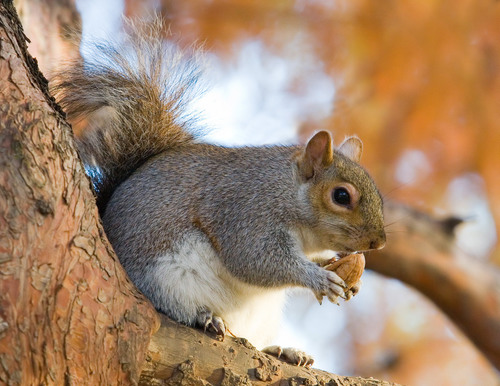
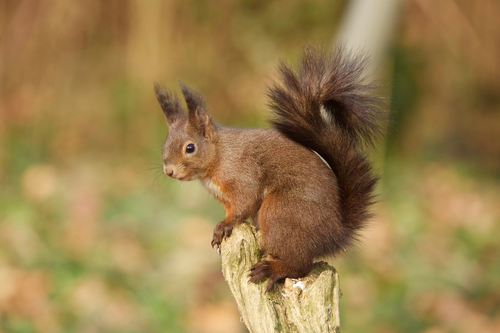
Other species in the family Sciuridae
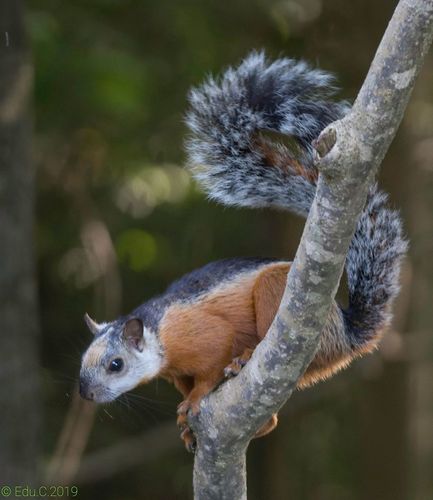
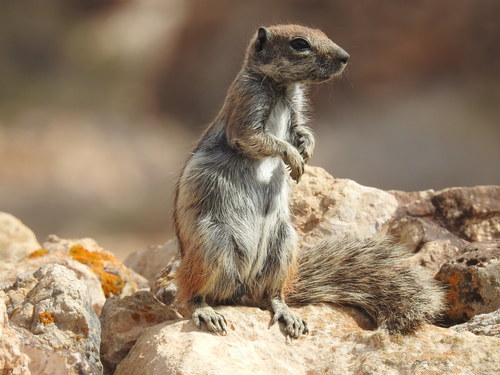
Sources
Conservation status, range description and population estimate come from the IUCN Red List assessment for Callosciurus finlaysonii. Countries are derived from that range description, not from a mapped country list. Last refreshed on .
The distribution map is drawn from the IUCN Red List spatial data compiled in 2008. IUCN (International Union for Conservation of Nature)