
Black Flying Squirrel
Aeromys tephromelas
Red List assessment
Data Deficienton the IUCN Red List
- EXExtinct
- EWExtinct in the Wild
- CRCritically Endangered
- ENEndangered
- VUVulnerable
- NTNear Threatened
- LCLeast Concern
Data Deficient has no position on the scale above — it records the absence of an assessment, not a degree of risk.
The Black Flying Squirrel is recorded in 4 countries across Asia. The IUCN Red List records the Black Flying Squirrel as Data Deficient. Unknown; no reliable global population estimate has been made.
- Family
- Sciuridae
- Order
- Rodentia
- Genus
- Aeromys
- Countries recorded
- 4
- Continents
- Asia
- Red List category
- Data Deficient
- Data updated
- August 9, 2026
What is the Black Flying Squirrel?
The Black Flying Squirrel (Aeromys tephromelas) is a large, dark-furred gliding squirrel native to the primary tropical rainforests of Borneo and possibly adjacent islands. It possesses an expansive patagium — a fur-covered gliding membrane stretching from wrist to ankle — enabling impressive aerial glides between tall forest trees. It is strictly nocturnal and highly arboreal, spending the day concealed in tree hollows deep within old-growth forest. Due to its cryptic coloration, secretive habits, and remote forest habitat, it remains one of the least studied large mammals of Southeast Asia.
Where does the Black Flying Squirrel live?
Borneo (Malaysia: Sabah and Sarawak; Brunei Darussalam; Indonesia: Kalimantan); possibly also northern Sumatra (Indonesia) and Palawan (Philippines)
Predominantly distributed across the island of Borneo, including Sabah and Sarawak (East Malaysia), Brunei Darussalam, and the Kalimantan provinces of Indonesia. Tentative records exist from northern Sumatra and Palawan (Philippines), but these remain unconfirmed and require verification. The species is considered endemic or near-endemic to Borneo.
Altitude and depth
Primarily found from sea level to approximately 1,500 m elevation; the majority of records are from lowland forests below 1,000 m, where forest structure and tree size support gliding locomotion.
Habitat of the Black Flying Squirrel
Primary and tall secondary lowland tropical rainforests, favoring old-growth stands with large emergent trees essential for gliding and nesting in tree hollows. It generally avoids heavily logged, fragmented, or degraded forests. Occasionally recorded in lower montane forest up to approximately 1,500 m elevation.
Adaptations to its environment
The large patagium connecting fore and hind limbs acts as a natural paraglider, allowing long-distance glides of potentially 50–150 meters between trees while losing minimal altitude. Oversized eyes with enlarged pupils maximize light capture for effective nocturnal vision in the dark forest canopy. Dark, near-black pelage provides excellent camouflage against dark bark and shadowed canopy during nocturnal foraging.
Conservation status and numbers
Listed as Data Deficient (DD) on the IUCN Red List, meaning available information is insufficient to assess its extinction risk directly. However, given its dependence on intact primary forest and the catastrophic rates of deforestation across Borneo, conservation biologists broadly consider the species to be at real but unquantified risk.
Estimated population
Unknown; no reliable global population estimate has been made. Population trend is assumed to be declining in line with the ongoing contraction and degradation of primary forest habitat across Borneo.
What threatens the Black Flying Squirrel?
Large-scale deforestation driven by commercial logging, illegal timber extraction, and rapid conversion of forest to oil palm plantations is the primary threat. Forest fires — exacerbated by drought and land clearing — destroy primary habitat. Subsistence and commercial bushmeat hunting, as well as capture for the exotic pet trade, represent secondary but significant pressures.
What is being done to protect it?
The species receives partial protection within established protected areas including Danum Valley Conservation Area, Maliau Basin Conservation Area, and Tabin Wildlife Reserve in Sabah, as well as national parks in Sarawak and Kalimantan. It is legally protected under Malaysia's Wildlife Conservation Act 2010 in both Sabah and Sarawak. Brunei's extensive forest reserves also provide refuge.
Recommended actions
Systematic camera-trap and spotlight surveys to map current distribution and estimate population size across Borneo. Expansion and improved enforcement of primary forest reserves. Strict regulation of logging concessions to retain high conservation value forest. Reduction of bushmeat hunting through community engagement and alternative livelihood programs. Dedicated ecological research to address the Data Deficient IUCN status.
What the Black Flying Squirrel looks like
The dorsal (upper) surface is uniformly dark blackish-brown to nearly jet black. The ventral (underside) surface is slightly paler, typically dark grayish or brownish. The large gliding membrane (patagium) is dark-furred on both surfaces. The tail is long, bushy, and uniformly dark. The head is rounded with notably large, prominent dark eyes adapted for nocturnal vision, and relatively small, rounded ears.
Size
Head-body length approximately 27–42 cm; tail length approximately 28–42 cm; total length can approach 80 cm. Wingspan of extended patagium approximately 50–70 cm when gliding. Among the larger members of the family Sciuridae.
Weight
Estimated 800 g to 1.5 kg; precise weight data are scarce, and reliable data on sexual size dimorphism are not available.
Distinctive features
Distinguished from the closely related Thomas's Flying Squirrel (Aeromys thomasi) by its larger overall body size and its more uniformly dark, nearly black coloration. It is larger than most other sympatric flying squirrels (e.g., Hylopetes, Pteromyscus) but smaller than the giant flying squirrels of the genus Petaurista. The combination of large size and uniform black-brown coloration is diagnostic.
Behaviour and diet of the Black Flying Squirrel
Presumed to be largely solitary outside the mating season, consistent with the general pattern observed in large flying squirrels. Individuals likely maintain exclusive or semi-exclusive home ranges within primary forest. Brief associations between individuals may occur during courtship and mating.
When it is active
Strictly nocturnal. Rests during daylight hours in tree hollows or dense sheltered vegetation at height, emerging after dusk to navigate the forest canopy. Activity peaks in the hours after nightfall and before dawn.
Diet
Primarily frugivorous and herbivorous. Diet includes ripe fruits, seeds, bark, leaves, flowers, and likely fungi. Like other large flying squirrels in Borneo, it may opportunistically consume insects or other small invertebrates, though plant material dominates the diet.
How it feeds and hunts
Forages by gliding between trees and clambering through the forest canopy in search of ripe fruits, seeds, and plant material. No predatory hunting behavior is known; it is not a carnivore.
Communication
Likely relies on vocalizations (high-pitched calls and chirps), scent marking via specialized glands, and tactile signals, consistent with other sciurids. Specific communication repertoire for this species has not been formally studied or described in the scientific literature.
Interactions with other species
Known or likely predators include large forest owls (e.g., Buffy Fish Owl Ketupa ketupu, Barred Eagle-Owl Bubo sumatranus), the Sunda Clouded Leopard (Neofelis diardi), and large arboreal snakes (e.g., reticulated python, pit vipers). Competes with other frugivores including other flying squirrel species and fruit bats (Pteropodidae) for food resources. Acts as a seed disperser for large-seeded forest trees.
Role in its ecosystem
Fulfills an important ecological role as a seed disperser in primary tropical rainforests, contributing to forest regeneration and tree community composition. Its dependence on old-growth forest with large trees means its presence serves as an indicator of primary forest integrity and health.
Reproduction and lifecycle
Reproductive biology is poorly documented for this species. By analogy with related flying squirrels, litters are likely small (1–2 offspring), and births may coincide with peaks in forest fruit availability. Gestation period is unknown but estimated at approximately 40–45 days based on related sciurids.
Raising the young
Young are presumed to be born altricial (helpless) and raised within the shelter of a tree hollow den. Maternal care — including nursing and protection — is provided during the early weeks of life. The duration of parental investment is undocumented for this species.
Maturity and lifespan
Age of sexual maturity is not documented for this species. Closely related large flying squirrels typically live 5–10 years in the wild; captive lifespans of related species can reach 12–15 years. No captive longevity data exist for Aeromys tephromelas specifically.
Taxonomy and naming of the Black Flying Squirrel
Classification
Mammalia > Rodentia > Sciuridae > Aeromys > Aeromys tephromelas
Scientific synonyms
Sciuropterus tephromelas Günther, 1873; also historically placed under the genus Pteromys. The species was first formally described by Albert Günther in 1873 from Bornean specimens.
What research says
Recent studies
Scientific literature on this species remains very sparse. Occasional camera-trap records from wildlife surveys in Sabah (e.g., Danum Valley, Kinabatangan landscape) and Sarawak have provided presence data. Regional mammal reviews and systematic revisions of Bornean sciurids have addressed its taxonomy relative to Aeromys thomasi, but no dedicated ecological or behavioral studies have been published.
Compared with similar species
Aeromys tephromelas is larger and darker than its sole congener Aeromys thomasi (Thomas's Flying Squirrel). Both Aeromys species differ markedly from the much larger Petaurista (giant flying squirrels, up to 3 kg) and the smaller Hylopetes and Pteromyscus flying squirrels of Borneo. Aeromys occupies an intermediate ecological niche between these groups in terms of body size and gliding capability.
The Black Flying Squirrel and people
Despite being one of the largest flying squirrels in the world, the Black Flying Squirrel is so secretive and perfectly camouflaged that even experienced wildlife researchers in Borneo rarely encounter it. Its near-black pelage renders it virtually invisible against the dark forest canopy at night, earning it an almost mythical status among local naturalists. A single glide can carry it silently and effortlessly across a gap of over 100 meters — the equivalent of a human leaping across a football field.
Where and how to see it
Best observed at night using a spotlight or bright headlamp along forest roads or riverbanks in primary forest areas of Sabah (Danum Valley Conservation Area, Kinabatangan Wildlife Sanctuary, Tabin Wildlife Reserve) or Sarawak (Mulu National Park area). Look for eyeshine — large, reflective eyes — in the upper canopy after dusk, or watch for silhouettes gliding silently between tall trees near fruiting figs or dipterocarp trees. Patience and quiet are essential.
Risks to humans
No notable risk to humans. The species is not aggressive, does not carry venom, and poses no documented significant disease transmission risk to people.
Human uses
Occasionally taken as bushmeat by indigenous communities in rural Borneo. Not widely used in traditional medicine. Sporadic capture for the exotic pet trade has been reported but is not well documented. The species has no known commercial agricultural or industrial use.
Countries where the Black Flying Squirrel is recorded
The 4 countries named in the range description of its IUCN Red List assessment.
Questions about the Black Flying Squirrel
Where does the Black Flying Squirrel live?
The Black Flying Squirrel is recorded in Brunei, Indonesia, Malaysia and Philippines across Asia. These countries come from the range description of its IUCN Red List assessment, and they are what place the species on the interactive map.
Is the Black Flying Squirrel endangered?
The IUCN Red List assesses the Black Flying Squirrel as Data Deficient. There is not enough information to judge the risk of extinction, usually because the species is rarely seen or has never been surveyed. It is not a reassuring category: several species were Data Deficient right up to the point they were found to be Critically Endangered.
How many are left in the wild?
Unknown; no reliable global population estimate has been made. This figure comes from the species assessment on the IUCN Red List; population estimates for wild mammals are ranges, not counts, and are revised at each assessment.
What habitat does the Black Flying Squirrel live in?
Primary and tall secondary lowland tropical rainforests, favoring old-growth stands with large emergent trees essential for gliding and nesting in tree hollows.
What is the scientific name of the Black Flying Squirrel?
The Black Flying Squirrel is Aeromys tephromelas, in the family Sciuridae, order Rodentia.
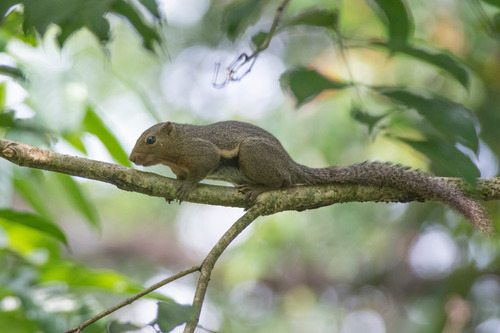
Other species in the genus Aeromys
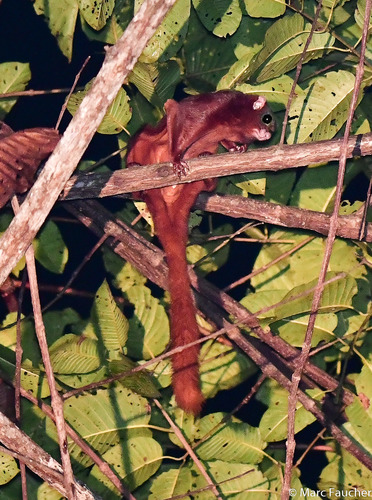
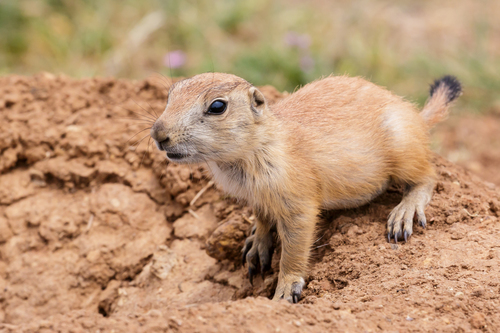
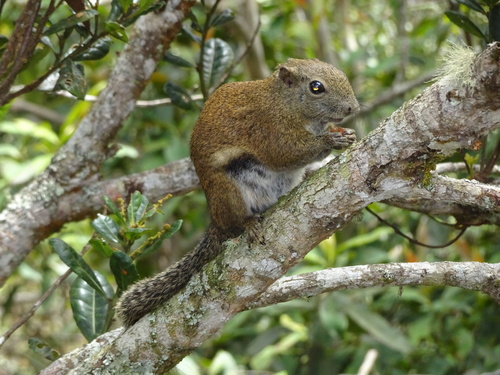
Other species in the family Sciuridae
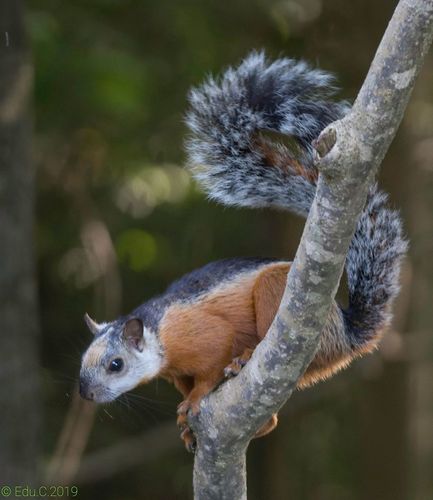
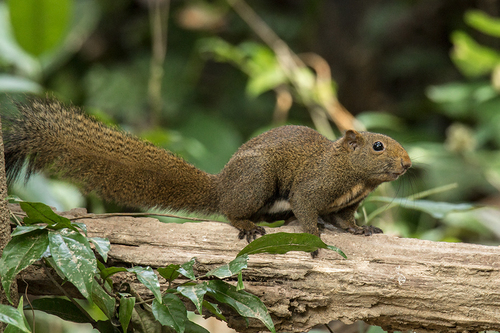
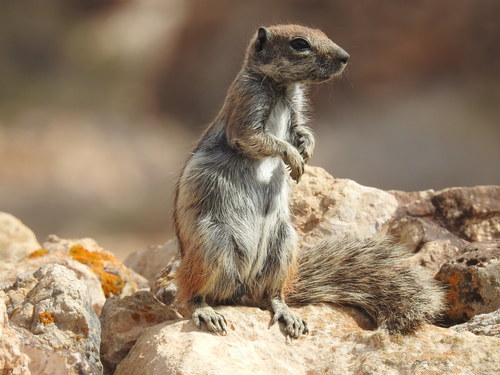
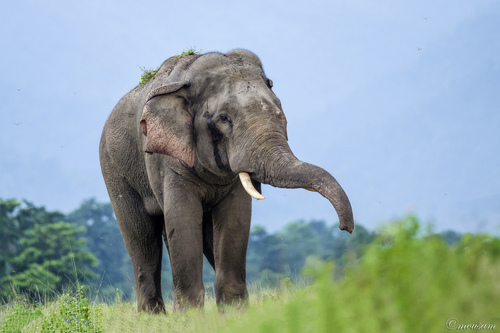
Species that share its range
Sources
Conservation status, range description and population estimate come from the IUCN Red List assessment for Aeromys tephromelas. Countries are derived from that range description, not from a mapped country list. Last refreshed on .
The distribution map is drawn from the IUCN Red List spatial data compiled in 2016. IUCN (International Union for Conservation of Nature)