
Alpine Marmot
Marmota marmota
Red List assessment
Least Concernon the IUCN Red List
- EXExtinct
- EWExtinct in the Wild
- CRCritically Endangered
- ENEndangered
- VUVulnerable
- NTNear Threatened
- LCLeast Concern
The Alpine Marmot is recorded in 8 countries across Europe. The IUCN Red List assesses the Alpine Marmot as Least Concern. Population estimated in the hundreds of thousands across the Alps alone, with an overall stable to increasing trend due to successful conservation and reintroduction efforts
- Family
- Sciuridae
- Order
- Rodentia
- Genus
- Marmota
- Countries recorded
- 8
- Continents
- Europe
- Red List category
- Least Concern
- Data updated
- August 9, 2026
What is the Alpine Marmot?
The Alpine Marmot is a large ground-dwelling squirrel native to the high-altitude meadows of the Alps and other European mountain ranges. It is renowned for its highly social burrow-dwelling lifestyle, loud alarm whistles, and deep winter hibernation in family groups. This species is a classic symbol of alpine wildlife and a popular subject for wildlife tourism.
Where does the Alpine Marmot live?
Mountain ranges of Central Europe, primarily the Alps, with introduced populations in the Pyrenees, Apennines, Carpathians, and Tatra Mountains
Native to the European Alps spanning France, Switzerland, Italy, Austria, Germany, and Slovenia. Introduced populations now exist in the Pyrenees, French Massif Central, Apennines, Carpathians, and the Tatra Mountains of Poland and Slovakia.
Altitude and depth
800-3200 meters, with highest densities typically between 1800-2800 meters depending on local topography and snow cover
Seasonal movements
Hibernates for 5-6 months (typically October to April) in family groups within deep burrows, relying on huddling and lowered metabolic rate; emerges in spring to mate and forage intensively through summer to build fat reserves
Habitat of the Alpine Marmot
Alpine and subalpine meadows, rocky grasslands, and pastures above the treeline where soil is deep enough for burrowing. Prefers open areas with good visibility for predator detection and abundant herbaceous vegetation.
Adaptations to its environment
Thick fur and substantial fat reserves provide insulation against harsh alpine winters. Communal hibernation in sealed burrows with huddling behavior reduces energy expenditure. Strong claws and robust forelimbs enable extensive burrow digging in rocky, cold terrain.
Conservation status and numbers
Least Concern (LC) according to IUCN, reflecting stable to increasing populations across its range and successful reintroduction programs in several mountain regions
Estimated population
Population estimated in the hundreds of thousands across the Alps alone, with an overall stable to increasing trend due to successful conservation and reintroduction efforts
What threatens the Alpine Marmot?
Climate change reducing snow cover duration and affecting hibernation cycles, habitat loss from tourism and ski infrastructure development, and localized hunting or persecution in some areas
Diseases and parasites
Susceptible to various endoparasites including nematodes and fleas; can occasionally carry tick-borne pathogens though not considered a major disease reservoir
What is being done to protect it?
Protected under national wildlife laws in most Alpine countries; several national parks (e.g., Vanoise, Gran Paradiso, Hohe Tauern) provide significant protected habitat. Reintroduction programs have successfully established new populations in the Pyrenees and Apennines.
Recommended actions
Monitor climate change impacts on hibernation timing and snowpack, maintain protected alpine grassland habitats, and manage tourism pressure in sensitive breeding and hibernation areas
What the Alpine Marmot looks like
Robust, thickset body with dense brownish-grey to yellowish fur, a broad flattened head, small rounded ears, and short powerful legs. The tail is bushy and relatively short compared to tree squirrels.
Size
Body length 42-54 cm, with a tail of 13-16 cm
Weight
2-3.5 kg after hibernation emergence, up to 5-8 kg in late summer/autumn before hibernation; males slightly larger than females
Distinctive features
Distinguished from other marmot species by its slightly smaller size, uniform brown-grey coat lacking strong color patterning, and characteristic high-pitched alarm whistle used across alpine colonies
Differences between males and females
Minimal sexual dimorphism; males are marginally heavier and larger than females but coloration and general appearance are similar between sexes
Behaviour and diet of the Alpine Marmot
Highly social, living in extended family groups of 2-20 individuals within shared burrow systems, featuring a dominant breeding pair and their offspring from multiple years, with strong cooperative behaviors including communal hibernation and pup-guarding
When it is active
Diurnal, most active during daylight hours especially morning and late afternoon, retreating to burrows during midday heat and at night
Diet
Herbivorous, feeding on grasses, herbs, flowers, roots, and seeds of alpine meadow plants; occasionally consumes insects or invertebrates opportunistically
Communication
Uses distinctive shrill whistles as alarm calls to warn of aerial or terrestrial predators, along with scent marking via cheek glands and body postures to communicate within the social group
Interactions with other species
Preyed upon by golden eagles, red foxes, and occasionally wolves; competes with chamois and other herbivores for alpine forage but generally coexists peacefully in shared habitats
Role in its ecosystem
Plays an important role in alpine ecosystems as a seed disperser and soil aerator through burrowing activity, and serves as a key prey species supporting populations of eagles and foxes
Reproduction and lifecycle
Mating occurs shortly after emergence from hibernation in spring (April-May); gestation lasts approximately 33-34 days, with litters of 2-7 pups born in an underground nest chamber
Raising the young
Pups are raised communally within the family burrow, nursed by the mother for about 6 weeks, and remain with the family group for at least two years before dispersing, often helping care for younger siblings
Maturity and lifespan
Sexual maturity typically reached at 2-3 years; lifespan averages 12-15 years in the wild, with some individuals reaching up to 18 years
Taxonomy and naming of the Alpine Marmot
Classification
Class Mammalia > Order Rodentia > Family Sciuridae > Genus Marmota > Species Marmota marmota
Subspecies
Marmota marmota marmota (nominate, Alps) and Marmota marmota latirostris (Tatra Mountains, sometimes considered a distinct subspecies with a broader skull)
Scientific synonyms
Arctomys marmota (older genus classification used in 18th-19th century literature)
What research says
Recent studies
Recent research has focused on how climate change is shifting hibernation onset and duration, with studies showing shorter hibernation periods correlating with reduced body condition and survival in some populations
Genome and DNA
Diploid chromosome number of 2n=38; genetic studies have been used to trace postglacial recolonization patterns and population structure across the Alps
Compared with similar species
Closely related to the North American groundhog (Marmota monax) and yellow-bellied marmot (Marmota flaviventris), but the Alpine Marmot has a more uniformly colored coat and inhabits higher, more rugged terrain than its American relatives
The Alpine Marmot and people
Alpine Marmots can lose up to a third of their body weight during hibernation. Their alarm whistles are so distinctive that hikers often hear them before spotting the animal. Family members huddle together in a single chamber during hibernation to share body heat, sometimes numbering over a dozen individuals.
Where and how to see it
Best observed in early morning or late afternoon during summer months (June-September) in alpine meadows of national parks like Vanoise (France) or Gran Paradiso (Italy); approach quietly and use binoculars as they are wary and quick to retreat to burrows
Risks to humans
No notable risk; generally shy and avoids human contact, though may bite if directly handled or cornered
Human uses
Historically hunted for fur and fat, which was used in traditional ointments for rheumatism; today primarily valued for ecotourism and wildlife observation in alpine regions
Myths and legends
In alpine folklore, marmots have long been associated with weather prediction and seasonal change, similar to the groundhog tradition in North America, and their fat was historically used in traditional remedies for joint pain and rheumatism
Countries where the Alpine Marmot is recorded
The 8 countries named in the range description of its IUCN Red List assessment.
Questions about the Alpine Marmot
Where does the Alpine Marmot live?
The Alpine Marmot is recorded in Austria, France, Germany, Italy and Poland, among 8 countries in total across Europe. These countries come from the range description of its IUCN Red List assessment, and they are what place the species on the interactive map.
Is the Alpine Marmot endangered?
The IUCN Red List assesses the Alpine Marmot as Least Concern. The species is widespread and abundant enough not to qualify for any threatened category. It does not mean the species is safe forever, only that nothing in the current data raises an alarm.
How many are left in the wild?
Population estimated in the hundreds of thousands across the Alps alone, with an overall stable to increasing trend due to successful conservation and reintroduction efforts This figure comes from the species assessment on the IUCN Red List; population estimates for wild mammals are ranges, not counts, and are revised at each assessment.
What habitat does the Alpine Marmot live in?
Alpine and subalpine meadows, rocky grasslands, and pastures above the treeline where soil is deep enough for burrowing.
What is the scientific name of the Alpine Marmot?
The Alpine Marmot is Marmota marmota, in the family Sciuridae, order Rodentia.
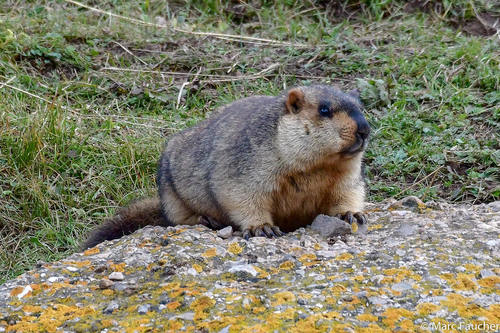
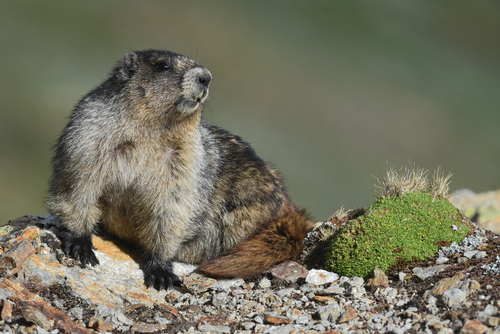
Other species in the genus Marmota
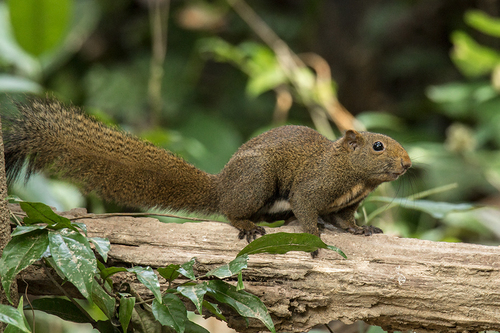
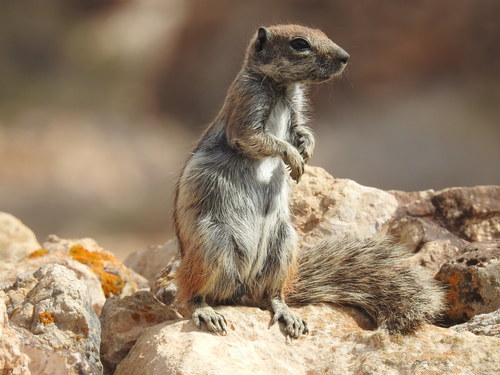
Other species in the family Sciuridae
Sources
Conservation status, range description and population estimate come from the IUCN Red List assessment for Marmota marmota. Countries are derived from that range description, not from a mapped country list. Last refreshed on .
The distribution map is drawn from the IUCN Red List spatial data compiled in 2023. IUCN SSC Small Mammal Specialist Group