
Tiger
Panthera tigris
Red List assessment
Endangeredon the IUCN Red List
- EXExtinct
- EWExtinct in the Wild
- CRCritically Endangered
- ENEndangered
- VUVulnerable
- NTNear Threatened
- LCLeast Concern
The Tiger is recorded in 9 countries across Asia and Europe. The IUCN Red List assesses the Tiger as Endangered. Approximately 4,500-5,000 individuals remain in the wild as of recent estimates, with populations showing an overall increasing trend in India and Nepal but continued decline in Southeast Asia.
- Family
- Felidae
- Order
- Carnivora
- Genus
- Panthera
- Countries recorded
- 9
- Continents
- Asia and Europe
- Red List category
- Endangered
- Data updated
- August 9, 2026
What is the Tiger?
The tiger is the largest living cat species, renowned for its distinctive orange coat with black stripes and its role as an apex predator across Asian forests. It inhabits a wide range of habitats from tropical rainforests to snowy taiga, reflecting remarkable ecological adaptability despite drastic range contraction. Tigers are solitary, powerful hunters that play a crucial role in maintaining prey population balance. Culturally and symbolically significant across Asia, the species has become an icon of wildlife conservation.
Where does the Tiger live?
South and Southeast Asia, with fragmented populations in India, Bangladesh, Nepal, Bhutan, Russia (Far East), China, Indonesia (Sumatra), Thailand, and Malaysia
Historically ranged across most of Asia from Turkey to the Russian Far East, but now restricted to fragmented populations in India, Nepal, Bhutan, Bangladesh, Russia, China, Thailand, Malaysia, and Sumatra (Indonesia). India holds roughly 70% of the global wild tiger population.
Altitude and depth
Sea level to approximately 4,000 meters, with some populations recorded at high elevations in the Himalayas and Bhutan.
Seasonal movements
No true migration or hibernation; tigers may shift home range use seasonally based on prey availability and water sources, and Amur tigers show increased range in winter to follow ungulate herds.
Habitat of the Tiger
Tigers occupy diverse habitats including tropical and subtropical moist forests, mangrove swamps (Sundarbans), dry deciduous forests, grasslands, and temperate broadleaf/coniferous forests in the Russian Far East. They require dense cover for hunting and large prey bases, along with access to water.
Adaptations to its environment
Tigers have powerful muscular bodies, retractable claws, and excellent night vision for stalking prey in dense cover. Amur tigers have thicker fur and a layer of fat for cold climates, while Sumatran tigers are smaller and more agile for dense jungle. Stripe patterns provide effective camouflage in tall grass and forest shadows.
Conservation status and numbers
Endangered (EN) according to IUCN, having experienced a population decline of over 95% from historical numbers due to habitat loss and poaching. Some subspecies, like the South China tiger, are considered functionally extinct in the wild.
Estimated population
Approximately 4,500-5,000 individuals remain in the wild as of recent estimates, with populations showing an overall increasing trend in India and Nepal but continued decline in Southeast Asia.
What threatens the Tiger?
Poaching for traditional medicine and skins, habitat loss and fragmentation due to agriculture and logging, human-wildlife conflict, and depletion of prey species are the primary threats.
Diseases and parasites
Tigers can suffer from diseases such as canine distemper virus, feline immunodeficiency virus, and various internal/external parasites including ticks, tapeworms, and roundworms.
What is being done to protect it?
Major initiatives include the Global Tiger Recovery Program, India's Project Tiger with dedicated tiger reserves, CITES trade restrictions, anti-poaching patrols, and habitat corridors connecting protected areas across range countries.
Recommended actions
Strengthening anti-poaching enforcement, securing habitat connectivity through corridors, reducing human-tiger conflict through community engagement, and increasing prey base populations are top priorities.
What the Tiger looks like
Tigers have a reddish-orange to orange-brown coat marked with distinctive black vertical stripes, a white underbelly, and white spots on the backs of their ears. Their muscular build, large head, and powerful forelimbs make them formidable predators.
Size
Head-body length ranges from 140-280 cm depending on subspecies and sex, with tail length adding 60-110 cm; shoulder height is approximately 70-120 cm.
Weight
Males typically weigh 90-310 kg (Amur tigers being largest), while females weigh 65-170 kg, showing significant sexual size dimorphism.
Distinctive features
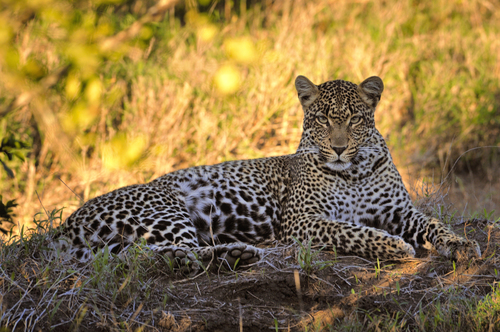
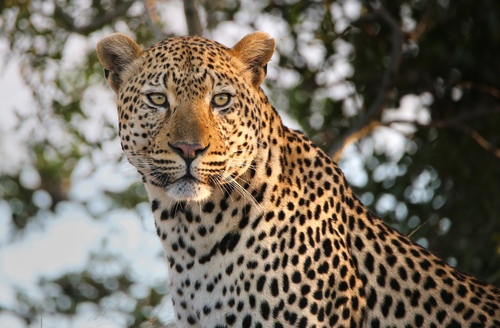
Each tiger's stripe pattern is unique, similar to a human fingerprint, distinguishing individuals. Compared to lions, tigers are solitary and lack a mane, and compared to leopards, tigers are significantly larger with more prominent striping rather than rosettes.
Differences between males and females
Males are notably larger and heavier than females, with more robust builds and larger heads; there is no significant color difference between sexes.
Behaviour and diet of the Tiger
Tigers are largely solitary animals except for mothers with cubs or during mating encounters; adults maintain and defend large territories that may overlap slightly between sexes but rarely between same-sex individuals.
When it is active
Primarily crepuscular and nocturnal, tigers are most active during dawn, dusk, and night hours, though they can be active during the day in undisturbed areas.
Diet
Tigers are obligate carnivores, primarily preying on large ungulates such as deer (sambar, chital), wild boar, and wild cattle (gaur, banteng); they occasionally take smaller prey including monkeys, birds, and fish.
How it feeds and hunts
Tigers rely on stealth and ambush tactics, stalking prey silently using cover before launching a short, explosive charge and delivering a killing bite to the neck or throat.
Communication
Tigers communicate through vocalizations such as roars, growls, chuffs, and moans, as well as scent marking via urine spraying, scratching trees, and flehmen response to detect chemical signals from other tigers.
Interactions with other species
As apex predators, tigers have few natural enemies aside from humans, though they may compete with other large carnivores like leopards and dholes for prey; young or weak tigers can occasionally fall victim to other predators or conspecifics.
Role in its ecosystem
Tigers serve as apex predators and indicator species, regulating herbivore populations and maintaining forest ecosystem health through top-down trophic control.
Reproduction and lifecycle
Breeding can occur year-round but often peaks in winter in temperate regions; gestation lasts around 93-112 days, resulting in litters of 2-4 cubs that are weaned by 3-6 months of age.
Raising the young
Females raise cubs alone, providing all care including nursing, protection, and teaching hunting skills; cubs remain with their mother for 18-24 months before establishing independent territories.
Maturity and lifespan
Sexual maturity is reached around 3-4 years for females and 4-5 years for males; wild tigers typically live 10-15 years, while captive individuals can live up to 20-26 years.
Taxonomy and naming of the Tiger
Classification
Mammalia > Carnivora > Felidae > Panthera > Panthera tigris
Subspecies
Bengal tiger (P. t. tigris) in India/Bangladesh/Nepal/Bhutan; Amur/Siberian tiger (P. t. altaica) in Russian Far East and northeast China; Sumatran tiger (P. t. sumatrae) in Sumatra; Indochinese tiger (P. t. corbetti) in Southeast Asia; Malayan tiger (P. t. jacksoni) in Malay Peninsula; South China tiger (P. t. amoyensis), possibly extinct in the wild. Several other subspecies (Bali, Javan, Caspian) are extinct.
Scientific synonyms
Felis tigris (Linnaeus, 1758)
What research says
Recent studies
Recent genomic research has clarified tiger subspecies boundaries and evolutionary history, while camera-trap and GPS-collar studies continue to refine population estimates and corridor use across fragmented landscapes.
Genome and DNA
Tigers have a diploid chromosome number of 38; genomic studies have revealed low genetic diversity in some isolated populations, informing conservation genetics and subspecies classification.
Compared with similar species
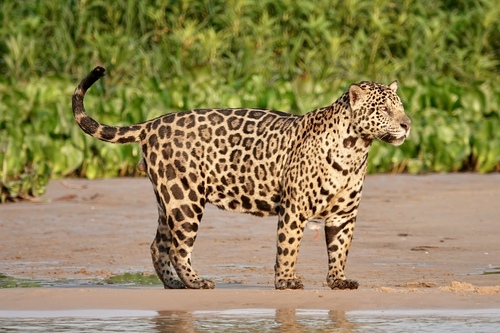
Compared to lions, tigers are solitary rather than social, larger on average, and lack manes; compared to jaguars, tigers are generally larger with a different stripe pattern versus the jaguar's rosettes and stockier build.
The Tiger and people
Tigers have striped skin beneath their fur, meaning no two individuals have identical patterns; they are excellent swimmers and often cool off in water, unlike most cats; their roar can be heard up to 3 km away.
Where and how to see it
Best observed in protected reserves such as Ranthambore, Bandhavgarh, and Kanha National Parks in India, or Chitwan National Park in Nepal, ideally during early morning or late afternoon safari drives in the dry winter season when vegetation is sparser.
Risks to humans
Tigers can pose a serious risk to humans, particularly in areas with habitat overlap like the Sundarbans, where man-eating incidents have been documented, though attacks are relatively rare and often linked to habitat encroachment.
Human uses
Historically hunted for sport and traditional medicine using bones and body parts, tigers are now primarily valued for ecotourism revenue and as flagship species for conservation fundraising.
Myths and legends
Tigers hold deep cultural symbolism across Asia, representing power, courage, and protection in Chinese folklore (one of the zodiac animals), while in Hindu mythology the tiger is the mount of the goddess Durga.
Countries where the Tiger is recorded
The 9 countries named in the range description of its IUCN Red List assessment.
Questions about the Tiger
Where does the Tiger live?
The Tiger is recorded in Bangladesh, Bhutan, China, India and Indonesia, among 9 countries in total across Asia and Europe. These countries come from the range description of its IUCN Red List assessment, and they are what place the species on the interactive map.
Is the Tiger endangered?
Yes. The IUCN Red List assesses the Tiger as Endangered, one of the three threatened categories. The species faces a very high risk of extinction in the wild — a step below Critically Endangered, but still on a trajectory that ends badly without intervention.
How many are left in the wild?
Approximately 4,500-5,000 individuals remain in the wild as of recent estimates, with populations showing an overall increasing trend in India and Nepal but continued decline in Southeast Asia. This figure comes from the species assessment on the IUCN Red List; population estimates for wild mammals are ranges, not counts, and are revised at each assessment.
What habitat does the Tiger live in?
Tigers occupy diverse habitats including tropical and subtropical moist forests, mangrove swamps (Sundarbans), dry deciduous forests, grasslands, and temperate broadleaf/coniferous forests in the Russian Far East.
What is the scientific name of the Tiger?
The Tiger is Panthera tigris, in the family Felidae, order Carnivora.
Other species in the genus Panthera
Other species in the family Felidae
Species that share its range
Sources
Conservation status, range description and population estimate come from the IUCN Red List assessment for Panthera tigris. Countries are derived from that range description, not from a mapped country list. Last refreshed on .
The distribution map is drawn from the IUCN Red List spatial data compiled in 2022. IUCN SSC Cat Specialist Group