
Caracal
Caracal caracal
Red List assessment
Least Concernon the IUCN Red List
- EXExtinct
- EWExtinct in the Wild
- CRCritically Endangered
- ENEndangered
- VUVulnerable
- NTNear Threatened
- LCLeast Concern
The Caracal is recorded in one country, India across Asia. The IUCN Red List assesses the Caracal as Least Concern. No precise global population estimate exists, but the species is considered stable in southern Africa while declining or rare in North Africa and parts of Asia; overall trend is considered stable to slightly declining.
- Family
- Felidae
- Order
- Carnivora
- Genus
- Caracal
- Countries recorded
- 1
- Continents
- Asia
- Red List category
- Least Concern
- Data updated
- August 9, 2026
What is the Caracal?
The caracal is a medium-sized wild cat known for its striking tufted black ears and powerful hind legs that enable spectacular vertical leaps to catch birds in flight. Found across Africa, the Middle East, and parts of Asia, it inhabits a wide range of arid and semi-arid environments. Despite its wide distribution, it remains elusive and rarely seen due to its secretive, mostly nocturnal habits. It is sometimes called the 'desert lynx' though it is not a true lynx.
Where does the Caracal live?
Africa (particularly sub-Saharan and North Africa) and the Middle East through to Central and South Asia into India
Found throughout most of Africa (excluding central rainforest blocks), the Arabian Peninsula, the Middle East, Central Asia, and into India. Populations are fragmented, being more continuous in southern and eastern Africa and more sparse and threatened in North Africa and Asia.
Altitude and depth
Sea level up to approximately 3000 meters in mountainous regions such as the Ethiopian highlands and parts of Central Asia.
Seasonal movements
No true migration or hibernation; breeding can occur year-round in some regions but may peak seasonally, correlating with prey availability and local climate.
Habitat of the Caracal
Caracals occupy savannas, scrublands, semi-deserts, arid woodlands, and rocky hill country; they can also be found in dense equatorial forests in parts of their range. They avoid extremely sandy true deserts but tolerate low-rainfall environments well due to physiological adaptations.
Adaptations to its environment
Powerful hind limbs allow leaps of over 3 meters to catch birds mid-air, an adaptation for hunting in open habitats. Their kidneys are highly efficient at conserving water, allowing survival with minimal drinking, an advantage in arid environments. Tufted ears may aid in communication and possibly enhanced hearing for detecting prey.
Conservation status and numbers
Listed as Least Concern by the IUCN due to its wide distribution and adaptability, though some regional populations (e.g., North Africa, Central Asia) are considered threatened or possibly extirpated in parts of their historic range.
Estimated population
No precise global population estimate exists, but the species is considered stable in southern Africa while declining or rare in North Africa and parts of Asia; overall trend is considered stable to slightly declining.
What threatens the Caracal?
Habitat loss and fragmentation, persecution by farmers due to livestock predation (especially small stock like sheep and goats), illegal trapping and poisoning, and to a lesser extent, road mortality and trade in body parts.
Diseases and parasites
Susceptible to common feline diseases such as feline immunodeficiency virus (FIV) and various endo- and ectoparasites including ticks, fleas, and intestinal worms, though comprehensive studies are limited.
What is being done to protect it?
Protected under national legislation in many range countries, listed on CITES Appendix I (Asian populations) and Appendix II (African populations), and included in some regional conservation and research programs, particularly in South Africa focusing on human-carnivore conflict mitigation.
Recommended actions
Strengthen protections and enforcement in North Africa and Asia, promote non-lethal livestock protection methods to reduce human-caracal conflict, conduct further population surveys in poorly studied regions, and maintain habitat connectivity.
What the Caracal looks like
The caracal has a short, dense, tawny to reddish-brown coat, a pale underside, and a plain unmarked face except for a black line from the eye to the nose. Its most iconic feature is long black ear tufts extending several centimeters from the tips of the ears.
Size
Body length of 65-90 cm plus a tail of 20-34 cm; shoulder height approximately 40-50 cm.
Weight
Males typically weigh 13-19 kg, while females are slightly smaller at 10-15 kg.
Distinctive features
Distinguished from other similarly sized cats by its unique long black ear tufts, plain reddish coat with no spots, and exceptionally muscular hind legs suited for high leaping.
Differences between males and females
Males are generally larger and heavier than females, but there is no notable difference in coloration or markings between sexes.
Behaviour and diet of the Caracal
Caracals are solitary and territorial, with males and females only associating briefly during mating. Territories may overlap slightly, but individuals largely avoid direct contact outside of breeding.
When it is active
Primarily nocturnal and crepuscular, though can be active during the day in cooler regions or where human disturbance is low.
Diet
Carnivorous, feeding mainly on small to medium-sized mammals (rodents, hyraxes, small antelope) and birds; they are also known to take domestic livestock such as sheep and goats when available.
How it feeds and hunts
Caracals stalk prey using cover before a rapid final pounce or leap, and are particularly famous for leaping into the air to knock down birds in flight using their powerful hind legs and swiping paws.
Communication
Caracals communicate through scent marking (urine spraying, scratching), vocalizations including growls, hisses, and a distinctive chirping contact call, along with body postures such as ear position.
Interactions with other species
Adult caracals face few natural predators but may compete with or be killed by larger carnivores such as leopards, hyenas, and lions; they may also prey upon or compete with smaller carnivores like foxes and jackals.
Role in its ecosystem
As a mesopredator, the caracal helps regulate populations of small to medium mammals and birds, playing an important role in maintaining ecological balance within its range, particularly where larger predators have been extirpated.
Reproduction and lifecycle
Breeding can occur year-round with regional peaks; gestation lasts approximately 68-81 days, producing litters of 1-6 kittens, most commonly 2-3.
Raising the young
Females raise kittens alone in a den such as a burrow, rock crevice, or dense vegetation; kittens are weaned around 10 weeks and become independent at around 9-12 months of age.
Maturity and lifespan
Sexual maturity is reached at around 12-18 months; lifespan in the wild is typically 10-12 years, while captive individuals can live up to 15-19 years.
Taxonomy and naming of the Caracal
Classification
Class Mammalia > Order Carnivora > Family Felidae > Genus Caracal > Species Caracal caracal
Subspecies
Up to 9 subspecies are sometimes recognized, including C. c. caracal (southern Africa), C. c. nubicus (northeast Africa), C. c. algira (North Africa), C. c. michaelis (Turkmenistan), and C. c. schmitzi (Middle East to India), though taxonomic boundaries remain debated.
Scientific synonyms
Felis caracal (original classification), Lynx caracal
What research says
Recent studies
Recent GPS telemetry studies, particularly in South Africa's urban-adjacent landscapes (e.g., Cape Town), have revealed surprising adaptability to human-modified environments and provided new insight into home range size and human-wildlife conflict dynamics.
Genome and DNA
The caracal has a diploid chromosome number of 2n=38, typical for many felid species, and has been included in phylogenetic studies confirming its close relationship to the African golden cat and serval within the Caracal lineage.
Compared with similar species
Often confused with the true lynx due to ear tufts and the name 'desert lynx,' but caracals are more closely related to the serval and African golden cat; unlike lynxes, caracals have a plain unspotted coat and longer, more slender legs relative to body size.
The Caracal and people
Caracals can leap over 3 meters vertically to snatch birds from the air, sometimes striking down multiple birds in a single leap. Historically, they were trained by humans in Iran and India for hunting small game, similar to falconry. Their name derives from the Turkish word 'karakulak,' meaning 'black ear.'
Where and how to see it
Best observed in protected reserves in South Africa (such as areas around Cape Town's Table Mountain National Park) during dawn or dusk using camera traps or guided night drives, as they are elusive and rarely seen in the wild during daylight.
Risks to humans
No notable risk to humans; caracals are shy and avoid human contact, though they may prey on livestock, leading to conflict with farmers.
Human uses
Historically used for hunting small game (a practice called 'caracal coursing') in parts of Iran and India; today, they are occasionally kept in captivity for exhibition or as exotic pets in some regions, though this is controversial and often restricted.
Myths and legends
In ancient Egypt, caracals were sometimes depicted in art and occasionally mummified, suggesting a degree of reverence or symbolic importance similar to domestic cats. In parts of Persia and India, tamed caracals were historically used in hunting competitions, occasionally featured in royal courts as prestigious hunting companions.
Countries where the Caracal is recorded
The 1 countries named in the range description of its IUCN Red List assessment.
Questions about the Caracal
Where does the Caracal live?
The Caracal is recorded in India across Asia. These countries come from the range description of its IUCN Red List assessment, and they are what place the species on the interactive map.
Is the Caracal endangered?
The IUCN Red List assesses the Caracal as Least Concern. The species is widespread and abundant enough not to qualify for any threatened category. It does not mean the species is safe forever, only that nothing in the current data raises an alarm.
How many are left in the wild?
No precise global population estimate exists, but the species is considered stable in southern Africa while declining or rare in North Africa and parts of Asia; overall trend is considered stable to slightly declining. This figure comes from the species assessment on the IUCN Red List; population estimates for wild mammals are ranges, not counts, and are revised at each assessment.
What habitat does the Caracal live in?
Caracals occupy savannas, scrublands, semi-deserts, arid woodlands, and rocky hill country; they can also be found in dense equatorial forests in parts of their range.
What is the scientific name of the Caracal?
The Caracal is Caracal caracal, in the family Felidae, order Carnivora.
Other species in the genus Caracal
Other species in the family Felidae
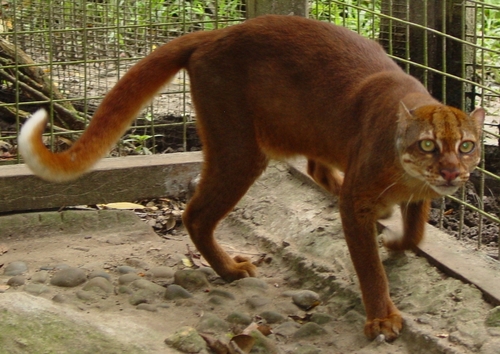
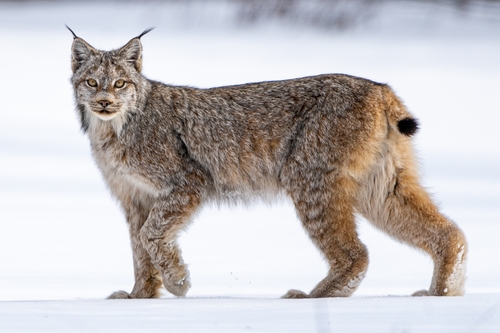
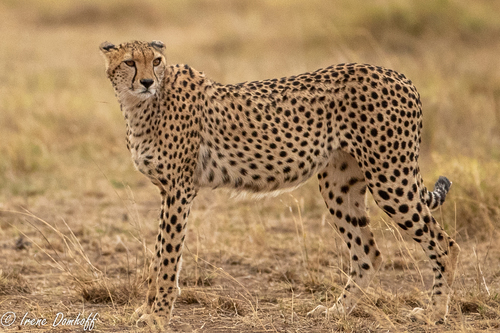
Species that share its range

Sources
Conservation status, range description and population estimate come from the IUCN Red List assessment for Caracal caracal. Countries are derived from that range description, not from a mapped country list. Last refreshed on .
The distribution map is drawn from the IUCN Red List spatial data compiled in 2016. IUCN (International Union for Conservation of Nature)