
Canada Lynx
Lynx canadensis
Red List assessment
Least Concernon the IUCN Red List
- EXExtinct
- EWExtinct in the Wild
- CRCritically Endangered
- ENEndangered
- VUVulnerable
- NTNear Threatened
- LCLeast Concern
The Canada Lynx is recorded in 2 countries across North America. The IUCN Red List assesses the Canada Lynx as Least Concern. Estimated global population in the tens of thousands to low hundreds of thousands, with the Canadian/Alaskan population considered stable, while U.S.
- Family
- Felidae
- Order
- Carnivora
- Genus
- Lynx
- Countries recorded
- 2
- Continents
- North America
- Red List category
- Least Concern
- Data updated
- August 9, 2026
What is the Canada Lynx?
The Canada lynx is a medium-sized wild cat native to the boreal forests of North America, closely tied ecologically to its primary prey, the snowshoe hare. It is renowned for its large, furred paws that act as natural snowshoes, allowing efficient movement through deep snow. This elusive, solitary predator is a keystone indicator species of healthy boreal forest ecosystems. Its population cycles famously track the 10-year boom-bust cycle of snowshoe hare populations.
Where does the Canada Lynx live?
Canada and Alaska, with smaller populations extending into the northern contiguous United States (Montana, Washington, Maine, Colorado reintroduction)
Ranges across most of Canada and Alaska, with the core range in the boreal forest belt. Peripheral populations exist in the northern United States including Maine, Minnesota, Montana, Washington, and reintroduced populations in Colorado.
Altitude and depth
Sea level to approximately 3,500 m in subalpine forest habitats within its southern range.
Seasonal movements
No true hibernation or migration, but lynx may shift ranges seasonally to track hare abundance and undergo increased movement during winter breeding season and food scarcity.
Habitat of the Canada Lynx
Primarily inhabits boreal and sub-boreal coniferous forests with dense understory, particularly areas with high snowshoe hare density. Also found in mixed forests and subalpine habitats with cold, snowy winters.
Adaptations to its environment
Large, densely furred paws distribute weight for travel on snow, functioning like natural snowshoes. Long limbs, tufted ears enhancing hearing, and a thick winter coat provide cold adaptation and camouflage in snowy environments.
Conservation status and numbers
Listed as Least Concern globally by IUCN due to large stable population in Canada and Alaska, though listed as Threatened under the US Endangered Species Act in the contiguous United States due to fragmented, small populations.
Estimated population
Estimated global population in the tens of thousands to low hundreds of thousands, with the Canadian/Alaskan population considered stable, while U.S. populations are small and fragmented.
What threatens the Canada Lynx?
Habitat fragmentation and loss from logging and development, climate change reducing snowpack (favoring competitors like bobcats), trapping in some regions, and declines in snowshoe hare populations.
Diseases and parasites
Susceptible to feline parasites such as fleas, ticks, and intestinal worms, as well as diseases like feline leukemia virus and rabies, though disease is not a primary population threat.
What is being done to protect it?
Protected under the US Endangered Species Act in the contiguous US; regulated trapping quotas in Canada; habitat protection initiatives and a notable reintroduction program in Colorado starting in 1999.
Recommended actions
Maintain and restore boreal forest connectivity, monitor climate change impacts on snowpack, regulate trapping sustainably, and continue population monitoring especially in southern range fragments.
What the Canada Lynx looks like
Thick grayish-brown fur, often with faint spotting, longer in winter for insulation. Distinctive black ear tufts, a ruff of fur around the face, and large furred paws are hallmark features.
Size
Body length 80-105 cm, shoulder height approximately 48-56 cm, with a short tail of 5-12 cm.
Weight
Males typically 8-11 kg, females slightly smaller at 6-9 kg.
Distinctive features
Distinguished from the bobcat by larger paws, longer ear tufts, an all-black tail tip (versus bobcat's black-banded tail with white underside), and longer legs relative to body size.
Differences between males and females
Minimal sexual dimorphism; males are slightly larger and heavier than females but coloring and markings are similar.
Behaviour and diet of the Canada Lynx
Solitary and territorial except during breeding season or when females are raising kittens; home ranges may overlap slightly between individuals of opposite sexes.
When it is active
Primarily nocturnal and crepuscular, with peak activity during dawn and dusk hours when hunting snowshoe hares.
Diet
Highly specialized carnivore with snowshoe hare comprising up to 60-95% of diet; also eats small mammals, birds, and occasionally larger prey like deer during hare population lows.
How it feeds and hunts
Ambush predator relying on stealth and short bursts of speed; stalks prey using cover then pounces, using acute hearing aided by ear tufts to detect hares in dense vegetation or snow.
Communication
Communicates through vocalizations including yowls, hisses, and mews, especially during mating season, as well as scent marking via urine, feces, and scratching to establish territory.
Interactions with other species
Competes with bobcats and coyotes for prey, especially as climate change increases range overlap; occasionally preyed upon by wolves, cougars, and other larger carnivores as kittens or when vulnerable.
Role in its ecosystem
Functions as a specialist mesopredator whose population dynamics are tightly linked to snowshoe hare cycles, playing an important role in regulating hare populations within boreal forest food webs.
Reproduction and lifecycle
Breeding occurs in late winter (March-April), with a gestation period of about 63-70 days, resulting in litters of 1-4 kittens born in spring.
Raising the young
Females raise kittens alone in dens, nursing for about 3-4 months while kittens gradually begin eating meat and learning to hunt over their first year.
Maturity and lifespan
Sexual maturity reached at around 1-2 years for females and 2-3 years for males; lifespan averages 10-15 years in the wild and up to 20 years in captivity.
Taxonomy and naming of the Canada Lynx
Classification
Class Mammalia > Order Carnivora > Family Felidae > Genus Lynx > Species Lynx canadensis
Subspecies
Generally considered monotypic, though some authorities historically recognized subspecies such as L. c. canadensis (mainland) and L. c. subsolanus (Newfoundland), the latter now often synonymized.
Scientific synonyms
Felis canadensis (original description by Kerr, 1792); Lynx lynx canadensis (formerly treated as a subspecies of Eurasian lynx by some authors)
What research says
Recent studies
Recent research has focused on climate change impacts on snow cover and range shifts, hybridization with bobcats, and genetic connectivity between fragmented US populations and core Canadian populations.
Genome and DNA
Diploid chromosome number is 2n=38, similar to other Lynx species; genomic studies have revealed hybridization events with bobcats in areas of range overlap.
Compared with similar species
Similar to the Eurasian lynx but smaller and more specialized for hare hunting; distinguished from the bobcat by larger size, bigger paws, longer ear tufts, and solid black tail tip versus the bobcat's banded tail.
The Canada Lynx and people
Canada lynx populations rise and fall in an almost perfectly synchronized 10-year cycle with snowshoe hare populations. Their oversized paws can be nearly twice the size of a bobcat's, acting like natural snowshoes for silent travel over deep snow. Despite being elusive, they are rarely aggressive toward humans and sightings are considered a rare treat by wildlife watchers.
Where and how to see it
Best observed in remote boreal forests of Canada and Alaska during winter months at dawn or dusk, often requiring tracking of snowshoe hare habitat and use of trail cameras due to the species' elusive nature.
Risks to humans
No notable risk; Canada lynx are shy and avoid human contact, with no recorded serious attacks on humans in the wild.
Human uses
Historically trapped for its fur, which was valued in the fur trade; today, regulated trapping continues in parts of Canada, and the species is also a subject of ecotourism and wildlife photography interest.
Myths and legends
In some Indigenous North American cultures, the lynx is regarded as a keeper of secrets and symbol of clairvoyance due to its elusive, silent nature and keen eyesight.
Countries where the Canada Lynx is recorded
The 2 countries named in the range description of its IUCN Red List assessment.
Questions about the Canada Lynx
Where does the Canada Lynx live?
The Canada Lynx is recorded in Canada and United States across North America. These countries come from the range description of its IUCN Red List assessment, and they are what place the species on the interactive map.
Is the Canada Lynx endangered?
The IUCN Red List assesses the Canada Lynx as Least Concern. The species is widespread and abundant enough not to qualify for any threatened category. It does not mean the species is safe forever, only that nothing in the current data raises an alarm.
How many are left in the wild?
Estimated global population in the tens of thousands to low hundreds of thousands, with the Canadian/Alaskan population considered stable, while U.S. This figure comes from the species assessment on the IUCN Red List; population estimates for wild mammals are ranges, not counts, and are revised at each assessment.
What habitat does the Canada Lynx live in?
Primarily inhabits boreal and sub-boreal coniferous forests with dense understory, particularly areas with high snowshoe hare density.
What is the scientific name of the Canada Lynx?
The Canada Lynx is Lynx canadensis, in the family Felidae, order Carnivora.
Other species in the genus Lynx
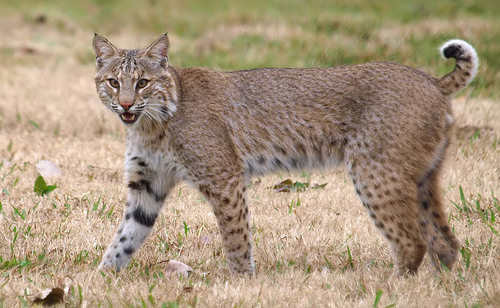
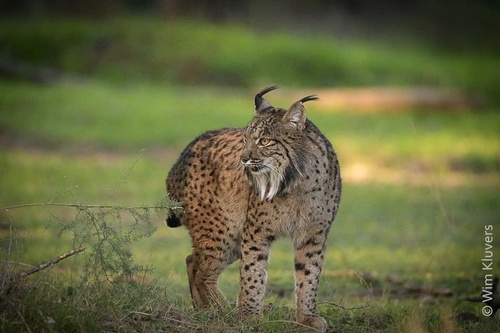
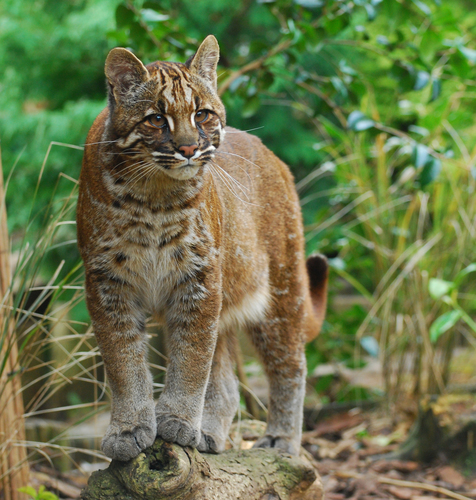
Other species in the family Felidae
Species that share its range
Sources
Conservation status, range description and population estimate come from the IUCN Red List assessment for Lynx canadensis. Countries are derived from that range description, not from a mapped country list. Last refreshed on .
The distribution map is drawn from the IUCN Red List spatial data compiled in 2016. Maine Department of Inland Fisheries and Wildlife