
Lion
Panthera leo
Red List assessment
Vulnerableon the IUCN Red List
- EXExtinct
- EWExtinct in the Wild
- CRCritically Endangered
- ENEndangered
- VUVulnerable
- NTNear Threatened
- LCLeast Concern
The Lion is recorded in 7 countries across Africa and Asia. The IUCN Red List assesses the Lion as Vulnerable. Approximately 20,000-25,000 individuals remain in the wild, with an overall declining trend across most of Africa, though some southern African populations are stable or increasing in fenced reserves.
- Family
- Felidae
- Order
- Carnivora
- Genus
- Panthera
- Countries recorded
- 7
- Continents
- Africa and Asia
- Red List category
- Vulnerable
- Data updated
- August 9, 2026
What is the Lion?
The lion is one of the world's most iconic big cats, known as the 'King of the Jungle' despite primarily inhabiting savannas and grasslands. It is the only truly social cat species, living in prides, and is a top apex predator across much of sub-Saharan Africa. A tiny relict population survives in the Gir Forest of India, remnant of a once much wider Asian and African range.
Where does the Lion live?
Sub-Saharan Africa, with a small critically endangered population in the Gir Forest of India
Found across sub-Saharan Africa including East Africa (Kenya, Tanzania), Southern Africa (Botswana, Namibia, South Africa, Zimbabwe), and West/Central Africa in fragmented populations; a single isolated population persists in the Gir Forest National Park, Gujarat, India.
Altitude and depth
0-4000m; lions have been recorded at high altitudes on Mount Kenya but typically occupy lowland to mid-elevation savanna habitats.
Seasonal movements
No true migration or hibernation, but prides may shift territory seasonally in response to prey movements and water availability, especially in arid regions.
Habitat of the Lion
Lions primarily inhabit open savannas, grasslands, and scrublands with access to water and cover for hunting, but also occur in semi-arid areas and open woodlands. They avoid dense tropical rainforest and true desert interiors.
Adaptations to its environment
Lions have powerful builds, retractable claws, and tawny coats providing camouflage in dry grass; their social structure allows cooperative hunting of large prey and defense of territory and cubs. Males' manes may signal fitness and provide protection during fights.
Conservation status and numbers
Classified as Vulnerable (VU) by IUCN due to a population decline of approximately 43% over the past two decades, driven by habitat loss, prey depletion, and human-wildlife conflict.
Estimated population
Approximately 20,000-25,000 individuals remain in the wild, with an overall declining trend across most of Africa, though some southern African populations are stable or increasing in fenced reserves.
What threatens the Lion?
Habitat loss and fragmentation, retaliatory killing due to livestock conflict, poaching for body parts (bones, claws, teeth) for traditional medicine trade, and decline in wild prey base.
Diseases and parasites
Susceptible to feline immunodeficiency virus (FIV), canine distemper virus (which caused mass die-offs in Serengeti lions), bovine tuberculosis, and various internal/external parasites like ticks and tapeworms.
What is being done to protect it?
Protected in numerous national parks and reserves (Serengeti, Kruger, Okavango Delta, Gir Forest), supported by anti-poaching patrols, community conflict-mitigation programs, and CITES trade regulations. Organizations like Panthera and WildCRU run range-wide monitoring and lion recovery initiatives.
Recommended actions
Expand and connect protected areas, strengthen anti-poaching enforcement, support community-based conservation and compensation schemes for livestock losses, and regulate the legal and illegal trade in lion parts.
What the Lion looks like
Lions have short, tawny to golden-brown fur, a long tufted tail, and males possess a distinctive mane ranging from blond to black that darkens with age. Their muscular, compact bodies are built for powerful short bursts of speed and strength.
Size
Body length 1.7-2.5m (excluding tail), shoulder height 0.9-1.2m; tail adds another 60-100cm.
Weight
Males typically weigh 150-250 kg; females weigh 120-180 kg.
Distinctive features
The male's mane is unique among big cats and immediately distinguishes lions from other Panthera species; lions are also the only cats living in structured social groups called prides.
Differences between males and females
Pronounced: males are larger and heavier with a prominent mane, while females are smaller, leaner, and maneless, better suited for stealth and cooperative hunting.
Behaviour and diet of the Lion
Lions live in prides typically composed of related females, their cubs, and a coalition of 1-4 males; pride size can range from 3 to over 30 individuals. Males defend territory while females do most hunting cooperatively.
When it is active
Primarily crepuscular and nocturnal, resting up to 20 hours a day, with peak activity during dawn, dusk, and night hours to avoid daytime heat.
Diet
Strict carnivore, preying mainly on medium to large ungulates such as wildebeest, zebra, buffalo, and antelope; opportunistically scavenges and can take smaller prey when necessary.
How it feeds and hunts
Females typically hunt cooperatively in coordinated ambushes, using tall grass for cover and encircling prey before a short, powerful chase; males may assist in hunting larger or dangerous prey like buffalo.
Communication
Lions communicate through deep roars audible up to 8km away for territory advertisement, along with scent marking, head-rubbing, grooming, and body postures within the pride.
Interactions with other species
Lions compete with spotted hyenas for kills and territory, occasionally kill leopards and cheetahs to reduce competition, and have no natural predators as adults aside from humans.
Role in its ecosystem
As apex predators, lions regulate herbivore populations and scavenger dynamics, playing a key role in maintaining the structure and health of African savanna ecosystems.
Reproduction and lifecycle
Breeding occurs year-round with no fixed season; gestation lasts about 110 days, producing litters of 1-4 cubs which are weaned around 6-7 months of age.
Raising the young
Cubs are raised communally within the pride, with lactating females often nursing each other's young; mothers hide cubs for the first weeks before integrating them into the pride, and cub mortality is high due to infanticide by incoming males.
Maturity and lifespan
Females reach sexual maturity around 3-4 years, males around 4-5 years; wild lifespan is typically 10-14 years, while captive lions can live 20 years or more.
Taxonomy and naming of the Lion
Classification
Mammalia > Carnivora > Felidae > Panthera > Panthera leo
Subspecies
Panthera leo leo (Northern/West/Central African and Asiatic lion) and Panthera leo melanochaita (Southern and East African lion) are the two currently recognized subspecies; historically more subspecies such as P. l. persica (Asiatic) and P. l. senegalensis were described.
Scientific synonyms
Felis leo (Linnaeus, 1758)
What research says
Recent studies
Recent genomic and phylogeographic research has clarified lion subspecies boundaries and revealed historical population bottlenecks, informing translocation and genetic rescue strategies for isolated populations like those in West Africa and Gir.
Genome and DNA
Lions have 38 chromosomes; genomic studies have revealed distinct genetic clusters supporting the two-subspecies classification and informed conservation genetics for managing small, isolated populations.
Compared with similar species
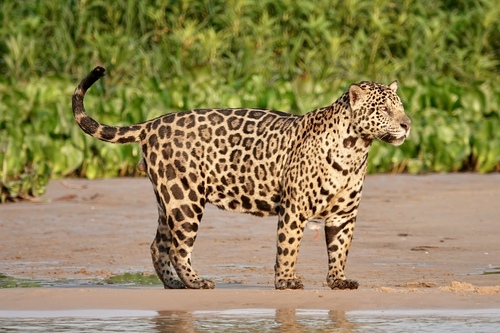
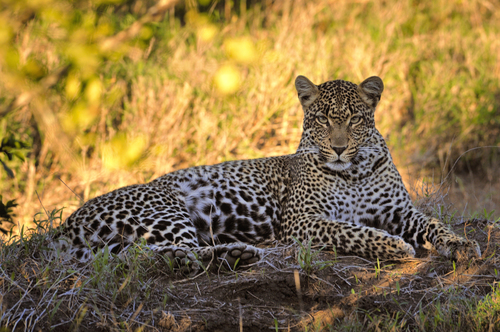
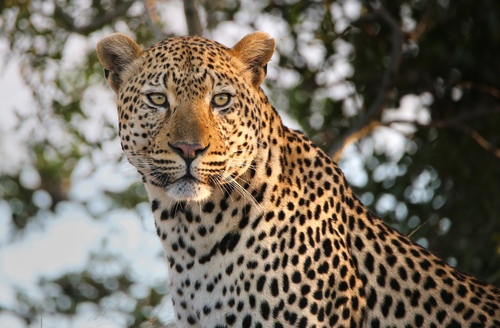
Unlike tigers, lions are highly social and lack the mane; compared to leopards and jaguars, lions are larger, less arboreal, and rely more on cooperative group hunting rather than solitary ambush strategies.
The Lion and people
A lion's roar can be heard up to 8 kilometers away; lionesses perform about 90% of a pride's hunting; and lions can sleep or rest for up to 20 hours a day.
Where and how to see it
Best observed during early morning or late afternoon game drives in East African parks like the Serengeti and Maasai Mara or Southern African reserves like Kruger National Park, especially during dry season when animals congregate near water sources.
Risks to humans
Lions can be dangerous to humans, particularly in areas of habitat overlap with livestock, though attacks on humans are relatively rare compared to livestock predation incidents.
Human uses
Lions have significant ecotourism value in Africa, and their body parts (bones, teeth, claws) are illegally traded for traditional medicine and ornamental purposes, raising conservation concerns.
Myths and legends
Lions symbolize courage, royalty, and strength across many cultures, from ancient Egyptian and Mesopotamian iconography to the biblical 'Lion of Judah' and their continued use as national and heraldic emblems worldwide.
Countries where the Lion is recorded
The 7 countries named in the range description of its IUCN Red List assessment.
Questions about the Lion
Where does the Lion live?
The Lion is recorded in Botswana, India, Kenya, Namibia and South Africa, among 7 countries in total across Africa and Asia. These countries come from the range description of its IUCN Red List assessment, and they are what place the species on the interactive map.
Is the Lion endangered?
Yes. The IUCN Red List assesses the Lion as Vulnerable, one of the three threatened categories. The species faces a high risk of extinction in the wild. It is the first of the three threatened categories: numbers are falling, the range is shrinking, or the population is small enough that a single bad event could do lasting damage.
How many are left in the wild?
Approximately 20,000-25,000 individuals remain in the wild, with an overall declining trend across most of Africa, though some southern African populations are stable or increasing in fenced reserves. This figure comes from the species assessment on the IUCN Red List; population estimates for wild mammals are ranges, not counts, and are revised at each assessment.
What habitat does the Lion live in?
Lions primarily inhabit open savannas, grasslands, and scrublands with access to water and cover for hunting, but also occur in semi-arid areas and open woodlands.
What is the scientific name of the Lion?
The Lion is Panthera leo, in the family Felidae, order Carnivora.
Other species in the genus Panthera
Other species in the family Felidae
Species that share its range
Sources
Conservation status, range description and population estimate come from the IUCN Red List assessment for Panthera leo. Countries are derived from that range description, not from a mapped country list. Last refreshed on .
The distribution map is drawn from the IUCN Red List spatial data compiled in 2025. IUCN SSC Cat Specialist Group