
Asian Elephant
Elephas maximus
Red List assessment
Endangeredon the IUCN Red List
- EXExtinct
- EWExtinct in the Wild
- CRCritically Endangered
- ENEndangered
- VUVulnerable
- NTNear Threatened
- LCLeast Concern
The Asian Elephant is recorded in 13 countries across Asia. The IUCN Red List assesses the Asian Elephant as Endangered. Approximately 45,000-50,000 individuals remain in the wild, with populations declining in most range states; India holds the largest population (around 27,000), while several countries have fewer than 500 individuals.
- Family
- Elephantidae
- Order
- Proboscidea
- Genus
- Elephas
- Countries recorded
- 13
- Continents
- Asia
- Red List category
- Endangered
- Data updated
- August 9, 2026
What is the Asian Elephant?
The Asian elephant is the largest land mammal in Asia and one of only two living elephant genera worldwide alongside African elephants. It inhabits tropical and subtropical forests, grasslands, and scrublands across South and Southeast Asia. Highly intelligent and social, it plays a crucial ecological role as a keystone species shaping forest structure and seed dispersal. It has been culturally significant to Asian societies for millennia, used in religious ceremonies, labor, and warfare.
Where does the Asian Elephant live?
South and Southeast Asia, including India, Sri Lanka, Nepal, Bhutan, Bangladesh, Myanmar, Thailand, Laos, Cambodia, Vietnam, Malaysia, Indonesia (Sumatra, Borneo), and China (Yunnan)
Historically ranged across most of Asia from the Tigris-Euphrates to China, but now restricted to fragmented populations in 13 countries: India, Sri Lanka, Nepal, Bhutan, Bangladesh, Myanmar, Thailand, Laos, Cambodia, Vietnam, Peninsular Malaysia, Sumatra (Indonesia), and Borneo (Malaysia/Indonesia), plus a small relict population in Yunnan, China.
Altitude and depth
Sea level up to approximately 3,000 meters, with most populations concentrated below 1,000 meters in lowland and hill forests.
Seasonal movements
No true hibernation or long-distance migration, but elephants undertake seasonal movements tracking water and food availability, often moving between wet and dry season ranges and following monsoon patterns.
Habitat of the Asian Elephant
Tropical and subtropical moist and dry forests, grasslands, scrublands, and agricultural mosaics near forest edges. They require access to large areas with water sources, dense vegetation for shade and food, and often use forest corridors between habitat patches.
Adaptations to its environment
The trunk serves as a versatile tool for feeding, drinking, social interaction, and thermoregulation via dust and mud bathing. Large ears aid in heat dissipation, while thick, wrinkled skin helps retain moisture. Their massive body size and cushioned feet allow efficient movement through dense forest and swampy terrain.
Conservation status and numbers
Endangered (EN) according to IUCN, with the population having declined by an estimated 50% over the last three generations (approximately 60-75 years) due to habitat loss, fragmentation, and human-elephant conflict. Populations continue to decline across most of the range.
Estimated population
Approximately 45,000-50,000 individuals remain in the wild, with populations declining in most range states; India holds the largest population (around 27,000), while several countries have fewer than 500 individuals.
What threatens the Asian Elephant?
Habitat loss and fragmentation from agricultural expansion and infrastructure development, human-elephant conflict resulting in retaliatory killings, poaching for ivory (tusks) and skin, and capture for the illegal wildlife trade.
Diseases and parasites
Susceptible to elephant endotheliotropic herpesvirus (EEHV), which can be fatal especially in young elephants, as well as tuberculosis, anthrax, and various internal and external parasites including ticks and nematodes.
What is being done to protect it?
Protected under CITES Appendix I and national wildlife protection laws across all range states; extensive network of protected areas and elephant reserves exist, particularly in India (Project Elephant) and Sri Lanka; corridors and human-elephant conflict mitigation programs including early warning systems and compensation schemes are being implemented.
Recommended actions
Expand and connect protected habitats through wildlife corridors, strengthen anti-poaching enforcement, implement effective human-elephant conflict mitigation strategies, and engage local communities in conservation through education and economic incentives.
What the Asian Elephant looks like
Asian elephants have grey to brownish skin, often with patches of pink depigmentation especially on the face, ears, and trunk. They have a twin-domed head, smaller ears than African elephants, and a single fingerlike projection at the tip of the trunk. The back is convex or level rather than swayed.
Size
Shoulder height ranges from 2 to 3.5 meters, with males typically larger than females; body length can reach 5.5-6.5 meters including the trunk.
Weight
Males weigh between 4,000-5,500 kg, while females typically weigh 2,700-4,000 kg, making this the largest land animal in Asia.
Distinctive features
Compared to African elephants, Asian elephants have smaller ears, a more arched back, only one 'finger' on the trunk tip instead of two, and typically only males have prominent tusks (though many males are tuskless, called 'makhnas').
Differences between males and females
Males are significantly larger and heavier than females and typically possess visible tusks, while female tusks (tushes) are usually small or absent entirely; males also have a more pronounced forehead and larger overall body mass.
Behaviour and diet of the Asian Elephant
Highly social animals living in matriarchal family groups of related females and their offspring, typically 6-20 individuals led by the oldest female. Adult males are usually solitary or form loose bachelor groups outside of the breeding season.
When it is active
Primarily crepuscular and nocturnal in regions with high human activity, though naturally exhibit diurnal and nocturnal activity patterns, spending 16-18 hours daily feeding and moving between resources.
Diet
Herbivorous, consuming grasses, bark, roots, leaves, and cultivated crops such as bananas, sugarcane, and rice. An adult elephant can eat 150-300 kg of vegetation and drink up to 200 liters of water daily.
Communication
Elephants communicate through a range of vocalizations including trumpets, rumbles, and infrasound calls that can travel several kilometers, as well as body language, touch, and chemical signals via temporal gland secretions and dung/urine marking.
Interactions with other species
Adult elephants have virtually no natural predators due to their size, though tigers occasionally prey on calves. They interact ecologically with numerous species through seed dispersal, habitat modification, and as prey for scavengers when they die naturally.
Role in its ecosystem
Asian elephants are a keystone species and ecosystem engineer, creating clearings, dispersing seeds of numerous plant species over long distances, and maintaining forest-grassland mosaics that benefit many other species.
Reproduction and lifecycle
Breeding occurs year-round with no fixed season; gestation lasts 18-22 months, the longest of any land mammal, typically resulting in a single calf weighing around 100 kg at birth. Females give birth every 4-5 years under favorable conditions.
Raising the young
Calves are raised communally within the matriarchal herd, with mothers and related females (aunts) providing protection, teaching, and social bonding for years. Calves are nursed for 2-3 years and remain closely associated with their mothers into adulthood.
Maturity and lifespan
Females reach sexual maturity around 10-12 years, males slightly later around 12-15 years; lifespan in the wild averages 60-70 years, similar to or sometimes exceeding lifespan in captivity.
Taxonomy and naming of the Asian Elephant
Classification
Class Mammalia > Order Proboscidea > Family Elephantidae > Genus Elephas > Species Elephas maximus
Subspecies
Elephas maximus indicus (mainland Asia, most numerous), Elephas maximus maximus (Sri Lanka, largest subspecies), Elephas maximus sumatranus (Sumatra, smallest subspecies), and the debated Borneo pygmy elephant sometimes classified as E. m. borneensis.
Scientific synonyms
Elephas asiaticus, Elephas indicus, Elephas ceylanicus
What research says
Recent studies
Recent studies have used GPS collar tracking to better understand elephant corridor use and human-elephant conflict hotspots, while genomic research is being applied to improve breeding management and disease resistance in both wild and captive populations.
Genome and DNA
Asian elephants have 56 chromosomes (28 pairs); genomic studies have revealed relatively low genetic diversity in some isolated populations, raising concerns about inbreeding depression, and research continues into disease resistance genes, particularly related to EEHV susceptibility.
Compared with similar species
Compared to the African bush elephant (Loxodonta africana), the Asian elephant is smaller, has smaller ears, a different trunk tip structure, and generally more docile temperament, which historically made it more amenable to domestication and use in labor.
The Asian Elephant and people
Elephants can recognize themselves in mirrors, a sign of self-awareness shared by very few animal species. They display behaviors resembling grief, appearing to mourn and investigate the bones of deceased herd members. Their trunks contain over 40,000 muscles, allowing extraordinary dexterity.
Where and how to see it
Best observed in protected reserves such as Yala National Park in Sri Lanka, Kaziranga and Periyar National Parks in India, or Khao Yai National Park in Thailand, ideally during early morning or late afternoon when elephants are most active near water sources.
Risks to humans
Human-elephant conflict poses significant risk, as elephants can cause property damage, crop destruction, and occasionally fatal encounters when threatened or when habitat encroachment forces close contact; caution is advised when observing wild individuals.
Human uses
Historically and currently used for logging, transportation, tourism, and ceremonial purposes across Asia; also holds significant cultural and religious value, though the practice of capturing wild elephants for captivity has raised substantial ethical and conservation concerns.
Myths and legends
The Asian elephant holds deep religious and cultural significance, particularly in Hinduism where the god Ganesha has an elephant head, and in Buddhism where the white elephant symbolizes purity and royal power. Elephants have also played important roles in South and Southeast Asian royal ceremonies and warfare throughout history.
Countries where the Asian Elephant is recorded
The 13 countries named in the range description of its IUCN Red List assessment.
Questions about the Asian Elephant
Where does the Asian Elephant live?
The Asian Elephant is recorded in Bangladesh, Bhutan, Cambodia, China and India, among 13 countries in total across Asia. These countries come from the range description of its IUCN Red List assessment, and they are what place the species on the interactive map.
Is the Asian Elephant endangered?
Yes. The IUCN Red List assesses the Asian Elephant as Endangered, one of the three threatened categories. The species faces a very high risk of extinction in the wild — a step below Critically Endangered, but still on a trajectory that ends badly without intervention.
How many are left in the wild?
Approximately 45,000-50,000 individuals remain in the wild, with populations declining in most range states; India holds the largest population (around 27,000), while several countries have fewer than 500 individuals. This figure comes from the species assessment on the IUCN Red List; population estimates for wild mammals are ranges, not counts, and are revised at each assessment.
What habitat does the Asian Elephant live in?
Tropical and subtropical moist and dry forests, grasslands, scrublands, and agricultural mosaics near forest edges.
What is the scientific name of the Asian Elephant?
The Asian Elephant is Elephas maximus, in the family Elephantidae, order Proboscidea.
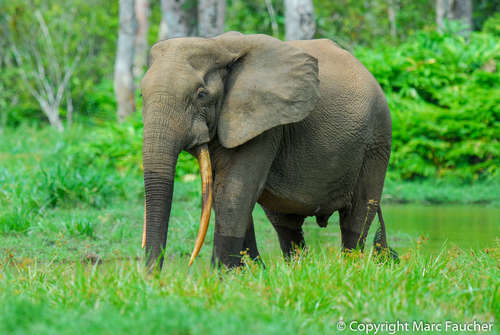
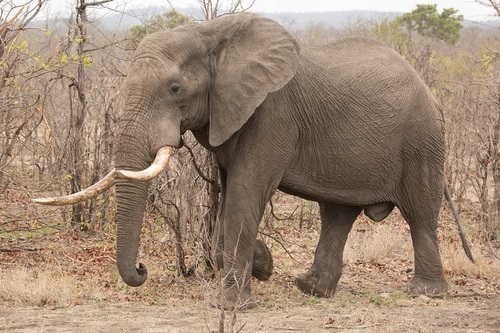
Other species in the family Elephantidae
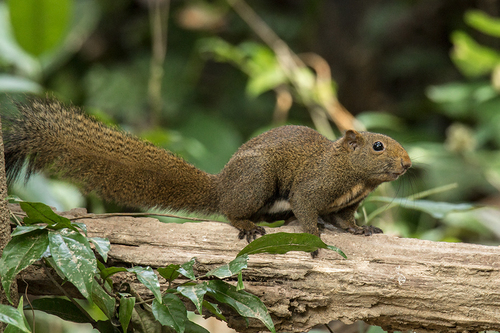
Species that share its range
Sources
Conservation status, range description and population estimate come from the IUCN Red List assessment for Elephas maximus. Countries are derived from that range description, not from a mapped country list. Last refreshed on .
The distribution map is drawn from the IUCN Red List spatial data compiled in 2020. IUCN/SSC AsESG, WCS, WWF