
Shaggy Bat
Centronycteris maximiliani
Red List assessment
Least Concernon the IUCN Red List
- EXExtinct
- EWExtinct in the Wild
- CRCritically Endangered
- ENEndangered
- VUVulnerable
- NTNear Threatened
- LCLeast Concern
The Shaggy Bat is recorded in 10 countries across North America and South America. The IUCN Red List assesses the Shaggy Bat as Least Concern. No precise population estimates exist; the species is considered uncommon to rare in survey records but is presumed stable given its broad range.
- Family
- Emballonuridae
- Order
- Chiroptera
- Genus
- Centronycteris
- Countries recorded
- 10
- Continents
- North America and South America
- Red List category
- Least Concern
- Data updated
- August 9, 2026
What is the Shaggy Bat?
The Shaggy Bat is a small, insectivorous sac-winged bat found in the humid lowland forests of northern South America and parts of Central America. It is named for its notably long, woolly fur which distinguishes it from most other emballonurids. This species is a forest specialist that roosts in dark, sheltered sites and forages within the understory. Though poorly studied due to its cryptic habits, it plays a role in controlling nocturnal insect populations.
Where does the Shaggy Bat live?
Northern South America, including the Guiana Shield, Amazon Basin, and parts of Central America
Ranges from southern Central America (Costa Rica, Panama) through northern South America, including Colombia, Venezuela, the Guianas (Guyana, Suriname, French Guiana), and the Amazon Basin in Brazil, Ecuador, and Peru.
Altitude and depth
Typically found from sea level up to about 1,500 meters elevation.
Habitat of the Shaggy Bat
Primarily found in humid tropical lowland and lower montane forests, including primary and secondary growth. Often associated with dense understory vegetation, forest edges, and areas near streams or rivers where insect prey is abundant.
Adaptations to its environment
Its unusually long, shaggy fur may provide camouflage against lichen-covered bark or foliage in its forest roosts. Broad wings adapted for slow, maneuverable flight allow it to navigate through dense vegetation while foraging for insects near the understory.
Conservation status and numbers
Listed as Least Concern by the IUCN due to its wide geographic distribution across northern South America and apparent tolerance of some habitat disturbance, though population trends are not well quantified.
Estimated population
No precise population estimates exist; the species is considered uncommon to rare in survey records but is presumed stable given its broad range.
What threatens the Shaggy Bat?
Deforestation and habitat fragmentation from agricultural expansion, logging, and mining pose the primary threats, particularly in the Amazon and Guiana Shield regions.
Diseases and parasites
Specific data are lacking, but like other bats it likely hosts ectoparasites such as bat flies (Streblidae) and may carry various bat-associated viruses.
What is being done to protect it?
Benefits indirectly from protected areas and reserves within its range, such as national parks in the Amazon and Guiana Shield, though no species-specific conservation programs are known.
Recommended actions
Continued monitoring of population trends, further ecological research to clarify roosting and foraging requirements, and protection of intact lowland forest habitat.
What the Shaggy Bat looks like
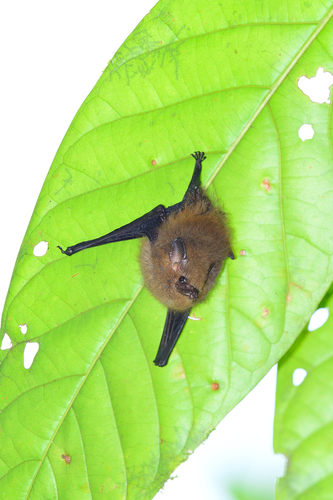
Distinguished by long, woolly, grayish-brown to reddish-brown fur that is notably longer and shaggier than related emballonurid species. It has a simple, unadorned face without a nose-leaf, small eyes, and membranous wings typical of sac-winged bats.
Size
Forearm length approximately 38-42 mm; body length around 4-5 cm excluding tail.
Weight
Approximately 4-6 grams.
Distinctive features
The exceptionally long and dense pelage separates it from other members of the Emballonuridae family, most of which have short, sleek fur.
Differences between males and females
Minimal sexual dimorphism reported; males and females are similar in size and coloration.
Behaviour and diet of the Shaggy Bat
Generally roosts alone or in small groups of a few individuals, often in hollow logs, tree cavities, or dark understory sites rather than large colonies.
When it is active
Nocturnal, emerging after dusk to forage for flying insects.
Diet
Insectivorous, feeding on a variety of small flying insects captured in flight within forest understory and edge habitats.
How it feeds and hunts
Uses echolocation to detect and intercept insect prey while flying slowly and maneuverably through cluttered vegetation near the ground.
Communication
Communicates primarily through echolocation calls for navigation and prey detection, along with likely low-intensity social vocalizations at roost sites.
Interactions with other species
Preyed upon by nocturnal raptors, snakes, and other forest predators; competes with other insectivorous bats for aerial insect prey within the same habitat.
Role in its ecosystem
Functions as a nocturnal insect predator, helping to regulate populations of flying insects within tropical forest ecosystems.
Reproduction and lifecycle
Reproductive biology is poorly documented, but likely follows the general emballonurid pattern of a single pup born per breeding season after a gestation of a few months.
Raising the young
Presumed that females care for a single pup, carrying it briefly after birth before leaving it at a roost while foraging, typical of small insectivorous bats.
Maturity and lifespan
Exact age of sexual maturity is unknown; small emballonurid bats typically live 5-10 years in the wild.
Taxonomy and naming of the Shaggy Bat
Classification
Class Mammalia > Order Chiroptera > Family Emballonuridae > Genus Centronycteris > Species Centronycteris maximiliani
Scientific synonyms
Vespertilio maximiliani (original combination); formerly included in genus Peropteryx by some authors
What research says
Recent studies
Recent bat surveys in the Guiana Shield and Amazon have used acoustic monitoring and mist-netting to better document the species' distribution and roosting ecology, though detailed behavioral studies remain scarce.
Compared with similar species
Compared to other emballonurids like Saccopteryx bilineata, Centronycteris maximiliani lacks striking wing stripes and has notably longer, shaggier fur, making it visually distinct within the family.
The Shaggy Bat and people
Its scientific and common names both reference its unusually long, shaggy fur, a rare trait among sac-winged bats. It is one of the least frequently captured bats in Neotropical mist-net surveys, suggesting either rarity or specialized, hard-to-sample habitat use.
Where and how to see it
Best observed at dusk in undisturbed lowland tropical forest in the Guianas or Amazon Basin, using bat detectors to identify echolocation calls near forest understory and streams.
Risks to humans
No notable risk to humans; like all bats it should not be handled directly due to general disease transmission precautions (e.g., rabies).
Countries where the Shaggy Bat is recorded
The 10 countries named in the range description of its IUCN Red List assessment.
Questions about the Shaggy Bat
Where does the Shaggy Bat live?
The Shaggy Bat is recorded in Brazil, Colombia, Costa Rica, Ecuador and French Guiana, among 10 countries in total across North America and South America. These countries come from the range description of its IUCN Red List assessment, and they are what place the species on the interactive map.
Is the Shaggy Bat endangered?
The IUCN Red List assesses the Shaggy Bat as Least Concern. The species is widespread and abundant enough not to qualify for any threatened category. It does not mean the species is safe forever, only that nothing in the current data raises an alarm.
How many are left in the wild?
No precise population estimates exist; the species is considered uncommon to rare in survey records but is presumed stable given its broad range. This figure comes from the species assessment on the IUCN Red List; population estimates for wild mammals are ranges, not counts, and are revised at each assessment.
What habitat does the Shaggy Bat live in?
Primarily found in humid tropical lowland and lower montane forests, including primary and secondary growth.
What is the scientific name of the Shaggy Bat?
The Shaggy Bat is Centronycteris maximiliani, in the family Emballonuridae, order Chiroptera.
Other species in the genus Centronycteris
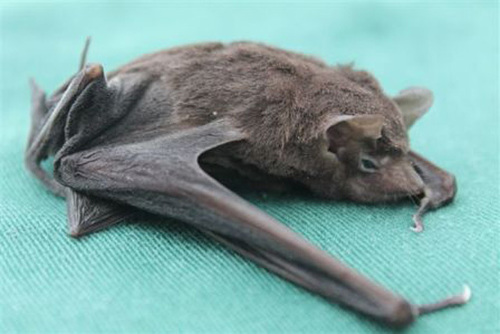
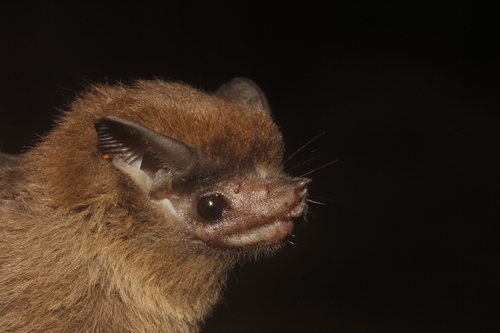
Other species in the family Emballonuridae
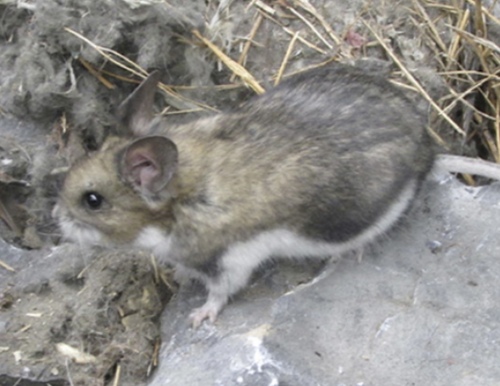
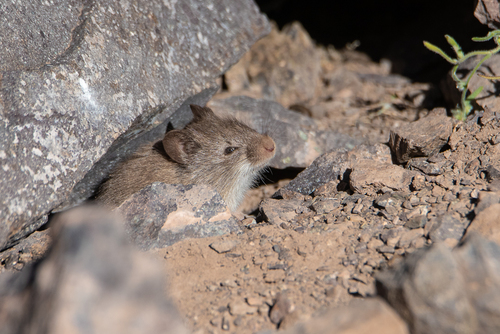
Species that share its range


Sources
Conservation status, range description and population estimate come from the IUCN Red List assessment for Centronycteris maximiliani. Countries are derived from that range description, not from a mapped country list. Last refreshed on .
The distribution map is drawn from the IUCN Red List spatial data compiled in 2008. IUCN (International Union for Conservation of Nature)