
Gray Sac-winged Bat
Balantiopteryx plicata
Red List assessment
Least Concernon the IUCN Red List
- EXExtinct
- EWExtinct in the Wild
- CRCritically Endangered
- ENEndangered
- VUVulnerable
- NTNear Threatened
- LCLeast Concern
The Gray Sac-winged Bat is recorded in 8 countries across North America and South America. The IUCN Red List assesses the Gray Sac-winged Bat as Least Concern. No precise global population estimate exists, but the species is considered common and abundant within its range; population trend is believed to be stable.
- Family
- Emballonuridae
- Order
- Chiroptera
- Genus
- Balantiopteryx
- Countries recorded
- 8
- Continents
- North America and South America
- Red List category
- Least Concern
- Data updated
- August 9, 2026
What is the Gray Sac-winged Bat?
The Gray Sac-winged Bat is a small insectivorous bat found in tropical dry forests and caves from Mexico to northern South America. It is named for the characteristic wing sac found in males, used for scent dispersal during mating displays. This species is notable for forming large, dense colonies in caves and rock crevices and for its distinctive fast, erratic flight pattern.
Where does the Gray Sac-winged Bat live?
Mexico, Central America (Guatemala, El Salvador, Honduras, Nicaragua, Costa Rica), extending to Colombia and Venezuela in South America
Ranges from northwestern and central Mexico through Guatemala, El Salvador, Honduras, Nicaragua, and Costa Rica, with populations extending into Colombia and Venezuela in South America.
Altitude and depth
Sea level up to approximately 1,500 meters elevation
Seasonal movements
No long-distance migration is documented; the species shows some seasonal variation in reproductive activity tied to wet and dry seasons, with births often timed to coincide with increased insect abundance.
Habitat of the Gray Sac-winged Bat
Primarily inhabits tropical dry deciduous forests, thorn scrub, and semi-arid regions near caves, rock crevices, culverts, and sometimes buildings that serve as roosting sites.
Adaptations to its environment
Possesses a wing sac (in males) used for pheromone storage and dispersal important in mate attraction. Their small size and agile flight allow efficient foraging in cluttered forest edge habitats, and echolocation calls are adapted for detecting small flying insects in open to semi-open spaces.
Conservation status and numbers
Listed as Least Concern (LC) by the IUCN due to its wide distribution, presumed large population, and tolerance of a variety of habitats including some human-modified landscapes.
Estimated population
No precise global population estimate exists, but the species is considered common and abundant within its range; population trend is believed to be stable.
What threatens the Gray Sac-winged Bat?
Localized threats include disturbance or destruction of cave roosts, deforestation of tropical dry forest habitat, and pesticide use reducing insect prey availability.
Diseases and parasites
Susceptible to ectoparasites such as bat flies (Streblidae) and mites; specific disease studies are limited but bats in general can carry rabies virus at low prevalence.
What is being done to protect it?
Protected indirectly through habitat conservation in various national parks and protected areas across its range; no species-specific conservation programs are widely documented.
Recommended actions
Recommended actions include protecting key cave roosting sites from disturbance, conserving remaining tropical dry forest habitat, and monitoring population trends in areas of high human development.
What the Gray Sac-winged Bat looks like
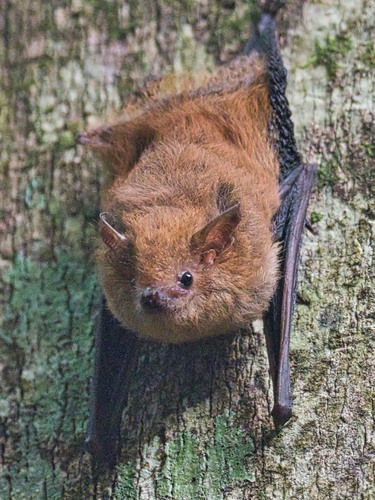
Fur is typically grayish-brown to pale gray on the dorsal side with slightly paler underparts. The bat has a slender build, large eyes relative to body size, and translucent, narrow wings characteristic of the Emballonuridae family.
Size
Forearm length approximately 40-46 mm; total body length around 5-6 cm excluding tail.
Weight
Approximately 4-7 grams
Distinctive features
Distinguished from related Balantiopteryx species by its grayer coloration and specific wing sac morphology in males; smaller and paler than many other emballonurid bats in its range.
Differences between males and females
Males possess a distinctive wing sac (a glandular pouch on the propatagium) used for scent marking, which is absent or less developed in females; otherwise minimal size difference between sexes.
Behaviour and diet of the Gray Sac-winged Bat
Highly social and colonial, forming groups ranging from dozens to several thousand individuals in caves and crevices, often segregated by sex outside of breeding periods.
When it is active
Nocturnal, emerging shortly after sunset to forage and returning to roost before dawn.
Diet
Insectivorous, feeding primarily on small flying insects such as moths, beetles, and flies caught during flight.
How it feeds and hunts
Uses echolocation to detect and capture insects during agile, fast flight in open areas near forest edges, over water, or around roost entrances.
Communication
Communicates primarily through echolocation calls for navigation and hunting, as well as scent marking via the male wing sac and various social vocalizations within roosting colonies.
Interactions with other species
Predated upon by owls, snakes, and other nocturnal predators near roost sites; competes with other insectivorous bat species for similar prey resources in shared habitats.
Role in its ecosystem
Plays an important ecological role as an insectivore, helping regulate populations of night-flying insects including agricultural pests.
Reproduction and lifecycle
Breeding is typically timed with seasonal rainfall patterns; gestation lasts approximately 4-5 months, and females usually give birth to a single pup per year.
Raising the young
Females carry and nurse a single pup, which clings to the mother initially; pups are weaned within a few weeks and become independent flyers relatively quickly.
Maturity and lifespan
Sexual maturity is reached at approximately 1 year of age; lifespan in the wild is estimated at 5-10 years, with limited data on captivity due to rarity of captive specimens.
Taxonomy and naming of the Gray Sac-winged Bat
Classification
Class Mammalia > Order Chiroptera > Family Emballonuridae > Genus Balantiopteryx > Species Balantiopteryx plicata
Subspecies
Several subspecies recognized including B. p. plicata (widespread Mexico to Central America) and B. p. pallida (more restricted range), though taxonomy remains debated among authorities.
Scientific synonyms
Emballonura plicata (original combination by Peters, 1867)
What research says
Recent studies
Recent studies have focused on the acoustic characteristics of its echolocation calls for species identification in bioacoustic surveys and on phylogenetic relationships within the Emballonuridae family.
Compared with similar species
Similar in appearance to other emballonurid bats such as Saccopteryx bilineata but distinguished by lacking the pale wing stripes and having a grayer overall coloration; smaller than most other sac-winged bats.
The Gray Sac-winged Bat and people
Male bats use their unique wing sac to store a scented liquid that they waft toward females during courtship displays. Colonies can number in the thousands, creating dramatic emergence flights at dusk. Despite its small size, this bat can detect insects using ultrasonic calls beyond human hearing range.
Where and how to see it
Best observed at dusk near cave entrances or rock crevices in tropical dry forest regions of Mexico and Central America; using a bat detector can help identify their characteristic echolocation calls during evening emergence.
Risks to humans
No notable risk to humans; like most bats, individuals should not be handled due to potential but low risk of rabies transmission.
Countries where the Gray Sac-winged Bat is recorded
The 8 countries named in the range description of its IUCN Red List assessment.
Questions about the Gray Sac-winged Bat
Where does the Gray Sac-winged Bat live?
The Gray Sac-winged Bat is recorded in Colombia, Costa Rica, El Salvador, Guatemala and Honduras, among 8 countries in total across North America and South America. These countries come from the range description of its IUCN Red List assessment, and they are what place the species on the interactive map.
Is the Gray Sac-winged Bat endangered?
The IUCN Red List assesses the Gray Sac-winged Bat as Least Concern. The species is widespread and abundant enough not to qualify for any threatened category. It does not mean the species is safe forever, only that nothing in the current data raises an alarm.
How many are left in the wild?
No precise global population estimate exists, but the species is considered common and abundant within its range; population trend is believed to be stable. This figure comes from the species assessment on the IUCN Red List; population estimates for wild mammals are ranges, not counts, and are revised at each assessment.
What habitat does the Gray Sac-winged Bat live in?
Primarily inhabits tropical dry deciduous forests, thorn scrub, and semi-arid regions near caves, rock crevices, culverts, and sometimes buildings that serve as roosting sites.
What is the scientific name of the Gray Sac-winged Bat?
The Gray Sac-winged Bat is Balantiopteryx plicata, in the family Emballonuridae, order Chiroptera.
Other species in the genus Balantiopteryx
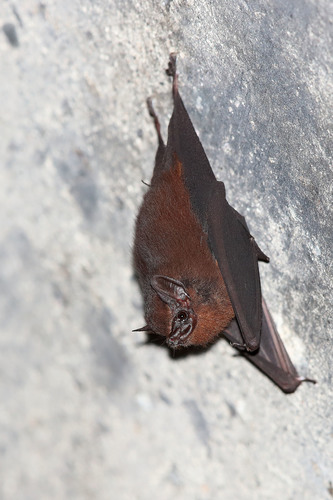
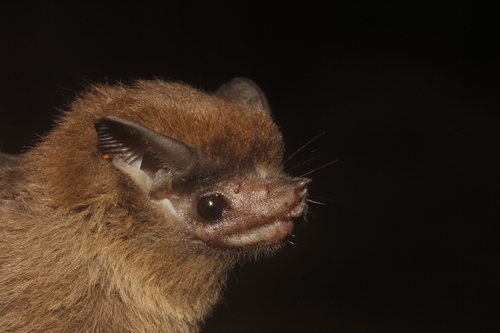
Other species in the family Emballonuridae
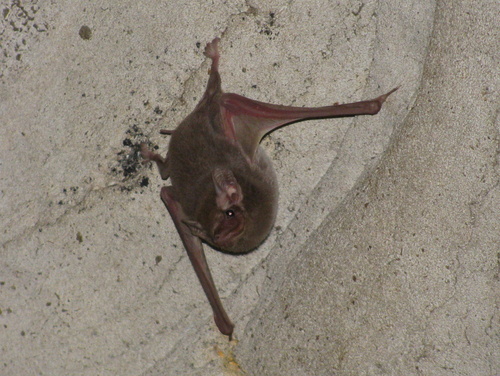
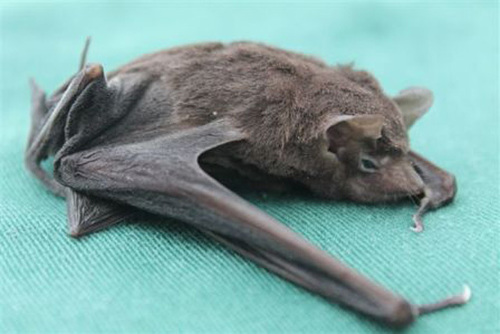
Species that share its range

Sources
Conservation status, range description and population estimate come from the IUCN Red List assessment for Balantiopteryx plicata. Countries are derived from that range description, not from a mapped country list. Last refreshed on .
The distribution map is drawn from the IUCN Red List spatial data compiled in 2016. IUCN (International Union for Conservation of Nature)