
Sanborn's Grass Mouse
Abrothrix sanborni
Red List assessment
Near Threatenedon the IUCN Red List
- EXExtinct
- EWExtinct in the Wild
- CRCritically Endangered
- ENEndangered
- VUVulnerable
- NTNear Threatened
- LCLeast Concern
The Sanborn's Grass Mouse is recorded in 2 countries across South America. The IUCN Red List assesses the Sanborn's Grass Mouse as Near Threatened. No precise global population estimate is available.
- Family
- Cricetidae
- Order
- Rodentia
- Genus
- Abrothrix
- Countries recorded
- 2
- Continents
- South America
- Red List category
- Near Threatened
- Data updated
- August 9, 2026
What is the Sanborn's Grass Mouse?
Sanborn's Grass Mouse is a small sigmodontine rodent endemic to the cool, humid temperate forests and shrublands of southern Chile. It belongs to the genus Abrothrix, commonly known as soft-haired mice, characterized by dense, silky pelage and a predominantly terrestrial lifestyle. The species inhabits the Valdivian temperate rainforest zone, one of the world's most biodiverse temperate forest ecosystems. It is named in honor of Colin Campbell Sanborn (1897–1962), a prolific American mammalogist at the Field Museum of Natural History who contributed extensively to the knowledge of South American mammals.
Where does the Sanborn's Grass Mouse live?
Southern Chile, primarily in the Los Lagos Region (Región de Los Lagos); possibly marginally into adjacent Argentina
Restricted to southern Chile, primarily within the Los Lagos Region (approximately 40–44°S latitude), including coastal lowlands and Andean foothills. The range is centered around the area of Chiloé Province and adjacent mainland. A marginal extension into bordering Argentine Patagonia is possible but not firmly established.
Altitude and depth
Primarily found at low to mid elevations, from near sea level up to approximately 1000–1500 m a.s.l., within the temperate forest and shrubland belt.
Seasonal movements
No major seasonal migrations documented. Activity may be slightly reduced during the coldest austral winter months (June–August), but true hibernation is not known. Breeding activity peaks during the austral spring and summer (October–March).
Habitat of the Sanborn's Grass Mouse
Valdivian temperate evergreen and deciduous forests, shrublands (matorral), and grassland ecotones in southern Chile. The species favors dense ground cover, abundant leaf litter, mossy substrates, and areas with fallen logs that provide shelter and foraging microhabitats.
Adaptations to its environment
Dense, soft fur provides thermal insulation against the persistently cool and wet climate of the Valdivian forest region. A generalist omnivorous diet allows flexibility in exploiting seasonally variable food resources. Ground-dwelling locomotion is well-suited to navigating dense understory and thick leaf litter.
Conservation status and numbers
Near Threatened (NT) on the IUCN Red List. The species has a restricted geographic range and is susceptible to ongoing habitat degradation. It does not currently meet the quantitative thresholds for Vulnerable but warrants close monitoring given continued pressure on native temperate forests in its range.
Estimated population
No precise global population estimate is available. The population trend is suspected to be declining due to ongoing and cumulative habitat loss and fragmentation within its already restricted range.
What threatens the Sanborn's Grass Mouse?
Primary threats include logging and conversion of native temperate forests to exotic pine (Pinus radiata) and eucalyptus plantations, agricultural expansion, and residential development. Introduced predators such as feral cats, domestic dogs, and the European mink (Neovison vison) in Chiloé represent additional localized pressures. Climate change may alter the rainfall and temperature regime of the Valdivian forest.
Diseases and parasites
As a sigmodontine rodent in southern South America, it is a potential reservoir host for hantaviruses, though specific records for this species are limited. It likely harbors ectoparasites (mites, fleas, ticks) and intestinal helminths (nematodes, cestodes) typical of the rodent community in the Valdivian forest. A comprehensive parasite inventory for the species is lacking.
What is being done to protect it?
The species occurs within several protected areas in southern Chile, including Chiloé National Park and other national reserves managed by CONAF (Corporación Nacional Forestal). General Chilean wildlife legislation offers baseline protection for native rodents, but no species-specific conservation action plan exists.
Recommended actions
Expansion and improved enforcement of protected areas within the species' range; long-term monitoring of population trends using standardized live-trapping protocols; reduction of native forest conversion to monoculture plantations; management and control of invasive predators, especially on Chiloé Island; increased taxonomic and ecological research to better define range limits and population structure.
What the Sanborn's Grass Mouse looks like
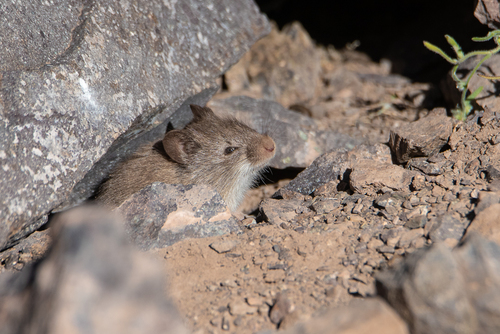
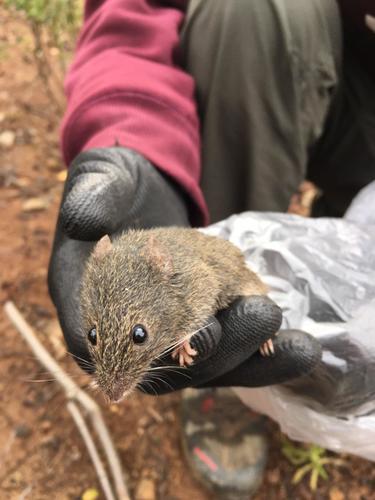
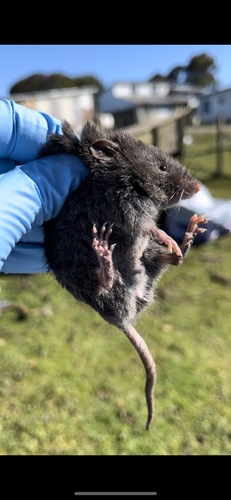
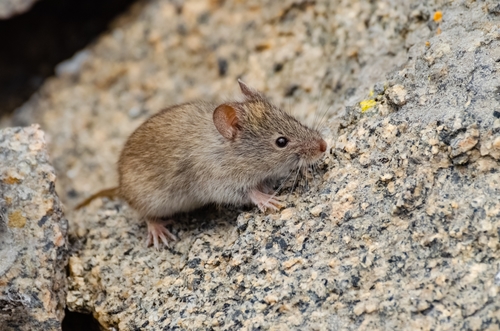
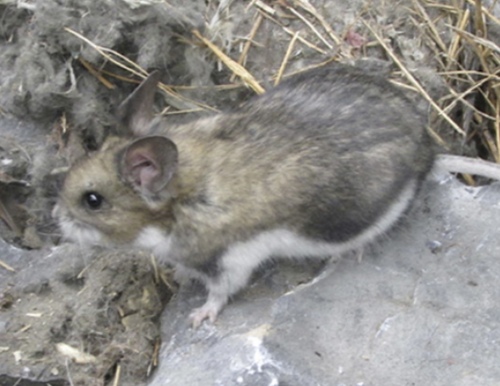
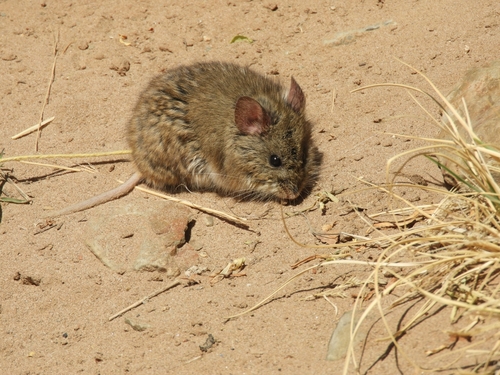
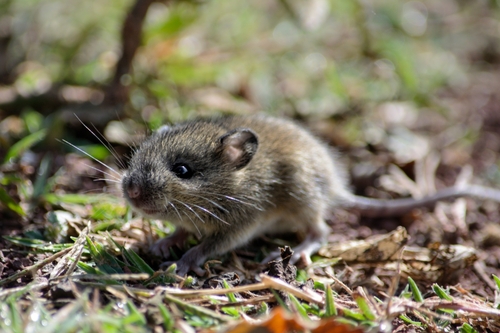
Dorsal pelage is brownish to grayish-brown, often with a slightly darker mid-dorsal region; the ventral surface is paler, grayish-white to buffy-white. Fur is notably dense and soft — the hallmark of the genus Abrothrix. Eyes and ears are relatively small, the snout is blunt, and the tail is moderately short and thinly haired.
Size
Head-body length approximately 80–115 mm; tail length approximately 55–80 mm. A small mouse roughly comparable to a house mouse but somewhat more robustly built.
Weight
Approximately 15–35 g. No significant data on sex-based weight dimorphism, though females of related species tend to be marginally smaller.
Distinctive features
Distinguished from the closely related and more widespread Abrothrix olivaceus by its darker, more uniform dorsal coloration and its more restricted southern distribution. Compared to A. longipilis, it is smaller and has shorter, less shaggy fur. The combination of dark dorsal pelage, relatively short tail, and geographic restriction to the Los Lagos Region is diagnostic.
Differences between males and females
Sexual dimorphism is minimal; males and females are similar in body size and coloration, as is typical across the genus Abrothrix.
Behaviour and diet of the Sanborn's Grass Mouse
Presumed to be solitary or loosely associated outside the breeding season, consistent with other Abrothrix species. Individuals likely maintain small, partially overlapping home ranges. Males may exhibit territorial behavior during the reproductive season.
When it is active
Primarily nocturnal and possibly crepuscular. Forages actively on the forest floor during nighttime hours and retreats to sheltered microhabitats — dense vegetation, shallow burrows, or beneath logs and rocks — during the day.
Diet
Omnivorous: diet consists of seeds, green plant material, fungi, and invertebrates (insects, larvae, earthworms). The proportion of animal vs. plant matter likely shifts seasonally depending on availability.
How it feeds and hunts
Forages by searching methodically through leaf litter and soil surface for invertebrates and seeds. May dig shallowly to access buried seeds or soil-dwelling invertebrates. No specialized predatory techniques are known.
Communication
Communicates via ultrasonic and audible vocalizations used during mating and agonistic encounters. Scent marking through urine and glandular secretions delineates home ranges and conveys reproductive status. Body posture and tail movements likely function in close-range social signaling.
Interactions with other species
Predated upon by barn owls (Tyto alba), rufous-legged owls (Strix rufipes), South American gray foxes (Lycalopex griseus), and the introduced European mink (Neovison vison). Competes with syntopic sigmodontines such as Abrothrix olivaceus and the long-tailed colilargo (Oligoryzomys longicaudatus). Serves as an intermediate host for ectoparasites and endoparasites.
Role in its ecosystem
Functions as a seed disperser and consumer of invertebrates, contributing to forest floor nutrient cycling and soil aeration through its foraging activity. As a prey base for multiple predator guilds (raptors, carnivores), it plays a key role in temperate forest food webs. It may also facilitate fungal spore dispersal through consumption of hypogeous fungi.
Reproduction and lifecycle
Breeding peaks during the austral spring and summer (October–March). Based on closely related species, gestation is estimated at approximately 20–23 days. Litter size is typically 2–5 altricial pups. Multiple litters per year are probable under favorable conditions.
Raising the young
The female provides the primary parental care, nursing pups in a concealed nest of plant material. Pups are born altricial (blind, hairless) and are weaned at approximately 2–3 weeks of age. Males are not known to contribute significantly to parental care.
Maturity and lifespan
Sexual maturity is likely reached at 2–3 months of age, as is typical for small Abrothrix species. Lifespan in the wild is estimated at 1–2 years due to high predation pressure; captive individuals of related species may survive 3–4 years.
Taxonomy and naming of the Sanborn's Grass Mouse
Classification
Mammalia > Rodentia > Cricetidae > Abrothrix > Abrothrix sanborni
Scientific synonyms
Akodon sanborni Osgood, 1943 (original description); previously referred to under genus Chroeomys by some authors before reclassification into Abrothrix.
What research says
Recent studies
Phylogenetic and biogeographic studies of Abrothrix (including work by Rodríguez-Serrano, Lessa, and colleagues) have helped clarify species relationships and distributional boundaries within the genus. Ongoing taxonomic revisions of Sigmodontinae continue to refine our understanding of this species' precise relationships and range.
Genome and DNA
A detailed karyotype has not been widely published for this specific species. Phylogenomic studies of the genus Abrothrix (e.g., using mitochondrial and nuclear markers) have confirmed its monophyly and clarified species boundaries among southern South American sigmodontines, firmly placing A. sanborni as a valid, distinct lineage.
Compared with similar species
Abrothrix sanborni is most closely related to A. olivaceus (Olive-colored Grass Mouse), which has a far broader distribution across Chile and western Argentina. A. longipilis is distinctly larger and has noticeably longer, shaggier fur. A. jelskii and A. andinus are Andean high-elevation specialists. All Abrothrix species share a preference for cool, humid environments and dense ground-cover habitats, distinguishing them from the lowland-adapted Akodon species.
The Sanborn's Grass Mouse and people
Sanborn's Grass Mouse lives in one of the world's most distinctive temperate rainforests — the Valdivian forest — a biodiversity hotspot found only in a narrow coastal strip of southern Chile and Argentina. Despite its small size, it likely influences the regeneration of the forest by dispersing seeds of understory plants and fungi. Its namesake, Colin Campbell Sanborn, personally collected tens of thousands of mammal specimens across Latin America and Southeast Asia, leaving a legacy woven into the scientific names of dozens of species.
Where and how to see it
Best detected at night in intact native temperate forests of the Los Lagos Region, particularly within Chiloé National Park or Alerce Costero National Park. Sherman live-traps baited with rolled oats, peanut butter, or sunflower seeds placed along forest trails and near fallen logs are the most reliable survey method. Austral spring and summer nights offer the highest activity levels and probability of encounter.
Risks to humans
No notable direct risk to humans. As with all wild sigmodontine rodents in southern South America, a precautionary awareness of hantavirus transmission risk (via inhalation of aerosolized droppings or urine) is warranted when handling live or dead animals; standard protective measures are recommended for researchers.
Countries where the Sanborn's Grass Mouse is recorded
The 2 countries named in the range description of its IUCN Red List assessment.
Questions about the Sanborn's Grass Mouse
Where does the Sanborn's Grass Mouse live?
The Sanborn's Grass Mouse is recorded in Argentina and Chile across South America. These countries come from the range description of its IUCN Red List assessment, and they are what place the species on the interactive map.
Is the Sanborn's Grass Mouse endangered?
The IUCN Red List assesses the Sanborn's Grass Mouse as Near Threatened. The species does not qualify as threatened today, but it is close to the thresholds and likely to cross them soon. It is the category that most often changes at the next assessment.
How many are left in the wild?
No precise global population estimate is available. This figure comes from the species assessment on the IUCN Red List; population estimates for wild mammals are ranges, not counts, and are revised at each assessment.
What habitat does the Sanborn's Grass Mouse live in?
Valdivian temperate evergreen and deciduous forests, shrublands (matorral), and grassland ecotones in southern Chile.
What is the scientific name of the Sanborn's Grass Mouse?
The Sanborn's Grass Mouse is Abrothrix sanborni, in the family Cricetidae, order Rodentia.
Other species in the genus Abrothrix

Other species in the family Cricetidae
Sources
Conservation status, range description and population estimate come from the IUCN Red List assessment for Abrothrix sanborni. Countries are derived from that range description, not from a mapped country list. Last refreshed on .
The distribution map is drawn from the IUCN Red List spatial data compiled in 2017. IUCN SSC Small Mammal Specialist Group