
Gray Akodont
Abrothrix illutea
Red List assessment
Least Concernon the IUCN Red List
- EXExtinct
- EWExtinct in the Wild
- CRCritically Endangered
- ENEndangered
- VUVulnerable
- NTNear Threatened
- LCLeast Concern
The Gray Akodont is recorded in 2 countries across South America. The IUCN Red List assesses the Gray Akodont as Least Concern. No reliable global population estimate exists.
- Family
- Cricetidae
- Order
- Rodentia
- Genus
- Abrothrix
- Countries recorded
- 2
- Continents
- South America
- Red List category
- Least Concern
- Data updated
- August 9, 2026
What is the Gray Akodont?
Abrothrix illutea is a small, ground-dwelling sigmodontine rodent endemic to the Patagonian region of southern South America. It inhabits open shrubby steppe and grassland landscapes, where it forages among sparse vegetation. The species belongs to a genus of 'soft-furred mice' characterized by their notably dense, velvety pelage. It is considered remarkable within the genus for its particularly grayish, washed-out coloration compared to its congeners.
Where does the Gray Akodont live?
Patagonian steppe of southern and central Argentina; possibly marginally into adjacent Chile
Endemic to Argentina, distributed across central and southern Patagonian provinces including Neuquén, Río Negro, Chubut, and potentially Santa Cruz. Its western range approaches the Andean foothills, and sporadic records suggest marginal occurrence in adjacent Chilean Patagonia.
Altitude and depth
Typically found from near sea level up to approximately 1,500–2,000 m elevation across the Patagonian steppe and Andean piedmont zones.
Seasonal movements
No seasonal migration is documented. Like most small Patagonian rodents, it remains active year-round without hibernation, though activity levels and reproductive output are strongly tied to seasonal resource availability (spring–summer peak).
Habitat of the Gray Akodont
Primarily occupies Patagonian shrub-steppe (monte and steppe communities dominated by grasses and low shrubs such as Mulinum and Stipa). It favors areas with some ground cover for shelter but avoids dense closed-canopy forest. Rocky outcrops and the borders of drainage channels may also be used.
Adaptations to its environment
Dense, soft fur provides insulation in the cold, wind-exposed Patagonian environment. Its grayish dorsal coloration offers cryptic camouflage against the pale steppe soils. Well-developed hind limbs and a robust body plan are typical adaptations for life in open, sometimes rocky terrain.
Conservation status and numbers
Least Concern (LC) on the IUCN Red List. The species has a reasonably broad range within Patagonia, is not subject to severe targeted exploitation, and faces no evidence of rapid population decline meeting threatened thresholds.
Estimated population
No reliable global population estimate exists. The population trend is assumed stable based on broad range and LC status, but has not been formally quantified.
What threatens the Gray Akodont?
Overgrazing by sheep and cattle degrades steppe vegetation structure. Expansion of agriculture and altered fire regimes may locally reduce habitat quality. Climate change-driven aridification of Patagonia poses a longer-term threat to steppe ecosystems.
Diseases and parasites
Like other South American cricetids, it may harbor hantaviruses and various internal parasites (helminths, cestodes) and external parasites (mites, fleas). Specific documented parasites for A. illutea are poorly studied.
What is being done to protect it?
The species occurs within several protected areas in Argentine Patagonia, including Nahuel Huapi and Los Alerces National Parks. It benefits indirectly from general Argentine wildlife protection legislation (Ley 22.421 on wildlife conservation).
Recommended actions
Long-term population monitoring across the Patagonian range, assessment of impacts from livestock overgrazing, and inclusion of the species in broader steppe biodiversity surveys are recommended. Genetic studies to clarify population structure would also be valuable.
What the Gray Akodont looks like
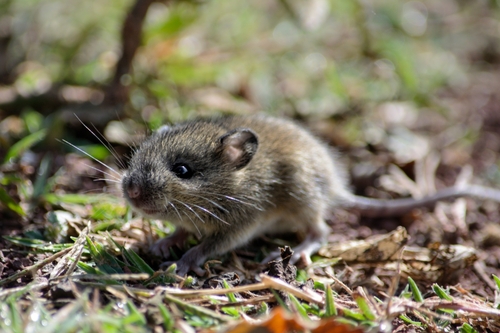
Dorsal fur is uniformly grayish-brown to pale gray, notably washed-out or 'illute' (Latin for muddy/dull gray), giving the species its common name. The ventral surface is pale gray to whitish. The fur is relatively soft and dense. Eyes are small and dark; ears are rounded and moderately sized.
Size
Body length (head–body) approximately 90–130 mm; tail length roughly 70–100 mm (shorter than or subequal to body length); hind foot approximately 18–22 mm.
Weight
Typically 20–40 g; no pronounced sexual weight dimorphism has been reported.
Distinctive features
Distinguished from closely related Abrothrix olivacea by its markedly paler, more uniformly gray (less olivaceous or brownish) dorsal pelage. Compared to Abrothrix hirta, it lacks coarser guard hairs. The overall grayish, washed coloration is the key field mark within the genus.
Differences between males and females
Sexual dimorphism is minimal; males and females are similar in size and coloration, as is typical for the genus Abrothrix.
Behaviour and diet of the Gray Akodont
Presumed to be solitary or loosely social, as is typical for small akodontine rodents. Individuals maintain home ranges that may overlap, particularly between sexes during breeding season.
When it is active
Primarily nocturnal to crepuscular, with peak foraging activity occurring after dusk and before dawn. May show some diurnal activity during austral winter when nights are extremely cold.
Diet
Omnivorous; diet likely includes seeds, plant material (stems, roots, fungi), and invertebrates (insects, larvae, worms). The balance shifts seasonally with resource availability, with greater invertebrate consumption in spring and summer.
How it feeds and hunts
Forages opportunistically on the ground, using olfaction to locate seeds and invertebrates beneath leaf litter, soil, and among grass clumps. No specialized hunting technique; invertebrates are likely captured by pouncing or probing.
Communication
Communication likely involves ultrasonic vocalizations (common in sigmodontine rodents), scent marking via urine and specialized glands, and tactile contact. Specific vocalizations for this species have not been formally studied.
Interactions with other species
Predated by Patagonian raptors (e.g., Barn Owl Tyto alba, Great Horned Owl Bubo virginianus), terrestrial carnivores (Patagonian weasel Lyncodon patagonicus, culpeo fox Lycalopex culpaeus), and snakes. It likely competes for seeds and invertebrates with other sympatric small rodents such as Eligmodontia and Phyllotis species.
Role in its ecosystem
Serves as an important prey item in Patagonian food webs, helping sustain predator populations. As an omnivore, it contributes to seed dispersal and soil turnover (bioturbation) through burrowing and caching activity.
Reproduction and lifecycle
Breeding season is concentrated in austral spring and summer (October–March). Gestation period is estimated at approximately 20–23 days (extrapolated from congeners). Litter sizes typically range from 2 to 6 pups, with multiple litters possible per season under favorable conditions.
Raising the young
Females provide primary parental care, nursing pups in a grass-lined nest constructed in burrows or under rocks. Pups are altricial and become independent within a few weeks of birth. Paternal care has not been documented.
Maturity and lifespan
Sexual maturity is likely reached at 2–3 months of age, consistent with other Abrothrix species. Wild lifespan is estimated at 1–2 years; captive longevity data are unavailable for this species.
Taxonomy and naming of the Gray Akodont
Classification
Mammalia > Rodentia > Cricetidae (subfamily Sigmodontinae, tribe Akodontini) > Abrothrix > Abrothrix illutea
Scientific synonyms
Akodon illuteus Thomas, 1925 (original description); formerly placed within the broadly defined genus Akodon before molecular revisions elevated Abrothrix to full generic status.
What research says
Recent studies
Recent molecular systematics work within Sigmodontinae has helped confirm the taxonomic validity of Abrothrix as a distinct genus. Phylogeographic studies across Patagonian small mammals have begun to illuminate population structure, though A. illutea specifically remains understudied.
Genome and DNA
The diploid chromosome number for Abrothrix species typically ranges from 2n=44 to 2n=52; specific karyotype data for A. illutea are not well-documented. Molecular phylogenetic studies have confirmed the distinctness of the genus Abrothrix from Akodon.
Compared with similar species
Abrothrix illutea is most similar to Abrothrix olivacea (olive-colored akodont), differing primarily in its paler, more uniformly gray coloration. Both share similar ecology and habitat preferences in Patagonian steppes. Compared to Abrothrix longipilis, A. illutea is smaller and inhabits more open, arid steppe rather than wetter, shrubby habitats.
The Gray Akodont and people
1) The species' scientific epithet 'illutea' comes from Latin meaning 'muddy' or 'washed-out,' directly referencing its unusually dull, grayish coloration. 2) Despite its small size, Abrothrix rodents are known to be bold generalists capable of thriving in some of the harshest, windiest environments in the Southern Hemisphere. 3) The genus Abrothrix was for decades lumped together with Akodon, one of the most species-rich rodent genera on Earth, but modern DNA analysis revealed it as a distinct evolutionary lineage.
Where and how to see it
Best observed in the Patagonian steppe of Neuquén and Río Negro provinces (Argentina), particularly near Nahuel Huapi National Park. Nighttime spotlighting along road margins or grassy steppe with dense shrub cover is the most effective method. Spring through early summer (October–December) offers higher activity levels coinciding with the breeding season.
Risks to humans
No notable risk under normal circumstances. As with all wild rodents in Patagonia, caution is advised due to the potential for hantavirus transmission; handling wild individuals without protective equipment is discouraged.
Countries where the Gray Akodont is recorded
The 2 countries named in the range description of its IUCN Red List assessment.
Questions about the Gray Akodont
Where does the Gray Akodont live?
The Gray Akodont is recorded in Argentina and Chile across South America. These countries come from the range description of its IUCN Red List assessment, and they are what place the species on the interactive map.
Is the Gray Akodont endangered?
The IUCN Red List assesses the Gray Akodont as Least Concern. The species is widespread and abundant enough not to qualify for any threatened category. It does not mean the species is safe forever, only that nothing in the current data raises an alarm.
How many are left in the wild?
No reliable global population estimate exists. This figure comes from the species assessment on the IUCN Red List; population estimates for wild mammals are ranges, not counts, and are revised at each assessment.
What habitat does the Gray Akodont live in?
Primarily occupies Patagonian shrub-steppe (monte and steppe communities dominated by grasses and low shrubs such as Mulinum and Stipa).
What is the scientific name of the Gray Akodont?
The Gray Akodont is Abrothrix illutea, in the family Cricetidae, order Rodentia.
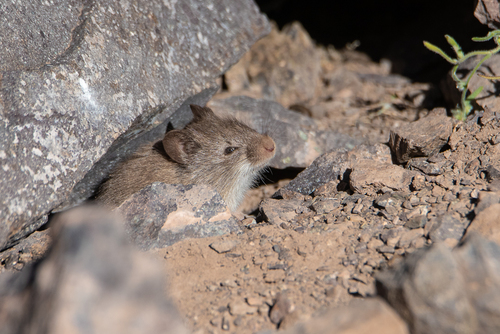
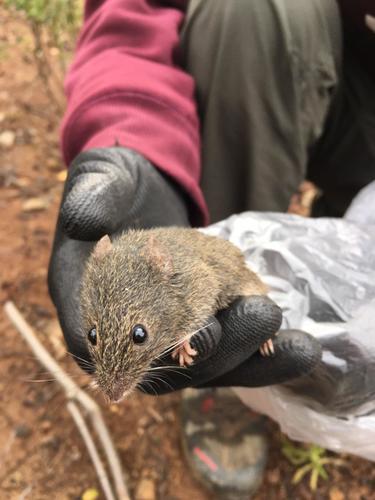
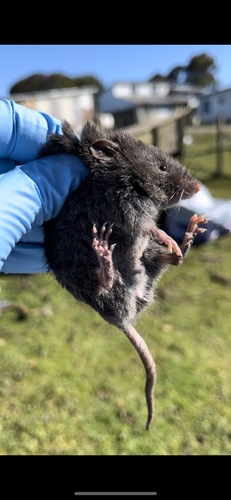
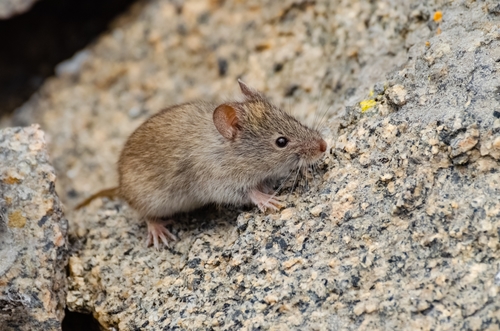
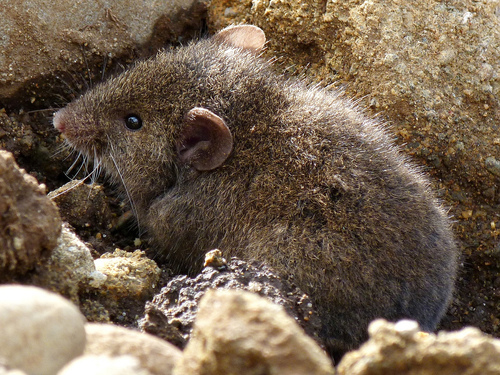
Other species in the genus Abrothrix

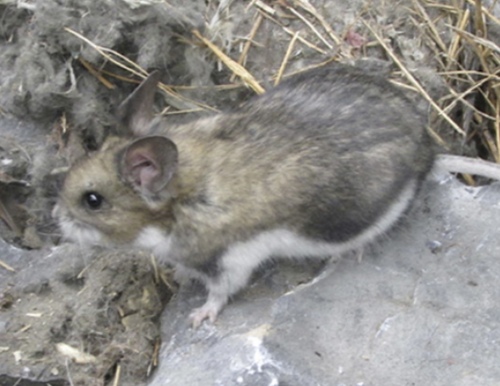
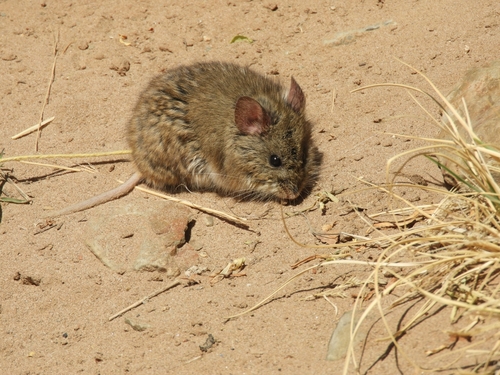
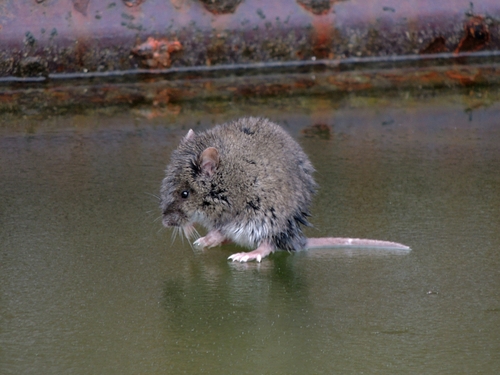
Other species in the family Cricetidae
Sources
Conservation status, range description and population estimate come from the IUCN Red List assessment for Abrothrix illutea. Countries are derived from that range description, not from a mapped country list. Last refreshed on .
The distribution map is drawn from the IUCN Red List spatial data compiled in 2016. IUCN SSC Small Mammal Specialist Group