
Jelski's Altiplano Mouse
Abrothrix jelskii
Red List assessment
Least Concernon the IUCN Red List
- EXExtinct
- EWExtinct in the Wild
- CRCritically Endangered
- ENEndangered
- VUVulnerable
- NTNear Threatened
- LCLeast Concern
The Jelski's Altiplano Mouse is recorded in 4 countries across South America. The IUCN Red List assesses the Jelski's Altiplano Mouse as Least Concern. No precise population estimates exist; the species is presumed to have a stable population based on its broad distribution and adaptable habitat use.
- Family
- Cricetidae
- Order
- Rodentia
- Genus
- Abrothrix
- Countries recorded
- 4
- Continents
- South America
- Red List category
- Least Concern
- Data updated
- August 9, 2026
What is the Jelski's Altiplano Mouse?
Abrothrix jelskii, commonly known as Jelski's Altiplano Mouse, is a small terrestrial rodent native to the high Andean plateaus of South America. It inhabits the harsh puna and altiplano ecosystems at extreme elevations, demonstrating remarkable physiological adaptations to cold, arid, high-altitude conditions. This species is part of a diverse radiation of sigmodontine rodents that have colonized nearly every Andean habitat niche. It remains relatively understudied compared to lowland rodent species.
Where does the Jelski's Altiplano Mouse live?
High Andean regions of Peru, Bolivia, Chile, and Argentina
Distributed along the central Andes, spanning southern Peru, western Bolivia, northern Chile, and northwestern Argentina, generally within the Altiplano and Puna biogeographic zones.
Altitude and depth
Typically found between 3,000 and 5,000 meters above sea level, with some records extending to higher elevations near the snow line.
Seasonal movements
No true hibernation, but activity and reproduction are influenced by the pronounced wet and dry seasons of the Altiplano, with breeding often concentrated in the warmer, wetter months.
Habitat of the Jelski's Altiplano Mouse
Found primarily in high-altitude puna grasslands, altiplano scrub, and rocky steppe habitats. Also occupies bunchgrass communities and areas near wetlands or bofedales within the Andean highlands.
Adaptations to its environment
Possesses dense, insulating fur to cope with cold high-altitude temperatures and a compact body form that reduces heat loss. Physiological adaptations likely include efficient oxygen utilization for hypoxic high-altitude environments, common among Andean small mammals.
Conservation status and numbers
Listed as Least Concern (LC) by the IUCN due to its relatively wide distribution across suitable high-altitude habitats and presumed stable population, though data remain limited.
Estimated population
No precise population estimates exist; the species is presumed to have a stable population based on its broad distribution and adaptable habitat use.
What threatens the Jelski's Altiplano Mouse?
Potential threats include habitat degradation from overgrazing by livestock, mining activities in the Altiplano, and climate change altering high-altitude ecosystems.
Diseases and parasites
Specific parasites are not well documented, though like other wild rodents it likely hosts ectoparasites such as fleas and mites, and may carry zoonotic pathogens including hantaviruses.
What is being done to protect it?
No species-specific conservation programs are known; general protection may occur incidentally within Andean protected areas and national parks across its range countries.
Recommended actions
Further ecological and population studies are recommended, along with monitoring of high-altitude habitat health amid climate change and mining pressures.
What the Jelski's Altiplano Mouse looks like
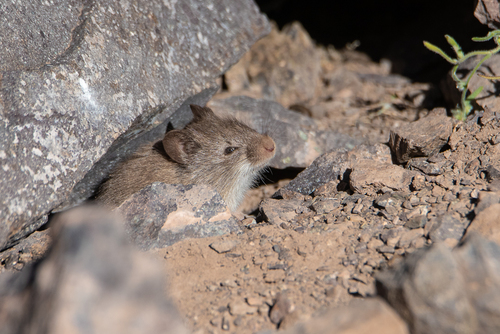
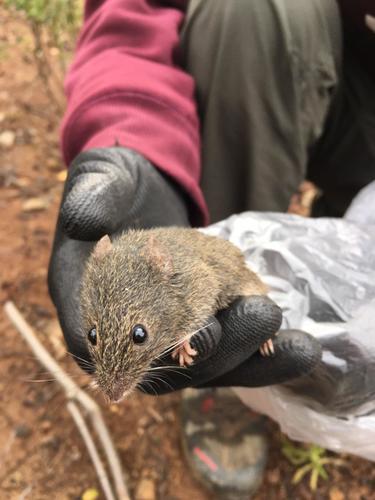
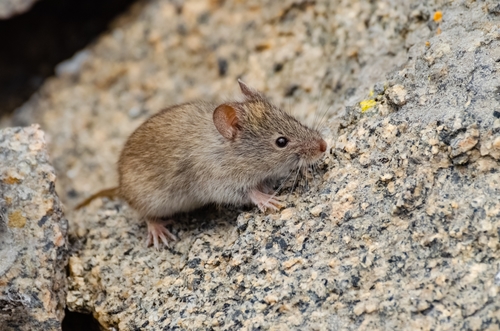
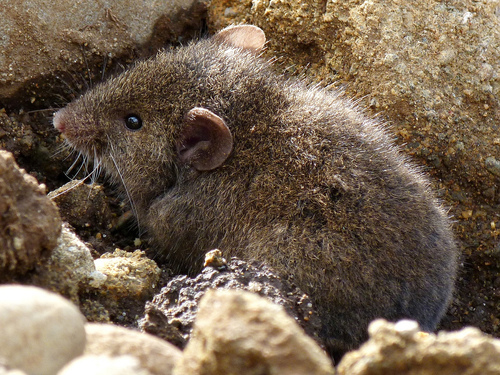
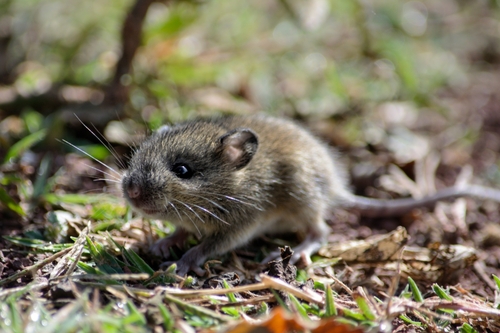
The fur is typically brownish-gray to grayish-brown on the dorsal side, transitioning to a paler grayish or whitish underside. It has a moderately long tail, small rounded ears, and a slender, mouse-like body typical of sigmodontine rodents.
Size
Body length typically ranges from 8 to 11 cm, with a tail length of approximately 6 to 9 cm.
Weight
Adults generally weigh between 15 and 30 grams.
Distinctive features
Distinguished from related Abrothrix species by subtle differences in cranial morphology, pelage coloration, and tail-to-body ratio, often requiring genetic or detailed morphometric analysis for confirmation.
Differences between males and females
Minimal sexual dimorphism has been reported, with males and females showing similar size and coloration.
Behaviour and diet of the Jelski's Altiplano Mouse
Generally considered solitary or living in loose, non-territorial associations, consistent with many small Akodontine rodents, though detailed social studies are lacking.
When it is active
Primarily nocturnal to crepuscular, with activity peaks during dawn and dusk to avoid extreme daytime temperature fluctuations of the Altiplano.
Diet
Omnivorous diet consisting mainly of seeds, grasses, herbaceous vegetation, and likely some insects or invertebrates when available.
Communication
Likely communicates through olfactory scent marking and ultrasonic vocalizations, common in small rodents, though specific studies on this species are limited.
Interactions with other species
Preyed upon by Andean raptors, foxes, and small carnivores; competes with other sympatric Altiplano rodents for food resources such as seeds and vegetation.
Role in its ecosystem
Plays a role in seed dispersal and as a prey base supporting Andean predator populations, contributing to the trophic structure of high-altitude ecosystems.
Reproduction and lifecycle
Breeding likely occurs during the warmer, wetter months of the Andean summer; gestation period is estimated to be similar to related Abrothrix species, around 22-25 days, with litter sizes typically ranging from 3 to 6 pups.
Raising the young
Females provide primary parental care, nursing and protecting young in nests until weaning, typical of small cricetid rodents; males are not known to participate significantly in offspring care.
Maturity and lifespan
Sexual maturity is likely reached within 2-3 months, consistent with similar-sized rodents; wild lifespan is estimated at 1-2 years, with captivity potentially extending this slightly.
Taxonomy and naming of the Jelski's Altiplano Mouse
Classification
Class Mammalia > Order Rodentia > Family Cricetidae > Genus Abrothrix > Species Abrothrix jelskii
Subspecies
Several subspecies have been proposed across its range, but taxonomy remains under revision; no widely recognized subspecies list is currently stable.
Scientific synonyms
Akodon jelskii (former genus placement before reclassification into Abrothrix)
What research says
Recent studies
Recent phylogenetic studies using molecular data have helped clarify the taxonomic placement of Abrothrix jelskii within the broader Abrothrix radiation, though comprehensive ecological studies remain scarce.
Genome and DNA
Genetic studies have contributed to the reclassification of this species from Akodon to Abrothrix, but detailed genomic data remain limited.
Compared with similar species
Similar to other Abrothrix species such as Abrothrix andinus, but distinguished by subtle morphological and genetic differences; generally smaller and more high-altitude adapted than lowland Akodon relatives.
The Jelski's Altiplano Mouse and people
This tiny rodent survives at elevations comparable to some of the highest human settlements on Earth. It belongs to a remarkable radiation of Andean rodents that have adapted to some of the most extreme terrestrial environments outside polar regions.
Where and how to see it
Best observed during dawn or dusk in high Andean puna grasslands of Peru or Bolivia, particularly near rocky outcrops or grassy steppe areas; patience and quiet observation with a flashlight may be needed due to its nocturnal habits.
Risks to humans
No notable risk to humans, though as with all wild rodents, handling should be avoided due to potential zoonotic disease transmission.
Countries where the Jelski's Altiplano Mouse is recorded
The 4 countries named in the range description of its IUCN Red List assessment.
Questions about the Jelski's Altiplano Mouse
Where does the Jelski's Altiplano Mouse live?
The Jelski's Altiplano Mouse is recorded in Argentina, Bolivia, Chile and Peru across South America. These countries come from the range description of its IUCN Red List assessment, and they are what place the species on the interactive map.
Is the Jelski's Altiplano Mouse endangered?
The IUCN Red List assesses the Jelski's Altiplano Mouse as Least Concern. The species is widespread and abundant enough not to qualify for any threatened category. It does not mean the species is safe forever, only that nothing in the current data raises an alarm.
How many are left in the wild?
No precise population estimates exist; the species is presumed to have a stable population based on its broad distribution and adaptable habitat use. This figure comes from the species assessment on the IUCN Red List; population estimates for wild mammals are ranges, not counts, and are revised at each assessment.
What habitat does the Jelski's Altiplano Mouse live in?
Found primarily in high-altitude puna grasslands, altiplano scrub, and rocky steppe habitats.
What is the scientific name of the Jelski's Altiplano Mouse?
The Jelski's Altiplano Mouse is Abrothrix jelskii, in the family Cricetidae, order Rodentia.
Other species in the genus Abrothrix
Other species in the family Cricetidae
Sources
Conservation status, range description and population estimate come from the IUCN Red List assessment for Abrothrix jelskii. Countries are derived from that range description, not from a mapped country list. Last refreshed on .
The distribution map is drawn from the IUCN Red List spatial data compiled in 2008. IUCN (International Union for Conservation of Nature)