
Long-haired Akodont
Abrothrix longipilis
Red List assessment
Least Concernon the IUCN Red List
- EXExtinct
- EWExtinct in the Wild
- CRCritically Endangered
- ENEndangered
- VUVulnerable
- NTNear Threatened
- LCLeast Concern
The Long-haired Akodont is recorded in 2 countries across South America. The IUCN Red List assesses the Long-haired Akodont as Least Concern. No precise global estimate exists; the species is considered locally common across much of its range.
- Family
- Cricetidae
- Order
- Rodentia
- Genus
- Abrothrix
- Countries recorded
- 2
- Continents
- South America
- Red List category
- Least Concern
- Data updated
- August 9, 2026
What is the Long-haired Akodont?
The Long-haired Akodont is a small, soft-furred sigmodontine rodent native to the temperate and Mediterranean zones of South America. It is remarkable for its exceptionally dense, long pelage, which likely provides insulation in the cold, wet southern Chilean forests and Patagonian shrublands it inhabits. The species is among the more wide-ranging members of the genus Abrothrix, occurring across a broad latitudinal gradient from northern semi-arid Chile to subantarctic Patagonia. It plays an important role as a granivore and invertebrate predator in its ecosystems.
Where does the Long-haired Akodont live?
Chile and adjacent western Argentina, from the Atacama/Coquimbo region south through Patagonia
Distributed along the western slope and foothills of the Andes in Chile from approximately 29°S (Atacama/Coquimbo boundary) southward to Tierra del Fuego (~55°S), and across the Andes into adjacent Patagonian Argentina (Neuquén, Río Negro, Chubut, Santa Cruz provinces).
Altitude and depth
Found from near sea level on the Chilean coast up to approximately 2,500–3,000 m in Andean foothills and valleys; most common below 1,800 m in forested and shrubland zones.
Seasonal movements
Does not hibernate; active year-round. Reproductive activity peaks in spring and summer (October–March in the Southern Hemisphere), with reduced breeding during austral winter. No significant seasonal migrations recorded.
Habitat of the Long-haired Akodont
Occupies a variety of habitats including Valdivian temperate rainforest undergrowth, Mediterranean matorral scrubland, Andean shrubby grasslands (pastizales), riparian vegetation, and open grasslands. It shows a preference for areas with dense herbaceous cover and leaf litter that provide shelter and foraging opportunities.
Adaptations to its environment
The long, dense fur is the species' most notable adaptation, providing thermal insulation in cold, wet southern environments. Like other Abrothrix, it has relatively broad, robust feet suited for moving through dense vegetation and leaf litter. Its omnivorous diet allows it to exploit variable seasonal food resources.
Conservation status and numbers
Listed as Least Concern (LC) by the IUCN. The species has a wide distribution, is locally common in suitable habitat, and no rapid population decline has been detected. No major range-wide threats currently justify a threatened category.
Estimated population
No precise global estimate exists; the species is considered locally common across much of its range. Population trend is presumed stable overall, though locally declining in heavily altered landscapes.
What threatens the Long-haired Akodont?
Habitat loss due to agricultural expansion, afforestation with non-native pine and eucalyptus plantations (which replace native forest understory), and urbanization along the Chilean coastal range. Predation by introduced carnivores (American mink, domestic cats, rats) may be locally significant.
Diseases and parasites
Hosts fleas (Siphonaptera), lice, ticks, and internal helminths. Has been documented as a reservoir host for Hantavirus (Andes virus lineage) in Chile, posing a public health concern. Also harbors Trypanosoma and various intestinal nematodes.
What is being done to protect it?
The species occurs within several Chilean protected areas, including Parque Nacional Bosque Fray Jorge, Parque Nacional Nahuelbuta, Parque Nacional Villarrica, and multiple Patagonian reserves. Chilean biodiversity legislation (Ley 19.300) provides indirect protection.
Recommended actions
Monitoring population trends in areas affected by plantation forestry; control of invasive predators (mink, feral cats) in sensitive zones; preservation and restoration of native shrubland and forest corridors; further taxonomic and genetic research to clarify species boundaries and subspecific status.
What the Long-haired Akodont looks like
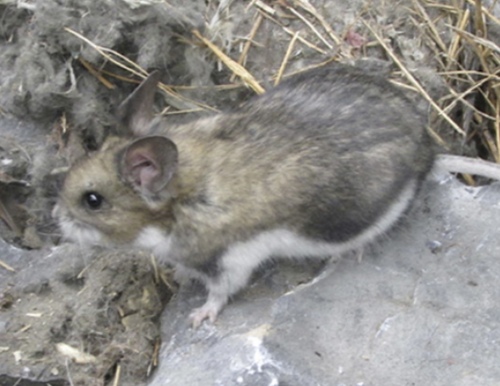
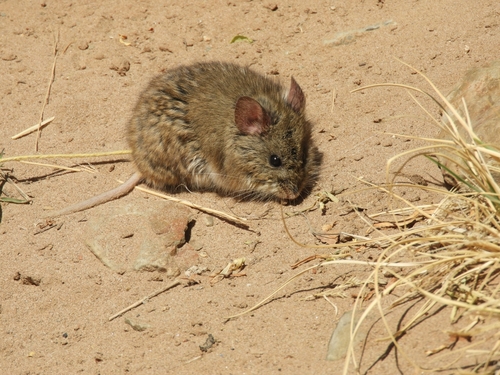
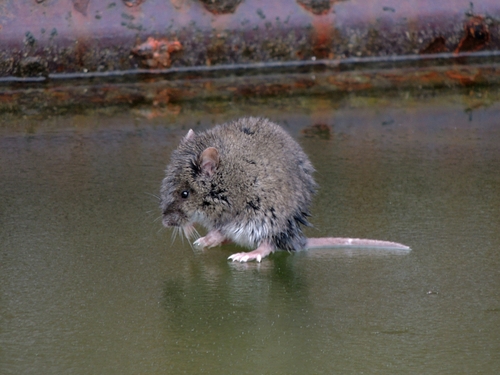
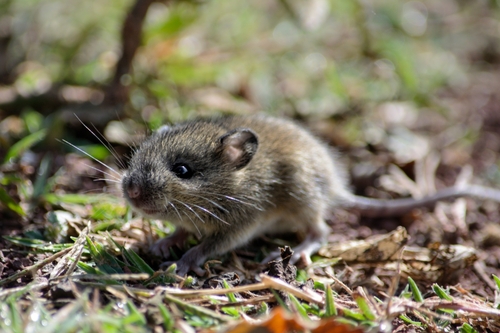
Dorsal fur is long, soft, and dense, grizzled dark grayish-brown to ochraceous-brown with a subtle olivaceous or rufous tint, created by banded individual hairs. The ventral surface is paler gray to whitish-gray, sometimes with a faint buffy wash. The tail is bicolored (darker above, paler below) and moderately haired. Ears are moderately large and rounded.
Size
Head-body length approximately 90–125 mm; tail length 70–105 mm (notably shorter than body); hind foot 18–23 mm. Total length roughly 160–230 mm.
Weight
Typically 20–42 g; adults average around 25–35 g with some geographic variation. No strong sexual size dimorphism in weight.
Distinctive features
Distinguished from the closely related Abrothrix olivacea by its significantly longer and denser dorsal fur, larger body size, and darker, more richly colored dorsum. Compared to A. sanborni, it is considerably larger. The notably long pelage—giving the species its common and scientific names—is the primary diagnostic trait within the genus.
Differences between males and females
Sexual dimorphism is minimal; males and females are similar in size and coloration. Females have multiple pairs of mammae typical for prolific small rodents.
Behaviour and diet of the Long-haired Akodont
Primarily solitary outside the breeding season; individuals maintain overlapping or exclusive home ranges. No evidence of complex social hierarchies. May occur at locally high densities during population booms (ratadas) following masting events.
When it is active
Mainly nocturnal and crepuscular; activity begins shortly after sunset and peaks in the first half of the night. Remains active year-round even during cold austral winters.
Diet
Omnivorous; diet includes seeds, green plant material (leaves, shoots), fungi, and invertebrates (insects, earthworms, spiders). Diet composition shifts seasonally with availability; seeds and arthropods are particularly important resources.
How it feeds and hunts
Forages on the ground and within dense vegetation, using olfaction to locate seeds and invertebrates under leaf litter and soil surface. Opportunistically exploits invertebrates encountered during ground-level movements.
Communication
Communicates via ultrasonic vocalizations (common in sigmodontine rodents) and likely uses scent marking with urine and glandular secretions to delineate home ranges and convey reproductive status. Threat responses include foot-drumming and teeth chattering.
Interactions with other species
Predated by raptors (Tyto alba, Asio flammeus, Buteo species), foxes (Lycalopex culpaeus, L. griseus), native mustelids, and introduced carnivores (Neovison vison, feral cats). Competes with other small rodents such as Oligoryzomys longicaudatus and Phyllotis species for seeds and shelter. May serve as a host for ectoparasites shared with syntopic species.
Role in its ecosystem
Functions as a seed disperser and granivore, influencing plant community composition. As a prey species for numerous predators, it is a key link in food webs of Chilean and Patagonian ecosystems. During population irruptions it can have measurable effects on seed banks and vegetation recovery.
Reproduction and lifecycle
Breeding season concentrated in austral spring-summer (October–March). Gestation approximately 19–22 days. Litter size typically 2–6 pups (average ~4). Multiple litters per season are possible under favorable conditions.
Raising the young
Altricial young are born blind and hairless in a grass-lined nest. The mother provides all direct parental care (nursing, thermoregulation, grooming). Weaning occurs at approximately 14–21 days; juveniles become independent shortly thereafter.
Maturity and lifespan
Sexual maturity is reached at approximately 2–3 months of age. Lifespan in the wild is typically 1–2 years due to high predation pressure; captive individuals may survive 3–4 years.
Taxonomy and naming of the Long-haired Akodont
Classification
Mammalia > Rodentia > Cricetidae (Sigmodontinae, tribe Akodontini) > Abrothrix > Abrothrix longipilis
Subspecies
Several subspecies have been described, including A. l. longipilis (Waterhouse, 1837) in central Chile, A. l. mordax (Thomas, 1927) in southern Chile and Argentina, and A. l. castaneus (Philippi, 1896); taxonomic boundaries remain under review.
Scientific synonyms
Mus longipilis Waterhouse, 1837; Akodon longipilis; Chroeomys longipilis; formerly placed in the broadly defined genus Akodon before molecular revisions elevated Abrothrix.
What research says
Recent studies
Recent phylogeographic studies have revealed significant genetic structure across the species' range, suggesting potential cryptic diversity or incipient speciation between northern and southern populations. Work by D'Elía and collaborators has clarified the systematics of the Abrothrix genus using mitochondrial and nuclear markers.
Genome and DNA
Diploid chromosome number 2n = 52, with a fundamental number (FN) of approximately 52. Molecular phylogenetic studies (e.g., Lessa, D'Elía et al.) have confirmed the monophyly of Abrothrix and placed A. longipilis within a clade of Andean and southern Chilean species.
Compared with similar species
Most similar to Abrothrix olivacea, which is smaller and has shorter, less dense fur. Abrothrix hirta (formerly synonymized then re-separated) is a closely related taxon from Tierra del Fuego. Compared to the broader Akodon group, Abrothrix species are generally characterized by softer, longer fur and adaptation to colder, wetter southern environments.
The Long-haired Akodont and people
The species' fur is so notably long and soft that early naturalist George Robert Waterhouse, who first described it in 1837, made the fur texture the centerpiece of its name (longipilis = 'long-haired'). During mast-seeding years (ratadas), populations can irrupt dramatically, with hundreds of individuals per hectare temporarily, before crashing. Despite its small size, A. longipilis is one of the southernmost naturally occurring small rodents in the world, surviving near the tip of Tierra del Fuego in near-subantarctic conditions.
Where and how to see it
Best observed by setting Sherman live traps in dense shrubby or forested habitat at night, particularly along stream margins and forest edges. In protected areas such as Parque Nacional Nahuelbuta or Parque Pumalín (Patagonia), patient nocturnal observation with a red-filtered headlamp may reveal foraging individuals. Autumn and winter nights, when vegetation is less dense, can increase detection.
Risks to humans
Potential reservoir host for Hantavirus (Andes virus), which can cause Hantavirus Pulmonary Syndrome (HPS) in humans through inhalation of aerosolized excreta. Direct handling without precautions in endemic areas carries risk. No venom or dangerous bite under normal circumstances.
Human uses
Occasionally used as a study organism in ecological, parasitological, and epidemiological research, particularly in Hantavirus surveillance programs in Chile. No use in traditional medicine, farming, or commercial trade has been documented.
Myths and legends
No specific myths or legends are directly associated with this species in indigenous or popular Chilean tradition; small mice as a group (ratones del campo) are generally considered omens of bad harvests or associated with the plague of field mice (ratadas) in Chilean agricultural folklore.
Countries where the Long-haired Akodont is recorded
The 2 countries named in the range description of its IUCN Red List assessment.
Questions about the Long-haired Akodont
Where does the Long-haired Akodont live?
The Long-haired Akodont is recorded in Argentina and Chile across South America. These countries come from the range description of its IUCN Red List assessment, and they are what place the species on the interactive map.
Is the Long-haired Akodont endangered?
The IUCN Red List assesses the Long-haired Akodont as Least Concern. The species is widespread and abundant enough not to qualify for any threatened category. It does not mean the species is safe forever, only that nothing in the current data raises an alarm.
How many are left in the wild?
No precise global estimate exists; the species is considered locally common across much of its range. This figure comes from the species assessment on the IUCN Red List; population estimates for wild mammals are ranges, not counts, and are revised at each assessment.
What habitat does the Long-haired Akodont live in?
Occupies a variety of habitats including Valdivian temperate rainforest undergrowth, Mediterranean matorral scrubland, Andean shrubby grasslands (pastizales), riparian vegetation, and open grasslands.
What is the scientific name of the Long-haired Akodont?
The Long-haired Akodont is Abrothrix longipilis, in the family Cricetidae, order Rodentia.
Other species in the genus Abrothrix

Other species in the family Cricetidae
Sources
Conservation status, range description and population estimate come from the IUCN Red List assessment for Abrothrix longipilis. Countries are derived from that range description, not from a mapped country list. Last refreshed on .
The distribution map is drawn from the IUCN Red List spatial data compiled in 2008. IUCN (International Union for Conservation of Nature)