
Northern Muriqui
Brachyteles hypoxanthus
Red List assessment
Critically Endangeredon the IUCN Red List
- EXExtinct
- EWExtinct in the Wild
- CRCritically Endangered
- ENEndangered
- VUVulnerable
- NTNear Threatened
- LCLeast Concern
The Northern Muriqui is recorded in one country, Brazil across South America. The IUCN Red List assesses the Northern Muriqui as Critically Endangered. Fewer than 1000 individuals remain in the wild, with a declining population trend.
- Family
- Atelidae
- Order
- Primates
- Genus
- Brachyteles
- Countries recorded
- 1
- Continents
- South America
- Red List category
- Critically Endangered
- Data updated
- August 9, 2026
What is the Northern Muriqui?
The Northern Muriqui is one of the largest New World monkeys and the largest primate endemic to Brazil, inhabiting fragmented remnants of the Atlantic Forest. It is a highly threatened spider-monkey relative known for its gentle, egalitarian social behavior and remarkable arboreal locomotion. Considered a flagship species for Atlantic Forest conservation, it is Critically Endangered due to massive habitat loss.
Where does the Northern Muriqui live?
Brazil, restricted to fragments of the Atlantic Forest in the states of Minas Gerais, Espírito Santo, Bahia and Rio de Janeiro
Restricted to a few isolated forest fragments in southeastern Brazil, primarily in Minas Gerais and Espírito Santo, with small populations in Bahia and Rio de Janeiro.
Altitude and depth
Approximately 100-1200 meters above sea level
Seasonal movements
No true migration, but diet shifts seasonally between fruit-rich periods and leaf-dominated periods during fruit scarcity.
Habitat of the Northern Muriqui
Primary and secondary tropical semi-deciduous and montane Atlantic Forest, requiring large tracts of continuous canopy for locomotion and foraging.
Adaptations to its environment
Possesses a prehensile tail used as a fifth limb for arboreal locomotion, long limbs for brachiation, and a highly flexible hip joint enabling suspensory movement through the canopy.
Conservation status and numbers
Critically Endangered (IUCN); population has declined by over 80% due to habitat destruction and fragmentation, with only small isolated subpopulations remaining.
Estimated population
Fewer than 1000 individuals remain in the wild, with a declining population trend.
What threatens the Northern Muriqui?
Deforestation and habitat fragmentation for agriculture and urbanization, hunting, small isolated population sizes leading to genetic bottlenecks, and disease transmission from humans.
Diseases and parasites
Susceptible to gastrointestinal parasites and has shown vulnerability to human-transmitted respiratory diseases due to close contact with researchers and forest fragmentation.
What is being done to protect it?
Protected under Brazilian law; conservation efforts include the Muriqui Conservation Programs, protected areas such as Caratinga Biological Station and Serra do Brigadeiro State Park, habitat corridors, and community education initiatives.
Recommended actions
Expand and connect protected forest fragments via corridors, strengthen anti-poaching enforcement, support reforestation programs, and continue long-term population monitoring and genetic studies.
What the Northern Muriqui looks like
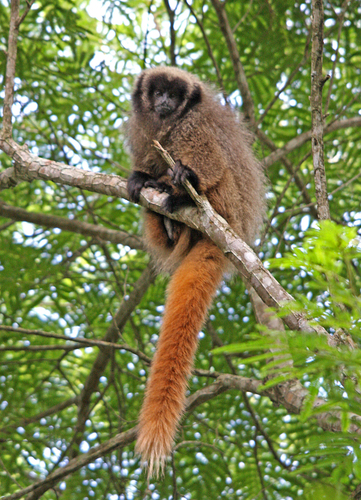
Covered in dense, grizzled fur ranging from golden-brown to grayish, with a bare, often mottled face that can show pink, black or blotchy pigmentation. Long limbs and a muscular prehensile tail give it a distinctive spider-monkey-like silhouette.
Size
Body length approximately 46-63 cm, with a prehensile tail adding an additional 74-80 cm.
Weight
Adults typically weigh between 9-15 kg, with males generally slightly larger than females.
Distinctive features
Distinguished from the Southern Muriqui by facial coloration patterns and genetic differences; generally has a more uniformly pigmented or blotchy face compared to its southern relative.
Differences between males and females
Minimal sexual dimorphism in size; males and females are similar in body size and coloration, though males may be marginally larger.
Behaviour and diet of the Northern Muriqui
Lives in large, cohesive social groups of 20-80 individuals with a notably egalitarian, low-aggression social structure and minimal dominance hierarchies compared to other primates.
When it is active
Diurnal, active during daylight hours with peak feeding periods in morning and late afternoon.
Diet
Primarily folivorous-frugivorous, feeding on leaves, fruits, flowers and seeds; diet composition shifts seasonally based on resource availability.
Communication
Uses a range of vocalizations including whinnies, neighs and chirps for group coordination, along with body postures and embraces as affiliative social signals.
Interactions with other species
Few natural predators remain due to habitat degradation, though historically large raptors and wild cats may have preyed on juveniles; competes indirectly with other frugivorous mammals for fruit resources.
Role in its ecosystem
Plays a crucial role as a seed disperser within the Atlantic Forest ecosystem, contributing to forest regeneration and plant diversity maintenance.
Reproduction and lifecycle
Females typically give birth to a single offspring after a gestation period of about 7.5 months, with births often occurring during the dry season; inter-birth intervals average around 3 years.
Raising the young
Mothers provide extended care, carrying and nursing infants for over a year; alloparental behavior is rare, and males show little direct parental investment beyond social tolerance.
Maturity and lifespan
Sexual maturity reached around 6-8 years for females and slightly later for males; lifespan can reach up to 40 years in the wild.
Taxonomy and naming of the Northern Muriqui
Classification
Mammalia > Primates > Atelidae > Brachyteles > Brachyteles hypoxanthus
Scientific synonyms
Brachyteles arachnoides hypoxanthus (formerly considered a subspecies of the Southern Muriqui before being elevated to full species status)
What research says
Recent studies
Recent long-term studies at Caratinga Biological Station have documented unique egalitarian social dynamics and provided insights into female-biased dispersal patterns unusual among primates.
Genome and DNA
Diploid chromosome number of 2n=48; genetic studies have highlighted low genetic diversity in remaining populations due to severe habitat fragmentation and small population sizes.
Compared with similar species
Closely related to the Southern Muriqui (Brachyteles arachnoides), differing mainly in facial pigmentation, genetic markers and geographic range; both species are the largest platyrrhine primates.
The Northern Muriqui and people
Muriquis are sometimes called 'hippie monkeys' due to their remarkably peaceful, low-aggression social behavior; they frequently engage in group hugging behaviors as social bonding.
Where and how to see it
Best observed at protected reserves such as Caratinga Biological Station (RPPN Feliciano Miguel Abdala) or Serra do Brigadeiro State Park in Minas Gerais, ideally during early morning hours when groups are most active and vocal.
Risks to humans
No notable risk to humans; the species is shy and non-aggressive.
Human uses
No significant traditional or commercial use; primarily valued today for ecotourism and as a conservation flagship species for the Atlantic Forest.
Myths and legends
Not widely featured in mainstream folklore, though local Brazilian communities near remaining forest fragments regard the species as an important cultural and ecological symbol of the Atlantic Forest.
Countries where the Northern Muriqui is recorded
The 1 countries named in the range description of its IUCN Red List assessment.
Questions about the Northern Muriqui
Where does the Northern Muriqui live?
The Northern Muriqui is recorded in Brazil across South America. These countries come from the range description of its IUCN Red List assessment, and they are what place the species on the interactive map.
Is the Northern Muriqui endangered?
Yes. The IUCN Red List assesses the Northern Muriqui as Critically Endangered, one of the three threatened categories. The species faces an extremely high risk of extinction in the wild. This is the last category before extinction, and it is reached through a very small or steeply declining population, a tiny range, or both.
How many are left in the wild?
Fewer than 1000 individuals remain in the wild, with a declining population trend. This figure comes from the species assessment on the IUCN Red List; population estimates for wild mammals are ranges, not counts, and are revised at each assessment.
What habitat does the Northern Muriqui live in?
Primary and secondary tropical semi-deciduous and montane Atlantic Forest, requiring large tracts of continuous canopy for locomotion and foraging.
What is the scientific name of the Northern Muriqui?
The Northern Muriqui is Brachyteles hypoxanthus, in the family Atelidae, order Primates.
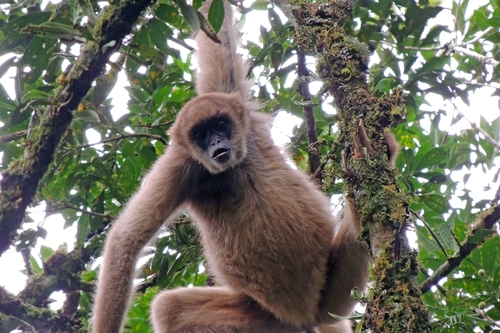
Other species in the genus Brachyteles
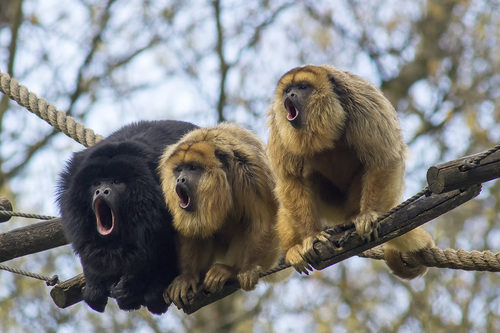
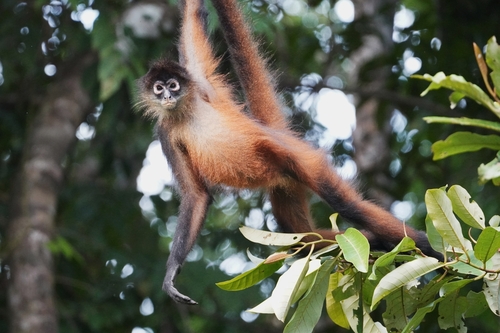
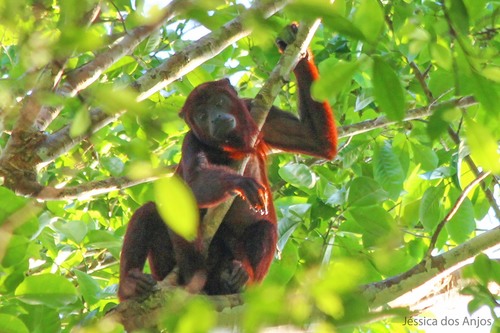
Other species in the family Atelidae
Species that share its range
Sources
Conservation status, range description and population estimate come from the IUCN Red List assessment for Brachyteles hypoxanthus. Countries are derived from that range description, not from a mapped country list. Last refreshed on .
The distribution map is drawn from the IUCN Red List spatial data compiled in 2019. IUCN (International Union for Conservation of Nature)