
Juan Fernández Fur Seal
Arctocephalus philippii
Red List assessment
Least Concernon the IUCN Red List
- EXExtinct
- EWExtinct in the Wild
- CRCritically Endangered
- ENEndangered
- VUVulnerable
- NTNear Threatened
- LCLeast Concern
The Juan Fernández Fur Seal is recorded in one country, Chile across South America. The IUCN Red List assesses the Juan Fernández Fur Seal as Least Concern. Estimated at approximately 12,000–20,000 individuals, with the largest concentration (roughly 70–80% of the total) on Alejandro Selkirk Island.
- Family
- Otariidae
- Order
- Carnivora
- Genus
- Arctocephalus
- Countries recorded
- 1
- Continents
- South America
- Red List category
- Least Concern
- Data updated
- August 9, 2026
What is the Juan Fernández Fur Seal?
The Juan Fernández Fur Seal is a medium-to-large otariid endemic to a handful of remote volcanic islands off the coast of Chile in the South Pacific Ocean. Once reduced to near-extinction by intensive commercial sealing operations in the 18th and 19th centuries, its population has staged a remarkable recovery. It is noteworthy as one of the most geographically restricted pinnipeds in the world, with the vast majority of its global population concentrated at just two main island groups. Its story represents one of the more successful marine mammal conservation recoveries in the Southern Hemisphere.
Where does the Juan Fernández Fur Seal live?
Juan Fernández Archipelago (Robinson Crusoe Island, Alejandro Selkirk Island) and Desventuradas Islands (San Félix, San Ambrosio), Chile
Highly restricted range centered on the Juan Fernández Archipelago (~670 km west of Valparaíso, Chile), principally Alejandro Selkirk Island (Más Afuera) and Robinson Crusoe Island. A smaller colony exists at the Desventuradas Islands (San Félix and San Ambrosio), approximately 900 km north of Juan Fernández. Rare vagrant sightings have been reported along the Chilean and Peruvian coasts.
Altitude and depth
Hauls out from sea level to rocky outcrops a few meters above the waterline. Dives typically range from 20 to 170 m depth during foraging trips, with maximum recorded depths around 200 m.
Seasonal movements
Strongly seasonal reproduction: males arrive at breeding colonies from late October, females from late November through December. Pups are born in December–January. Post-breeding dispersal occurs into open Pacific waters from February onward. No true migration is documented, but animals range widely at sea outside the breeding season.
Habitat of the Juan Fernández Fur Seal
Rocky shorelines, boulder beaches, and sea caves on steep volcanic islands for resting, hauling out, and breeding. Forages in pelagic and coastal waters of the subtropical to temperate South Pacific. Prefers sheltered rocky coves with overhanging rocks or sea caves, particularly during the hot breeding season.
Adaptations to its environment
Thick, dense underfur (the fur prized by sealers) provides thermal insulation in cool Pacific waters. Streamlined body and powerful fore-flippers enable agile underwater maneuvering. Prefers shaded rocky habitats and sea caves during the hottest part of the breeding season to avoid overheating. Highly efficient oxygen storage allows extended dives. Counter-current heat exchange in flippers minimizes heat loss at sea.
Conservation status and numbers
Least Concern (LC) on the IUCN Red List as of the most recent assessment. The species was functionally eliminated by commercial sealing and was considered near-extinction in the early 20th century, but protection and geographic isolation have allowed substantial recovery. Population trends are currently increasing or stable.
Estimated population
Estimated at approximately 12,000–20,000 individuals, with the largest concentration (roughly 70–80% of the total) on Alejandro Selkirk Island. Population trend is considered increasing or stable following recovery from near-extinction. Exact counts are difficult due to the rugged terrain of the islands.
What threatens the Juan Fernández Fur Seal?
Entanglement in fishing gear (bycatch in longline and gillnet fisheries) is the primary current threat. Climate variability and El Niño events reduce prey availability and can cause pup mortality. Introduced predators (rats, cats, dogs) on some islands threaten pups. Plastic pollution and marine debris entanglement are increasing concerns. Tourism disturbance at colonies, though currently limited, could become problematic.
Diseases and parasites
Susceptible to hookworm infestations (Uncinaria spp.), which can cause significant mortality in young pups. Lice and external ectoparasites are common. Morbillivirus outbreaks affecting other pinniped populations have not been well-documented in this species but represent a potential threat. Leptospirosis has been recorded in related otariids.
What is being done to protect it?
The Juan Fernández Archipelago is a Chilean National Park and a UNESCO Biosphere Reserve, providing legal habitat protection. Chile enacted laws prohibiting the hunting of marine mammals. The Desventuradas Islands were declared a Marine Protected Area (MPA) in 2016, one of the largest in the Americas. Ongoing monitoring programs by Chilean and international research institutions track population trends.
Recommended actions
Strengthening enforcement of marine protected areas and reducing illegal fishing incursions. Implementing bycatch mitigation measures on longline vessels operating near island waters. Eradicating introduced predators (rats and cats) from key breeding islands. Continued long-term population monitoring and diet studies. Expanding marine no-take zones around core breeding habitat.
What the Juan Fernández Fur Seal looks like
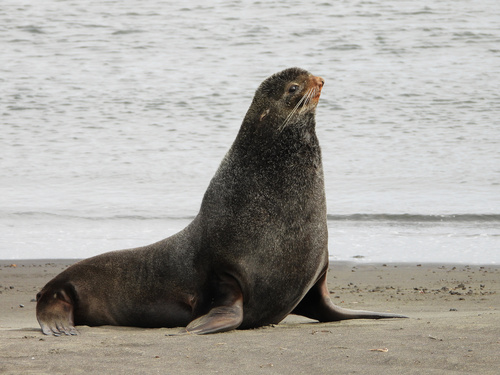
Adult males are dark brown to blackish on the dorsal surface, often with a grayish mane of coarser guard hairs around the neck and shoulders. Females and juveniles are gray-brown dorsally and paler or creamy-buff ventrally. The muzzle is moderately pointed, with small external ear pinnae and large, forward-facing eyes.
Size
Adult males: 180–200 cm total body length. Adult females: 130–150 cm. Males are substantially larger than females.
Weight
Adult males: 100–140 kg. Adult females: 40–70 kg. Pups at birth: approximately 5–7 kg.
Distinctive features
Distinguished from the closely related South American Fur Seal (Arctocephalus australis) by its more restricted range and subtly different cranial morphology. Males have a less pronounced sagittal crest than some congeners. The species is separated from the Guadalupe Fur Seal (Arctocephalus townsendi) by geographic range and minor morphological differences; the two were historically confused.
Differences between males and females
Pronounced sexual dimorphism: males are 2–3 times heavier than females and 30–50% longer. Males develop a thick, shaggy mane of guard hairs on the neck and shoulders as they mature. Females are sleeker and more lightly built. Males are also noticeably darker in coloration.
Behaviour and diet of the Juan Fernández Fur Seal
Polygynous and colonial during the breeding season; dominant males (bulls) defend territories on rocky beaches containing groups of 5–20 females (harems). Outside the breeding season, animals are largely solitary at sea. Non-territorial males form loosely associated bachelor groups away from the main breeding beaches.
When it is active
Primarily crepuscular to nocturnal in foraging behavior at sea, likely linked to the vertical migration of prey. Hauled-out animals are most active in the early morning and late afternoon; they rest extensively during the hottest midday hours, often seeking shade in sea caves.
Diet
Carnivorous; diet consists mainly of small mesopelagic and epipelagic fish (e.g., lanternfishes, myctophids), squid, and octopus. Prey selection varies seasonally and with El Niño conditions. Foraging trips can last several days to over a week during the non-breeding season.
How it feeds and hunts
Pursuit diving: uses powerful fore-flippers to chase and capture agile prey underwater. Most foraging occurs at night when mesopelagic prey migrate toward the surface. Whiskers (vibrissae) likely assist in detecting prey movement in low-light conditions. Dives are typically 1–3 minutes in duration but can extend longer.
Communication
Vocalizations are central to mother-pup recognition, using individually distinctive calls. Territorial males produce loud roaring and barking calls to intimidate rivals and maintain harem boundaries. Body posturing (head raising, open-mouth threats) is used in male-male competition. Olfactory cues (scent marking) may play a secondary role in individual recognition.
Interactions with other species
Main predators include sharks (particularly the blue shark and potentially the great white shark) and killer whales (Orcinus orca). On land, introduced rats and feral cats can predate pups. The species competes with other seabirds and marine predators for local fish and squid resources. No documented symbiotic relationships, though cleaner fish behavior near hauled-out animals may occur.
Role in its ecosystem
Mesopredator in the pelagic food web, consuming significant quantities of mesopelagic fish and cephalopods. Represents a nutrient link between offshore pelagic zones and the island terrestrial ecosystem through defecation on shore. Supports local ecotourism economy and acts as a bioindicator of Pacific marine ecosystem health.
Reproduction and lifecycle
Highly polygynous. Breeding season: November–January. Males establish and fiercely defend terrestrial territories in late October–November. Females give birth to a single pup shortly after arriving at the colony (late November–December), then come into estrus and mate approximately 6–8 days post-partum. Gestation lasts approximately 11–12 months, including a period of embryonic diapause (delayed implantation) of roughly 3–4 months.
Raising the young
Maternal investment is substantial; the mother nurses the pup for approximately 8–12 months, alternating between foraging trips at sea (lasting 4–8 days) and nursing bouts ashore (1–3 days). Mothers and pups recognize each other through vocal and olfactory cues. Males provide no direct parental care. Pups begin foraging independently around 10–12 months of age.
Maturity and lifespan
Females reach sexual maturity at approximately 3–4 years, males at 5–7 years (though males typically do not hold breeding territories until 8–10 years due to competitive exclusion by larger males). Estimated lifespan in the wild is 20–25 years; captive data are limited.
Taxonomy and naming of the Juan Fernández Fur Seal
Classification
Mammalia > Carnivora > Otariidae > Arctocephalus > Arctocephalus philippii
Scientific synonyms
Arctophoca philippii (Peters, 1866); historically confused with Arctocephalus townsendi (Guadalupe Fur Seal). Some earlier taxonomic treatments placed it within a broader Arctocephalus australis complex.
What research says
Recent studies
Recent studies using satellite telemetry have begun to characterize the at-sea foraging ranges and dive behavior of this species, revealing extensive open-ocean movements. Genetic analyses have confirmed the distinctness of the Desventuradas Islands population as a subpopulation with some genetic differentiation from the Juan Fernández population. Stable isotope analyses are providing insights into dietary niche partitioning.
Genome and DNA
Chromosome number: 2n = 36, consistent with other Arctocephalus species. Phylogenetic studies using mitochondrial DNA confirm A. philippii as a distinct species most closely related to the Guadalupe Fur Seal (A. townsendi). Genetic diversity is relatively low, consistent with the severe historical bottleneck caused by commercial hunting.
Compared with similar species
Most closely related to the Guadalupe Fur Seal (Arctocephalus townsendi) of the North Pacific, with which it was historically confused; both share a similar near-extinction bottleneck history. Distinguished from the South American Fur Seal (A. australis) by its more restricted range, slightly different skull morphology, and habitat preference. Compared to the Antarctic Fur Seal (A. gazella), A. philippii is adapted to warmer subtropical waters and shows less extreme sexual dimorphism.
The Juan Fernández Fur Seal and people
The Juan Fernández Fur Seal was so intensively hunted by sealers from the late 1600s onward that by the early 20th century the population had been reduced to perhaps only a few hundred individuals, making it one of the closest brush with extinction ever recorded for a pinniped. The Juan Fernández Archipelago is also famous as the inspiration for Daniel Defoe's Robinson Crusoe, as Scottish sailor Alexander Selkirk was marooned there in 1704 and likely shared the island with large numbers of these fur seals. Unlike sea lions, fur seals have a dense underfur that was extremely valuable in the fur trade — one adult pelt could contain over 300,000 hairs per square centimeter.
Where and how to see it
Best observed at Alejandro Selkirk Island (Más Afuera) and Robinson Crusoe Island in the Juan Fernández Archipelago, accessible by small aircraft or boat from Valparaíso or Santiago, Chile. The breeding season (December–January) offers the best viewing of large aggregations with pups. Visiting with licensed ecotourism operators is recommended to minimize disturbance. Dawn and dusk hours are best for observing active behavior.
Risks to humans
No notable venomous or toxic risk. Large territorial males can be aggressive if approached too closely during the breeding season and can inflict serious bites. Maintaining a safe distance of at least 10–15 meters from hauled-out animals is strongly advised. No known disease transmission risk to humans under normal observation conditions.
Human uses
Historically hunted intensively for its exceptionally dense underfur, which was processed into high-value felt hats and luxury garments during the 17th–19th centuries; this commercial sealing essentially destroyed the population. Currently, the species is fully protected under Chilean law and international agreements. It supports a small but growing ecotourism industry in the Juan Fernández Archipelago. No current commercial exploitation.
Myths and legends
Indigenous Mapuche and Polynesian-influenced cultures of the Chilean coast had various relationships with marine mammals, but specific myths centered on A. philippii are not well-documented. The species figures prominently in the history of Pacific sealing and the narrative of early European exploitation of South Pacific island resources.
Countries where the Juan Fernández Fur Seal is recorded
The 1 countries named in the range description of its IUCN Red List assessment.
Questions about the Juan Fernández Fur Seal
Where does the Juan Fernández Fur Seal live?
The Juan Fernández Fur Seal is recorded in Chile across South America. These countries come from the range description of its IUCN Red List assessment, and they are what place the species on the interactive map.
Is the Juan Fernández Fur Seal endangered?
The IUCN Red List assesses the Juan Fernández Fur Seal as Least Concern. The species is widespread and abundant enough not to qualify for any threatened category. It does not mean the species is safe forever, only that nothing in the current data raises an alarm.
How many are left in the wild?
Estimated at approximately 12,000–20,000 individuals, with the largest concentration (roughly 70–80% of the total) on Alejandro Selkirk Island. This figure comes from the species assessment on the IUCN Red List; population estimates for wild mammals are ranges, not counts, and are revised at each assessment.
What habitat does the Juan Fernández Fur Seal live in?
Rocky shorelines, boulder beaches, and sea caves on steep volcanic islands for resting, hauling out, and breeding.
What is the scientific name of the Juan Fernández Fur Seal?
The Juan Fernández Fur Seal is Arctocephalus philippii, in the family Otariidae, order Carnivora.
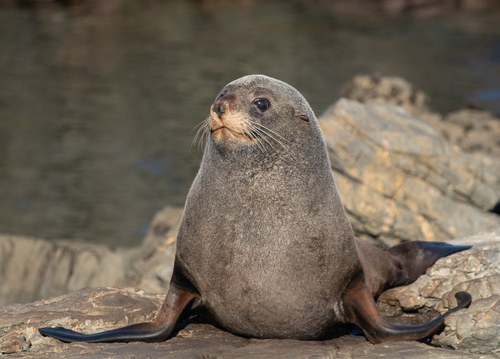
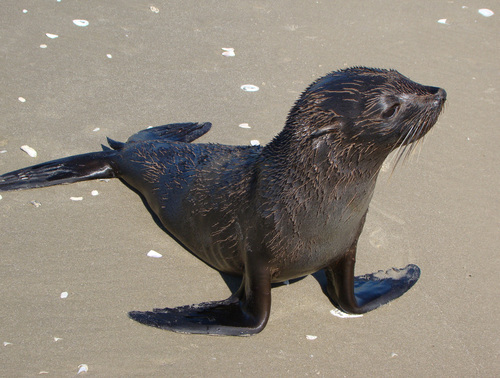
Other species in the genus Arctocephalus
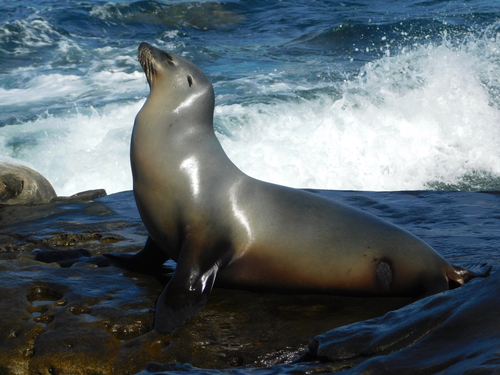
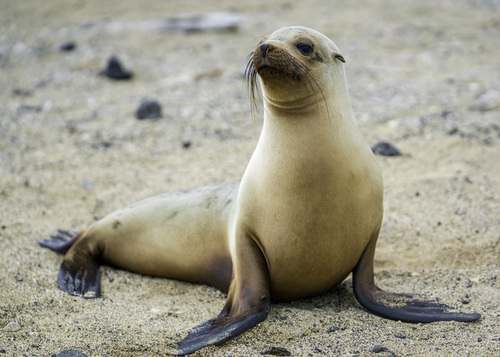
Other species in the family Otariidae
Species that share its range
Sources
Conservation status, range description and population estimate come from the IUCN Red List assessment for Arctocephalus philippii. Countries are derived from that range description, not from a mapped country list. Last refreshed on .
The distribution map is drawn from the IUCN Red List spatial data compiled in 2026. IUCN (International Union for Conservation of Nature)