
Galápagos Sea Lion
Zalophus wollebaeki
Red List assessment
Endangeredon the IUCN Red List
- EXExtinct
- EWExtinct in the Wild
- CRCritically Endangered
- ENEndangered
- VUVulnerable
- NTNear Threatened
- LCLeast Concern
The Galápagos Sea Lion is recorded in one country, Ecuador across South America. The IUCN Red List assesses the Galápagos Sea Lion as Endangered. Approximately 20,000-50,000 individuals, with population trends fluctuating significantly due to El Niño events; overall considered declining or unstable.
- Family
- Otariidae
- Order
- Carnivora
- Genus
- Zalophus
- Countries recorded
- 1
- Continents
- South America
- Red List category
- Endangered
- Data updated
- August 9, 2026
What is the Galápagos Sea Lion?
The Galápagos sea lion is a medium-sized eared seal endemic to the Galápagos Archipelago, with a small population also found on Isla de la Plata off Ecuador. It is one of the most iconic and approachable marine mammals in the world, famous for its curiosity and tolerance of human presence. This species plays a key role in the marine ecosystem of the Galápagos as both predator and prey. It is listed as Endangered due to its restricted range and vulnerability to environmental fluctuations like El Niño events.
Where does the Galápagos Sea Lion live?
Galápagos Islands, Ecuador
Endemic to the Galápagos Islands, Ecuador, with a small breeding colony on Isla de la Plata near the Ecuadorian mainland. Found throughout the archipelago's coastlines including islands such as Fernandina, Isabela, Santa Cruz, and San Cristóbal.
Altitude and depth
Primarily coastal and shallow marine waters, diving to depths of 30-60m typically, though capable of dives exceeding 200m; haul-out sites are at sea level.
Seasonal movements
Breeding season occurs primarily from May to January, peaking between June and December depending on the colony. Population dynamics fluctuate significantly with El Niño/La Niña cycles affecting food availability.
Habitat of the Galápagos Sea Lion
Rocky and sandy shorelines, tide pools, sea caves, and shallow coastal waters surrounding volcanic islands. They haul out on beaches and lava rock formations for resting, breeding, and thermoregulation.
Adaptations to its environment
Streamlined body and strong fore-flippers allow agile swimming and diving for fish in nutrient-rich Galápagos waters. Thick blubber layer and short dense fur provide insulation, while their ability to fast during breeding season and thermoregulate on land aid survival in a variable tropical-subtropical environment.
Conservation status and numbers
Endangered (EN) according to IUCN, primarily due to a small, fragmented population highly susceptible to climatic events like El Niño, which can cause mass mortality through food shortages. Population has experienced significant declines historically and remains vulnerable to stochastic environmental events.
Estimated population
Approximately 20,000-50,000 individuals, with population trends fluctuating significantly due to El Niño events; overall considered declining or unstable.
What threatens the Galápagos Sea Lion?
El Niño-Southern Oscillation events causing food scarcity, disease outbreaks, marine pollution, entanglement in fishing gear, and predation by introduced species. Climate change-driven ocean warming poses a growing long-term threat.
Diseases and parasites
Susceptible to diseases such as leptospirosis, hookworm infections in pups, and pathogens transmitted from domestic dogs, including canine distemper virus concerns. Parasitic infections can significantly affect pup survival rates.
What is being done to protect it?
Protected within the Galápagos National Park and Galápagos Marine Reserve, with strict regulations on human interaction and fishing activities. Ongoing research and monitoring programs track population health and disease.
Recommended actions
Strengthen marine protected area enforcement, reduce bycatch in local fisheries, monitor and mitigate disease transmission from domestic animals, and continue long-term population monitoring amid climate variability.
What the Galápagos Sea Lion looks like
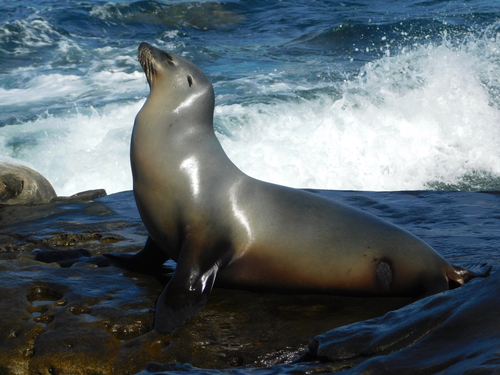
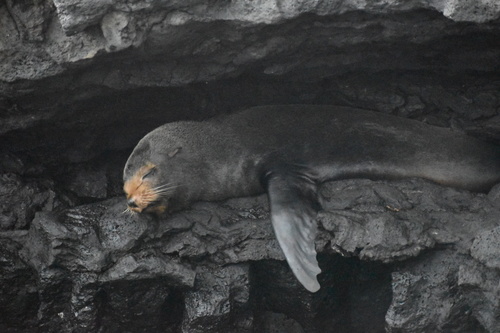
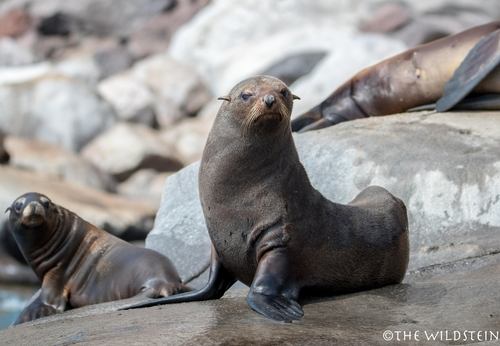
Sleek, short fur ranging from dark brown in males to a lighter tan or golden-brown in females and juveniles. Males develop a pronounced sagittal crest on the forehead as they mature, giving them a distinctive bulging head shape.
Size
Males reach 180-250 cm in length; females are smaller, typically 150-200 cm.
Weight
Adult males weigh 200-250 kg; females weigh considerably less, around 50-110 kg.
Distinctive features
Distinguished from the closely related California sea lion by smaller body size, a more slender skull, and generally lighter coloration in females. Their playful, curious behavior around humans and boats is also notably more pronounced.
Differences between males and females
Pronounced sexual dimorphism: males are significantly larger and heavier than females, with a bulkier build and a prominent bony head crest absent or less developed in females.
Behaviour and diet of the Galápagos Sea Lion
Highly social animals forming colonies on beaches, with dominant males establishing and defending territories during breeding season. Females and juveniles often form loose social groups, and animals frequently interact playfully both in water and on land.
When it is active
Diurnal and crepuscular, with peak foraging activity in early morning and late afternoon; they rest and socialize on beaches during midday heat.
Diet
Primarily piscivorous, feeding on sardines, anchovies, mackerel, and squid found in the nutrient-rich Galápagos waters. Diet varies with prey availability, which is strongly influenced by oceanic conditions.
How it feeds and hunts
Forage individually or in small groups, using agile swimming and diving to pursue schooling fish; often hunt cooperatively near upwelling zones where prey concentrates.
Communication
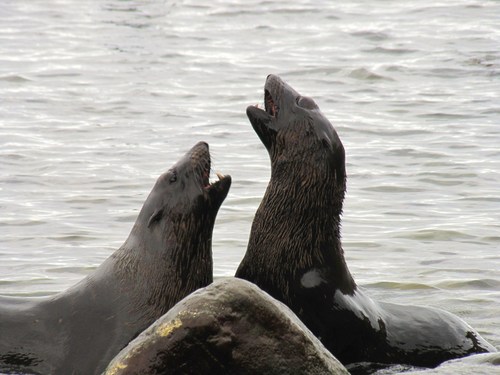
Communicate through vocalizations such as barks, growls, and grunts, especially during territorial disputes and mother-pup interactions. Body postures and scent play secondary roles in communication and individual recognition.
Interactions with other species
Natural predators include sharks (especially Galápagos sharks) and orcas; they compete with seabirds and other marine predators for fish resources. They also share habitats with marine iguanas and other endemic species, generally coexisting peacefully.
Role in its ecosystem
Serve as an important mid-level predator in the Galápagos marine food web, helping regulate fish populations while serving as prey for sharks. Their presence indicates the health of coastal marine ecosystems.
Reproduction and lifecycle
Breeding occurs mostly between May and January; gestation lasts about 11 months, with females giving birth to a single pup. Mating occurs shortly after birth, allowing for delayed implantation to synchronize future births with favorable conditions.
Raising the young
Mothers provide extensive care, nursing pups for up to 1-3 years, alternating between nursing on land and foraging trips at sea. Pups remain closely bonded to mothers and rely on vocal and scent recognition for reunions.
Maturity and lifespan
Females reach sexual maturity around 4-5 years, males later around 8-9 years due to competition for territory. Lifespan in the wild is typically 15-20 years.
Taxonomy and naming of the Galápagos Sea Lion
Classification
Class Mammalia > Order Carnivora > Family Otariidae > Genus Zalophus > Species Zalophus wollebaeki
Scientific synonyms
Formerly classified as a subspecies of Zalophus californianus (Zalophus californianus wollebaeki)
What research says
Recent studies
Recent research has focused on the impacts of climate change and El Niño events on population dynamics, as well as disease surveillance related to interactions with domestic animals on inhabited islands.
Genome and DNA
Diploid chromosome number is 2n=36, similar to other otariid seals; genetic studies confirm its status as a distinct species from Zalophus californianus, having diverged due to geographic isolation.
Compared with similar species
Similar to the California sea lion (Zalophus californianus) and Japanese sea lion (Zalophus japonicus, extinct), but smaller in size and adapted to a tropical rather than temperate environment. The Galápagos sea lion is also generally more approachable and less wary of humans.
The Galápagos Sea Lion and people
Galápagos sea lions are known to playfully interact with snorkelers and divers, often mimicking human movements underwater. They can dive to depths of over 200 meters despite their coastal lifestyle, and some individuals have been observed resting on park benches or boats in populated areas.
Where and how to see it
Best observed on beaches and coastal areas throughout the Galápagos Islands, particularly on San Cristóbal, Santa Fe, and Española, where large colonies haul out. Early morning or late afternoon offers the best chances to see active foraging and playful behavior, and snorkeling allows close encounters with curious individuals.
Risks to humans
Generally low risk, though large males can become aggressive and bite if approached too closely, especially during breeding season. Visitors are advised to maintain a respectful distance to avoid provoking defensive behavior.
Human uses
Not commercially exploited today; the species is primarily valued for ecotourism, drawing wildlife enthusiasts to the Galápagos for close wildlife encounters.
Countries where the Galápagos Sea Lion is recorded
The 1 countries named in the range description of its IUCN Red List assessment.
Questions about the Galápagos Sea Lion
Where does the Galápagos Sea Lion live?
The Galápagos Sea Lion is recorded in Ecuador across South America. These countries come from the range description of its IUCN Red List assessment, and they are what place the species on the interactive map.
Is the Galápagos Sea Lion endangered?
Yes. The IUCN Red List assesses the Galápagos Sea Lion as Endangered, one of the three threatened categories. The species faces a very high risk of extinction in the wild — a step below Critically Endangered, but still on a trajectory that ends badly without intervention.
How many are left in the wild?
Approximately 20,000-50,000 individuals, with population trends fluctuating significantly due to El Niño events; overall considered declining or unstable. This figure comes from the species assessment on the IUCN Red List; population estimates for wild mammals are ranges, not counts, and are revised at each assessment.
What habitat does the Galápagos Sea Lion live in?
Rocky and sandy shorelines, tide pools, sea caves, and shallow coastal waters surrounding volcanic islands.
What is the scientific name of the Galápagos Sea Lion?
The Galápagos Sea Lion is Zalophus wollebaeki, in the family Otariidae, order Carnivora.
Other species in the genus Zalophus
Other species in the family Otariidae
Species that share its range
Sources
Conservation status, range description and population estimate come from the IUCN Red List assessment for Zalophus wollebaeki. Countries are derived from that range description, not from a mapped country list. Last refreshed on .
The distribution map is drawn from the IUCN Red List spatial data compiled in 2015. Fritz Trillmich