
Guadalupe Fur Seal
Arctocephalus townsendi
Red List assessment
Least Concernon the IUCN Red List
- EXExtinct
- EWExtinct in the Wild
- CRCritically Endangered
- ENEndangered
- VUVulnerable
- NTNear Threatened
- LCLeast Concern
The Guadalupe Fur Seal is recorded in 3 countries across North America. The IUCN Red List assesses the Guadalupe Fur Seal as Least Concern. Estimated at approximately 20,000–35,000 individuals as of the most recent assessments (ca.
- Family
- Otariidae
- Order
- Carnivora
- Genus
- Arctocephalus
- Countries recorded
- 3
- Continents
- North America
- Red List category
- Least Concern
- Data updated
- August 9, 2026
What is the Guadalupe Fur Seal?
The Guadalupe Fur Seal is a medium-to-large eared seal (family Otariidae) endemic to the eastern North Pacific, with its primary breeding colony on the remote Guadalupe Island off Baja California, Mexico. It is remarkable as one of the great conservation recovery stories of the 20th century, having been driven to presumed extinction by commercial sealing and then rediscovered in 1954 with only a handful of individuals remaining. The species has since rebounded strongly and is now listed as Least Concern by the IUCN. It is distinguished from other fur seals by its notably long, pointed snout and large eyes adapted for deep foraging dives.
Where does the Guadalupe Fur Seal live?
Primarily breeds on Guadalupe Island (Isla Guadalupe), Baja California, Mexico; forages across the eastern North Pacific Ocean from Mexico to Oregon, Washington, and occasionally British Columbia
The core breeding colony is located on Guadalupe Island (~29°N, 118°W), Mexico, with smaller and growing colonies on the San Benito Archipelago (Islas San Benito). Outside the breeding season, individuals range widely across the northeastern Pacific, with regular sightings along the coasts of California, Oregon, and Washington (USA), and occasionally as far north as British Columbia, Canada.
Altitude and depth
Foraging dives typically range from 30 to 200 m depth, with recorded maximum dives exceeding 400 m. Haul-out sites are at sea level on rocky shores.
Seasonal movements
Breeding and pupping occur from June to August on Guadalupe Island, when males establish and defend territories. After the breeding season, adults disperse to pelagic foraging grounds across the eastern North Pacific and may travel thousands of kilometers. A brief delayed implantation (blastocyst diapause) occurs after mating.
Habitat of the Guadalupe Fur Seal
Rocky coastlines and sea caves on offshore volcanic islands for breeding and hauling out. Open ocean pelagic habitat for foraging, preferring cool, productive waters influenced by the California Current. Rocky intertidal and subtidal zones are used for resting between foraging bouts.
Adaptations to its environment
Possesses a thick, double-layered fur coat (dense underfur overlaid by guard hairs) providing excellent thermal insulation in cold Pacific waters. Enlarged eyes facilitate low-light, deep-water foraging. Hind flippers can be rotated forward, enabling agile locomotion on land. A streamlined body and powerful fore-flippers allow efficient swimming and deep diving.
Conservation status and numbers
Least Concern (LC) on the IUCN Red List (assessed 2016). The species recovered from near-extinction following the cessation of commercial sealing, and the population trend is increasing. It was previously listed as Vulnerable before the population recovery became well established.
Estimated population
Estimated at approximately 20,000–35,000 individuals as of the most recent assessments (ca. 2015–2020), with a steadily increasing trend. This is a dramatic recovery from fewer than 100 animals estimated in the mid-20th century.
What threatens the Guadalupe Fur Seal?
Climate variability and El Niño–Southern Oscillation (ENSO) events can drastically reduce prey availability, causing pup mortality and adult starvation. Incidental entanglement in fishing gear (bycatch) poses a mortality risk. Marine pollution (plastic ingestion, chemical contaminants) is an emerging concern. Historical overhunting by commercial sealers in the 18th–19th centuries nearly caused extinction.
Diseases and parasites
Subject to infection by calicivirus (San Miguel Sea Lion Virus), leptospirosis, and various helminth parasites (nematodes, cestodes) common to otariids. Hookworm (Uncinaria spp.) infestations in pups can cause significant mortality. Domoic acid toxicosis from harmful algal blooms has been recorded. Mites and lice are common external parasites.
What is being done to protect it?
Guadalupe Island is protected as a Mexican Biosphere Reserve (Reserva de la Biosfera Isla Guadalupe) since 2005. The species is protected under Mexican federal law, the US Marine Mammal Protection Act (MMPA) of 1972, and is listed on CITES Appendix I, prohibiting international commercial trade. Regular population monitoring programs are conducted by CONANP (Mexico's National Commission of Natural Protected Areas).
Recommended actions
Continued long-term monitoring of breeding colonies on Guadalupe and San Benito Islands. Mitigation of bycatch in longline and net fisheries in the eastern Pacific. Strengthened enforcement against illegal fishing within the Guadalupe Island Biosphere Reserve. Research into prey availability changes under climate change scenarios to anticipate future population vulnerabilities.
What the Guadalupe Fur Seal looks like
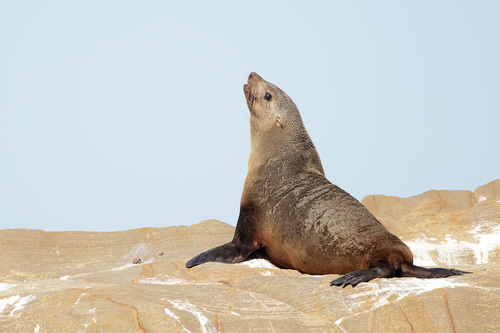
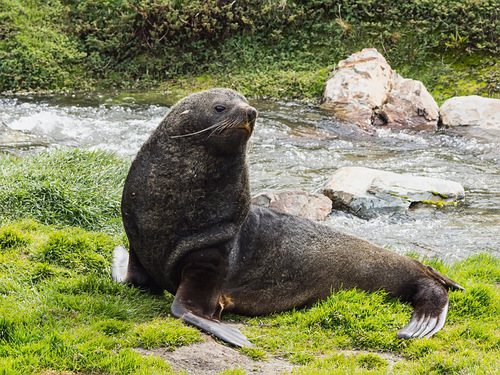
Adult males are dark chocolate-brown to nearly black overall, with a coarser, lighter-tipped mane of elongated guard hairs on the neck and shoulders. Females and subadults are lighter brown on the back, with a pale grayish-tan to yellowish underside and throat. The snout is distinctively long and pointed, and the ears are large and prominent. The eyes are notably large and dark.
Size
Adult males: 1.8–2.4 m total length. Adult females: 1.2–1.6 m total length. Pups at birth: approximately 60–65 cm.
Weight
Adult males: 130–200 kg. Adult females: 40–55 kg. Newborn pups: approximately 3.5–4.5 kg. Pronounced sexual size dimorphism.
Distinctive features
The exceptionally long, tapered snout is the most distinctive trait separating A. townsendi from its closest relative, the Juan Fernández Fur Seal (A. philippii). The prominent, pale mane in males and the very large eyes are also characteristic. Compared to the California Sea Lion (Zalophus californianus) which shares its range, the Guadalupe Fur Seal is smaller, has a more pointed snout, and possesses the thick underfur characteristic of true fur seals.
Differences between males and females
Extreme sexual dimorphism: adult males are 3–4 times heavier than females and considerably longer. Males develop a thick, shaggy mane on the neck and shoulders and are much darker in coloration. Females are substantially smaller and more slender with a uniformly brown appearance.
Behaviour and diet of the Guadalupe Fur Seal
Polygynous and seasonally colonial during breeding; males are highly territorial and compete intensely for prime rocky haul-out sites to attract females. Outside the breeding season, individuals are largely solitary at sea, though small aggregations may form at productive feeding areas. Non-breeding males and females may form loose groups at non-breeding haul-out sites.
When it is active
Active at all hours (arrhythmic), though foraging dives frequently occur at night when mesopelagic prey (squid, myctophid fish) migrate toward the surface. Haul-out and resting behavior on land is most common during daylight hours.
Diet
Carnivorous piscivore and teuthivore (squid-eater). The diet consists primarily of mesopelagic squid (e.g., Dosidicus gigas, various Enoploteuthidae) and small mesopelagic fish, especially myctophids (lanternfishes). Diet composition varies with season, location, and prey availability, which is strongly influenced by oceanographic conditions.
How it feeds and hunts
Active pursuit diver; uses its large eyes to detect bioluminescent prey in mesopelagic twilight zones. Forages primarily at night when squid and lanternfishes undertake diel vertical migrations toward the surface. Uses sensitive vibrissae (whiskers) to detect hydrodynamic disturbances from prey in low-visibility conditions.
Communication
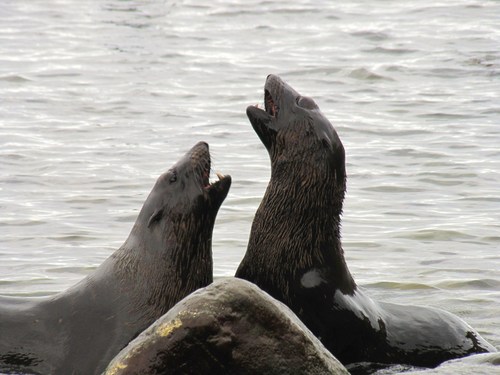
Both sexes and pups produce a variety of vocalizations. Adult males emit loud barks and roars during territorial disputes. Mother–pup pairs use high-pitched bleating calls to locate each other in the colony. Females give threatening vocalizations to intruding pups. Tactile and olfactory cues (scent recognition) are critical for mother–pup bonding.
Interactions with other species
Primary predators include great white sharks (Carcharodon carcharias) and killer whales (Orcinus orca). On Guadalupe Island, it shares habitat and may compete for space and prey with California sea lions (Zalophus californianus) and northern elephant seals (Mirounga angustirostris). Cleaner wrasses and other reef fish may remove ectoparasites near rocky haul-outs.
Role in its ecosystem
A mid-trophic level marine predator linking mesopelagic fish and squid communities to higher predators such as sharks and killer whales. By transporting nutrients from offshore pelagic foraging grounds to nearshore breeding islands (via excretion and carcasses), it contributes to island ecosystem productivity. Plays a role in regulating populations of mesopelagic prey species.
Reproduction and lifecycle
Breeding season runs from mid-June to late July on Guadalupe Island. Males arrive first to establish territories; females arrive shortly thereafter and give birth within days of arrival. After birth, females mate again approximately 7–10 days postpartum. Gestation lasts approximately 11.5–12 months, including a period of delayed implantation (blastocyst diapause) of roughly 3–4 months. A single pup is born per female per year.
Raising the young
Females provide all direct parental care. After birth, females alternate between foraging trips at sea (lasting several days) and nursing bouts on land. Pups are nursed for approximately 8–12 months. Females recognize their own pup by vocalizations and scent among the crowded colony. Males provide no parental care.
Maturity and lifespan
Females reach sexual maturity at 3–5 years of age; males reach social maturity and begin successfully holding territories at 8–12 years, although physiological maturity occurs earlier. Lifespan in the wild is estimated at 20–25 years. Captive longevity data are limited for this species.
Taxonomy and naming of the Guadalupe Fur Seal
Classification
Mammalia > Carnivora > Otariidae > Arctocephalus > Arctocephalus townsendi
Scientific synonyms
Callorhinus townsendi (Merriam, 1897); formerly sometimes treated as a subspecies of the Juan Fernández Fur Seal as Arctocephalus philippii townsendi.
What research says
Recent studies
Recent studies (2010s–2020s) have used GPS and satellite telemetry to characterize foraging trip distances and diving behavior, revealing regular deep mesopelagic dives and long-distance migrations. Population surveys using photographic mark-recapture and aerial counts have confirmed continued population growth. Stable isotope analyses have clarified seasonal and sex-related variation in foraging ecology.
Genome and DNA
The diploid chromosome number is 2n = 36, consistent with other Arctocephalus species. Genetic studies of the recovered population have documented low genetic diversity, consistent with a severe historical bottleneck, but no evidence of inbreeding depression sufficient to threaten recovery. Mitochondrial DNA analyses support A. townsendi as a distinct species from A. philippii.
Compared with similar species
Most closely related to the Juan Fernández Fur Seal (Arctocephalus philippii) of the South Pacific, from which it is distinguished by its more northerly range, longer snout, and larger body size. Compared to the Northern Fur Seal (Callorhinus ursinus), which overlaps in foraging habitat, A. townsendi has a more southerly breeding range, a longer snout, and belongs to the southern fur seal genus Arctocephalus. The Guadalupe Fur Seal is notably more slender and longer-snouted than sympatric California sea lions.
The Guadalupe Fur Seal and people
The Guadalupe Fur Seal was declared extinct in the early 20th century after commercial sealers reduced its population to perhaps only a handful of survivors — yet it rebounded to tens of thousands of animals, making it one of the most dramatic wildlife recoveries on record. Males are capable of fasting for weeks during the breeding season while defending territories, surviving entirely on fat reserves without eating or drinking. Their exceptionally large eyes — unusually large even relative to body size for an otariid — are thought to be an adaptation for detecting bioluminescent squid at depths of several hundred meters in near-total darkness.
Where and how to see it
The best and essentially only reliable place to observe breeding Guadalupe Fur Seals is on Guadalupe Island, Mexico, accessible via permitted scientific or conservation expeditions (tourist access is strictly regulated within the biosphere reserve). The peak breeding season of June–August offers the highest density of animals ashore. Non-breeding individuals can occasionally be spotted hauled out on rocks along the coasts of southern and central California, or at sea from pelagic birding/marine mammal watch vessels operating off the US Pacific coast, particularly during winter and spring.
Risks to humans
No notable risk to humans under normal circumstances. Like all large pinnipeds, adult males can inflict serious bites if provoked or cornered on land; maintaining a safe distance is essential. No venomous or disease-transmission risk documented beyond occupational exposure for researchers.
Human uses
Historically, Guadalupe Fur Seals were intensively hunted by commercial sealers from the late 18th through the early 20th century for their dense, valuable underfur pelts, which nearly caused their extinction. Commercial exploitation is now entirely prohibited by Mexican and US law and by CITES. The species currently holds ecotourism value for marine wildlife enthusiasts and contributes to scientific research on pinniped population recovery and ecology.
Myths and legends
No well-documented indigenous myths or legends specifically associated with the Guadalupe Fur Seal are known, likely due to the remote and historically difficult-to-access nature of Guadalupe Island. The island itself holds cultural significance for Baja California and is sometimes associated with stories of shipwrecks and isolation among Mexican maritime heritage.
Countries where the Guadalupe Fur Seal is recorded
The 3 countries named in the range description of its IUCN Red List assessment.
Questions about the Guadalupe Fur Seal
Where does the Guadalupe Fur Seal live?
The Guadalupe Fur Seal is recorded in Canada, Mexico and United States across North America. These countries come from the range description of its IUCN Red List assessment, and they are what place the species on the interactive map.
Is the Guadalupe Fur Seal endangered?
The IUCN Red List assesses the Guadalupe Fur Seal as Least Concern. The species is widespread and abundant enough not to qualify for any threatened category. It does not mean the species is safe forever, only that nothing in the current data raises an alarm.
How many are left in the wild?
Estimated at approximately 20,000–35,000 individuals as of the most recent assessments (ca. This figure comes from the species assessment on the IUCN Red List; population estimates for wild mammals are ranges, not counts, and are revised at each assessment.
What habitat does the Guadalupe Fur Seal live in?
Rocky coastlines and sea caves on offshore volcanic islands for breeding and hauling out.
What is the scientific name of the Guadalupe Fur Seal?
The Guadalupe Fur Seal is Arctocephalus townsendi, in the family Otariidae, order Carnivora.
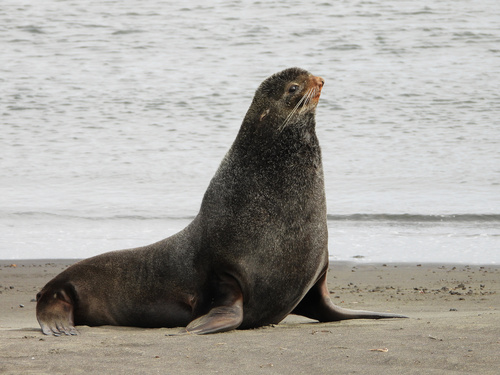
Other species in the genus Arctocephalus
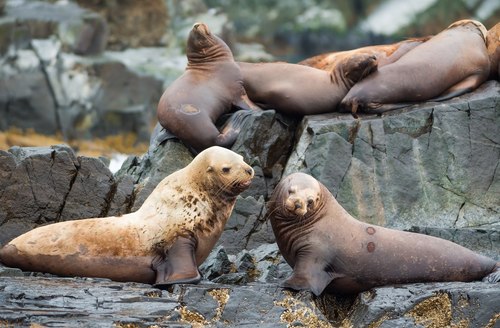
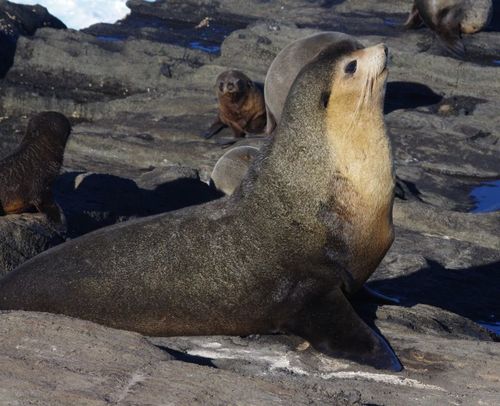
Other species in the family Otariidae
Species that share its range
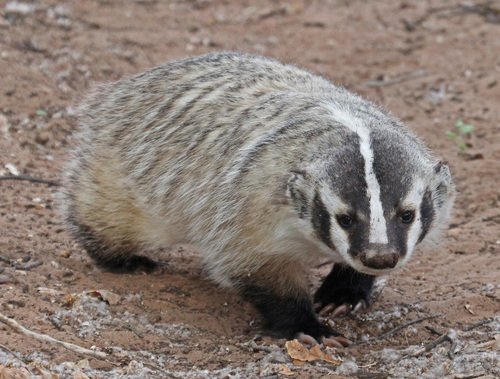
Sources
Conservation status, range description and population estimate come from the IUCN Red List assessment for Arctocephalus townsendi. Countries are derived from that range description, not from a mapped country list. Last refreshed on .
The distribution map is drawn from the IUCN Red List spatial data compiled in 2015. David Aurioles