
Californian Sea Lion
Zalophus californianus
Red List assessment
Least Concernon the IUCN Red List
- EXExtinct
- EWExtinct in the Wild
- CRCritically Endangered
- ENEndangered
- VUVulnerable
- NTNear Threatened
- LCLeast Concern
The Californian Sea Lion is recorded in 2 countries across North America. The IUCN Red List assesses the Californian Sea Lion as Least Concern. Approximately 250,000-300,000 individuals, with the population considered stable to increasing, particularly in U.S.
- Family
- Otariidae
- Order
- Carnivora
- Genus
- Zalophus
- Countries recorded
- 2
- Continents
- North America
- Red List category
- Least Concern
- Data updated
- August 9, 2026
What is the Californian Sea Lion?
The California sea lion is a highly intelligent, agile pinniped found along the Pacific coast of North America, from Mexico to Canada. Known for its playful behavior, loud barking calls, and frequent appearances in zoos and marine parks, it is one of the most recognizable marine mammals. It is a highly social species, often seen in large colonies on beaches, rocks, and man-made structures like docks and buoys. Its adaptability to human environments has made it a familiar sight in coastal cities such as San Francisco.
Where does the Californian Sea Lion live?
Western coasts of North America, from the Gulf of California and Baja California through California to British Columbia; also found in the Galápagos Islands (separate subspecies).
Ranges along the Pacific coast from the Gulf of California and Baja California, Mexico, through California, to as far north as British Columbia, Canada, particularly during non-breeding season. Major breeding rookeries are located on Channel Islands (California) and islands in the Gulf of California.
Altitude and depth
Primarily coastal and pelagic; dives typically range from 20-100m, but can reach depths of up to 274m during foraging trips.
Seasonal movements
Breeding season occurs from May to July, with males establishing and defending territories on rookeries. Outside the breeding season, especially in fall and winter, many individuals (particularly males) migrate northward along the coast in search of food.
Habitat of the Californian Sea Lion
Coastal and marine habitats including sandy beaches, rocky shorelines, sea caves, and offshore islands; also frequents harbors, docks, and buoys in urbanized coastal areas. Breeding colonies are typically found on isolated islands and beaches away from major predators.
Adaptations to its environment
Streamlined body and strong flippers allow for agile swimming and diving; external ear flaps and rotating hind flippers enable efficient movement on land, unlike true seals. Thick blubber layer provides insulation in cold Pacific waters, and they can hold their breath for up to 10 minutes while diving for prey.
Conservation status and numbers
Listed as Least Concern by IUCN; population has recovered significantly since protections were implemented, particularly under the U.S. Marine Mammal Protection Act of 1972. Numbers have been increasing over recent decades, though localized threats persist.
Estimated population
Approximately 250,000-300,000 individuals, with the population considered stable to increasing, particularly in U.S. waters.
What threatens the Californian Sea Lion?
Entanglement in fishing gear, marine pollution (including plastic debris and toxic algal blooms causing domoic acid poisoning), habitat disturbance from human activity, and occasional conflicts with fisheries due to competition for fish stocks.
Diseases and parasites
Susceptible to domoic acid toxicosis from harmful algal blooms, leptospirosis, and various parasitic infections including hookworms and lungworms; outbreaks of these diseases have caused mass strandings in some years.
What is being done to protect it?
Protected under the U.S. Marine Mammal Protection Act (1972) and Mexican federal wildlife laws; monitored populations at Channel Islands National Park and other protected rookeries; rehabilitation centers such as The Marine Mammal Center actively treat sick and injured individuals.
Recommended actions
Continued monitoring of harmful algal bloom impacts, reduction of marine plastic pollution, mitigation of fishing gear entanglement through modified gear, and management of human-wildlife conflict in urban harbor areas.
What the Californian Sea Lion looks like
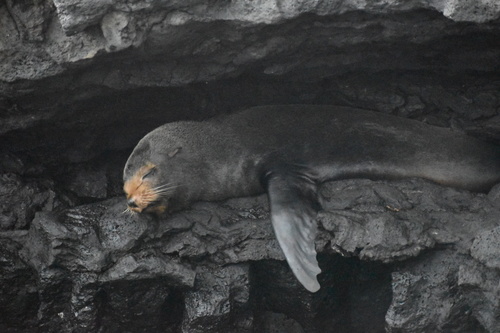
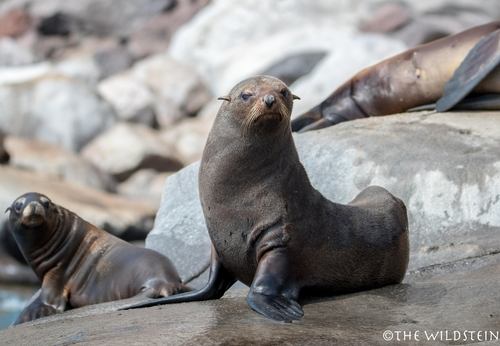
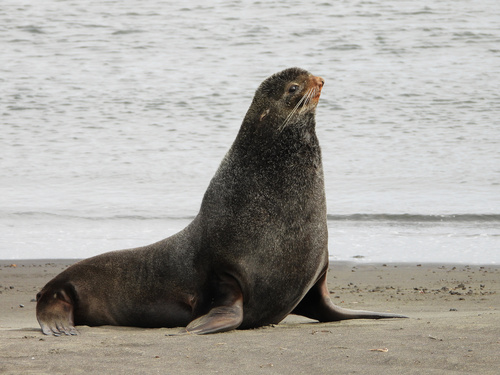
Sleek, streamlined body with a coat that is dark brown to black in males and lighter tan to brown in females; pups are born with a darker, woolly coat. Males develop a pronounced bony crest (sagittal crest) on the forehead as they mature, giving them a distinctive silhouette.
Size
Males: 200-250 cm in length; Females: 150-200 cm in length.
Weight
Males: 200-400 kg; Females: 50-110 kg, reflecting significant sexual size dimorphism.
Distinctive features
Distinguished from other sea lions by the male's prominent forehead crest, loud repetitive barking vocalizations, and relatively slender build compared to Steller sea lions. Their external ear flaps and ability to rotate hind flippers forward for walking distinguish them from true seals.
Differences between males and females
Pronounced sexual dimorphism: males are significantly larger and heavier than females, darker in color, and develop a distinctive sagittal crest on the head at sexual maturity; females remain smaller and lighter-colored throughout life.
Behaviour and diet of the Californian Sea Lion
Highly social and gregarious, forming large colonies that can number in the hundreds to thousands, especially during breeding season. Males establish and defend territories through vocal displays and physical confrontations, while females and juveniles often form loose social groups.
When it is active
Primarily diurnal but can be active both day and night, especially when foraging; often seen basking on land during the day and hunting in coastal waters, with some nocturnal foraging trips.
Diet
Carnivorous, feeding on a variety of fish and squid including anchovies, sardines, hake, and market squid; diet varies regionally and seasonally based on prey availability.
How it feeds and hunts
Hunts using agile underwater pursuit, relying on speed and maneuverability to catch fast-moving fish and squid; often forages cooperatively in groups and can dive repeatedly to depths exceeding 100m in search of prey.
Communication
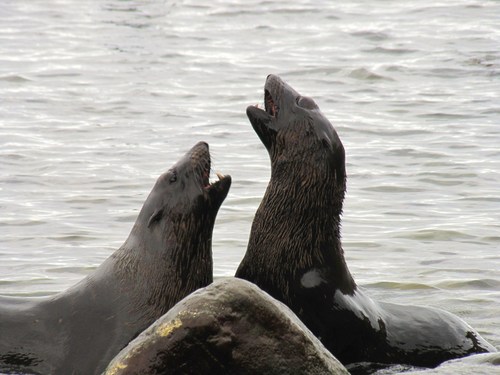
Communicates through loud, distinctive barking vocalizations, especially by territorial males; also uses body postures, head movements, and olfactory cues for individual and mother-pup recognition.
Interactions with other species
Preyed upon by great white sharks and orcas; competes with other pinnipeds and seabirds for fish resources; sometimes interacts with humans in fisheries and urban coastal environments, occasionally raiding fish catches.
Role in its ecosystem
Plays a role as a mid-to-upper level marine predator, helping regulate fish and squid populations; also serves as prey for large marine predators, linking coastal and pelagic food webs.
Reproduction and lifecycle
Breeding occurs from May to July; gestation lasts about 11 months including delayed implantation. Females give birth to a single pup per year and mate again shortly after giving birth.
Raising the young
Mothers provide sole parental care, nursing pups for 6-12 months while alternating between nursing bouts on land and foraging trips at sea; pups recognize their mothers through vocal calls and scent.
Maturity and lifespan
Females reach sexual maturity around 4-5 years, males around 5-8 years though they may not breed successfully until older; lifespan in the wild is typically 17-20 years, with some individuals reaching 25-30 years in captivity.
Taxonomy and naming of the Californian Sea Lion
Classification
Mammalia > Carnivora > Otariidae > Zalophus > Zalophus californianus
Subspecies
Zalophus californianus californianus (main population, Pacific coast of North America); the Galápagos sea lion (Zalophus wollebaeki) and the extinct Japanese sea lion (Zalophus japonicus) were formerly considered subspecies but are now recognized as distinct species.
Scientific synonyms
Otaria californiana, Zalophus californicus (older spelling variants used in historical literature).
What research says
Recent studies
Recent studies have focused on the cognitive abilities of California sea lions, including their capacity for logical reasoning and memory retention, as well as ongoing research into the impacts of domoic acid poisoning on brain function and behavior.
Genome and DNA
Diploid chromosome number is 2n=36; genetic studies have been used to assess population structure and connectivity between rookeries along the Pacific coast.
Compared with similar species
Similar in appearance to the Steller sea lion but notably smaller and darker in color, with a more prominent forehead crest in males; can be distinguished from true seals by their visible external ear flaps and ability to walk on land using rotated hind flippers.
The Californian Sea Lion and people
California sea lions are frequently trained for research and entertainment due to their high intelligence and trainability, including U.S. Navy programs using them for underwater object retrieval. They can dive to depths of over 250 meters and hold their breath for up to 10 minutes despite their active, energetic lifestyle.
Where and how to see it
Best observed at breeding rookeries such as those in the Channel Islands National Park, California, or at popular haul-out sites like Pier 39 in San Francisco, especially during the breeding season from May to July when large numbers gather.
Risks to humans
Generally low risk to humans, though bites can occur if animals are approached too closely or provoked, particularly by aggressive males during breeding season; can also carry zoonotic bacteria such as leptospira.
Human uses
Historically hunted for blubber and hides; now primarily valued for ecotourism, scientific research on cognition and physiology, and use in marine mammal training programs including U.S. Navy applications.
Myths and legends
Historically featured in Native American coastal folklore as symbols of playful, clever spirits; also commonly associated with circus and marine park imagery due to their trainability, contributing to modern popular perceptions of 'trained seals'.
Countries where the Californian Sea Lion is recorded
The 2 countries named in the range description of its IUCN Red List assessment.
Questions about the Californian Sea Lion
Where does the Californian Sea Lion live?
The Californian Sea Lion is recorded in Canada and Mexico across North America. These countries come from the range description of its IUCN Red List assessment, and they are what place the species on the interactive map.
Is the Californian Sea Lion endangered?
The IUCN Red List assesses the Californian Sea Lion as Least Concern. The species is widespread and abundant enough not to qualify for any threatened category. It does not mean the species is safe forever, only that nothing in the current data raises an alarm.
How many are left in the wild?
Approximately 250,000-300,000 individuals, with the population considered stable to increasing, particularly in U.S. This figure comes from the species assessment on the IUCN Red List; population estimates for wild mammals are ranges, not counts, and are revised at each assessment.
What habitat does the Californian Sea Lion live in?
Coastal and marine habitats including sandy beaches, rocky shorelines, sea caves, and offshore islands; also frequents harbors, docks, and buoys in urbanized coastal areas.
What is the scientific name of the Californian Sea Lion?
The Californian Sea Lion is Zalophus californianus, in the family Otariidae, order Carnivora.
Other species in the genus Zalophus
Other species in the family Otariidae
Species that share its range
Sources
Conservation status, range description and population estimate come from the IUCN Red List assessment for Zalophus californianus. Countries are derived from that range description, not from a mapped country list. Last refreshed on .
The distribution map is drawn from the IUCN Red List spatial data compiled in 2025. David Aurioles