
Inornate Squirrel
Callosciurus inornatus
Red List assessment
Least Concernon the IUCN Red List
- EXExtinct
- EWExtinct in the Wild
- CRCritically Endangered
- ENEndangered
- VUVulnerable
- NTNear Threatened
- LCLeast Concern
The Inornate Squirrel is recorded in 3 countries across Asia. The IUCN Red List assesses the Inornate Squirrel as Least Concern. No precise global population estimate exists, but the species is considered common within suitable habitat; overall population trend is believed to be stable, though regional declines are possible due to habitat degradation.
- Family
- Sciuridae
- Order
- Rodentia
- Genus
- Callosciurus
- Countries recorded
- 3
- Continents
- Asia
- Red List category
- Least Concern
- Data updated
- August 9, 2026
What is the Inornate Squirrel?
The Inornate Squirrel is a medium-sized arboreal rodent native to the forests of northern Indochina and southern China. It belongs to the diverse Callosciurus genus, known for colorful tree squirrels found throughout Southeast Asia. This species is notable for its relatively understated coloration compared to its more vividly patterned relatives, hence the name 'inornate.' It plays an important ecological role in forest regeneration through seed dispersal.
Where does the Inornate Squirrel live?
Northern Vietnam, Laos, and southern China (Yunnan Province)
Found in northern Vietnam, Laos, and southern China, particularly Yunnan Province. The range extends through the mountainous and forested regions of the northern Indochinese Peninsula, with the Golden Triangle area representing a core part of its distribution.
Altitude and depth
Typically found at elevations ranging from 200 to 1500 meters above sea level, though it may occur at slightly higher elevations in suitable forest habitat.
Seasonal movements
No true hibernation or long-distance migration occurs; the species remains active year-round, though foraging intensity may shift seasonally with fruit and seed availability.
Habitat of the Inornate Squirrel
Primarily inhabits subtropical and tropical evergreen and semi-evergreen forests, as well as secondary forests and forest edges. Also found in mixed deciduous forests at lower to mid elevations. Prefers areas with dense canopy cover for movement and nesting.
Adaptations to its environment
Possesses sharp curved claws and strong hind limbs adapted for climbing and leaping between tree branches. Its bushy tail aids in balance during arboreal locomotion and may help with thermoregulation. Coloration provides some camouflage against tree bark and foliage in its forest habitat.
Conservation status and numbers
Listed as Least Concern (LC) by the IUCN due to its relatively wide distribution and presumed stable population, though localized declines may occur due to habitat loss in parts of its range.
Estimated population
No precise global population estimate exists, but the species is considered common within suitable habitat; overall population trend is believed to be stable, though regional declines are possible due to habitat degradation.
What threatens the Inornate Squirrel?
Primary threats include deforestation and habitat fragmentation from logging, agricultural expansion, and infrastructure development. Hunting for local subsistence or pet trade may also pose localized pressure in some areas.
Diseases and parasites
Specific studies on diseases or parasites in this species are limited, but like other tree squirrels, it may host ectoparasites such as fleas and ticks, as well as internal parasites like nematodes.
What is being done to protect it?
The species occurs within several protected areas across its range in Vietnam, Laos, and China, including national parks and nature reserves that offer indirect protection through habitat preservation. No species-specific conservation programs are currently documented.
Recommended actions
Priority actions include monitoring population trends in fragmented habitats, protecting remaining forest corridors, and conducting further taxonomic and ecological studies to clarify subspecies boundaries and population status.
What the Inornate Squirrel looks like
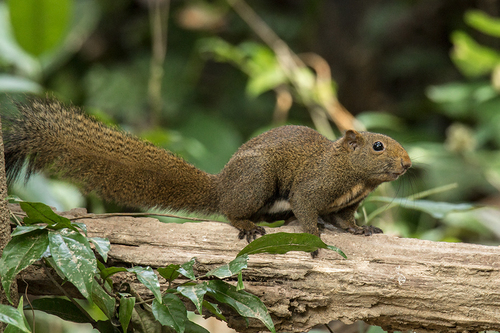
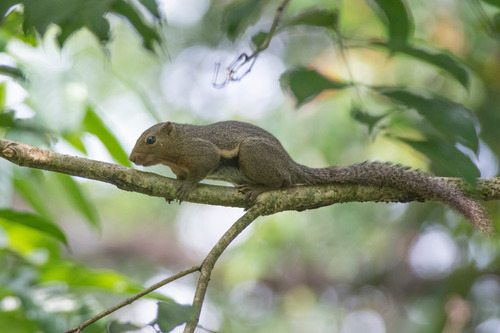
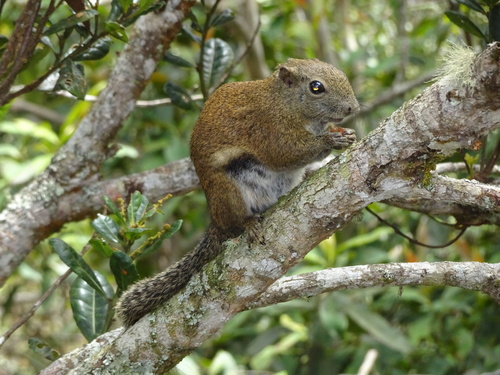
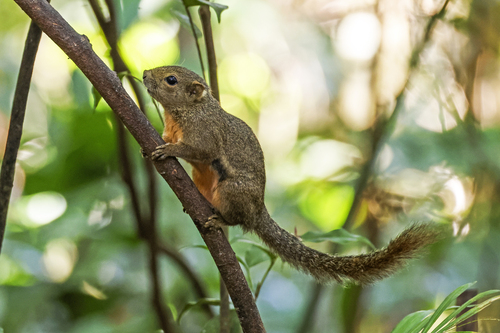
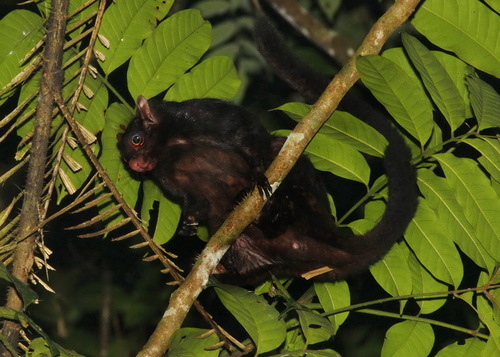
The Inornate Squirrel has a relatively plain grayish-brown to olive-brown dorsal coloration, with paler underparts ranging from cream to buff. Its fur lacks the bright reddish or multicolored patterns seen in some other Callosciurus species, giving it a more subdued appearance.
Size
Body length typically ranges from 20 to 24 cm, with a tail of similar or slightly greater length, often 18-22 cm, giving a total length of approximately 38-46 cm.
Weight
Adults typically weigh between 300 and 400 grams, with no significant difference reported between males and females.
Distinctive features
Distinguished from closely related Callosciurus species by its comparatively uniform and muted coat coloration, lacking prominent stripes or bright patches seen in species like the Pallas's squirrel. Subtle differences in skull morphology also help differentiate it taxonomically.
Behaviour and diet of the Inornate Squirrel
Generally solitary or found in loose pairs, particularly during breeding periods. Individuals maintain home ranges that may overlap with neighboring squirrels but show limited direct social interaction outside of mating and maternal care.
When it is active
Diurnal, with peak activity occurring in the early morning and late afternoon hours when foraging and movement through the canopy are most pronounced.
Diet
Omnivorous diet consisting primarily of fruits, seeds, nuts, and flowers, supplemented occasionally with insects, bird eggs, and other small invertebrates when available.
How it feeds and hunts
Forages by actively searching tree branches and forest floor for fruiting bodies, cracking open nuts and seeds with strong incisors; opportunistically catches insects or raids nests for eggs.
Communication
Communicates through a combination of vocal chirps and alarm calls, as well as tail-flicking and body posturing to signal threats or territorial boundaries to conspecifics.
Interactions with other species
Natural predators include raptors, small carnivores, and snakes; the species may compete with other arboreal squirrels and rodents for food resources within shared forest habitats.
Role in its ecosystem
Functions as an important seed disperser within its forest ecosystem, contributing to forest regeneration and plant diversity by transporting and caching seeds and nuts.
Reproduction and lifecycle
Breeding likely occurs year-round or with peaks tied to fruit abundance, though specific data for this species is limited. Gestation is estimated at around 40-45 days, typical for the genus, with litters usually consisting of 2-3 young.
Raising the young
Females are the primary caregivers, nursing and protecting young in tree nests or hollows until they are weaned and capable of independent foraging, typically over a period of two to three months.
Maturity and lifespan
Sexual maturity is likely reached around 8-12 months of age, similar to related Callosciurus species. Lifespan in the wild is estimated at 3-5 years, potentially longer in captivity with reduced predation pressure.
Taxonomy and naming of the Inornate Squirrel
Classification
Mammalia > Rodentia > Sciuridae > Callosciurus > Callosciurus inornatus
Subspecies
Several subspecies have been proposed including C. i. inornatus and C. i. concolor, primarily distinguished by minor pelage color variations across their range in Indochina, though taxonomy remains under review.
Scientific synonyms
Sciurus inornatus (original combination); has also been historically confused with or classified as closely related to Callosciurus erythraeus in some older taxonomic treatments.
What research says
Recent studies
Recent taxonomic studies using molecular data have sought to clarify the relationships between Callosciurus inornatus and closely related species, though comprehensive genetic studies remain limited compared to other more widely studied squirrel species.
Compared with similar species
Compared to the more widespread and colorful Pallas's squirrel (Callosciurus erythraeus), the Inornate Squirrel has a duller, more uniform coat and a somewhat more restricted geographic range confined to specific regions of Indochina and southern China.
The Inornate Squirrel and people
Its species name 'inornatus' literally means 'unadorned' or 'plain' in Latin, referencing its comparatively subdued coloration among the colorful Callosciurus squirrels. Despite its plain appearance, it plays a vital role in maintaining forest health through seed dispersal.
Where and how to see it
Best observed in early morning hours within evergreen or semi-evergreen forests of northern Vietnam or Yunnan Province, particularly in protected forest reserves with minimal human disturbance. Patience and quiet movement through forest trails increase chances of sighting.
Risks to humans
No notable risk to humans; the species is not known to be aggressive or a significant disease vector.
Human uses
Occasionally hunted for local subsistence in parts of its range, though it is not a major target species for trade or traditional medicine compared to other wildlife in the region.
Countries where the Inornate Squirrel is recorded
The 3 countries named in the range description of its IUCN Red List assessment.
Questions about the Inornate Squirrel
Where does the Inornate Squirrel live?
The Inornate Squirrel is recorded in China, Laos and Vietnam across Asia. These countries come from the range description of its IUCN Red List assessment, and they are what place the species on the interactive map.
Is the Inornate Squirrel endangered?
The IUCN Red List assesses the Inornate Squirrel as Least Concern. The species is widespread and abundant enough not to qualify for any threatened category. It does not mean the species is safe forever, only that nothing in the current data raises an alarm.
How many are left in the wild?
No precise global population estimate exists, but the species is considered common within suitable habitat; overall population trend is believed to be stable, though regional declines are possible due to habitat degradation. This figure comes from the species assessment on the IUCN Red List; population estimates for wild mammals are ranges, not counts, and are revised at each assessment.
What habitat does the Inornate Squirrel live in?
Primarily inhabits subtropical and tropical evergreen and semi-evergreen forests, as well as secondary forests and forest edges.
What is the scientific name of the Inornate Squirrel?
The Inornate Squirrel is Callosciurus inornatus, in the family Sciuridae, order Rodentia.
Other species in the genus Callosciurus
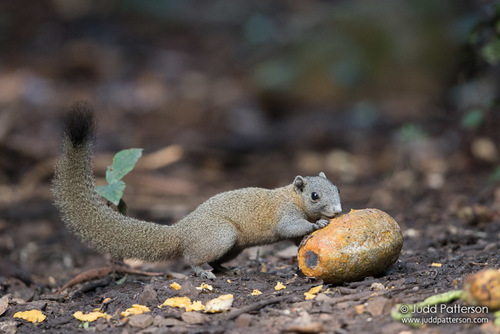
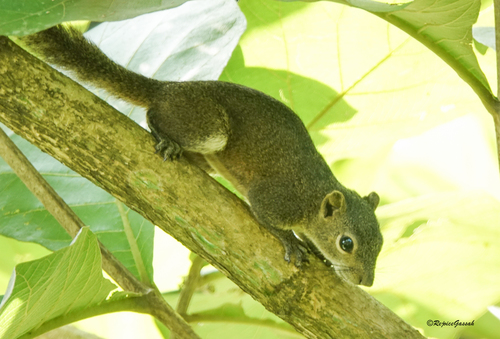
Other species in the family Sciuridae
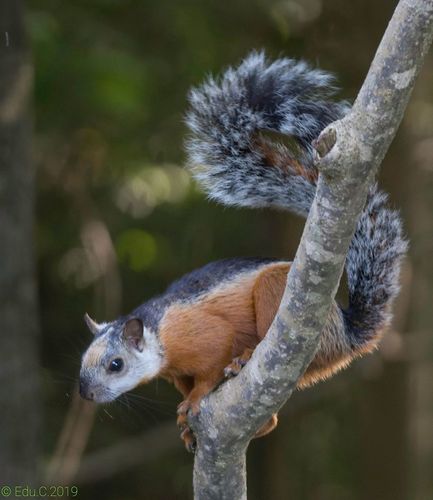
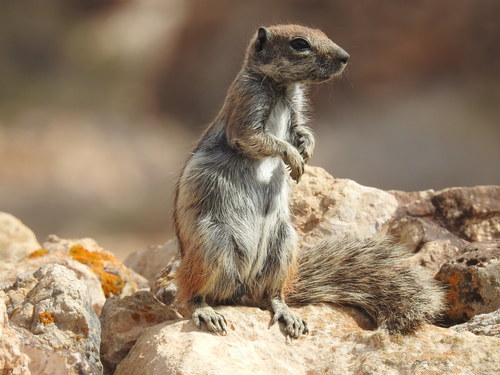
Sources
Conservation status, range description and population estimate come from the IUCN Red List assessment for Callosciurus inornatus. Countries are derived from that range description, not from a mapped country list. Last refreshed on .
The distribution map is drawn from the IUCN Red List spatial data compiled in 2008. IUCN (International Union for Conservation of Nature)