
Dark Fruit-eating Bat
Artibeus obscurus
Red List assessment
Least Concernon the IUCN Red List
- EXExtinct
- EWExtinct in the Wild
- CRCritically Endangered
- ENEndangered
- VUVulnerable
- NTNear Threatened
- LCLeast Concern
The Dark Fruit-eating Bat is recorded in 10 countries across North America and South America. The IUCN Red List assesses the Dark Fruit-eating Bat as Least Concern. No precise global population estimate exists; the species is considered common to abundant within its range.
- Family
- Phyllostomidae
- Order
- Chiroptera
- Genus
- Artibeus
- Countries recorded
- 10
- Continents
- North America and South America
- Red List category
- Least Concern
- Data updated
- August 9, 2026
What is the Dark Fruit-eating Bat?
Artibeus obscurus is a medium-sized neotropical fruit bat belonging to the family Phyllostomidae, characterized by its distinctly dark, almost blackish-brown pelage. It inhabits tropical and subtropical lowland rainforests across much of northern and central South America. It is ecologically remarkable as a key seed disperser and occasional pollinator, making it a cornerstone species for forest regeneration. Its ability to thrive across a range of forested habitats, from pristine primary forest to disturbed secondary growth, underlines its ecological flexibility.
Where does the Dark Fruit-eating Bat live?
Northern and central South America, including Colombia, Venezuela, Trinidad, Guyana, Suriname, French Guiana, Brazil, Ecuador, Peru, and Bolivia
Broadly distributed across northern and central South America: from Colombia, Venezuela, Trinidad and Tobago, through the Guiana Shield (Guyana, Suriname, French Guiana), southward through the Amazon Basin of Brazil, into eastern Peru, Ecuador, Bolivia, and reaching southeastern Brazil as far as Rio de Janeiro state.
Altitude and depth
Primarily found from sea level up to approximately 1,500 m elevation; most records come from lowland areas below 500 m, with occurrence declining at higher altitudes.
Seasonal movements
No long-distance seasonal migrations are documented. Activity levels and foraging behavior may shift slightly with seasonal changes in fruit availability. Reproductive timing is linked to rainfall seasonality and fruit abundance cycles.
Habitat of the Dark Fruit-eating Bat
Primarily lowland tropical rainforest, including terra firme and várzea (seasonally flooded) forest. Also found in secondary forests, forest edges, gallery forests, and occasionally plantations adjacent to natural forest. It shows a preference for structurally complex forests with abundant fruiting trees such as figs.
Adaptations to its environment
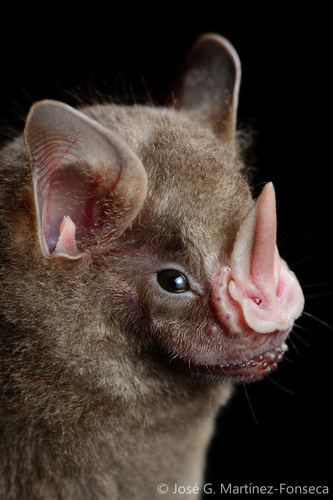
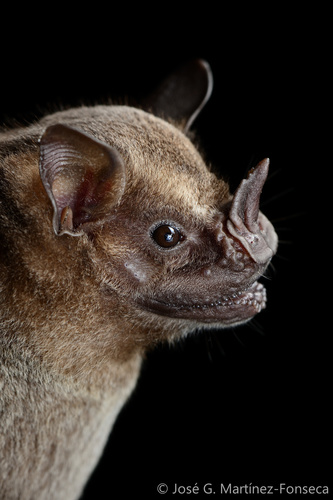
Possesses a characteristic leaf-nose (noseleaf) that assists in focusing echolocation calls for precise navigation within dense forest canopies. Its robust, short skull and strong jaw musculature are adapted for biting through tough fruit skin. Dark dorsal fur may provide camouflage against bark and shadowed foliage at roost sites. Like other Artibeus, it can enter brief periods of torpor during food scarcity.
Conservation status and numbers
Least Concern (LC) on the IUCN Red List. The species has a wide distribution, presumed large population, and tolerates some habitat disturbance. No major population-level declines have been documented sufficient to trigger a threatened category.
Estimated population
No precise global population estimate exists; the species is considered common to abundant within its range. Population trend is presumed stable, though subject to local declines in heavily deforested areas.
What threatens the Dark Fruit-eating Bat?
Deforestation and large-scale agricultural conversion (especially soy and cattle ranching) in the Amazon represent the primary long-term threats. Selective logging degrades roost and foraging habitat. Hunting bats for bushmeat occurs locally in some regions. Climate change may alter fruit phenology and reduce habitat suitability.
Diseases and parasites
Like other Neotropical bats, it can harbor bat flies (Diptera: Streblidae), mites (Acari), and intestinal helminths. Has been found to carry various bat-associated coronaviruses and other RNA viruses in surveillance studies, though disease transmission to humans has not been documented for this species specifically.
What is being done to protect it?
The species benefits from protection within numerous Amazonian protected areas and national parks (e.g., Parque Nacional da Amazônia in Brazil, Parque Nacional del Manu in Peru). Brazilian environmental legislation (Lei da Mata Atlântica, SNUC system) provides some indirect protection. International agreements such as CITES do not specifically list this species but regulate broader ecosystem protection.
Recommended actions
Expansion and strengthening of protected areas across the Amazon Basin. Monitoring of population trends through standardized bat survey programs. Reducing deforestation rates through enforcement of forest codes. Research into the species' specific roost requirements to guide habitat management. Public education programs to reduce persecution of bats.
What the Dark Fruit-eating Bat looks like
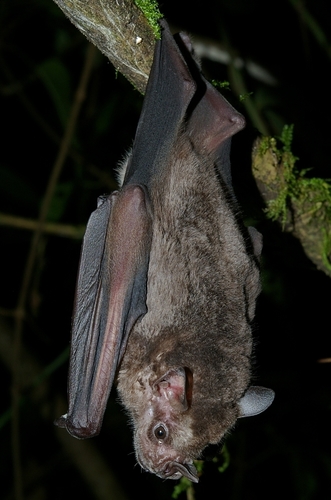
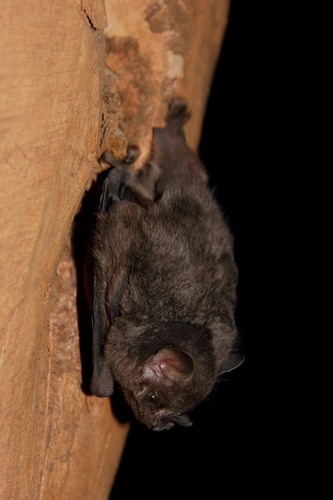
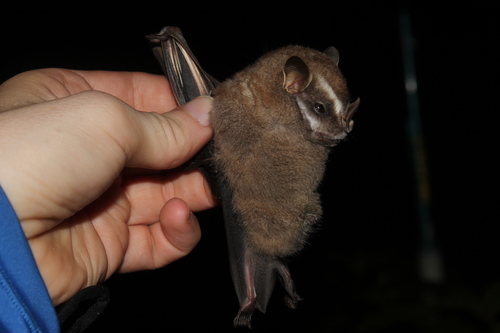
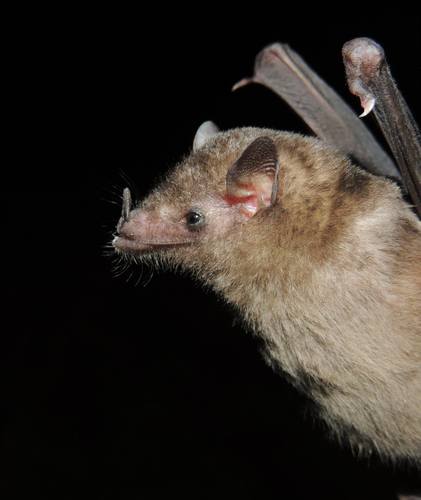
Dorsal fur is uniformly dark brown to blackish-brown, giving the species its common name. Ventral fur is slightly paler, grayish-brown. Pale supraorbital and suborbital facial stripes are present but typically faint and less conspicuous than in related species. Noseleaf is well-developed and triangular. Ears are moderately sized and pointed. Wings are dark and leathery, with a broad uropatagium.
Size
Head-body length approximately 70–90 mm; forearm length approximately 53–63 mm; wingspan approximately 33–38 cm. No externally visible tail.
Weight
Typically 30–60 grams; weight varies with sex, reproductive condition, and season.
Distinctive features
Distinguished from Artibeus lituratus and A. planirostris by its darker, more uniform blackish-brown coloration and less prominent facial stripes. Smaller overall than A. lituratus. Compared to A. jamaicensis, it is darker and the facial stripes are more subdued. The combination of dark pelage, faint facial stripes, and medium body size is diagnostic.
Differences between males and females
Sexual dimorphism is minimal in external appearance. Females may be slightly heavier than males during pregnancy and lactation. No notable differences in coloration or structure between sexes.
Behaviour and diet of the Dark Fruit-eating Bat
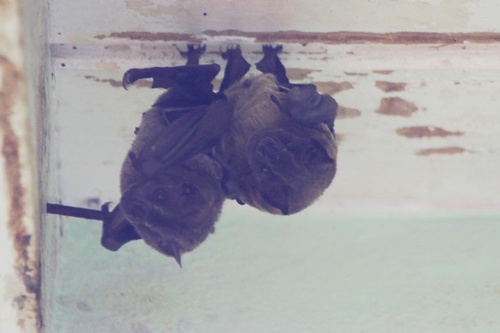
Colonial roosting species, typically forming small to medium harems consisting of one adult male, several adult females, and their offspring. Group sizes at a single roost generally range from 5 to 20 individuals. Dominant males defend roost sites and access to females. Solitary males are also known, occupying peripheral roosts.
When it is active
Strictly nocturnal. Foraging activity begins shortly after sunset and typically peaks in the first few hours of the night. A secondary foraging bout may occur before dawn. Daytime hours are spent roosting in sheltered sites.
Diet
Primarily frugivorous, with figs (Ficus spp.) constituting a major dietary component year-round. Also consumes fruits of Cecropia, Piper, Solanum, and other pioneer and canopy trees. Pollen, nectar, and insects are consumed opportunistically, particularly when fruits are scarce. Capable of carrying fruit items back to feeding roosts rather than consuming them at the plant.
How it feeds and hunts
Forages using a combination of echolocation and olfaction to locate ripe fruits within the forest canopy and understory. Approaches fruiting trees silently, hovers briefly to assess fruit suitability, then plucks the fruit mid-flight or while clinging momentarily to the plant. Transports fruit to a preferred feeding perch where it is consumed or partially eaten, with seeds dropped below.
Communication
Echolocation calls are frequency-modulated (FM) sweeps used for navigation and obstacle avoidance, typically in the 40–80 kHz range. Social vocalizations include audible clicks, squeaks, and chattering used within roost groups to signal dominance, alarm, or contact. Scent glands on the chest and throat are used for marking roost sites.
Interactions with other species
Natural predators include owls (especially Tyto and Strix species), arboreal snakes, and small felids. Competes for fruit resources with other frugivorous bats (e.g., Carollia, Sturnira) and frugivorous birds. Acts as a mutualistic seed disperser for dozens of plant species, many of which rely heavily on bats for seed dispersal and forest regeneration. May host ectoparasites such as bat flies (Streblidae) and mites.
Role in its ecosystem
Plays a critical ecological role as a primary seed disperser in Neotropical forests, facilitating the regeneration of early successional and canopy tree species. Contributes to pollination of some plant species. As prey, supports populations of aerial predators. Its foraging behavior helps maintain plant diversity and forest structure.
Reproduction and lifecycle
Exhibits bimodal polyestry, with two birth peaks per year correlated with dry seasons and peaks in fruit availability. Gestation lasts approximately 90–120 days. Single pup per birth is typical; twins are extremely rare. Females can become pregnant shortly after giving birth.
Raising the young
Maternal care is primary; the mother carries the newborn clinging to her body for the first several weeks. Pups are left at the roost during foraging once they become too heavy to carry. Weaning occurs at approximately 1–2 months of age. Males provide no direct parental care but defend the roost.
Maturity and lifespan
Sexual maturity is reached at approximately 6–12 months of age. Lifespan in the wild is estimated at 5–10 years; captive individuals of Artibeus species have lived over 10 years under optimal conditions.
Taxonomy and naming of the Dark Fruit-eating Bat
Classification
Mammalia > Chiroptera > Phyllostomidae > Artibeus > Artibeus obscurus (Schinz, 1821)
Scientific synonyms
Dermanura obscura; formerly treated by some authors as a subspecies or close relative of Artibeus jamaicensis; the genus-level synonym Dermanura has been used in some phylogenetic frameworks.
What research says
Recent studies
Recent phylogenomic studies have refined the taxonomy of the Artibeus jamaicensis species complex, reinforcing A. obscurus as a valid and distinct species based on mitochondrial and nuclear markers. Studies in the Atlantic Forest of Brazil have documented its presence as far south as Rio de Janeiro, extending the known southern limit of its range. Research on bat-plant interaction networks has highlighted A. obscurus as an important node in Amazonian seed dispersal networks.
Genome and DNA
Chromosome number is reported as 2n=30–31, consistent with other Artibeus species (with sex-chromosome variation between males and females). Molecular phylogenetic studies have confirmed its placement within the large fruit-eating bat clade (Stenodermatinae) and supported its species-level distinctness from A. jamaicensis.
Compared with similar species
Artibeus obscurus is most similar to A. planirostris and A. jamaicensis, forming part of the 'large Artibeus' clade. It differs from A. jamaicensis in its uniformly darker pelage and less distinct facial stripes. A. lituratus is noticeably larger with bold white facial stripes. Compared to smaller Artibeus (e.g., A. gnomus), it is significantly heavier and has a more robust skull.
The Dark Fruit-eating Bat and people
Artibeus obscurus can consume fruit equivalent to its own body weight in a single night, making it one of the most productive seed dispersers in the Neotropical forest. Despite its dark coloration making it nearly invisible in nighttime forest canopy, it can be identified by its characteristic chattering vocalizations audible near roost sites. Like other phyllostomid bats, it has been observed modifying large leaves by biting along the midrib to create a tent-shaped shelter, providing insulation and protection from predators.
Where and how to see it
Best observed at night near fruiting Ficus and Cecropia trees in lowland Amazonian forest. Mist netting during the first two hours after sunset at forest edges or along streams yields the highest capture rates. Notable sites include the Manaus region (Amazonas, Brazil), the Tambopata Reserve (Peru), and the Iwokrama Forest (Guyana). Ecotourism bat-watching programs at various Amazonian lodges may provide opportunities to observe this and related species.
Risks to humans
No notable direct risk to humans. Like all wild bats, it should not be handled without protective equipment due to the remote possibility of rabies or other zoonotic virus transmission. It does not attack humans and is non-venomous.
Human uses
Not commercially exploited. Plays an important indirect economic role through seed dispersal services that support forest regeneration, including timber species. Used as a study species in ecological research on seed dispersal networks and bat community ecology. No significant role in traditional medicine or bushmeat trade is documented.
Myths and legends
Bats in general are associated with the underworld, night, and supernatural forces in many Amazonian indigenous cultures. The Aztec bat deity Camazotz, while originating in Mesoamerica, reflects a broader cultural ambivalence toward bats across Latin America. Locally, fruit bats are sometimes considered agricultural pests in orchards, leading to unjustified persecution despite their ecological benefits.
Countries where the Dark Fruit-eating Bat is recorded
The 10 countries named in the range description of its IUCN Red List assessment.
Questions about the Dark Fruit-eating Bat
Where does the Dark Fruit-eating Bat live?
The Dark Fruit-eating Bat is recorded in Bolivia, Brazil, Colombia, Ecuador and French Guiana, among 10 countries in total across North America and South America. These countries come from the range description of its IUCN Red List assessment, and they are what place the species on the interactive map.
Is the Dark Fruit-eating Bat endangered?
The IUCN Red List assesses the Dark Fruit-eating Bat as Least Concern. The species is widespread and abundant enough not to qualify for any threatened category. It does not mean the species is safe forever, only that nothing in the current data raises an alarm.
How many are left in the wild?
No precise global population estimate exists; the species is considered common to abundant within its range. This figure comes from the species assessment on the IUCN Red List; population estimates for wild mammals are ranges, not counts, and are revised at each assessment.
What habitat does the Dark Fruit-eating Bat live in?
Primarily lowland tropical rainforest, including terra firme and várzea (seasonally flooded) forest.
What is the scientific name of the Dark Fruit-eating Bat?
The Dark Fruit-eating Bat is Artibeus obscurus, in the family Phyllostomidae, order Chiroptera.
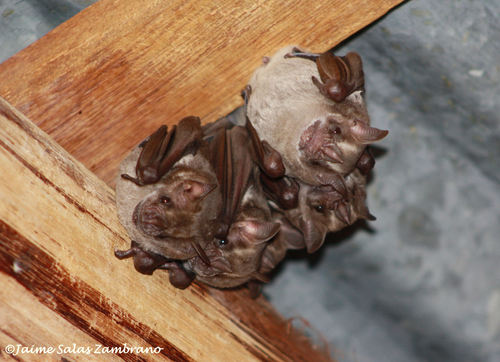
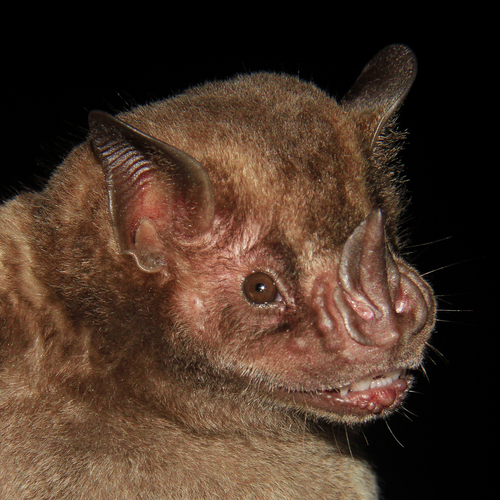
Other species in the genus Artibeus
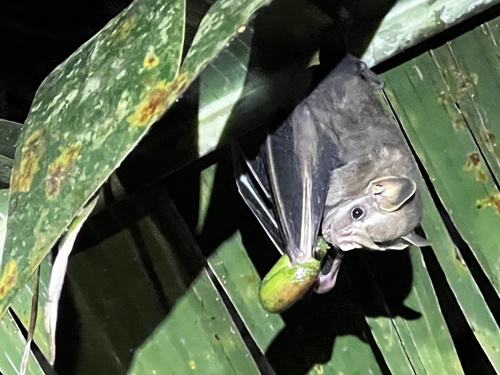
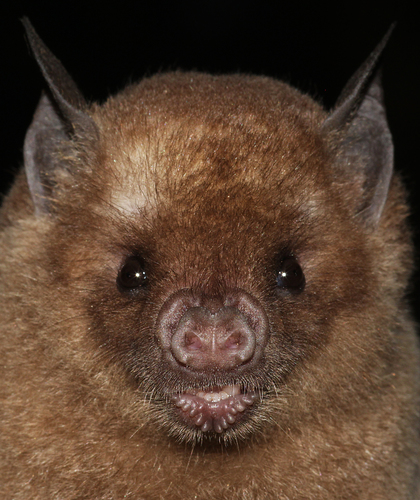
Other species in the family Phyllostomidae
Sources
Conservation status, range description and population estimate come from the IUCN Red List assessment for Artibeus obscurus. Countries are derived from that range description, not from a mapped country list. Last refreshed on .
The distribution map is drawn from the IUCN Red List spatial data compiled in 2008. IUCN (International Union for Conservation of Nature)