
Bush Dog
Speothos venaticus
Red List assessment
Near Threatenedon the IUCN Red List
- EXExtinct
- EWExtinct in the Wild
- CRCritically Endangered
- ENEndangered
- VUVulnerable
- NTNear Threatened
- LCLeast Concern
The Bush Dog is recorded in 9 countries across North America and South America. The IUCN Red List assesses the Bush Dog as Near Threatened. The global population is unknown but believed to be low density and declining, with estimates suggesting fewer than 15,000 mature individuals remain, scattered across fragmented habitat patches.
- Family
- Canidae
- Order
- Carnivora
- Genus
- Speothos
- Countries recorded
- 9
- Continents
- North America and South America
- Red List category
- Near Threatened
- Data updated
- August 9, 2026
What is the Bush Dog?
The Bush Dog is a small, elusive canid native to the forests and savannas of tropical South America, notable for its short legs, elongated body, and highly social pack-hunting behavior unusual among canids. It is one of the most primitive living canid species and occupies a unique ecological niche as a cooperative predator of large rodents. Despite its wide range, it is rarely observed due to its dense forest habitat and low population densities, making it one of the least-studied canids in the wild.
Where does the Bush Dog live?
Central and South America, primarily the Amazon Basin, including Brazil, Peru, Colombia, Venezuela, Ecuador, Bolivia, Paraguay, and parts of Panama and Guyana
The species ranges across the Amazon Basin and adjacent regions, from Panama in Central America through Colombia, Venezuela, Guyana, Ecuador, Peru, Bolivia, Brazil, and Paraguay, with the core population concentrated in Brazil's Amazon and Cerrado-Pantanal transition zones.
Altitude and depth
Primarily found at low elevations from sea level up to about 1,500 meters, though most populations occur below 500 meters in lowland tropical forests.
Seasonal movements
No true migration occurs, but activity and denning behavior may shift with wet and dry seasons, as flooding in wet season can restrict movement and concentrate prey availability in certain areas.
Habitat of the Bush Dog
Bush dogs inhabit tropical and subtropical moist forests, gallery forests, seasonally flooded savannas, and wet grasslands, often near water sources. They prefer areas with dense understory vegetation for cover while hunting and denning, and are also found in disturbed or secondary forest habitats.
Adaptations to its environment
Bush dogs have partially webbed feet that aid in swimming across rivers and flooded terrain, and their small size and short legs allow them to navigate dense undergrowth efficiently. Their cooperative pack-hunting strategy allows them to take down prey much larger than a single individual could manage alone.
Conservation status and numbers
Near Threatened (NT) according to IUCN, reflecting a population that is likely declining due to habitat loss and fragmentation, though not yet at threatened levels; the species was previously listed as Vulnerable in some assessments.
Estimated population
The global population is unknown but believed to be low density and declining, with estimates suggesting fewer than 15,000 mature individuals remain, scattered across fragmented habitat patches.
What threatens the Bush Dog?
Major threats include deforestation and habitat fragmentation from agriculture and logging, decline in prey base due to hunting by humans, disease transmission from domestic dogs, and direct persecution by farmers who perceive them as livestock threats.
Diseases and parasites
Bush dogs are susceptible to canine distemper virus and parvovirus, often contracted from contact with domestic dogs, as well as various internal parasites including nematodes and protozoan pathogens common to wild canids.
What is being done to protect it?
The species is protected under CITES Appendix I, and occurs in numerous protected areas across its range including national parks in Brazil, Peru, and Bolivia; captive breeding programs exist in zoos worldwide as an insurance population and for research purposes.
Recommended actions
Priority actions include expanding protected habitat corridors to reduce fragmentation, controlling domestic dog populations near reserves to prevent disease spillover, conducting population surveys using camera traps, and community education programs to reduce human-caused mortality.
What the Bush Dog looks like
The bush dog has a stocky, elongated body with short legs, a broad head, small rounded ears, and a short bushy tail. Fur is typically reddish-brown to tawny on the head and back, darkening to blackish-brown on the legs, belly, and tail.
Size
Body length ranges from 57 to 75 cm, with a short tail of 12-15 cm; shoulder height is approximately 20-30 cm, making it notably compact compared to most canids.
Weight
Adults typically weigh between 5 and 8 kg, with males generally slightly larger than females though the difference is modest.
Distinctive features
Its unusually short legs and elongated body distinguish it from all other canids, giving it a somewhat otter-like or mustelid appearance rather than typical dog-like proportions. Partially webbed toes and a very short tail further set it apart from related species.
Differences between males and females
Sexual dimorphism is minimal, with males being only slightly larger and heavier than females; coloration and general appearance are similar between sexes.
Behaviour and diet of the Bush Dog
Bush dogs are highly social and live in packs typically ranging from 2 to 12 individuals, usually consisting of a dominant breeding pair and their offspring from multiple litters. Packs cooperate closely in hunting, denning, and pup-rearing, exhibiting some of the strongest social cohesion among wild canids.
When it is active
Bush dogs are primarily diurnal, being most active during daylight hours, though some crepuscular activity has been recorded, especially in areas with high human disturbance.
Diet
They are carnivorous, feeding mainly on medium to large rodents such as pacas and agoutis, as well as armadillos, birds, reptiles, and occasionally larger prey like peccaries when hunting cooperatively as a pack.
How it feeds and hunts
Packs hunt cooperatively, often chasing prey into water or burrows where individuals take turns pursuing and cornering it; this coordinated strategy allows them to successfully take down prey much larger than themselves, such as capybaras or peccaries.
Communication
Bush dogs use a variety of high-pitched vocalizations including whines, squeaks, and bird-like calls to coordinate pack movements in dense vegetation, along with scent marking via urine and glandular secretions to establish territory and reinforce social bonds.
Interactions with other species
Natural predators include large cats such as jaguars and pumas, as well as large raptors that may take pups; competitors for prey include other carnivores like ocelots and tayras. Domestic dogs pose a risk through disease transmission and potential aggression.
Role in its ecosystem
As a mid-level predator, the bush dog helps regulate populations of medium-sized rodents and other prey species, playing a role in maintaining balance within tropical forest ecosystems.
Reproduction and lifecycle
Breeding can occur year-round in some populations, though births often peak in the dry season; gestation lasts approximately 65-83 days, with litters averaging 3-6 pups, though up to 10 have been recorded in captivity.
Raising the young
Only the dominant female typically breeds within a pack, and pups are raised communally with subordinate pack members, including males, helping to feed, guard, and later teach hunting skills to the young. Pups remain in the den for several weeks before beginning to accompany the pack.
Maturity and lifespan
Sexual maturity is typically reached at around 1 year of age; lifespan in the wild is estimated at 6-10 years, while captive individuals have been known to live up to 10-13 years with proper care.
Taxonomy and naming of the Bush Dog
Classification
Class Mammalia > Order Carnivora > Family Canidae > Genus Speothos > Species Speothos venaticus
Subspecies
Several subspecies have been proposed based on geographic variation, including S. v. venaticus (Brazil), S. v. panamensis (Panama), and S. v. wingei, though taxonomic validity of these subspecies remains debated and many authorities consider the species monotypic with clinal variation.
Scientific synonyms
Icticyon venaticus (former genus name used historically before reclassification to Speothos)
What research says
Recent studies
Recent camera-trap studies across the Amazon and Cerrado have provided new insights into pack sizes, territory use, and activity patterns, while genetic research continues to clarify the species' evolutionary relationships within Canidae, confirming it as a highly distinct and ancient lineage.
Genome and DNA
The bush dog has a diploid chromosome number of 74, which is notably different from most other canids and reflects its distinct evolutionary lineage within the family Canidae.
Compared with similar species
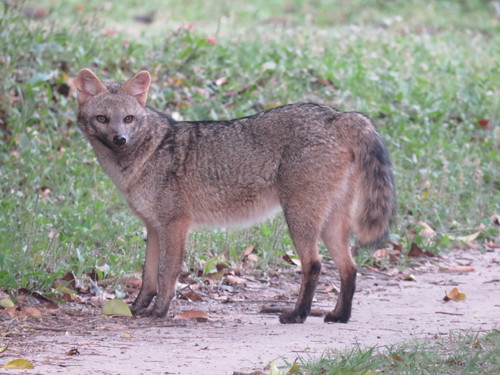
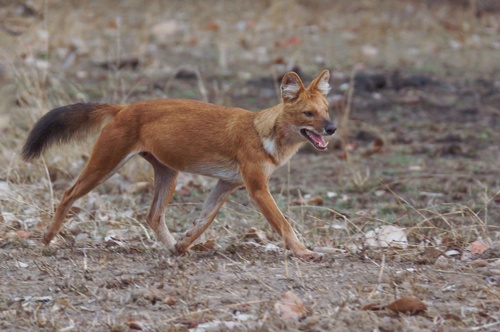
Unlike most canids which have long legs suited for running, the bush dog's short-legged, semi-aquatic build is more reminiscent of mustelids like otters, distinguishing it sharply from relatives such as the maned wolf or crab-eating fox found in similar South American habitats.
The Bush Dog and people
Bush dogs are one of the few canid species known to hunt cooperatively in coordinated packs to take down prey far larger than themselves, including peccaries. They also have partially webbed feet and are excellent swimmers, often chasing prey directly into rivers and streams.
Where and how to see it
Best observation opportunities occur in protected reserves such as Manu National Park in Peru or the Pantanal region of Brazil, ideally during early morning hours near water sources; sightings are rare and often require patience, camera traps, or guided expert-led wildlife tours.
Risks to humans
No notable risk to humans; bush dogs are shy, elusive, and avoid human contact, with no documented cases of unprovoked aggression toward people.
Human uses
Bush dogs have minimal direct commercial use, though they are occasionally kept in zoos for conservation breeding and public education purposes; historically some indigenous groups may have hunted them opportunistically, though this is not widespread.
Myths and legends
The bush dog has relatively limited presence in indigenous folklore compared to more iconic Amazonian predators like the jaguar, though some local communities associate its elusive nature and coordinated pack behavior with cunning and mystery in regional oral traditions.
Countries where the Bush Dog is recorded
The 9 countries named in the range description of its IUCN Red List assessment.
Questions about the Bush Dog
Where does the Bush Dog live?
The Bush Dog is recorded in Bolivia, Brazil, Colombia, Ecuador and Guyana, among 9 countries in total across North America and South America. These countries come from the range description of its IUCN Red List assessment, and they are what place the species on the interactive map.
Is the Bush Dog endangered?
The IUCN Red List assesses the Bush Dog as Near Threatened. The species does not qualify as threatened today, but it is close to the thresholds and likely to cross them soon. It is the category that most often changes at the next assessment.
How many are left in the wild?
The global population is unknown but believed to be low density and declining, with estimates suggesting fewer than 15,000 mature individuals remain, scattered across fragmented habitat patches. This figure comes from the species assessment on the IUCN Red List; population estimates for wild mammals are ranges, not counts, and are revised at each assessment.
What habitat does the Bush Dog live in?
Bush dogs inhabit tropical and subtropical moist forests, gallery forests, seasonally flooded savannas, and wet grasslands, often near water sources.
What is the scientific name of the Bush Dog?
The Bush Dog is Speothos venaticus, in the family Canidae, order Carnivora.
Other species in the family Canidae
Species that share its range
Sources
Conservation status, range description and population estimate come from the IUCN Red List assessment for Speothos venaticus. Countries are derived from that range description, not from a mapped country list. Last refreshed on .
The distribution map is drawn from the IUCN Red List spatial data compiled in 2011. IUCN (International Union for Conservation of Nature)