
Crab-eating Fox
Cerdocyon thous
Red List assessment
Least Concernon the IUCN Red List
- EXExtinct
- EWExtinct in the Wild
- CRCritically Endangered
- ENEndangered
- VUVulnerable
- NTNear Threatened
- LCLeast Concern
The Crab-eating Fox is recorded in 7 countries across South America. The IUCN Red List assesses the Crab-eating Fox as Least Concern. No precise global population estimate exists, but the species is considered common and abundant throughout much of its range, with a stable overall trend.
- Family
- Canidae
- Order
- Carnivora
- Genus
- Cerdocyon
- Countries recorded
- 7
- Continents
- South America
- Red List category
- Least Concern
- Data updated
- August 9, 2026
What is the Crab-eating Fox?
The crab-eating fox is a medium-sized canid native to South America, inhabiting a wide range of habitats from savannas to forests. Despite its name, crabs make up only a small part of its highly varied omnivorous diet. It is remarkable for its adaptability, thriving in disturbed and human-altered landscapes, and forming monogamous pair bonds that persist for years.
Where does the Crab-eating Fox live?
South America, primarily found in Brazil, Argentina, Paraguay, Uruguay, Bolivia, Colombia, Venezuela, and the Guianas
Widely distributed across South America east of the Andes, from Colombia and Venezuela in the north through Brazil, Bolivia, Paraguay, and Uruguay to northern Argentina. Absent from dense unbroken Amazonian rainforest interior and high Andean regions.
Altitude and depth
Sea level up to approximately 3000 meters in some Andean foothill regions, though most common in lowland areas below 1000m
Seasonal movements
No true migration or hibernation; activity patterns and diet shift seasonally with prey and fruit availability, particularly during wet versus dry seasons.
Habitat of the Crab-eating Fox
Highly adaptable species found in savannas, grasslands, gallery forests, wetlands, scrublands, and agricultural areas. Prefers areas with mixed vegetation offering both cover and open foraging grounds.
Adaptations to its environment
Highly generalist diet and behavior allow exploitation of diverse food sources and habitats, including human-modified landscapes. Opportunistic foraging strategy and flexible activity timing help it avoid competition and predation.
Conservation status and numbers
Listed as Least Concern by IUCN due to wide distribution, large population size, and tolerance of habitat disturbance. Population trend is considered stable across most of its range.
Estimated population
No precise global population estimate exists, but the species is considered common and abundant throughout much of its range, with a stable overall trend.
What threatens the Crab-eating Fox?
Localized threats include roadkill mortality, hunting for fur or as perceived poultry pest, habitat conversion to agriculture, and disease transmission from domestic dogs such as rabies and canine distemper.
Diseases and parasites
Susceptible to rabies, canine distemper virus, and various endoparasites including nematodes and cestodes, often contracted through contact with domestic dogs.
What is being done to protect it?
Protected in numerous national parks and reserves across its range countries; listed on CITES Appendix II regulating international trade. No dedicated species-specific conservation programs exist due to its stable status.
Recommended actions
Continued monitoring of disease transmission from domestic dogs, mitigation of roadkill through wildlife crossings, and maintaining habitat connectivity in increasingly fragmented agricultural landscapes.
What the Crab-eating Fox looks like
Grizzled grayish-brown to tawny fur with darker coloring along the back and a distinctive dark stripe running from shoulders to tail tip. The muzzle, ears, and lower legs are often darker or blackish, while the tail is bushy with a black tip.
Size
Body length 60-70 cm with a tail of 25-30 cm, shoulder height approximately 30-40 cm
Weight
Typically 4-7 kg, with males and females showing minimal size difference
Distinctive features
Distinguished from other South American canids by its shorter legs, stockier build, more rounded ears, and grizzled coat pattern with a dark dorsal stripe; smaller and more robust than the pampas fox.
Behaviour and diet of the Crab-eating Fox
Typically forms monogamous mated pairs that maintain long-term territories together, sometimes foraging separately but reuniting to rest or interact. Occasionally seen in small family groups with offspring before dispersal.
When it is active
Primarily nocturnal and crepuscular, though can be active during daylight hours in areas with low human disturbance or abundant food.
Diet
Omnivorous generalist consuming small mammals, birds, reptiles, amphibians, insects, crabs, fruits, and carrion. Diet composition shifts seasonally based on availability, with fruit consumption increasing during wet seasons.
How it feeds and hunts
Opportunistic forager and hunter, using keen hearing and smell to locate prey; digs for invertebrates and crustaceans, and stalks small vertebrates before pouncing.
Communication
Uses a variety of vocalizations including barks, growls, and a distinctive high-pitched call for pair contact; scent marking via urine and feces at territory boundaries is common, along with body postures for social signaling.
Interactions with other species
Preyed upon by larger carnivores such as pumas and ocelots, and susceptible to disease transmission from domestic dogs. Competes with other small carnivores like pampas foxes and coatis for similar food resources.
Role in its ecosystem
Plays an important ecological role as both predator of small vertebrates and invertebrates and as a seed disperser through fruit consumption, contributing to forest and savanna regeneration.
Reproduction and lifecycle
Breeding season varies by region but often peaks around the dry to wet season transition; gestation lasts approximately 52-59 days, producing litters of 3-6 pups.
Raising the young
Both parents participate in raising pups, with the male provisioning the female during lactation and both adults guarding and feeding young at the den. Pups are weaned around 8-10 weeks and become independent by 4-5 months.
Maturity and lifespan
Reaches sexual maturity around 9-12 months; lifespan in the wild is typically 7-10 years, while captive individuals can live up to 11-13 years.
Taxonomy and naming of the Crab-eating Fox
Classification
Class Mammalia > Order Carnivora > Family Canidae > Genus Cerdocyon > Species Cerdocyon thous
Subspecies
Several subspecies proposed based on geographic variation, including C. t. thous, C. t. aquilus, C. t. azarae, and others, though taxonomy remains debated with some authorities recognizing few or no valid subspecies.
Scientific synonyms
Canis thous (original Linnaean classification), Dusicyon thous
What research says
Recent studies
Recent research has focused on its role in zoonotic disease dynamics, particularly rabies and distemper transmission dynamics with domestic dogs, as well as studies on its adaptability to urban and agricultural edge habitats.
Genome and DNA
Diploid chromosome number of 2n=74; genetic studies have examined its phylogenetic placement within South American canids, showing distinct lineage from Lycalopex and Cerdocyon as basal to some other canid radiations.
Compared with similar species
Smaller and stockier than the culpeo fox, with a more robust build than the pampas fox, and distinguished from the maned wolf by its much smaller size and shorter legs.
The Crab-eating Fox and people
Despite its name, crabs are only a minor dietary component; the name likely derives from early observations near wetland habitats. It is one of the few South American canids that regularly forms lifelong monogamous pairs, and it can be surprisingly tame around human settlements.
Where and how to see it
Best observed at dusk or dawn in savanna and grassland reserves such as the Pantanal or Ibera Wetlands in Argentina, often seen along roadsides or forest edges in protected areas with minimal human disturbance.
Risks to humans
No notable risk to humans under normal circumstances, though bites can occur if cornered and there is potential for rabies transmission in areas with high domestic dog contact.
Human uses
Historically hunted for fur in some regions, though this is now minimal; occasionally kept as exotic pets in some areas despite being a wild species not suited for domestication.
Myths and legends
In some rural South American folklore, the species is associated with cunning trickster archetypes similar to fox mythology found in other cultures, though specific detailed legends are less documented than for wolves or coyotes.
Countries where the Crab-eating Fox is recorded
The 7 countries named in the range description of its IUCN Red List assessment.
Questions about the Crab-eating Fox
Where does the Crab-eating Fox live?
The Crab-eating Fox is recorded in Argentina, Bolivia, Brazil, Colombia and Paraguay, among 7 countries in total across South America. These countries come from the range description of its IUCN Red List assessment, and they are what place the species on the interactive map.
Is the Crab-eating Fox endangered?
The IUCN Red List assesses the Crab-eating Fox as Least Concern. The species is widespread and abundant enough not to qualify for any threatened category. It does not mean the species is safe forever, only that nothing in the current data raises an alarm.
How many are left in the wild?
No precise global population estimate exists, but the species is considered common and abundant throughout much of its range, with a stable overall trend. This figure comes from the species assessment on the IUCN Red List; population estimates for wild mammals are ranges, not counts, and are revised at each assessment.
What habitat does the Crab-eating Fox live in?
Highly adaptable species found in savannas, grasslands, gallery forests, wetlands, scrublands, and agricultural areas.
What is the scientific name of the Crab-eating Fox?
The Crab-eating Fox is Cerdocyon thous, in the family Canidae, order Carnivora.
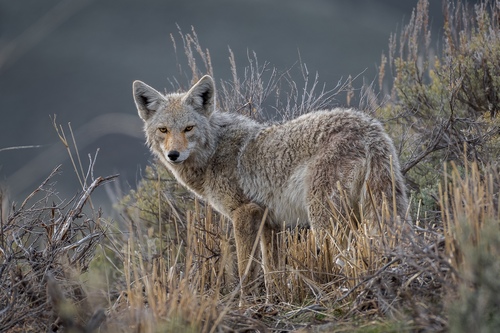
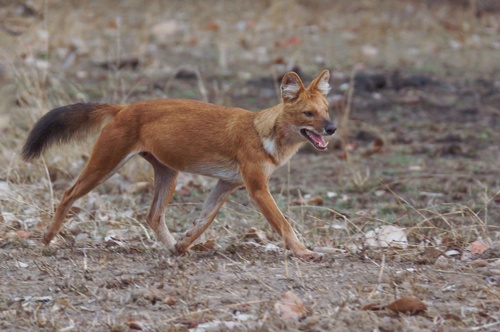
Other species in the family Canidae
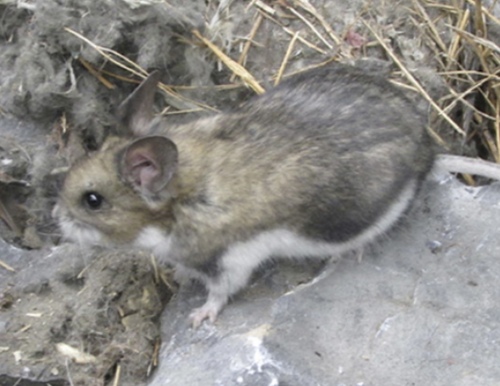
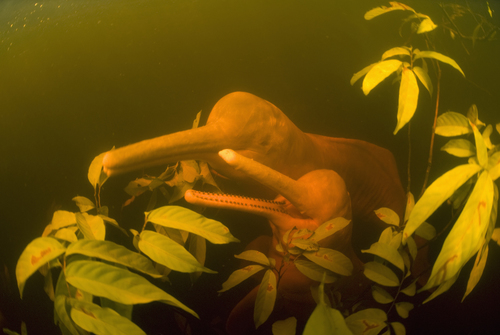
Species that share its range
Sources
Conservation status, range description and population estimate come from the IUCN Red List assessment for Cerdocyon thous. Countries are derived from that range description, not from a mapped country list. Last refreshed on .
The distribution map is drawn from the IUCN Red List spatial data compiled in 2015. International Union for the Conservation of Nature