
Coyote
Canis latrans
Red List assessment
Least Concernon the IUCN Red List
- EXExtinct
- EWExtinct in the Wild
- CRCritically Endangered
- ENEndangered
- VUVulnerable
- NTNear Threatened
- LCLeast Concern
The Coyote is recorded in 4 countries across North America. The IUCN Red List assesses the Coyote as Least Concern. Population size is not precisely quantified but is considered large and stable to increasing, with millions of individuals estimated across North America.
- Family
- Canidae
- Order
- Carnivora
- Genus
- Canis
- Countries recorded
- 4
- Continents
- North America
- Red List category
- Least Concern
- Data updated
- August 9, 2026
What is the Coyote?
The coyote is a medium-sized canid native to North America, closely related to wolves and domestic dogs. Highly adaptable, it thrives in habitats ranging from deserts and forests to suburban and urban landscapes, including major cities like Los Angeles. Known for its intelligence, opportunistic feeding, and vocal howling, the coyote has expanded its range dramatically since European colonization due to human-caused declines in wolf populations.
Where does the Coyote live?
North and Central America, including the United States, Canada, Mexico, and parts of Central America; particularly common in urban and suburban areas of California such as Los Angeles.
Found throughout North America from Alaska and Canada south through the United States, Mexico, and into Central America as far as Panama. Their range has expanded significantly over the past century, now including areas east of the Mississippi where they were historically absent.
Altitude and depth
Sea level up to approximately 3,000-4,000 meters in mountainous regions such as the Rocky Mountains.
Seasonal movements
No true migration or hibernation; however, breeding is seasonal, occurring once yearly typically between January and March, and social/territorial behavior can intensify during this period.
Habitat of the Coyote
Coyotes occupy an extremely wide range of habitats including deserts, grasslands, forests, mountains, and increasingly urban and suburban environments. They are highly adaptable and can thrive in areas with human development, using parks, greenbelts, and even residential neighborhoods as territory.
Adaptations to its environment
Coyotes possess highly adaptable diets, keen senses, and behavioral flexibility that allow them to exploit diverse habitats from wilderness to cities. Their thick fur provides insulation in cold climates, while their opportunistic hunting and scavenging strategies enable survival in resource-scarce environments.
Conservation status and numbers
Least Concern (LC) according to IUCN, reflecting a stable to increasing population trend and an expanding geographic range across North America. Unlike many carnivores, coyotes have benefited from human-altered landscapes and the extirpation of wolves.
Estimated population
Population size is not precisely quantified but is considered large and stable to increasing, with millions of individuals estimated across North America.
What threatens the Coyote?
Primary threats include vehicle collisions, human-caused mortality through hunting and trapping (often due to livestock predation concerns), and habitat fragmentation, though these have not significantly reduced overall population numbers.
Diseases and parasites
Coyotes can carry diseases such as rabies, canine distemper, and mange, as well as parasites including fleas, ticks, heartworms, and various intestinal worms.
What is being done to protect it?
No major conservation programs are needed given their stable status; however, some regions have implemented non-lethal management strategies including hazing and public education to reduce human-coyote conflicts in urban settings.
Recommended actions
Recommended actions focus on promoting coexistence strategies in urban areas, public education about coyote behavior, and non-lethal conflict mitigation rather than population protection.
What the Coyote looks like
Coyotes have a lean, dog-like build with grayish-brown to reddish fur, a bushy tail with a black tip, large pointed ears, and a narrow, pointed muzzle. Coloration can vary regionally from grayish to more reddish or tawny tones.
Size
Body length typically 75-100 cm (head to tail), with shoulder height of about 40-53 cm; tail length adds an additional 30-40 cm.
Weight
Males typically weigh 8-20 kg, while females are slightly smaller, averaging 7-18 kg.
Distinctive features
Compared to wolves, coyotes are smaller with a narrower snout, larger ears relative to head size, and a more slender build; their tail is carried low when running, unlike wolves which carry it straight out.
Differences between males and females
Minimal sexual dimorphism; males are generally slightly larger and heavier than females, but coloration and markings are similar between sexes.
Behaviour and diet of the Coyote
Coyotes exhibit flexible social structures, ranging from solitary individuals to mated pairs and small family groups or packs, particularly during pup-rearing season. Social structure often depends on food availability and population density.
When it is active
Primarily nocturnal and crepuscular, though coyotes can be active during the day, especially in areas with less human disturbance or during colder months.
Diet
Omnivorous and highly opportunistic, coyotes eat small mammals like rabbits and rodents, birds, insects, fruits, and carrion; in urban areas they may also consume garbage, pet food, and occasionally small pets.
How it feeds and hunts
Coyotes hunt alone or in pairs using stalking and pouncing techniques for small prey, and cooperative hunting strategies for larger prey like deer fawns; they also scavenge opportunistically.
Communication
Coyotes communicate through a variety of vocalizations including howls, yips, barks, and growls, often used for territorial signaling and group coordination; scent marking via urine and body language such as tail position also play important communicative roles.
Interactions with other species
Coyotes compete with and are sometimes preyed upon by wolves and mountain lions; they also interact with domestic dogs and can hybridize with wolves in some regions. They play a role in controlling rodent and small mammal populations.
Role in its ecosystem
As a mesopredator, the coyote plays an important ecological role in controlling populations of small mammals and mediating trophic cascades, especially in areas where larger apex predators like wolves have been extirpated.
Reproduction and lifecycle
Breeding season occurs once annually, typically January to March, with a gestation period of about 60-63 days; litters average 4-7 pups, born in dens.
Raising the young
Both parents, and sometimes older siblings, participate in raising pups, which are weaned around 5-7 weeks and become independent by 6-9 months of age; the den site is actively defended during early pup development.
Maturity and lifespan
Sexual maturity is typically reached at 1-2 years; lifespan in the wild averages 6-8 years, though they can live up to 13-15 years in captivity.
Taxonomy and naming of the Coyote
Classification
Class Mammalia > Order Carnivora > Family Canidae > Genus Canis > Species Canis latrans
Subspecies
Up to 19 recognized subspecies including Canis latrans latrans (Plains coyote), C. l. ochropus (California valley coyote), C. l. lestes (mountain coyote), C. l. thamnos (Northeastern coyote), and others distributed across different regions of North and Central America.
Scientific synonyms
Canis frustror (formerly used for some populations); historically sometimes grouped under Canis nebracensis in earlier taxonomic treatments.
What research says
Recent studies
Recent genetic studies have revealed widespread coyote-wolf hybridization in eastern North America, producing so-called 'coywolves' with mixed ancestry that may show different behavioral and physical traits.
Genome and DNA
Coyotes have 78 chromosomes, the same diploid number as domestic dogs and wolves, allowing for interbreeding and hybridization between these species.
Compared with similar species
Coyotes are smaller and more adaptable than gray wolves, with a narrower skull and more slender frame; they are more solitary than wolves but more social than red foxes, occupying an intermediate ecological niche among North American canids.
The Coyote and people
Coyotes can run up to 65 km/h (40 mph) and are excellent swimmers and jumpers, capable of leaping over 4 meters. They are one of the few large mammals whose range has expanded significantly due to human activity rather than contracted.
Where and how to see it
Coyotes can often be observed at dawn or dusk in parks, greenbelts, and open spaces in cities like Los Angeles; maintaining distance and avoiding feeding them is recommended for safe observation.
Risks to humans
Generally low risk to humans, though attacks are rare and usually associated with habituation to human food sources; coyotes can pose a threat to small pets left unattended in urban and suburban areas.
Human uses
Historically hunted for fur, and still trapped in some regions for pelt value or population management; coyotes have limited other direct economic uses but are studied extensively for urban wildlife ecology research.
Myths and legends
The coyote holds significant cultural symbolism in many Native American traditions, often depicted as a trickster figure representing cunning, chaos, and transformation in folklore and mythology.
Countries where the Coyote is recorded
The 4 countries named in the range description of its IUCN Red List assessment.
Questions about the Coyote
Where does the Coyote live?
The Coyote is recorded in Canada, Mexico, Panama and United States across North America. These countries come from the range description of its IUCN Red List assessment, and they are what place the species on the interactive map.
Is the Coyote endangered?
The IUCN Red List assesses the Coyote as Least Concern. The species is widespread and abundant enough not to qualify for any threatened category. It does not mean the species is safe forever, only that nothing in the current data raises an alarm.
How many are left in the wild?
Population size is not precisely quantified but is considered large and stable to increasing, with millions of individuals estimated across North America. This figure comes from the species assessment on the IUCN Red List; population estimates for wild mammals are ranges, not counts, and are revised at each assessment.
What habitat does the Coyote live in?
Coyotes occupy an extremely wide range of habitats including deserts, grasslands, forests, mountains, and increasingly urban and suburban environments.
What is the scientific name of the Coyote?
The Coyote is Canis latrans, in the family Canidae, order Carnivora.
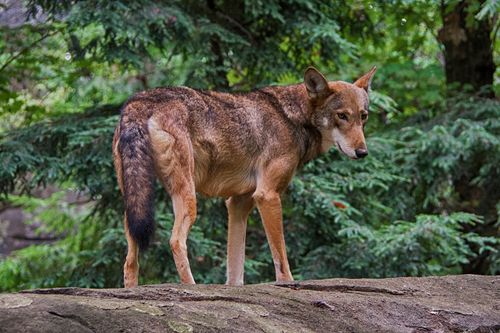
Other species in the genus Canis
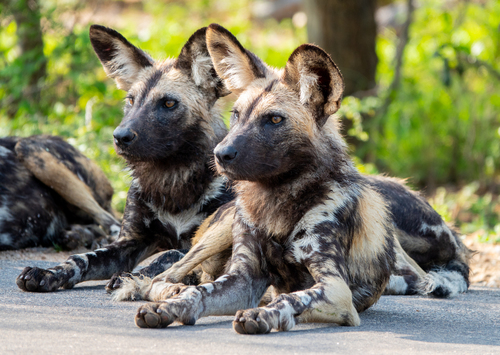
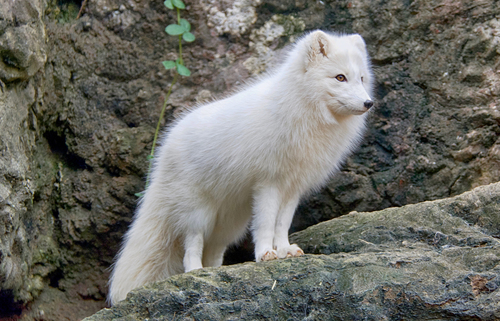
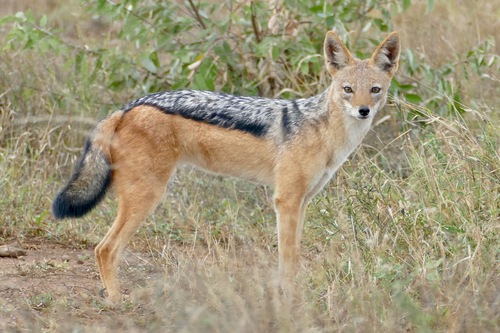
Other species in the family Canidae
Species that share its range
Sources
Conservation status, range description and population estimate come from the IUCN Red List assessment for Canis latrans. Countries are derived from that range description, not from a mapped country list. Last refreshed on .
The distribution map is drawn from the IUCN Red List spatial data compiled in 2018. Hody and Kays 2018